The Stone Statue
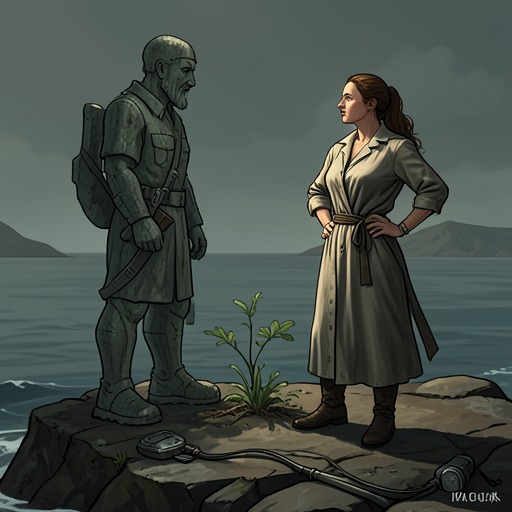
MulanThe Stone Statue is a weathered figure at the far edge of Green Island, where a local legend associates it with a man transformed by a fairy. Mulan’s decision to place the Odd-Shaped Rock against it sets in motion an unexpected change: both stone forms become dust, and Dragon Beard Grass grows where they stood. The statue is at once a remnant of the island’s past, a source of uneasy rumor, and the center of the discovery that advances Mulan’s quest.
Appearance and Setting
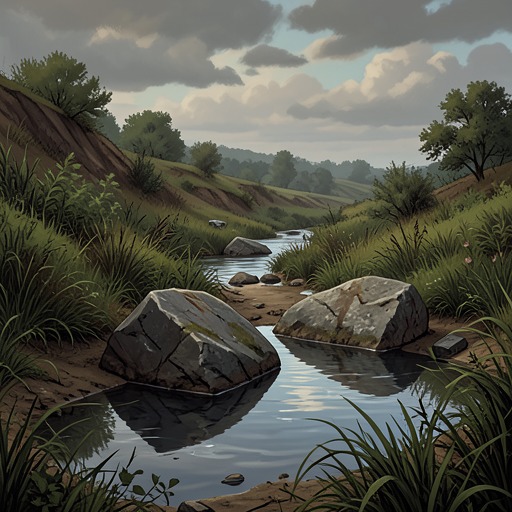
Mulan first notices the statue at the entrance to a dark cave on the island’s far side. From a distance, it is only a glinting shape against a landscape that looks brown and rocky rather than green. The contrast matters: the grass has stopped growing, the soil is dry and crumbling, and the island bears little resemblance to the abundant, fertile place the Jade Rabbit described. The statue is not initially explained, but its presence draws Mulan’s attention toward the cave and the question of what has happened to the island’s spirit.
After searching the hills, countryside, and much of the rocky shoreline, Mulan and her companions enter the main village without finding a single spike of Dragon Beard Grass. The statue remains a landmark beyond the village, near cliffs they have not yet inspected closely. Mulan suspects it depicts a long-forgotten island hero, though its surface is weathered enough to be barely recognizable. Its worn condition makes it both a physical trace of the past and an object whose identity the present community cannot readily establish.
Local Rumor and Uncertain Identity
In the village, Mulan asks Li Jing whether her father made the statue. Li Jing corrects her: her father is a baker, and the figure he made as a child’s model was fashioned from dough, not stone. The distinction briefly lightens the conversation, but the actual statue changes its tone. Li Jing says the villagers avoid discussing it because they consider it bad luck.
Li Jing dates the statue’s appearance to about twenty years before the conversation, before her own birth. She repeats one account: a man fell in love with a wicked fairy, who grew bored with him and turned him into stone. This is presented as a local story, not as a confirmed explanation. The gap between the rumor and Mulan’s initial suspicion that the figure is an island hero leaves the statue’s identity uncertain. Its reputation has survived, but the people around it treat that survival as a reason for silence rather than investigation.
The statue’s appearance makes the legend physically immediate when Mulan returns to it at night. In the lantern’s flickering light, its weathered, distorted face and outstretched hands seem ghostly enough to make her scream. Bringing the lantern closer dispels the apparent haunting: what confronts her is the same damaged stone figure she had sought. The scene turns fear into recognition, while Lu Ting-Pin’s response shows that the statue has significance beyond its unsettling appearance. The Jade Rabbit, too, is surprised that Mulan knew where to find it; she explains that she saw it from the hilltop and asked Li Jing about it.
The Statue and the Odd-Shaped Rock
Mulan’s encounter with the statue leads to a consequential choice about where to put the Odd-Shaped Rock. When Lu Ting-Pin asks what to do with it, she directs him to set it beside the statue and make the two touch. Lu Ting-Pin pushes the misshapen rock against the figure until the two stone forms collide as if in an embrace. The comparison gives their contact an intimate, almost bodily quality, in contrast with the villagers’ fearful distance from the statue.
The pairing does not immediately produce a visible confirmation that Mulan’s choice has worked. She watches anxiously, then answers Lu Ting-Pin’s question uncertainly. Her doubt recalls an earlier moment when she performed a difficult feat with a teacup but received displeasure from Ma instead of the recognition she expected. That memory does not establish what the statues’ contact means, but it clarifies Mulan’s unease: an action that feels like a possible triumph may not yet have yielded a result she can see.
Crumbling Stone and the Return of Growth
At dawn, Mulan returns to the far side of the island rather than going to the boat. The statue and the Odd-Shaped Rock are no longer intact: both have crumbled into piles of dust and dirt. When she reaches toward the remains, a strong gust blows the particles into her face. The dust then catches the morning light, appearing to glitter around her before another blast of wind scatters it over the cliffs. The stone forms disappear, leaving only a thin layer of dust on the ground.
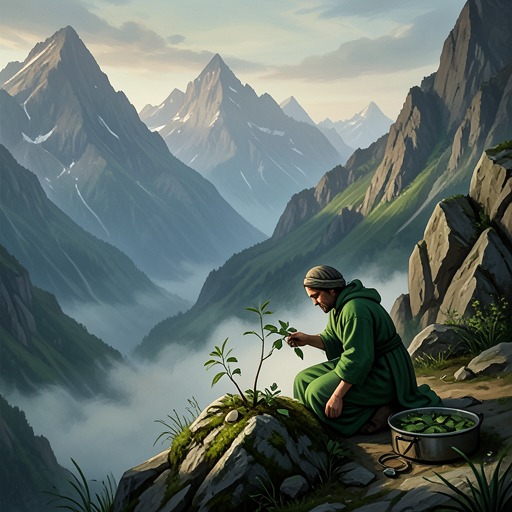
Mulan notices green among the remaining particles and kneels to inspect it. Fine stalks, each as long as her fingers, are pushing through the earth; when she pulls up one sprout, its roots are crimson and threadlike. She gathers more and runs to find Lu Ting-Pin and the Jade Rabbit, carrying the Dragon Beard Grass she has been seeking. Her discovery comes not from searching another stretch of barren terrain, but from returning to the site where the two stone forms met and changed.
The statue’s narrative importance rests on this reversal. Its presence first marks a landscape from which growth has nearly vanished; its rumored history makes it an object of apprehension; and its contact with the Odd-Shaped Rock precedes the return of visible green. The transformation is not explained in full by the villagers’ story, so the scene preserves some mystery even as it gives Mulan a concrete result. Dust that might have seemed to mark only disappearance becomes the ground from which the needed grass emerges. For Mulan, the statue is therefore not simply a relic to identify: it is the focal point of a change that yields the remedy ingredient and sends her racing onward with renewed purpose.