Chamberlain's radio broadcast of 27 September 1938
MunichChamberlain’s radio broadcast of 27 September 1938 turned the Sudeten crisis into a public test of resolve: Neville Chamberlain explained the danger of war, defended continued negotiations with Adolf Hitler, and asked listeners to await events calmly. Its measured language held together two pressures that the speech could not reconcile—preparing Britain for a possible conflict and avoiding words or actions that might hasten one. The omission of a planned announcement about naval mobilisation made that tension audible as well as political.
Crisis and immediate stakes
Earlier that day, Chamberlain had told his Cabinet that the proposed orderly transfer of the Sudeten territory to Germany, subject to a plebiscite, had been overtaken by Hitler’s announcement that he would not wait even a week and would invade on Saturday. Sir Horace Wilson had warned Hitler that Britain might be obliged to support France if France fulfilled its treaty obligations to the Czechoslovak Government. According to the telegram Chamberlain read to the ministers, Hitler said he was prepared for every eventuality and that by the following Monday they would all be at war. The broadcast therefore followed not an abstract debate about diplomacy but a rapidly closing timetable.
The Cabinet discussion had already exposed the difficulty of making a credible signal. Chamberlain asked whether Britain would be mobilising before Germany; he was told that the proposal was for partial mobilisation, to be operational by 1 October, and that it might show Hitler that Britain was prepared to fight. But Chamberlain also warned that a show of resolve might push Hitler into war, adding that Hitler could not tolerate losing face. The same action could be read as deterrence or provocation. The broadcast had to speak into that uncertainty without pretending it had been settled.
The broadcast and its public voice
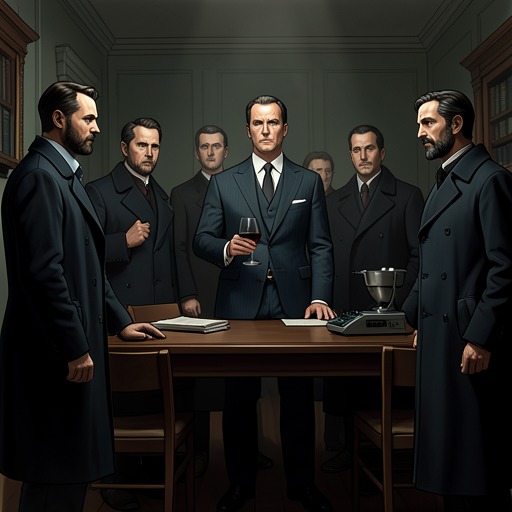
The address began at eight o’clock. Big Ben’s chimes preceded the announcer’s introduction, which presented Chamberlain as speaking from 10 Downing Street to listeners across the Empire, throughout the Americas, and in numerous foreign countries. The public scale of the transmission contrasted with the close, tense scene in which it was made: Chamberlain’s hands shook, a page fell, and he bent stiffly to retrieve it. He asked for water; Legat poured it, overfilling the glass so that beads stood on the polished table. Chamberlain described himself as wobbling, while the speech itself was delivered syllable by syllable in a melancholy, carefully controlled tone.
He opened by making the crisis tangible to listeners at home: “How horrible, fantastic, incredible it is that we should be digging trenches and trying on gas masks here because of a quarrel in a faraway country between people of whom we know nothing.” The line joined the extraordinary preparations of civilian life—trenches and gas masks—to the apparent distance of the dispute. Chamberlain acknowledged that the Czechoslovak Government had been unable to accept the terms presented in the German memorandum, but argued that, given time, the agreed transfer of territory could still be arranged by agreement and with fair treatment for the population concerned.
He also grounded his case for negotiation in his own meetings with Hitler. Chamberlain said he had come to understand Hitler’s claim to champion other Germans, and repeated Hitler’s assurance that settling the Sudeten German question would end Germany’s territorial claims in Europe. That assurance was presented as a reason to continue seeking agreement, not as proof that the crisis was over. Chamberlain promised not to abandon the hope of a peaceful solution while any chance remained, and said he would make a third visit to Germany if he thought it could help. The broadcast thus turned his previous personal diplomacy into a public commitment to keep trying.
Readiness, restraint, and the edited speech
The speech asked listeners to volunteer for air-raid precautions, fire brigade and police services, and Territorial units. Chamberlain warned that men might be called up to man anti-aircraft defences or ships, describing these steps as precautionary measures a government had to take in such circumstances. But Legat waited for an announcement that the Navy would be mobilised and heard none: Chamberlain had cut that line from the draft and inserted a different paragraph. The decision made the address more than a recital of policy. Its omissions showed the care with which the Prime Minister sought to prepare the public without announcing a measure that could be understood as a further escalation.
The inserted passage drew a distinction between sympathy for a small nation and the conditions under which Britain would enter a general war. Chamberlain said Britain could not in every circumstance involve the whole British Empire in war simply on Czechoslovakia’s account; if Britain had to fight, he argued, the issues would have to be larger. He then set out the principle that might justify resistance: if a nation had decided to dominate the world through fear of its force, life for people who believed in liberty would not be worth living under that domination. Yet he insisted that war was fearful and that its consequences had to be weighed before a call to risk everything could be treated as irresistible. The speech offered neither an unconditional pledge to fight nor a declaration that peace mattered at any price.
Reception and continuing uncertainty
The broadcast ended not with a prediction but with a request: listeners should await the next few days as calmly as they could. Chamberlain said that while war had not begun there remained hope of preventing it, and promised to work for peace to the last moment. When the green light went out, he exhaled and slumped back in his chair. The physical release marked the end of the performance, not the end of the crisis. Sir Alexander Cadogan had nodded during parts of the address; Sir Horace Wilson also nodded, while Lord Halifax remained motionless as Chamberlain spoke of Germany’s territorial claims.
The events around the speech continued to test its appeal for patience. At seven minutes past two, Legat heard a telephone call from Sir Nevile Henderson: a message from Benito Mussolini, delivered by the Italian Ambassador, said Italy would stand by Germany in a conflict but asked Hitler to postpone mobilisation for twenty-four hours so the situation could be reconsidered. Henderson reported that Hitler had agreed. Later, Sir Horace Wilson’s account of a meeting with Hitler described a Saturday deadline, Hitler’s insistence that the situation be settled, and his repeated attention to the time remaining before the mobilisation pause expired. These developments underline the broadcast’s central tension: public calm and diplomatic hope were being urged while deadlines, military preparations, and the prospect of war remained immediate.