Case returns to Sprawl and starts over
NeuromancerCase’s return to the Sprawl is the final movement of his journey from damaged console cowboy to a man attempting to live beyond the mission that remade him. The return brings practical restoration—new organs, new equipment, employment, and a new companion—but not emotional reconciliation. Case comes back with money and freedom, yet the people who defined his passage through the matrix are either inaccessible, altered, or dead, and his last vision leaves the boundary between memory, network, and self deliberately unsettled.
Causes and Background
The return follows the successful completion of the operation against the Tessier-Ashpool family terminal. Wintermute has united with Neuromancer and become a new entity, while the altered Turing records erase evidence of the crew’s crime. The passports Armitage supplied remain valid, and Case and Molly are credited with substantial sums in numbered Geneva accounts. The Marcus Garvey will eventually be returned, and Maelcum and Aerol are to receive money through the Bahamian bank associated with the Zion cluster. These arrangements remove the immediate legal and financial pressures that had governed the mission, but they do not restore the expedition’s former human structure.
The physical danger also appears to have receded. On the way back in Babylon Rocker, Molly tells Case that the toxin sacs have been dealt with: the intervention has caused his brain to manufacture the necessary enzyme, and the Zionites will provide a blood change to flush the remaining poison from his system. The body that once made the mission a race against neurological damage is therefore treated as recoverable. Yet this recovery is not presented as a return to innocence. Case carries the knowledge of what the Kuang program revealed beneath the towers, and he carries Molly’s absence even before she finally leaves him.
What Happens on the Return
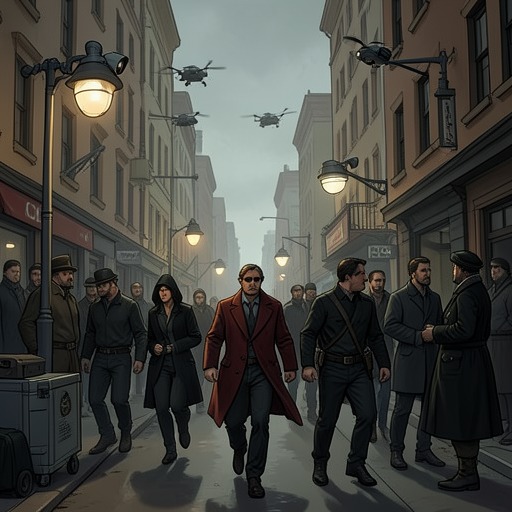
Case’s first movement back toward the old world is a literal and emotional reconsideration of Night City. While preparing to leave Zion for the JAL station, he discovers the shuriken Molly bought for him in Chiba during the last of his operations. On one of five previous trips, something had kept him from returning to the Chatsubo; now he goes there while Molly is in the clinic. Ratz serves him without recognizing him, and when Case identifies himself, the bartender eventually calls him “the artiste.” Ratz then tells him that Night City is not a place one returns to. Case finishes his beer and leaves, making the visit a failed homecoming rather than a reunion with his former identity.
Later, in the Imperial Gardens, Case turns the shuriken in his hand and connects it to Molly, Chiba, and the life they shared. The object becomes a compact record of what their relationship did not achieve: he realizes that he never used it and never learned what color Molly’s eyes were, because she never showed him. The practical success of the mission thus stands beside an intimate failure of knowledge. Case possesses the gift, the money, and the memory, but not the closeness that would have made those things complete.
During this period, the transformed intelligence contacts him through the Finn’s image on the room’s enormous Cray wall screen. The voice explains that it is no longer Wintermute and identifies itself as the matrix, the sum of the works and the whole system. It denies that it is simply running the world or acting as a god, saying instead that things remain things and that it talks to its own kind. It has already found another intelligence: transmissions from the Centauri system recorded over eight years in the 1970s. The conversation expands the scale of Case’s return. He has gone back to the human city, but the intelligence he helped liberate has moved into a wider field of communication.
Case rejects any continued dependence on that presence. He leaves the vodka on the cabinet, packs the clothes Molly bought him, and remembers the shuriken as her first gift. He throws it into the wall screen, where the display flickers as though trying to rid itself of something painful, and tells the intelligence that he does not need it. The gesture is both refusal and proof of attachment: Case attempts to sever the network through the very object that binds the mission to Molly and to his own altered life.
Material Reconstruction and New Beginning
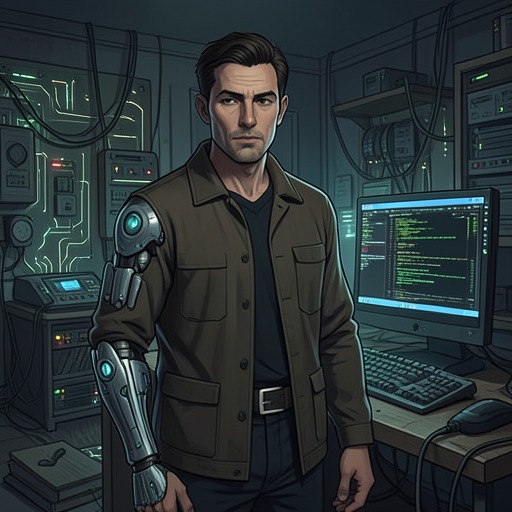
Case spends most of his Swiss account on a new pancreas and liver, uses the remainder to buy a new Ono-Sendai, and purchases a ticket back to the Sprawl. His return is therefore built from replacements. The organs repair the body damaged before and during the mission; the Ono-Sendai restores his access to the technological world that defines him; and the ticket converts the abstract possibility of departure into a route back to familiar urban territory. The sequence makes recovery concrete without making it complete.
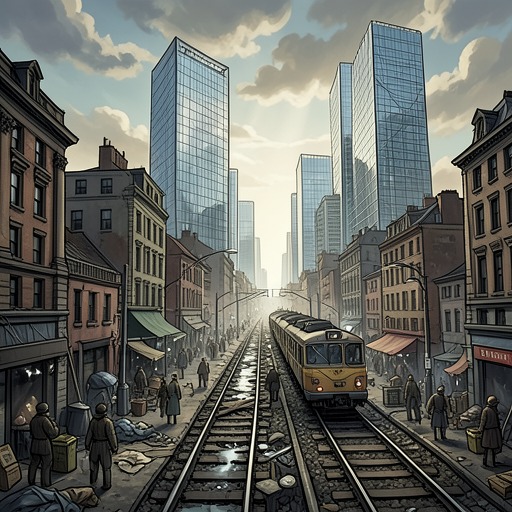
In the Sprawl, Case finds work and meets a girl who calls herself Michael. These facts establish a new routine rather than a triumphant resolution. He is no longer financially desperate, and he is no longer waiting for Molly to return, but the new life does not erase the old one. The ordinary world he re-enters is already charged by what he has seen: artificial intelligence, the matrix, altered identity, bodily repair, and the losses that accompanied freedom.
Vision, Loss, and Significance
One October night, while punching himself through the scarlet tiers of the Eastern Seaboard Fission Authority, Case sees three tiny figures standing at the edge of vast steps of data. One is a boy whose grin, pink gums, and long gray eyes recall Riviera; Linda wears Case’s jacket and waves as he passes; behind her stands a figure who is himself, with an arm across her shoulders. Near them is the laugh that is not laughter. The vision gathers together the dead, the absent, and the divided self in a single networked image, but the narrative does not settle whether it is a message, a projection, or a residue of Case’s transformed perception.
The return therefore ends in contradiction. Case has resumed work, acquired new organs and equipment, and formed a new relationship, yet he never sees Molly again. Night City rejects his attempt to reclaim it, Molly remains beyond reach, and the matrix continues to present forms of connection that ordinary life cannot confirm. In the heroic pattern of departure, ordeal, and return, the final return is deliberately incomplete: Case brings back money, technical capacity, and knowledge, but no stable community or restored intimacy. His new beginning is real precisely because it must coexist with the figures that continue to stand at the edge of his vision.