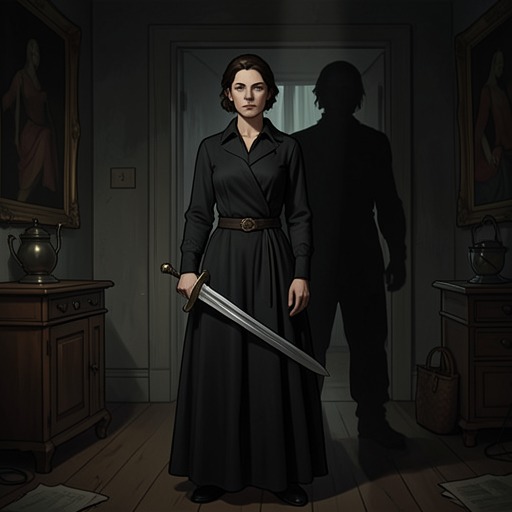
Mabel Stops Zayn from Abusing a Woman in Turilessa
NeverthelessMabel Stops Zayn from Abusing a Woman in Turilessa is a turning point in Mabel’s visit to Behrooz’s kingdom: when she encounters a woman being mistreated, she acts without waiting for permission, and her intervention brings her into direct conflict with the king’s guard. The episode makes her conduct as a soldier more than a question of formal status. In a court where royal power can silence its subjects, she responds to another person’s distress as an immediate obligation.
Setting and Stakes
The incident begins while Navi enters Behrooz’s throne hall with his men. Mabel expects that he will tell her to remain outside, and she is not looking at him as he goes in. Her attention shifts instead to a woman who has appeared again behind a column. The woman’s fearful expression and quiet approach suggest that something is wrong; Mabel takes steps toward her before Navi has returned.
Mabel recognizes the risk of acting on her own. She thinks that she could go into the hall and summon Navi, but doubts that he would believe her account. With no time to wait for him, she follows the woman through a narrow passage concealed in a gap between the walls. The route is so constricted that a person must move along it with their back against the wall, drawing their limbs through one at a time. Its hidden, difficult passage gives the rescue a particular urgency: Mabel is moving away from the court’s visible, formal space toward a danger she cannot yet see clearly.
At an opening beyond the passage, the woman has disappeared. Mabel hears a painful shout, reaches for the sword on her back, and then hears no further cry. Rather than turn away, she continues toward the sound. The account places her decision in a wider setting of fear around Behrooz’s rule: his power is associated with the taking of girls and with threats against families who ask what has happened. Mabel’s choice therefore confronts not only one guard’s actions but also the expectation that people under the king’s authority can do little to resist them.
Mabel Intervenes
At the doorway, Mabel sees Zayn striking a woman who is much smaller than he is. The woman is cowering in a corner. Zayn is about to use a whip when Mabel acts, jumping onto his back, wrapping her legs around his middle, and holding a knife to his neck. Her intervention is physical and immediate, but its motive is stated plainly afterward: she heard someone scream and could not hear it without doing anything.
That explanation distinguishes the act from an attempt to advance her position at court. Mabel says she is unimportant, and she does not identify the woman’s earlier attempt to ask her for help. The omission leaves the woman’s own appeal undisclosed to the king, even as Mabel makes clear that the distress she witnessed was enough to compel her. Her action is thus both a rescue attempt and a refusal to treat another person’s suffering as someone else’s concern.
The Confrontation in the Throne Hall
The intervention does not end with Zayn subdued. The Navon Royal Guard brings Mabel into the throne hall and throws her to the floor. Her recently injured ribs hurt when she lands. When she tries to recover, the guard lifts her by the hair; she has already struggled against him, using her agility to make it difficult for him to control her before he pulls her down. The confrontation turns the consequences of her rescue back upon her: she has intervened to protect a vulnerable woman, but now she herself is in the hands of the king’s guard.
Navi responds by pointing his sword at the guard. He knows that drawing a weapon in another ruler’s territory violates the advice he has been given, but he sees the guard holding one of his soldiers and considers the insult too serious to ignore. He threatens the guard and demands that Mabel be released. The exchange exposes the tension between diplomatic restraint and personal protection: Navi is a visiting prince negotiating with a powerful king, yet he is unwilling to let the formal rules of the visit prevent him from defending Mabel.
Behrooz ends the standoff by ordering Zayn to let her go. After the guard releases her, the king asks what she did to deserve the treatment. Zayn claims that she interrupted one of his admonitions and insists that her conduct should be punished. Behrooz refuses that demand for the moment, then asks Mabel who she is and what she was doing when Zayn found her. The dispute is no longer only between Mabel and a guard; it is now a question the king chooses to handle in public, with Navi present and ready to intervene.
Authority, Gender, and Consequences
Mabel answers that she heard a scream and could not ignore it, then asks what Zayn had been doing when she found him. Navi stiffens as she challenges the guard’s account, and his hand moves toward his sword when Behrooz shifts on the throne. The king, however, gestures for Navi to wait. He presents the episode as a misunderstanding and invites Mabel to remain and get to know the court. The invitation offers a way to contain the confrontation without admitting that Zayn’s conduct was part of a larger pattern of abuse.
The scene echoes the gendered restrictions Mabel has encountered in Navon. When she first tried to enlist in the King’s Army, the commander told her that a soldier would have to be a man; Navi later argues that she has no right to question the crown’s heir because she is only a girl. In Turilessa, those assumptions do not stop her from taking action, but they shape how others classify her: she is treated as an oddity at Behrooz’s court even after demonstrating the courage and initiative expected of a soldier. The episode joins her exclusion from formal authority to her refusal to wait for authority to act.
The action also changes the terms of Navi’s visit. He had entered the hall to deal with Behrooz as a political counterpart; Mabel’s arrival forces him to defend her while managing the danger of a confrontation on foreign territory. Behrooz’s decision to release her prevents an immediate escalation, but his framing of events as a misunderstanding leaves the underlying abuse unresolved. The episode’s central contrast remains sharp: Mabel regards a cry for help as a reason to act, while the court’s power can recast intervention as misconduct and then decide whether to excuse it.