Navon's Ban on Exiles Entering the Kingdom
NeverthelessNavon's Ban on Exiles Entering the Kingdom makes desertion a permanent rupture between a person and the country they once served. The ban is enforced through an identifying brand, exclusion from Navon, and the threat of execution for any exile caught within its borders. When Tzara threatens Navon, the rule becomes more than a punishment: it prevents willing defenders from returning to protect the homes they were forced to leave.
The Rule and Its Enforcement
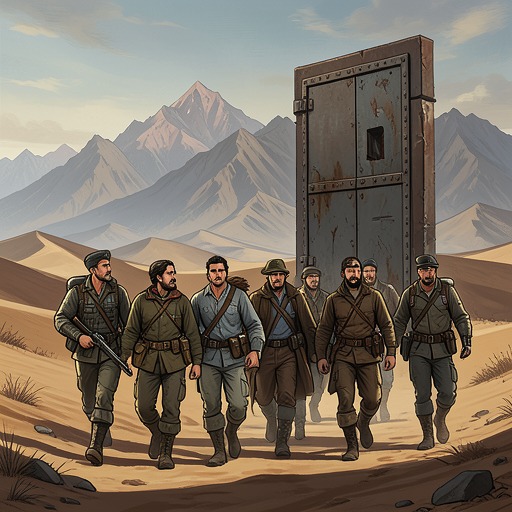
In Navon, desertion carries a sentence far beyond imprisonment. A deserter is sent to a secluded forest prison and then condemned to irrevocable exile, left outside the kingdom to survive. The account describes the exile as detached from society and expected to live beyond Navon's boundaries, where exiles may depend on attacking farms and houses for sustenance. Their expulsion is thus both a legal penalty and a forced separation from ordinary communal life.
The sentence is made visible on the body. A hot iron marks a deserter with a D at the end of the neck, identifying the person as someone barred from blending back into Navonian society. The mark serves as a portable sign of the state's judgment: it allows guards to recognize an exile and makes the border prohibition difficult to evade. If guards catch an exile on Navon soil, the stated punishment is death. The text presents the ban not as a temporary restriction that can be served out, but as a permanent status with fatal consequences for return.
Exile as a Public Identity
The rule shapes not only where former soldiers may go, but how Navon names and judges them. In the eyes of the kingdom, expelled deserters become offenders and then criminals, their past departure treated as evidence that they cannot be trusted again. When Navi considers the exiles' offer to help, he initially frames them as men who have already let Navon down. The label of deserter thus survives the circumstances that produced it and continues to determine whether a person may rejoin the community.
The exiles contest that interpretation. Alastair distinguishes many of them from ordinary criminals and argues that they left because they refused to fight battles that did not belong to them. From their perspective, Navon's old military obligations sent men to defend other kingdoms' lands for the benefit of powerful rulers; refusal brought a punishment that made return impossible. The contrast between their account and the kingdom's classification exposes the ban's reach: it fixes a legal identity even when those marked by it understand their departure as opposition to a war they considered unjust.
The Ban During the Threat to Navon
The rule's rigidity becomes especially consequential when Tzara turns its attention to Navon's land and gold. Navon had previously fought battles on behalf of other kingdoms, and deserters had left rather than serve in conflicts they regarded as someone else's. Now, for the first time, Navon itself faces a direct threat. The exiles outside the kingdom are also at risk, and some want to defend the homes and families associated with their former lives. Yet the brand and the ban prevent them from simply crossing the border and joining the defense.
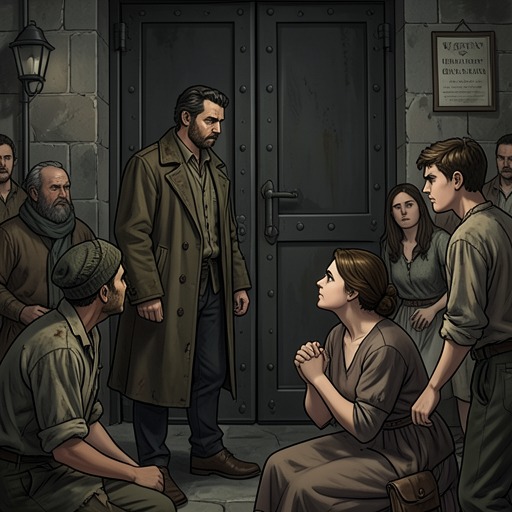
When Shai proposes speaking to the prince, Alastair points out the practical obstacle: he and Gaspar bear the mark at the end of the neck, so they cannot enter Navon. Mabel is therefore chosen to carry the message. She can cross where the branded exiles cannot, but she is not a neutral courier: she has to approach Navi despite their conflict, and the exiles' proposal depends on her getting their appeal before him. The ban makes a personal and political relationship the narrow passage through which a collective request must travel.
An Exception at the Border
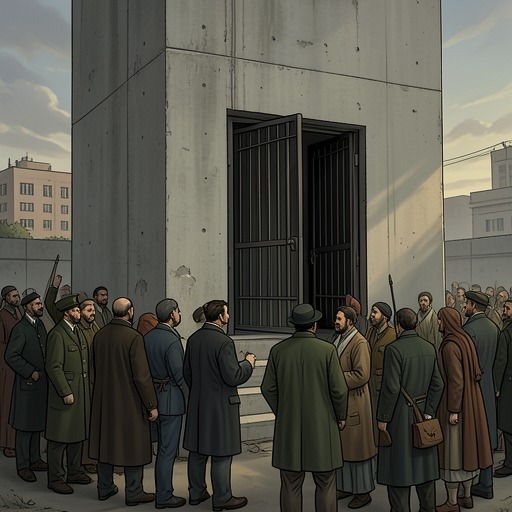
The account later shows a limited, authorized crossing. When the party returns to Navon, Shai is permitted by the prince to enter the castle, while the other exiles remain outside the city. They had wanted to accompany him in case difficulties arose; Mabel tells them there will be no complications because it is Navi. The scene does not describe the general ban as repealed. Instead, it sets an individual permission against the continuing exclusion of the group, underlining how access depends on authorization rather than on the exiles' wishes or need to return.
That boundary is part of a wider geography of guarded passage. Navon's castle stands on a hill among trees, with a stone bridge providing the approach through the forested terrain. Elsewhere in the story, Mabel takes the long road from castle to village along the river rather than simply taking a horse from the stables; routes through the kingdom are shaped by practical limits as well as formal access. At the other end of the political landscape, Tzara's border is enclosed by a vast wall that makes entry harder than departure. Against these settings, Navon's ban appears as a human border upheld by the mark and the threat of force: a return is not merely a matter of finding a road home.
The rule's central contradiction emerges when the exiles seek to defend Navon. The state that permanently excludes them needs soldiers, while those it calls criminals argue that the threatened homes are theirs to protect. Their proposed return tests whether the kingdom can recognize a changed circumstance without erasing the punishment that defines them. The branded neck, the closed border, and the single escorted messenger give that conflict a concrete form: Navon can ask for loyalty from people its law has made unable to come home.