Bird Women of Peru
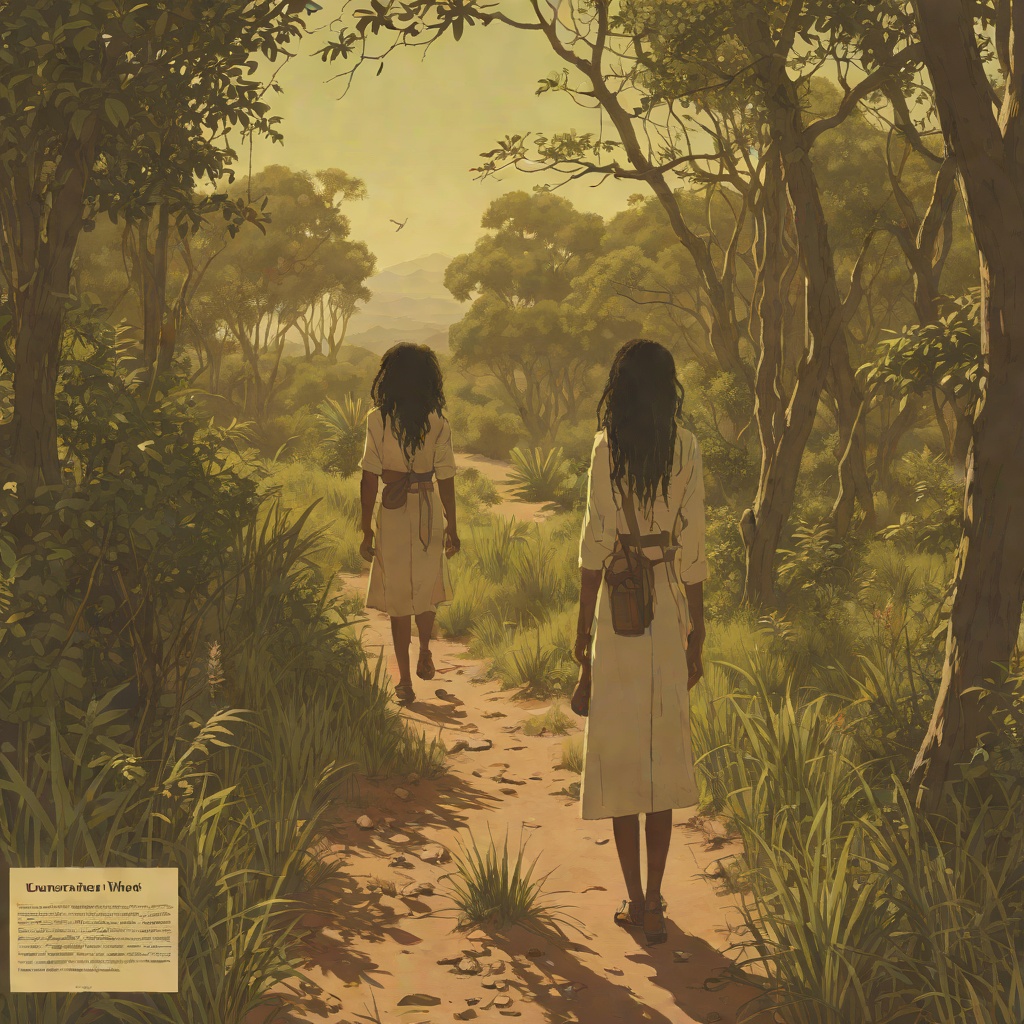
NightbitchThe Bird Women of Peru are a mythical people introduced in the first chapter of Wanda White's A Field Guide to Magical Women: A Mythical Ethnography, a book that becomes a central text in Nightbitch's life. As described by White, these women inhabit the tall, leafy boughs of the rainforest, where they construct intricate and artful nests from sticks and reeds. The book's pages depict a variety of these habitats, including a round orb with a small hole in its side perched nearly seventy feet up, and another described as an artful multilayered structure on par with the work of Andy Goldsworthy. The Bird Women feed on fruits and insects and regularly eat communally, sharing their food and squawking back and forth for hours. They are not born as such but rather sprout feathers and beaks in their sixties, and only if they have never married or had children. The precise cause of this transformation remains unclear; people in small Peruvian villages often explain the disappearances of older single women by saying they gave in to 'the calling of the birds,' gesturing toward the forest and pointing at the sky, flapping their arms as they try to explain.
Identity and Description
The Bird Women of Peru are defined by their late-life transformation and their separation from conventional female roles. They sprout feathers and beaks only in their sixties, and only if they have never married or had children. This condition ties their metamorphosis directly to the rejection of marriage and motherhood, marking them as beings who exist outside the domestic sphere. They spend the latter parts of their lives flitting from tree to tree, producing the loveliest calls, and learning how to fly. Their nests, constructed from sticks and reeds, are works of art, with one described as a round orb with a small hole in the side perched nearly seventy feet up, and another as an artful multilayered structure on par with the work of Andy Goldsworthy. They feed on fruits and insects and regularly eat communally, sharing their food and squawking back and forth for hours, a social structure that contrasts sharply with the isolated domesticity of the human mothers in Nightbitch's world.
The Twilight Flight
The defining act of the Bird Women is the 'twilight flight,' which White claims to have once witnessed. This is both the first and last flight a Bird Woman will take, for once she learns to fly, her maiden trip into the sky leads her away from the nest she has constructed and toward the horizon, to an unknown destination. All White knows is that Bird Women who learn to fly, once they depart, never return. The other Bird Women sing for days after with a sound that White describes as 'mellifluous, virtuosic weeping on par with the likes of Beethoven or Mozart, had they been birds.' This flight is a one-way journey of escape, a permanent departure from the constructed nest and the communal life, toward an unknown but chosen fate. It is the ultimate act of self-liberation, a leaving behind of all that has been built and known.
Nightbitch's Encounter and Its Significance
Nightbitch encounters the Bird Women while reading A Field Guide to Magical Women, a book she approaches with the demeanor of one observing a faith healing or a time-share sales presentation—that is, with mild, bemused interest and good-natured skepticism. Yet she keeps reading. The chapter on the Bird Women is as far as she can read before she falls asleep on the couch, and she dreams of a tree that surges with leaves and birdsong, a pyrotechnic sunset, and then an inhale, a plunge, no weight, no body, just movement and sky, an endless fall. This dream of flight and falling mirrors the Bird Women's twilight flight and foreshadows Nightbitch's own transformation. The Bird Women represent a vision of female power that is achieved through the rejection of marriage and motherhood, a path that Nightbitch herself is beginning to explore through her own metamorphosis into a dog. The book, and the Bird Women within it, become a touchstone for her, a piece of evidence in her growing belief that the constraints of her life are not inevitable, and that another way of being is possible.
Thematic Resonance with Motherhood and Transformation
The Bird Women's condition—that they transform only if they have never married or had children—stands in stark contrast to Nightbitch's own situation. She is a mother, and her transformation into a dog is not a rejection of motherhood but a radical reimagining of it. The Bird Women's escape is a flight away from the nest, while Nightbitch's transformation forces her to confront and remake the nest itself, the mid-century bungalow with its odd angles, too-narrow doors, and corners that are never right angles. The Bird Women offer a fantasy of total escape, a leaving behind of all domestic structures, while Nightbitch's journey is one of dwelling within and transforming those structures. The book becomes part of the clutter of her studio, the guest room she has claimed for herself, where she keeps the Field Guide alongside books on herb craft, taxidermy, and disruptive performance art. The Bird Women are thus not a model to be followed but a mirror that clarifies the shape of Nightbitch's own, more complicated, transformation.