
Nightbitch
Basic facts
Rachel Yoder’s Nightbitch is an American novel and her debut work of fiction. Written in English and published by Doubleday on July 20, 2021, the 256-page book is generally described as magical realism, while also drawing on black comedy, body horror, feminist fiction, and the domestic novel. Its startling premise is simple to state: a former artist who has become a stay-at-home mother begins to suspect that she is turning into a dog.
Plot and characters
The protagonist is never given a name. She is at home full-time with her two-year-old son after abandoning an emerging artistic career, and her husband travels for work during the week, leaving her to manage the child and the household largely alone. She loves her son, but motherhood has also brought exhaustion, loneliness, anxiety, and the unsettling sense that an identity once organized around art has been replaced by an endlessly repetitive series of tasks. The book takes seriously the contradiction between devotion to a child and resentment of the conditions under which that devotion is expected to operate.
After roughly a year and a half of motherhood, strange bodily changes begin. Hair grows across the mother’s body; a lump appears near her tailbone; extra nipples seem to develop on her abdomen; and her teeth appear longer and sharper. She develops a craving for raw meat and an urge to roam outside at night. When she tells her husband that she may be becoming canine, the emerging nighttime self comes to be called Nightbitch. The transformation is never reduced to a neat explanation. It can be read as supernatural, psychological, metaphorical, or all of these at once, and the novel deliberately allows ordinary domestic reality and impossible physical change to occupy the same space.
Three dogs appear on her lawn, remove her clothes, and leave dead animals outside the house. She also discovers a mysterious book about mythical women. As she begins to identify with the dog within her, she experiences a new physical power and a different way of being with her son. Her nocturnal freedom, however, does not erase the life she had before motherhood. When two old art-school friends visit, the encounter forces her to remember the career and ambitions she gave up. The central crisis consequently becomes larger than the question of whether she will turn into an animal: it is a struggle to recover a self that motherhood has not destroyed but has made difficult to see.
Themes and style
At the heart of Nightbitch is an unsentimental account of maternal ambivalence. The mother’s love is genuine, but so are her rage, boredom, fear, bodily discomfort, and desire to escape the role assigned to her. The novel challenges the ideal of the endlessly patient and selfless mother, exposing the social expectations and gendered assumptions that make domestic care appear natural, private, and emotionally effortless. Her animal transformation gives physical form to feelings that polite public life requires her to suppress.
The dog is therefore more than a horror image. It represents appetite, mobility, instinct, aggression, and a form of freedom outside the polished language of ideal motherhood. Yoder brings maternal experience back to the body: food, smell, sleep, teeth, hair, meat, mess, and motion. Black comedy keeps the book from becoming a solemn manifesto, while its grotesque scenes make the costs of isolation impossible to ignore. The unnamed protagonist’s public reassurances and private thoughts also reveal how thoroughly mothers are trained to translate distress into acceptable speech.
Yoder has described her pleasure in the novel’s long, propulsive sentences—sentences that draw readers in and do not readily let them out. That momentum suits a consciousness crowded by childcare, household routines, artistic memory, and sudden animal impulses. The prose moves between exact domestic observation and mythic or bodily strangeness, making the transformation feel at once outrageous and emotionally recognizable. The result is a novel that uses magical realism not to escape the everyday, but to tell the truth about what the everyday can feel like from inside.
Reception and lasting status
The novel was named a best book of the year by Esquire and Vulture and was a finalist for the PEN/Hemingway Award for Debut Novel. Its distinctive treatment of maternal anger, creative identity, and the pressure to perform contentment has made it a prominent work in contemporary writing about motherhood. The story was adapted into a 2024 American feature film written and directed by Marielle Heller, bringing its premise to a wider audience. Whether the metamorphosis is understood as literal magic, psychological crisis, or a feminist allegory, Nightbitch remains notable for turning an apparently monstrous transformation into a route toward agency and a more complicated understanding of love.
About the Author
Origins and education
Rachel Yoder is an American writer best known for her debut novel, Nightbitch. She grew up in an intentional Mennonite community in the Appalachian foothills of eastern Ohio. The available accounts do not identify any single childhood event as a direct source for her fiction, but this background provides an important context for a writer interested in faith, communal expectations, private feeling, and the pressures of prescribed roles. Yoder later attended Georgetown University, where she earned her undergraduate degree. She went on to study in the University of Iowa’s Nonfiction Writing Program and earned an MFA in fiction from the University of Arizona.
Her education reflects an interest in both lived experience and imaginative narrative. Yoder is also a founding editor of draft:, a journal devoted to the process of writing. That editorial work is consistent with her public interest in revision, craft, and the ways literary works take shape. Before her novel appeared, her short fiction had already received recognition: she was awarded The Missouri Review’s Editors’ Prize in Fiction, and her work received notable distinctions in Best American Short Stories and Best American Nonrequired Reading. These achievements established her presence in American literary publishing beyond the success of a single book.
Major work and literary development
Yoder’s principal published book is Nightbitch, first published by Doubleday in 2021. It is her debut novel and the major work identified in the available record. The book follows an unnamed former artist who becomes a stay-at-home mother to a two-year-old child and begins to believe that she is transforming into a dog. Combining magical realism, black comedy, body horror, and feminist social criticism, the novel examines maternal labor, creative identity, feminine rage, bodily experience, and the demand that mothers present caregiving as effortless fulfillment.
Yoder has spoken specifically about her approach to sentences. She values propulsion: a sentence that draws a reader inside and keeps moving forward. She also admires the opposite quality, the controlled and crystalline sentence that ends with a precise resonance. In discussing Nightbitch, she said she was reveling in long sentences. That formal choice suits a consciousness crowded by childcare, domestic repetition, artistic memory, and animal impulse. Her prose turns emotional and social pressures into movement, sensation, grotesque comedy, and metamorphosis, allowing the novel to remain intellectually pointed without losing its physical immediacy.
Life, recognition, and reputation
Yoder lives in Iowa City, Iowa, with her husband and son. The available material does not report a death; she is living and active as a writer as of the supplied accounts. Nightbitch was named a best book of the year by Esquire and Vulture and became a finalist for the PEN/Hemingway Award for Debut Novel. It was subsequently adapted as a 2024 feature film written and directed by Marielle Heller, extending the reach of Yoder’s work beyond literary readership.
Yoder’s reputation rests on more than the novelty of a mother becoming a dog. Her lasting importance lies in the way she gives literary form to contradictory maternal experience: attachment and resentment, tenderness and rage, responsibility and the desire for an unregulated self. By making suppressed feelings bodily and animal, she challenges idealized images of motherhood while preserving the reality of love. Nightbitch has consequently become a distinctive contemporary work in feminist grotesque fiction and in the expanding literature of motherhood, and Yoder is recognized for converting ordinary domestic pressure into an audacious, comic, and unsettling literary transformation.
StoryFlow
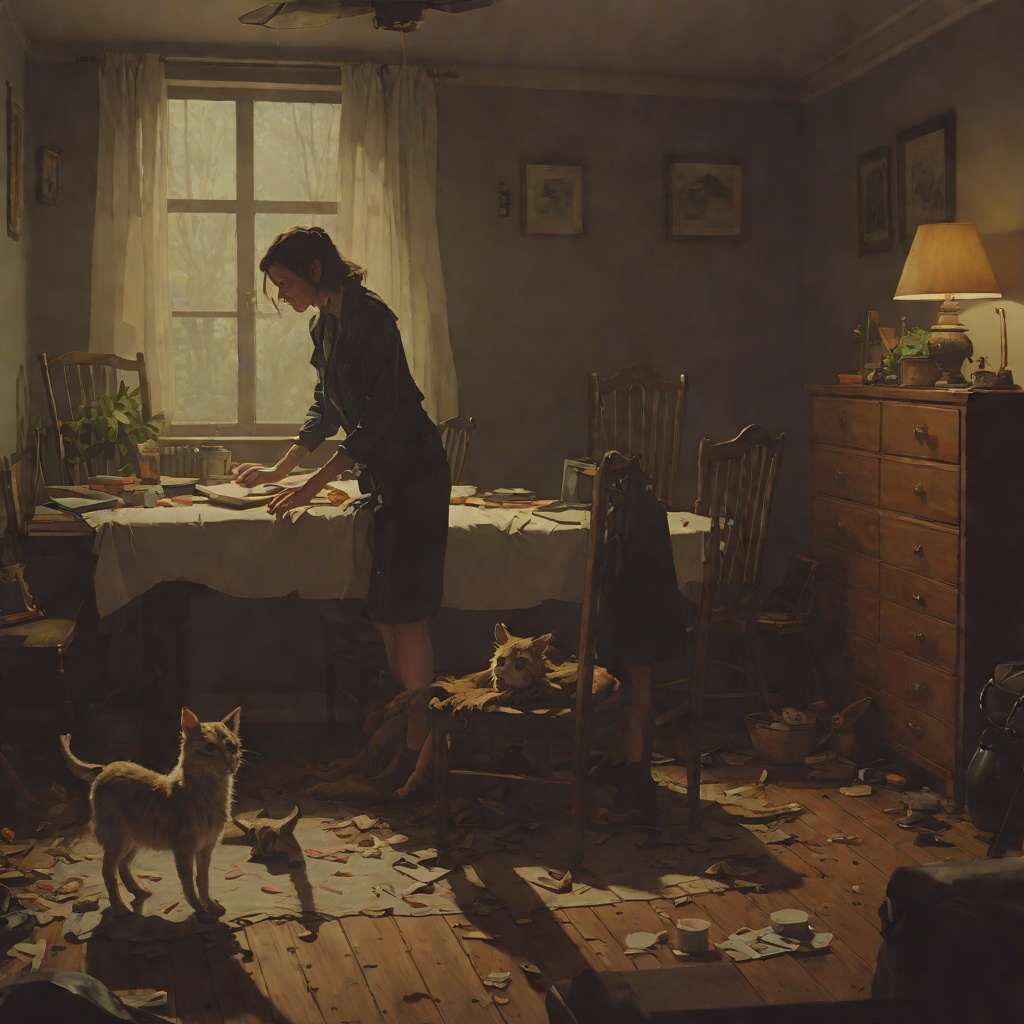
The Becoming of Nightbitch
Traces the protagonist's arc from a tired stay-at-home mother into a self-possessed animal-artist who claims the name Nightbitch as her own.

The Quest for Wanda White
Traces Nightbitch's relationship with A Field Guide to Magical Women, from library discovery to the revelation that Wanda White is a destination rather than a person.

From Secret to Spectacle
Follows the thread of concealment and exposure as Nightbitch's private transformation becomes public performance.
