WereMothers of Siberia
NightbitchWereMothers of Siberia are an elusive species of wolf-women whose collective life reframes motherhood, kinship, and animality as sources of protection rather than confinement. Described in Wanda White’s field account and imagined by Nightbitch as a radically different community, they become the clearest emblem of a world in which care is shared, bodies are not disciplined into respectability, and belonging is understood as physical interdependence.
Identity and Physical Description
WereMothers of Siberia are presented as a particularly evasive species. Their origin is uncertain, and the account notes that it is unclear how they mother cubs without males nearby. Males may not exist among them at all: there has been no empirical confirmation of their habitation in Siberia, while the WereMothers appear capable of self-fertilization. The species therefore unsettles ordinary assumptions about reproduction, heterosexual partnership, and the necessity of male participation in family life.
Their bodies combine human and canine characteristics without settling comfortably into either category. They are heavily furred and apparently pregnant, walk on all fours, and possess front paws that are not quite paws but modified hands, complete with opposable thumbs and an unsettling resemblance to human hands. Their faces are described as beautiful through the mixture itself: protruding snouts and large, soulful eyes coexist with recognizably human features. Later, their pelts appear thick as bear fur and glitter with hairs like silver. The WereMothers are thus not degraded humans or ordinary wolves, but a stable hybrid form whose physical difference is presented as coherent, capable, and even regal.
Wanda White’s Encounter
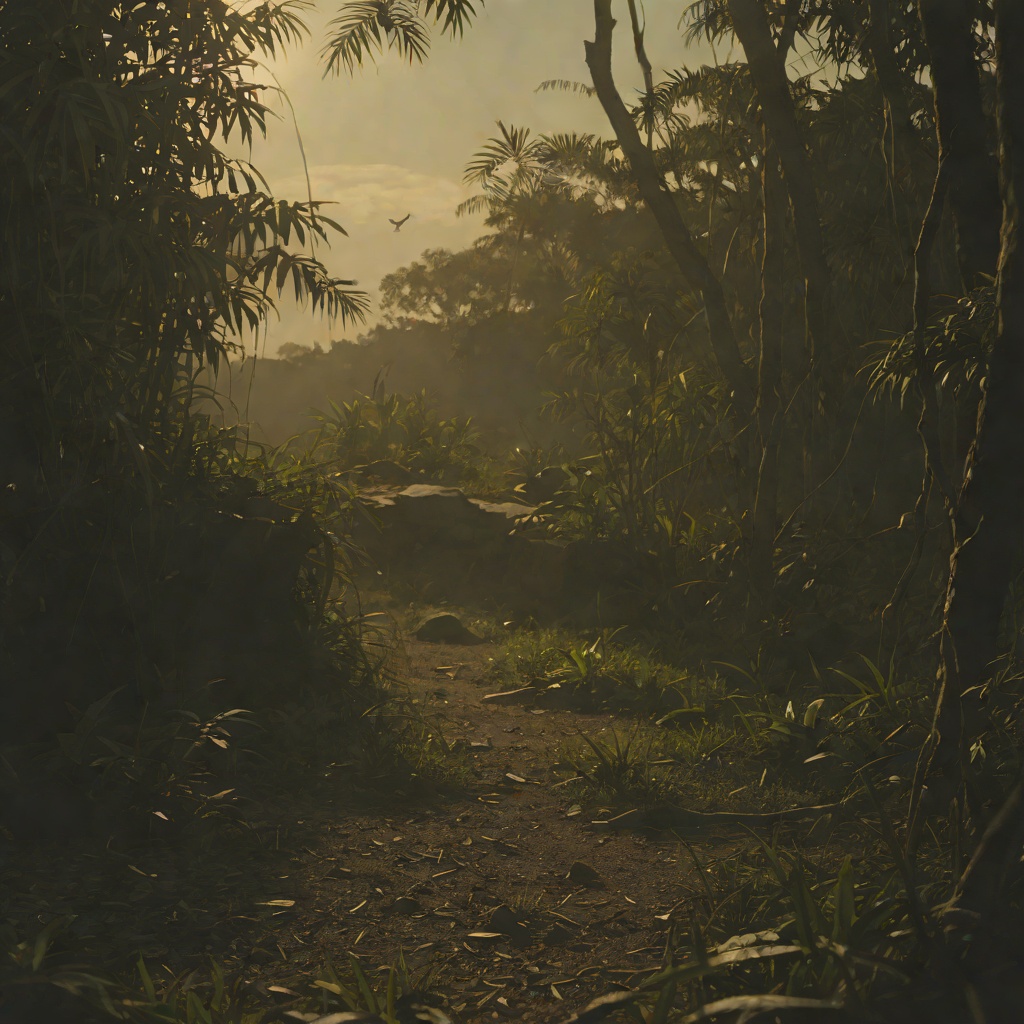
Wanda White’s account places the WereMothers in the Eastern Siberian taiga, a remote larch forest spread across permafrost and deep winter. A Soviet military helicopter leaves her near the center of the region, where temperatures can fall far below zero. Although she has provisions for three weeks and considers herself rational, hardy, and experienced in winter camping, she becomes overwhelmed by an irrational psychic malaise. Sweating, hypothermic, and wandering in sock feet beneath the early-morning moon, she loses her sense of who she is and why she is there.
In a moonlit clearing, two heavily furred, pregnant women beckon to her. Around them are between twenty and forty cubs at different stages of maturation. The creatures communicate without customary speech, apparently sending information telepathically: they identify their origins as Pripyat, Ukraine, some forty years earlier and three thousand miles to the west. The scene is presented through Wanda White’s depleted and unstable perception, yet its details are too organized to function merely as an indistinct hallucination. The WereMothers occupy a fully social world, with origins, reproduction, language, shelter, and collective practices.
The cubs immediately display the species’ defining principle of cooperation. They form a single platform, one mass moving in unison, and carry Wanda White beneath the trees to a protected cave. The group’s many bodies become transport, warmth, and architecture at once. Within the den, numerous WereMothers nest among countless cubs around a low fire. One wraps Wanda White in a thick flannel covering stuffed with down, while the cubs press beneath it to raise her core temperature. Another supplies a wooden bowl of broth. The cubs bark in a way that seems to contain words for play and a ball, and one WereMother licks Wanda White’s face with a gesture that recalls a warm cloth and her human childhood.
Communal Motherhood and Social Alternative
For Nightbitch, the most enchanting feature of the WereMothers is not simply their supernatural appearance but their social arrangement. The passage transports her mentally from the stuffy bedroom into cold, clean woods where the creatures live together and help one another in a constant state of babies. She imagines having twenty other wives with whom to share domestic life, and the fantasy immediately acquires practical as well as emotional force: with many mothers available, care might become efficient, mutual, and companionable rather than isolating.
This imagined community answers the mother-rage that has grown from working, pumping, hurrying, and failing to hold her child as she wishes. Nightbitch experiences contemporary motherhood as an immense multiplication of labor, one that pits ambition against biology and demands that a mother become less animal-like in order to count as happy, civilized, and successful. The WereMothers reverse that demand. Their animality is not a shameful remainder to be controlled but the basis of a social order suited to bodies, infants, survival, and collective need.
The contrast also reaches back to Nightbitch’s understanding of her own mother. She recalls a woman who was responsible and often distant, apparently pushing her daughter away from domestic obligations. With adulthood and motherhood, Nightbitch reinterprets that distance as her mother’s best form of love: a refusal to let another generation of women surrender every dream and call the sacrifice holy. The WereMothers offer a different solution from either abandonment or self-erasure. They preserve the intensity of maternal attachment while distributing its work across a group.
Relation to Nightbitch’s Transformation
Nightbitch’s transformation into a dog begins as a grotesque possibility that The Husband refuses to take seriously. When she names the change, he laughs, and she realizes that he cannot meet the claim with genuine inquiry. Her body, however, continues to produce evidence that escapes ordinary explanations. Later, after contact with dogs and the bodily release of hunting, she discovers an animal freedom that allows her to bark, snarl, run, hunger, rage, and act without justifying herself. The WereMothers give that freedom a social horizon.
The difference between Nightbitch’s initial animality and the WereMothers’ existence is crucial. Her first encounters with the animal world are marked by threat, violence, and solitary instinct: surrounded by dogs, she feels hair spreading, muscles rolling through her haunches, and the knowledge that she is an animal before lunging into the pack. After her first kill, she believes that what she needed was not medical attention or a better attitude but the experience of sinking her teeth into living flesh and feeling life drain away. Yet the WereMothers demonstrate that animal embodiment need not culminate in isolation or predation. It can also produce shelter, nourishment, language, and a collective body.
That possibility clarifies why Nightbitch finds the WereMothers beautiful rather than merely monstrous. She wants to reject established society for a community organized around its own needs, even if belonging requires becoming partly wolf. The question is not whether such a life is monstrous, but whether monstrosity can be a desirable departure from the systems that have made ordinary womanhood unbearable. In this sense, the WereMothers turn transformation into a choice of social form, not just a change of skin.
Narrative and Thematic Significance
The WereMothers occupy the uncertain boundary between documented ethnography and impossible tale. Wanda White speaks with the language of observation, classification, geography, and empirical caution, yet her account includes telepathy, self-fertilization, hybrid bodies, and a rescue carried out by a unified mass of cubs. The narrative never fully resolves whether the encounter belongs to natural history, supernatural knowledge, or a perception altered by cold and psychic distress. That uncertainty strengthens the species’ function: the WereMothers are not required to become scientifically acceptable before they can expose the limits of the supposedly reasonable world.
They also complicate the human-animal divide. Nightbitch’s body becomes a place where instinct and reflection, motherhood and aggression, human history and canine sensation coexist. The WereMothers extend that hybrid condition into a civilization of their own. They possess hands, language, social memory, reproductive independence, and elaborate care, but they do not need to abandon fur, paws, collective denning, or bodily dependence. Their existence suggests that humanity is not the only measure of intelligence, dignity, or social order.
The final image associated with them is one of shared warmth and indistinguishable bodies: beneath the moon, beings pile together in a cave, breathe together, dream together, and preserve one another through an unbroken lineage of togetherness. This image gives form to Nightbitch’s deepest recognition that one creature can be so much a part of another that the boundary between self and kin becomes unstable. WereMothers of Siberia therefore represent more than an imagined species. They are the place where Nightbitch’s rage at compulsory motherhood meets a vision of chosen interdependence, and where becoming animal opens not an escape from relationship but a different way to survive through it.