Nightbitch and Wanda White
NightbitchNightbitch and Wanda White is an asymmetrical relationship in which a book becomes the first medium of intimacy. Nightbitch discovers Wanda through A Field Guide to Magical Women, and the absent author gradually becomes the figure through whom she interprets bodily change, maternal rage, artistic ambition, and the possibility that the unbelievable may disclose truths ordinary rationality cannot contain.
Encounter Through the Field Guide
Nightbitch finds A Field Guide to Magical Women in a stack borrowed from The Library while she is preoccupied by sharpening teeth, a possible tail, and fur spreading down her neck. Published in 1978, the book looks at first like a collection of lurid stories about feminine monsters, but its nonfiction status makes the encounter stranger and more consequential. Wanda presents herself as a researcher of mythical women whose expedition has crossed all seven continents and whose work in mythical ethnography has been dismissed by colleagues as nonviable. She nevertheless claims to offer irrevocable data, inviting readers to learn the creatures’ habits, diets, and patterns so that they might meet them in the wild and experience their magic directly.
Wanda’s stated subject gives Nightbitch a framework for experiences that her domestic world cannot recognize. Wanda is interested in how womanhood appears on a mythical level, especially in the way motherhood complicates, deepens, or denies it. That formulation meets Nightbitch at the point where her own life has become nearly unrecognizable: she has left her career, lost the body and ambition she associated with herself, and become enraged by the social arrangements that present motherhood as natural fulfillment while loading her with unending work. The Field Guide therefore functions not merely as an object of information but as a counter-authority to the social, medical, and marital explanations that leave her feeling trapped.
Wanda as Imagined Attachment
Nightbitch soon desires Wanda with an intimacy far beyond ordinary scholarly admiration. She imagines weeping into Wanda’s powder-scented chest while the older woman strokes her hair, offering the cardiganed tenderness Nightbitch never received from Nightbitch's Mother. The fantasy is explicitly maternal: Wanda is someone who might baby her, shelter her, and recognize the private reality beneath her rage. The relationship thus reverses the direction of care demanded by motherhood. Nightbitch, who is continually needed by The Boy, longs to be held by an older woman who asks nothing of her except that she be understood.
Wanda’s authority is also intellectual and spiritual. Nightbitch believes the Field Guide possesses magical properties and that its passages answer her thoughts with uncanny precision. She has no evidence of a personal bond beyond the battered volume and a contact page, yet she treats the book as a living conversation. This confidence is not presented as simple credulity. The narrative places Wanda within Nightbitch’s struggle over what counts as knowledge: her intuition and feelings are dismissed as unbelievable, while the animal sensations transforming her body feel more truthful than the explanations available to her. Wanda becomes the imagined witness who could validate both.
Letters, Longing, and Self-Reconstruction
Nightbitch begins writing to Wanda after the dogs’ disturbing presence and her own animal response intensify her need for interpretation. In her first letter, she asks whether Wanda’s research is scientifically and rationally true or whether it is scholarship designed to expose the limits of knowledge and science’s failure to describe the whole world. She notes that Wanda belongs to the Philosophy Department at the University of Sacramento, turning a practical university contact into an opening toward a philosophical and existential exchange.
The letters are less a reliable correspondence than a form of self-making. Nightbitch explains that before The Boy she had imagined an entire artistic life: museums with echoing rooms and dustless floors, a sun-washed studio, interesting projects, friends with taste, European travel, and summer residencies. By addressing Wanda, she can narrate the distance between that imagined life and her present condition without reducing the conflict to a private failure. Her writing places motherhood, work, biology, capitalism, patriarchy, religion, gender roles, and artistic ambition within the same field of inquiry. The correspondence gives shape to a self that has been scattered by domestic labor.
When Wanda does not reply, Nightbitch’s attachment becomes more urgent rather than less. She waits with the fervor of a heartsick teenager, writes again, and describes herself as spiritually compelled to know the person whose book has spoken so intimately to her most private thoughts and desires. She asks whether Wanda has ever met a suburban American housewife or a mother in a small Midwestern town marked by an animalesque quality: unusually hairy, aggressive, prone to howling, yet not mentally ill, merely willing to embrace doglike playfulness in motherhood. The question is simultaneously an appeal for recognition and a disguised self-disclosure. Nightbitch wants Wanda to confirm that such a woman exists and, if she does, to put them in contact.
The repeated letters eventually resemble prayer more than correspondence. Each morning Nightbitch rises to look for a response; each night she moves the sewing machine aside and writes another message. Wanda has become a person Nightbitch believes in without evidence, an absent recipient who nevertheless organizes her days and gives her desire a direction. The silence is structurally important: because Wanda does not answer, Nightbitch must supply the relationship’s reciprocity herself, making the imagined Wanda carry whatever reassurance, guidance, and maternal tenderness the real world withholds.
From Person to Place
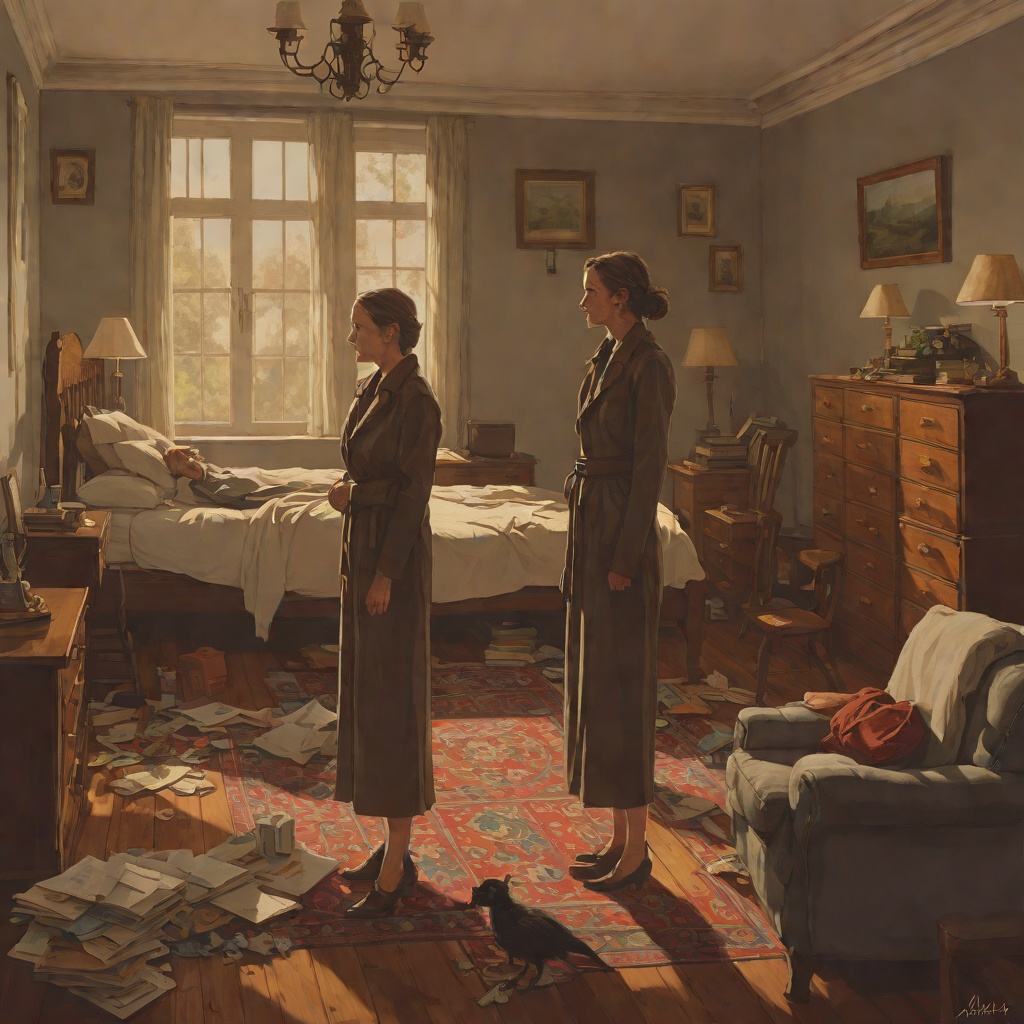
Nightbitch later sees a slim, lithe woman with silver hair, a cloak-like presence, a shirtdress, sensible shoes, and a straw hat standing at the far edge of The Dog Park with a notebook. Because the figure matches the Wanda she has imagined, Nightbitch runs toward her in jubilation, convinced that she has finally found Wanda White. The scene exposes the gap between recognition and proof: the woman is distant, engaged in observing the doggy trio, and identified by Nightbitch through desire before any exchange can establish her identity.
The apparent meeting does not resolve the relationship into ordinary friendship or mentorship. Instead, the story transforms Wanda’s status. Wanda White is not ultimately a person whom Nightbitch can locate, question, or possess; she becomes a place at which a person finally arrives. This formulation preserves the force of the search while refusing a conventional revelation in which the missing author simply appears and explains everything. Wanda names a threshold: the point beyond the curtain where Nightbitch’s animal identity, maternal rage, and artistic self can enter a new public form.
Wanda’s Legacy in Nightbitch’s Public Work
Although Wanda remains unavailable as a verifiable individual, her influence becomes materially visible. Nightbitch’s fans wear pins asking where do you go at night? alongside the image of a ferocious dog about to attack, and Jen turns Wanda’s book and Nightbitch’s persona into a public campaign. Sales of the once-out-of-print Field Guide skyrocket, yet no reporter can find Wanda White. The University of Sacramento proves to have been a short-lived institution no longer operating, while Wanda survives only as an online profile at a defunct school.
This disappearance retrospectively changes the relationship without erasing it. Wanda may have been an author, an invented persona, a magical intermediary, or a destination produced by Nightbitch’s own longing; the text does not settle the matter into a rational explanation. What remains certain is the work the figure performs. Wanda gives Nightbitch permission to treat motherhood as both violence and power, to regard women as animals without surrendering their dignity, and to imagine transformation as knowledge rather than pathology. In the final public image, Nightbitch stands behind a heavy velvet curtain before ascending toward whatever lies beyond the darkness and stage. Wanda’s absence has become the condition of that arrival: not a failed meeting, but the name of the passage through which Nightbitch makes herself legible.