Nightbitch and her mother
NightbitchNightbitch and her mother form the novel's deepest and most transformative bond, a relationship that begins in distance and misunderstanding and ends in a profound, almost mystical recognition. At the start of the story, Nightbitch's mother is a remote figure, living hundreds of miles away in the Appalachian foothills, rarely calling, and when she does, speaking only of the garden and the weather, the shortening days, and their dire need for rain. This emotional distance is compounded by a deliberate forgetting on Nightbitch's part: she has purposefully erased her childhood memories, believing that to forget her childhood meant she had survived it. Yet as Nightbitch's own body begins to transform into a dog, these buried memories resurface, and the relationship is re-examined through the lens of her own motherhood and rage.
The Distant Mother and the Daughter's Longing
In the present of the novel, Nightbitch's mother is characterized by absence and silence. When Nightbitch, pregnant and frightened, once tried to talk to her about childbirth, her mother offered only the cryptic consolation, "It's called labor because it's hard work," which Nightbitch understood as a grim acknowledgment that pain is a woman's lot, to be endured in silence. This exchange encapsulates the mother's inability or unwillingness to provide emotional support, leaving Nightbitch with a profound longing for guidance. At a playground, she nearly weeps at the thought of sitting across from an older woman who had played "doggies" with her own son, desperate to ask her countless questions about how to be happy and fulfilled, to learn the secrets of motherhood. Her own mother, far away and unreachable, offers no such wisdom, and Nightbitch's yearning for a maternal figure who can validate her experience remains unfulfilled in the present.
The Appalachian Childhood and the Mother's Hidden Self
Nightbitch's memories of her childhood in the old German ways of the Appalachian foothills reveal a mother who was both extraordinary and suppressed. Her mother had wanted to be an opera singer, with a voice that "soared up above everything and took the air up there to transform it into something sharp and translucent and perfect." Instead, she covered her hair, went to church, and sang four-part harmonies each Sunday, believing it a virtue to blend in and put the group above oneself. A big-city cousin, moved to tears by her solo at a Wednesday-night service, offered to become her patron and send her to the best vocal school in Europe, handing her a little white card. She kept the card hidden in the base of a music box on her dresser, for her family thought the dream of singing in Europe was the height of stupidity and vanity. She promised herself she would do it when she grew up, but "little did she know," as she would tell the story, laughing longer and harder than seemed called for when her daughter asked, "Know what? Know what?"
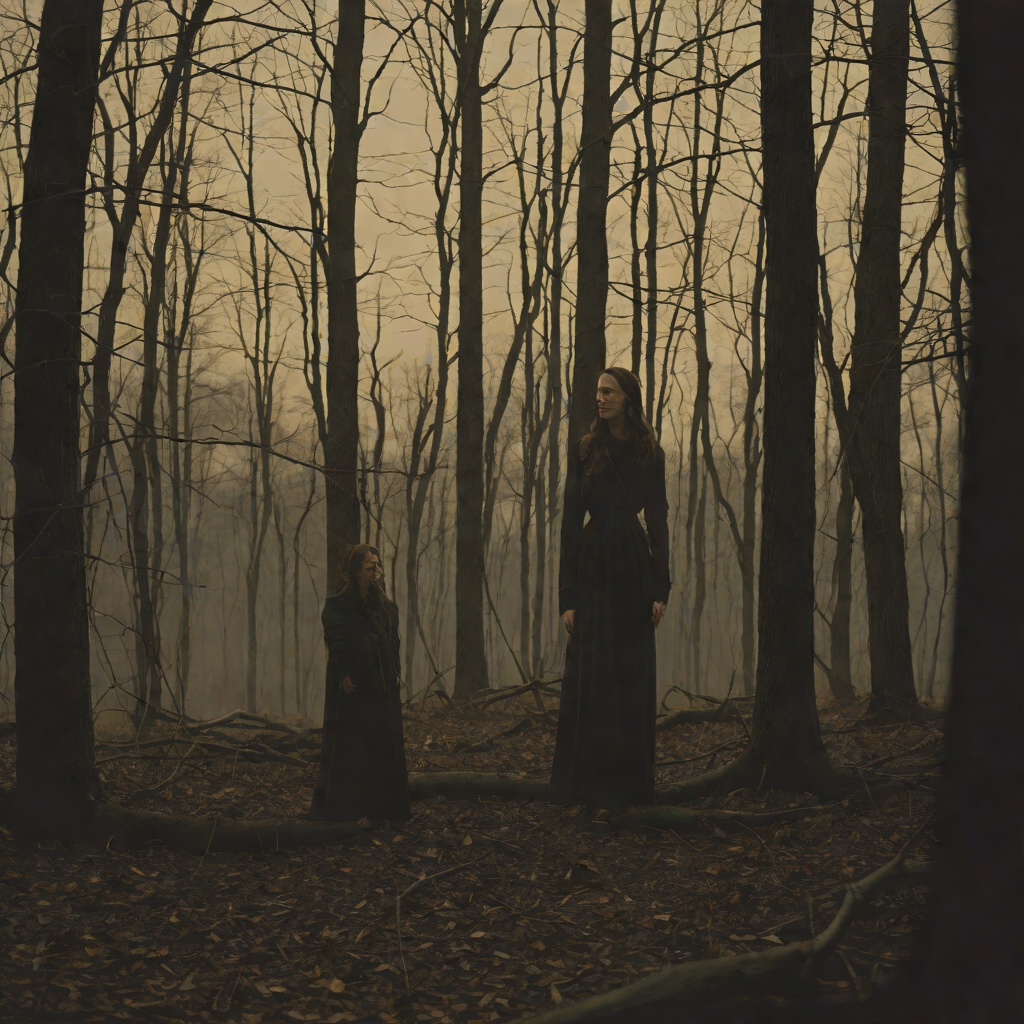
Even after her mother birthed a perfect baby girl, there was talk of Europe, so much talk it almost turned evil, threatening to tip into the terrain of the self-involved. Her father, a fine man, reminded her that the individual was of little import to the church. Nightbitch remembers warm summer nights when her mother sat barefoot on the lawn, a record player spilling opera over the black grass and unmoving trees, and that is how the girl fell asleep each night, with opera unspooling through the open windows. One night, the girl dreamed her mother was set upon by foxes, raccoons, and wolves, and that her mother meowed like a kitten, petting each animal lovingly as it pulled her apart. The girl woke heaving and went down to find her mother still on the lawn, unmoving, and feared her dead. When she called her name, her mother sat up with a start and wiped her face, insisting, "I'm not crying. I'm tired. Go to bed." This dream, with its image of a woman torn apart by the very creatures she loves, becomes a haunting metaphor for the mother's life of self-sacrifice.
The Mother's Best Love and the Great Forgetting
Nightbitch's mother was "good and responsible and holy and always somewhere far away in her own head, or with a headache, or napping, or just, please, leave me alone." She pushed her daughter out the door, away and away, go fast, and Nightbitch had always interpreted this as abandonment. But in a moment of revelation, she sees it for what it was: her mother's best love. She realizes that her mother, by pushing her out into the world, was trying to give her the freedom she herself never had. This recognition is accompanied by a broader indictment of a society that praises women for giving up their dreams, calling such sacrifice holy or selfless. Nightbitch asks, "How many generations of women had delayed their greatness only to have time extinguish it completely? How many women had run out of time while the men didn't know what to do with theirs?" The mother's life becomes a case study in this tragedy, and Nightbitch's anger at her mother transforms into anger at the system that crushed her.
The Reckoning and the Desire to Save Her Mother
As Nightbitch's own transformation into a dog progresses, she grows irate, not exactly with her husband but definitely generally with him, realizing that she had only ever had to ask for help, and that it was easy. This realization leads her back to her mother, lying in the dark grass on warm summer nights, and she wants to pull her up, take her by the shoulders, and shake her with both love and great anger. She imagines saying, "Look at you! You're amazing! You're my mother! Why are you acting like this? Go to Europe. Insist on your joy. Time is short, and you must make great haste, not only for yourself but for me as well." She wants to save her mother, and she sees now that she has always wanted this. This desire to save her mother is intertwined with her own struggle to reclaim her own joy and power, as she recognizes that her mother's sacrifice was not a choice but a submission to a patriarchal and religious order that demanded women put themselves last.
The Future and the Unbroken Lineage
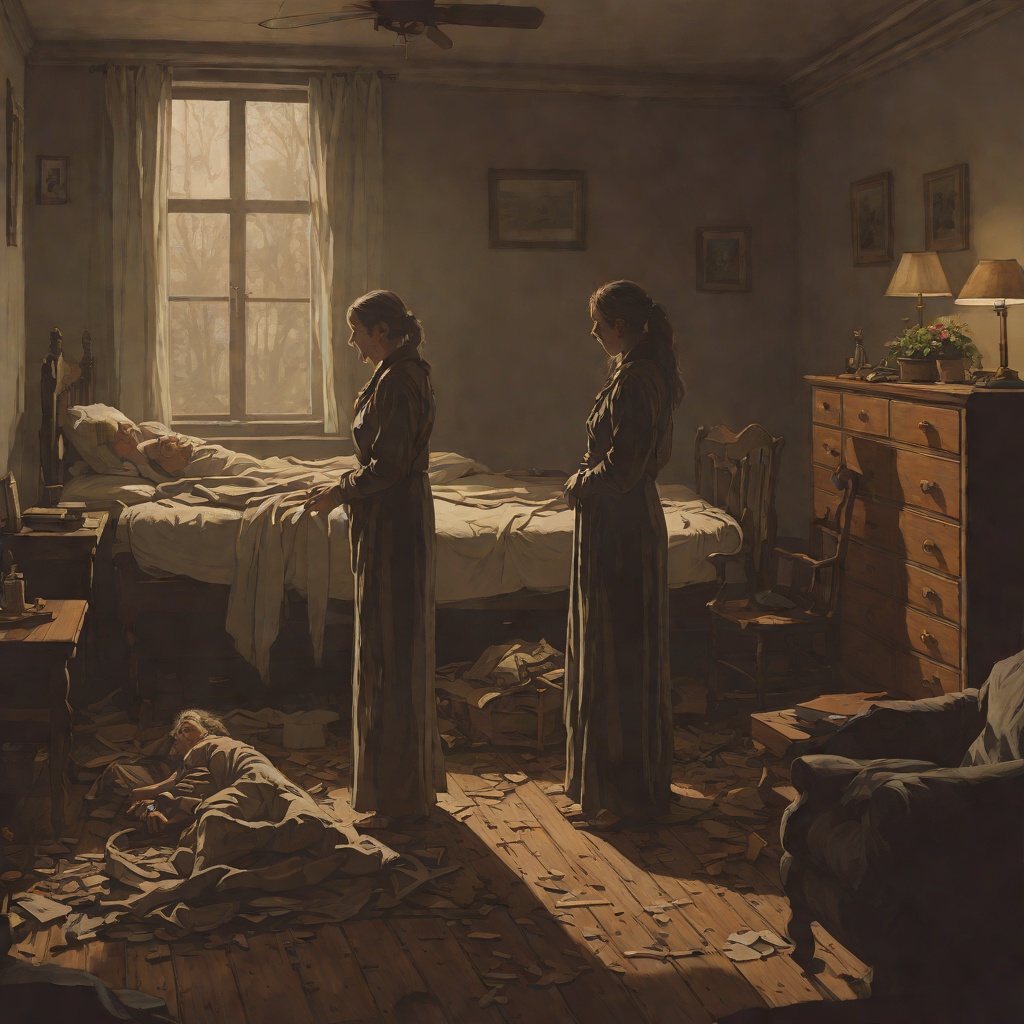
In a later moment of reflection, Nightbitch considers the future when she might be called upon to care for her parents, who are still in wonderful health in their seventies but will certainly at some point make a turn for the worse. She imagines them living in the guest room, emerging each morning skinny and rumple-haired, sitting down for breakfast next to her son for pancakes and vitamins, napping like infants in the morning and afternoon. She imagines bathing and changing them near the end, and though this would certainly be a burden, she finds that a place of great love has opened in her heart, which looks on such tasks with gratitude and reverence when done by choice rather than by inertia. To cleanse her mother's back lovingly with a warm cloth, to suds her father's thin hair—it would be an honor to nurse them, for they are parts of her. This vision of care is a far cry from the distant, resentful relationship of the novel's opening, and it signals a reconciliation not only with her mother but with the entire lineage of women who came before her.
This must be what it means to be an animal, Nightbitch reflects: to look at another and say, "I am so much that other thing that we are part of one another. Here is my skin. Here yours. Beneath the moon, we pile inside the warm cave, becoming one creature to save our warmth. We breathe together and dream together." This is how it has always been and how it will continue to be, an unbroken lineage of togetherness that keeps each other alive. The relationship between Nightbitch and her mother thus moves from a story of abandonment and silence to one of recognition and love, a bond that transcends the individual and becomes a model for the animal, communal, and maternal connections that define the novel's vision of life.