Great Recession
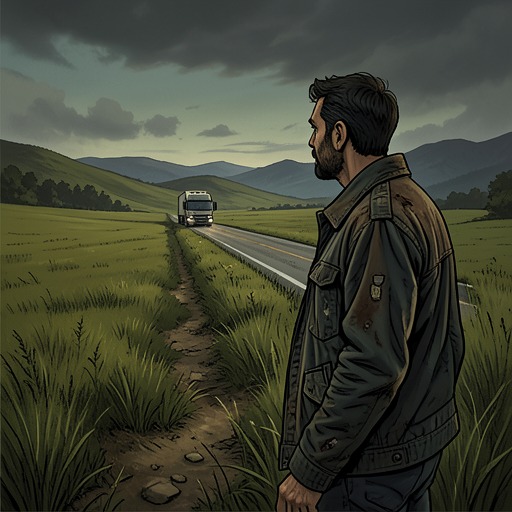
NomadlandThe Great Recession is presented as more than a financial downturn: it is the rupture that pushed many Americans out of conventional housing and stable expectations, while making seasonal work and vehicle dwelling ways to keep going. The book follows its effects from lost savings and foreclosures to Amazon warehouse jobs, insecure retirement, and the improvised support networks that helped people survive. For some, leaving a house for life on wheels began as a last resort; the road’s promise of opportunity offered hope, but did not undo the economic losses that had sent them there.
Economic shock and displacement
The recession’s consequences appear across the lives of people who entered workamping with very different histories. Some workers had watched personal savings disappear through bad investments or had seen their 401(k) accounts erode in the 2008 market crash. Others lacked savings enough to absorb divorce, illness, or injury. Layoffs and failed small businesses brought still more people into seasonal labor. Younger workers were also present: some had lost jobs, others had never found them, and student debt combined with degrees that proved to have little practical value. For many, life on the road represented an escape from what otherwise seemed an empty future.
Foreclosure made the change especially tangible. Phil DePeal and his wife, Robin, began workamping after the market crash and the bank’s foreclosure on their home. Rising commodity prices and intense competition had also undermined Phil’s Michigan scrap-metal hauling business, We-R-Junk. The couple moved into a fifth-wheel trailer pulled by a 1993 Dodge pickup. Their experience gives the book’s wider pattern a concrete shape: the loss of a home did not necessarily end someone’s working life, but it could redirect that life toward physically demanding jobs, temporary housing, and continual movement.
The narrator found similar financial troubles among dozens of Amazon CamperForce workers in Nevada, Kansas, and Kentucky. Their circumstances could resemble those of refugees from a jobless recovery: people pushed out of the traditional workforce and gathered in places of last resort. The workers’ stories varied, but the repeated losses—investments, employment, businesses, or homes—showed how a broad economic crisis could become a series of private emergencies.
Seasonal work as an aftermath
Amazon CamperForce began as an experiment that coincided with the housing crash. Amazon had struggled to staff its far-flung warehouses for the Christmas rush and had tried different recruitment arrangements, including bringing workers by bus from several hours away. In 2008, Express Employment Professionals brought RVers to Amazon’s Coffeyville, Kansas, warehouse for the pre-Christmas season. After a positive response, Amazon gave the program the CamperForce name, expanded it to Fernley and Campbellsville, and later hired workers directly rather than through temporary agencies. Small groups of experienced workers, called away teams, were subsequently sent to train staff at newly opened facilities.
This arrangement made the vehicle-dwelling workers useful precisely because they could move with seasonal demand. They arrived with their homes and supplied labor where it was needed, then left when the work ended. Their temporary camps could function like short-lived company towns, but their impermanence also limited the time available to organize. Physically difficult shifts left many too tired to socialize. The jobs offered income after other sources had failed, yet their temporary structure did not replace the security of a lost home or a dependable career.
The recession therefore appears not only in the stories of individuals who lost assets, but in the fit between those losses and a labor system built around mobility. For workers without savings or stable employment, bringing a trailer to a warehouse could make a job possible. For employers, it offered seasonal staff who could arrive when demand rose. The same arrangement that opened a route to work left workers responsible for their own housing and dependent on the next hiring cycle.
Retirement insecurity and accumulated risk
The downward mobility of older workers is one of the book’s clearest measures of the recession’s reach. Their circumstances would have seemed nearly unimaginable in the era associated with Empire’s stable jobs and pensions. Monique Morrissey of the Economic Policy Institute described the change as an unprecedented reversal in retirement security: younger generations, beginning with younger baby boomers, were increasingly less able to retire without a decline in living standards.
The figures cited in the book underline the change. Nearly nine million Americans aged sixty-five and older were still employed in 2016, a 60 percent increase over the preceding decade. Economists expected both that number and the proportion of seniors in the labor force to continue rising. Although most older Americans still regarded retirement as a time of leisure, only 17 percent anticipated that they would not work at all in later life. Continued employment was not simply a matter of personal preference; for many, it reflected the erosion of the means to stop working.
The book places this insecurity within a longer history. The Great Depression helped produce the American retirement system, as widespread unemployment and poverty among older people prompted new forms of public provision. After the New Deal, retirement finance was often described as a three-legged stool: Social Security, private pensions, and personal savings and investments. The recession damaged the savings and investments leg, while the longer move from employer-funded defined-benefit pensions toward 401(k) plans had shifted more responsibility onto workers. Such plans could run out before the end of a person’s life, and companies could provide them at lower cost than traditional pensions. The Great Recession thus intensified a change already under way: economic risk once shared more broadly was increasingly borne by families, whose resources could prove fragile.
Survival, mutual aid, and the road
The effects of economic loss do not end with the search for work. Many people who left conventional housing worked long hours in hard physical jobs to keep fuel in their vehicles and food on the table. They used laundromats and fitness-club showers, and the narrator describes them as often middle class in appearance and outlook. Their change in housing could be read as a survival strategy in a period of flat wages and rising housing costs, not as evidence that hardship had disappeared.
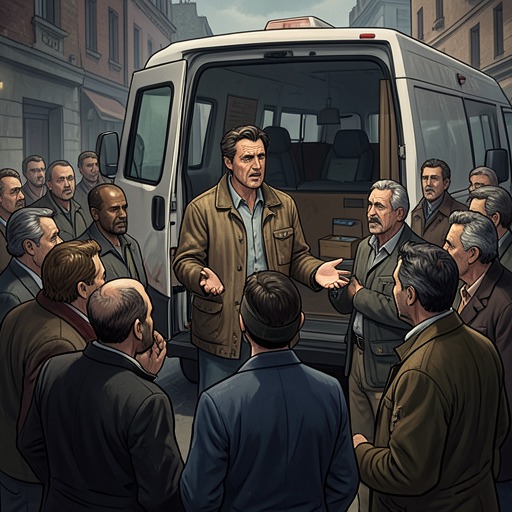
The road also offered forms of assistance that formal security had not supplied. At the Rubber Tramp Rendezvous, people shared practical skills and resources: mechanics taught basic repairs, carpenters built furnishings for vans, and people with large solar panels made excess power available to others. Lesa NeSmith revived a practice of making morning coffee for whoever came by. Group meals gathered ingredients contributed by many participants. These exchanges did not restore savings or guarantee steady employment, but they helped turn shared precarity into a functioning social network.
That support recurs in smaller acts of care. In Quartzsite, after Kat and Mike ran out of fuel while trying to keep warm, Vincent drove them into town to refill a fuel jug. They returned with food from the local food bank, including apples, sausages, and a large bag of salad. When Linda later fell ill with bronchitis in Ehrenberg, neighbors brought her food because she was too weak to cook. Such acts connect the book’s account of economic vulnerability to its portrait of community: mobility could leave people exposed, but it could also bring them into contact with others who understood the same precarious conditions.
The recession’s lasting significance lies in this double movement. It narrowed the margin between ordinary difficulty and housing or financial crisis, especially for people whose savings, jobs, or retirement provisions failed. Yet the book does not portray those who took to the road only as casualties. Their work, movement, and mutual aid offered ways to endure and, sometimes, to imagine a future beyond immediate subsistence. The hope attached to the next job or the next encounter remains real, but it rests on a fragile foundation: a society in which survival increasingly depends on personal improvisation and the help people can find along the way.