March 27, 1964
The Alaska Earthquake
When [Bob Wells](entity:character-recall-character-bob-wells-5e6a6a0057ee) was six, the Great Alaska Earthquake tore through Anchorage. He remembered darkness, freezing weather, aftershocks, and houses seeming to explode when leaking gas ignited.
The disaster taught Bob how quickly a familiar life could disappear. Years later, that memory would echo in his search for security beyond conventional housing.
Linda’s childhood
Linda’s Childhood Upheaval
[Linda May](entity:character-recall-character-linda-may-9153fbf4f2db) grew up amid frequent moves, her father’s drinking, and her mother’s chronic depression. The family shifted between apartments and, at one point, traveled across the country crowded into a flatbed truck with their belongings and dog.
Her father’s violence worsened as Linda grew older. After witnessing him abuse her mother, she made herself a promise that she would never accept that kind of life for herself.
Linda’s adolescence and early adulthood
A Promise of Independence
Undiagnosed dyslexia made school difficult for Linda, who felt that others mistook her struggle for a lack of effort. She eventually earned a GED, a construction technology certificate, and an associate’s degree, then moved through a striking range of jobs.
She also raised two daughters mostly on her own. The combination of responsibility and hard work became a pattern: Linda repeatedly adapted to unstable circumstances, but never found lasting financial security.
Late adolescence through her adulthood
Linda’s Years of Drinking
Linda’s father introduced her to alcohol while she was still in high school, turning late-night drinking into a ritual they shared. As an adult, she became a busy, high-functioning alcoholic and briefly used meth to sustain her drinking.
After an all-night binge, she returned home to find her daughters’ silent disappointment waiting for her. Their faces made the damage unmistakable, and Linda recommitted herself to quitting.
Around 1990
Linda’s Sobriety
Linda leaned on [Alcoholics Anonymous](entity:organization-recall-organization-alcoholics-anony-6880f11c6939) and her sponsor as she tried again to stop drinking. Her sponsor helped her break overwhelming tasks into small, immediate steps, a method that later helped her endure demanding warehouse shifts.
The effort held. Linda would later mark decades of sobriety as a source of gratitude, knowing that her grandchildren had always had a sober grandmother.
Early 1990s
A Shop and a Second Chance
In Bullhead City, Linda ran a carpet and tile business. She welcomed homeless men who came to use an outdoor water spigot and even made overnight visitors unofficial night watchmen, giving one former tree trimmer help securing city cleanup contracts.
The business failed after her partner concealed profits, and the worker she had helped abandoned the jobs. Linda responded by taking on the physical labor herself, mowing and clearing lots in extreme desert heat.
After the flooring business failed
Casino Work in Laughlin
Linda left the punishing outdoor cleanup work for a job selling cigarettes, candy, and flowers at the [Riverside Casino](entity:location-recall-location-riverside-casino-9fd9fc59768a). She bought merchandise wholesale, earned tips, and sometimes made several hundred dollars on a good night.
When vending machines made her position obsolete, Linda asked which casino jobs paid best and chose cocktail waitressing. She remembered the work fondly, but her prospects for comparable jobs diminished as she aged.
Around a decade before her first season on the road
The Earthship Dream
Linda became captivated by Earthships, self-sufficient homes made with recycled materials and designed to collect water, generate power, and regulate temperature. She imagined building one with her own hands as both a retirement plan and a lasting gift to her children and grandchildren.
She gathered plans and photographs in a binder, but low wages and rent left little money for land or construction. The dream became a question of how to keep earning while cutting her costs enough to make it possible.
After Bob’s divorce in 1995
Bob’s First Home on Wheels
After a painful divorce and mounting credit-card debt, [Bob Wells](entity:character-recall-character-bob-wells-5e6a6a0057ee) could not afford both support for his former family and an apartment near his Safeway job. He began sleeping in a small pickup camper during the workweek, then bought an ugly box truck for the same amount as his remaining savings.
At first, living in the truck felt like rock bottom. He wept in the empty space, convinced that a working father reduced to vehicle living had failed.
The late 1990s
The Box Truck Becomes Home
Bob slowly transformed the box truck into a home, adding bunks, a recliner, shelves, a stove, insulation, heat, electricity, and eventually a television. His sons visited, and the truck became a workable base from which he could remain close to his children and job.
Without rent and utility bills, Bob found himself happier than he had expected. When the engine failed, he sold his land and used part of the proceeds to repair it, choosing to keep living on the road.
November 2000 to early 2002
Online Van Dwellers Gather
A user calling himself lance5g opened a Yahoo message board to share practical advice about living in a van. He posted an introductory guide and then disappeared, leaving the small online community to grow without him.
As Yahoo prepared to move its message boards, [Ghost Dancer](entity:character-recall-character-ghost-dancer-9543eab08f8a) created [Live in Your Van 2](entity:organization-recall-organization-live-in-your-van-8e71f373e7ab) from a pay phone and a jury-rigged internet connection. The gathering place survived the transition and became a growing source of friendship and practical knowledge for nomads.
2005
CheapRVLiving Begins
[Bob Wells](entity:character-recall-character-bob-wells-5e6a6a0057ee) launched CheapRVLiving.com as a practical guide to living in vehicles cheaply. He argued that eliminating housing costs could turn a desperate measure into a route toward freedom, and he shared budgets, equipment advice, and strategies for finding places to park.
After the [Great Recession](entity:time-recall-time-great-recession-04a7c2c032d8), the site drew people who had lost jobs, savings, or homes. Bob told them that following society’s rules had not guaranteed security and that a simpler mobile life could be more than a temporary retreat.
Before December 2010
Empire’s Company-Town Life
In [Empire, Nevada](entity:location-recall-location-empire-nevada-1f18170cc059), [United States Gypsum Company](entity:organization-recall-organization-united-states-gy-94f7fe542dbe) supported a town whose workers could rent modest homes cheaply and rely on steady factory jobs. Residents described a close-knit community of unlocked doors, potlucks, and neighbors who knew one another.
The town represented a version of working-class security that seemed increasingly remote elsewhere. When the drywall market collapsed, that shared stability proved entirely dependent on the company’s continued presence.
Thanksgiving Day, 2010
Linda’s Thanksgiving Crisis
Living in a trailer in [New River, Arizona](entity:location-recall-location-new-river-arizona-53f547df4e27), Linda had no electricity or running water and could not find work. Her unemployment benefits had ended, and there was no room for her in her daughter’s crowded apartment.
Alone in the dark, she imagined drinking, turning on the propane, and ending her life. The thought of harming her dogs stopped her; instead, she accepted a friend’s invitation to [Thanksgiving](entity:time-recall-time-thanksgiving-060be728c565) dinner. The moment showed her how urgently her life had to change.
December 2, 2010
Empire Is Ordered Closed
At a mandatory meeting, [United States Gypsum Company](entity:organization-recall-organization-united-states-gy-94f7fe542dbe) told Empire’s workers that the factory and town would close. Employees had until the following June to leave, which meant losing not only their jobs but also their company-provided homes.
Longtime workers watched the production line fall silent and worried over where their families would go. The closure made visible how quickly a town built around reliable employment could be erased when the market no longer supported its industry.
2011
Empire’s People Disperse
After the closure, some Empire workers moved to nearby gold mines, while others struggled to find new work. The town was eventually sealed behind gates, and its houses, churches, pool, post office, and golf course were left to decay.
The abandoned community became a sharp contrast with the temporary settlements forming near [Fernley](entity:location-recall-location-738a56d6ab4c), where itinerant workers came to fill seasonal warehouse jobs. One kind of company town vanished as another, made of workers’ own mobile homes, took shape.
2010 to 2012
Linda Faces the Cost of Aging
Linda struggled to make ends meet in a rented trailer in [Lake Elsinore](entity:location-recall-location-lake-elsinore-4366b89277e3) while working as a Home Depot cashier for an inconsistent schedule. Despite her construction education and experience, she was given entry-level work and suspected age discrimination was narrowing her options.
When she examined her Social Security statement, she learned the benefit would be only about five hundred dollars a month. With no pension and almost no savings, she could not see how she would ever stop working or avoid becoming a burden to her children.
2008 through the early 2010s
A Community of Nomads
The financial crisis pushed more people toward vehicle living, while blogs, online forums, and social media helped them exchange advice about work, parking, repairs, and isolation. The growing network made it possible for strangers to learn the practical routines of nomadic life before meeting in person.
[Workamping](entity:concept-recall-concept-workamping-bf9fa0c5510f) jobs also expanded into a nationwide circuit of temporary labor. Many older workers described themselves as travelers or retirees even as they took physically demanding jobs to supplement thin benefits and pay their way on the road.
2011
The First Rubber Tramp Gathering
[Bob Wells](entity:character-recall-character-bob-wells-5e6a6a0057ee) began hosting the [Rubber Tramp Rendezvous](entity:event-recall-event-rubber-tramp-rendezvous-7fe1608991c4) on public land near [Quartzsite, Arizona](entity:location-recall-location-quartzsite-arizona-6bb265f2d574). Inspired by the yearly gatherings of nineteenth-century mountain men, the event offered scattered vehicle dwellers a chance to meet, share skills, and help newcomers.
The gathering grew into a meeting point for people who were often solitary and far from family. Its improvised community would become important to Linda as she began imagining a life beyond mere economic survival.
After Thanksgiving 2010 and before April 2013
Linda Finds the Road
Searching online for a way to manage on her small benefit, Linda found [Bob Wells](entity:character-recall-character-bob-wells-5e6a6a0057ee)’s website and its argument that housing was the largest expense she could eliminate. The stories of other people living in vehicles made the idea feel possible rather than shameful.
Linda came to see frugality as a route to freedom and companionship, not simply deprivation. She began looking for a vehicle and imagining work that could follow her from place to place.
Spring 2013
Money for a Motorhome
A short-term painting and preparation job at a Veterans Affairs hospital paid Linda fifty dollars an hour. Within a few months, she had saved about ten thousand dollars, a rare windfall after years of low-wage work.
She used some of it to buy a 1994 El Dorado motorhome advertised far below its expected value. Though the vehicle had damage, a broken generator, and a bad shower, Linda saw a home she could repair and a way to begin moving toward her [Earthship](entity:object-recall-object-earthship-91ed8241ae2c).
Spring 2013
Linda Plans Seasonal Work
Linda repaired the motorhome’s shower, replaced its unsafe tires, and arranged seasonal work with [California Land Management](entity:organization-recall-organization-california-land-7416502425d2). She expected to camp-host near Yosemite, where a free work site would sharply reduce her living costs.
She also applied to [Amazon CamperForce](entity:organization-recall-organization-amazon-camperfor-d5187bca4723) after learning about the warehouse program through nomad bloggers. Her plan was to combine seasonal jobs, save what she could, and eventually attend the gathering where she might meet her new community.
June 2013
Junction Campground Begins
At [Junction Campground](entity:location-recall-location-junction-campground-a68aada15cca) near [Yosemite National Park](entity:location-recall-location-yosemite-national-pa-0ee8e57e1523), Linda began her first season as a camp host. She earned $8.50 an hour for a thirty-hour week but lived rent-free, with a generator and water deliveries helping her keep the motorhome running.
The work suited her social nature. She welcomed visitors, cleaned the small campground, and took on nearby [Tioga Lake](entity:location-recall-location-tioga-lake-d6087c7302a0), while discovering that the job offered a different rhythm from the checkout lines and offices she had known.
August 2013
The Rim Fire Begins
A small illegal fire in the remote Clavey River Canyon ignited the [Rim Fire](entity:event-recall-event-rim-fire-e07e1a1524a7) in [Stanislaus National Forest](entity:location-recall-location-stanislaus-national-0a0a7c895df7). The blaze eventually consumed an enormous stretch of forest, sending smoke toward Linda’s campground.
By September, the changing conditions made it time for Linda to leave her first camp-hosting job. Her next stop was not another wilderness campground but an [Amazon](entity:organization-recall-organization-amazon-7d39ae4f39ec) warehouse in Nevada.
September 2013
Linda Joins CamperForce
When Linda arrived near the [Fernley](entity:location-recall-location-738a56d6ab4c) warehouse, the RV parks were crowded with seasonal workers. She found a place at [Sage Valley RV Park](entity:location-recall-location-sage-valley-rv-park-dea6f126d4da) only after persuading a sympathetic manager to fit her in.
The temporary settlements brought together older workers who had traveled long distances for warehouse jobs. Linda joined them to earn money, though the program’s cheerful promises of friendship and adventure could not disguise the physical demands ahead.
Before October 2013
Jen and Ash Choose Van Life
In Colorado Springs, [Jen](entity:character-recall-character-jen-5e3fe7eca203) and [Ash](entity:character-recall-character-ash-4997dc421b44) grew doubtful that conventional jobs and more schooling would lead to stability. They had seen education fail to protect their families or guarantee good work, and both feared a future built around debt and disposable employment.
They hiked the [Colorado Trail](entity:location-recall-location-f6b7d99aefab) for fifty-two days, then drove toward Nevada. Their plan to live in a Subaru during CamperForce proved impractical, so they bought a used van, the [Manatee](entity:object-recall-object-manatee-175c81ba5245), and joined the mobile workers gathering near the warehouse.
October 2013
The Warehouse Takes Its Toll
Linda worked overnight as a stower, walking, lifting, bending, and scanning merchandise in a warehouse the size of many football fields. She found the work monotonous and was disturbed by the volume of disposable goods passing through her hands.
The job also brought her camaraderie with coworkers, including [Silvianne Delmars](entity:character-recall-character-silvianne-delmars-5fc0e8ac21e9), who lived nearby with her cat. [Silvianne](entity:character-recall-character-silvianne-3beff760ffff) found the repetitive work painful and frustrating, while Linda tried to endure by breaking the long shifts into manageable pieces.
October 2013
The Manatee’s Long Commute
[Jen](entity:character-recall-character-jen-5e3fe7eca203) and [Ash](entity:character-recall-character-ash-4997dc421b44) tried biking to the warehouse to save gas, but a slow leak turned the journey into a three-hour ordeal. After completing a ten-hour shift, they biked home in the cold and darkness, earning a reputation among coworkers as the pair who rode to work.
They later slept near the warehouse during work nights and returned to the RV park on days off. Hiking had helped them prepare for the warehouse, but the repetitive work remained monotonous and isolating.
Late October to December 2013
Winter in the RV Parks
Temperatures around [Fernley](entity:location-recall-location-738a56d6ab4c) plunged below freezing, and the mobile homes of CamperForce workers proved ill-suited to the cold. [Jen](entity:character-recall-character-jen-5e3fe7eca203) and [Ash](entity:character-recall-character-ash-4997dc421b44) layered clothes under quilts, while other workers insulated windows, wrapped hoses, or struggled with frozen pipes and sewage lines.
Linda disconnected her water lines but found her sewage hose frozen solid. The encampments were not carefree campsites: they were makeshift homes where workers had to manage cold, exhaustion, and the costs of staying mobile.
December 15, 2013
Linda’s Medical Emergency
Two weeks before finishing at the warehouse, Linda became dizzy and went to [Amazon](entity:organization-recall-organization-amazon-7d39ae4f39ec)’s in-house medical station. Her blood pressure was dangerously low, so coworkers called an ambulance and she was taken to a hospital in Reno.
The doctors found no clear cause, and Linda was advised to see a primary-care physician she did not have. Uninsured and without a ride back to the RV park, she paid for a cab and lost several days of wages while recovering.
Cyber Monday, December 2, 2013
The Warehouse’s Record Season
As the holiday rush intensified, [Amazon](entity:organization-recall-organization-amazon-7d39ae4f39ec)’s shelves filled beyond capacity and stowers struggled to find open bins. Supervisors still urged them to increase their pace as millions of customer orders poured in.
Linda worked through the holiday season despite wrist pain and mounting fatigue. She felt less like one of Santa’s elves than a cog in a vast machine, and spent [Christmas](entity:time-recall-time-christmas-a573265d0167) alone in her motorhome after the warehouse closed for the day.
December 2013
Don Becomes an Associate
As CamperForce wound down, [Amazon](entity:organization-recall-organization-amazon-7d39ae4f39ec) offered [Don Wheeler](entity:character-recall-character-don-wheeler-debb581e6715) an unusual opportunity: a permanent, year-round warehouse job. He accepted, becoming a blue-badge associate after years of seasonal work and financial hardship.
The offer improved his prospects enough for him to pay debts, get dental work and glasses, contribute to a retirement account, and begin saving for a motorcycle. But Don worried that speaking to the media could jeopardize the job he now needed.
December 30, 2013
Linda Finishes Her First Circuit
Linda stayed at the warehouse until the end of its season, determined to earn as much as she could. Completing the camp-hosting job and months of warehouse labor gave her a first taste of self-sufficiency on the road.
She left [Fernley](entity:location-recall-location-738a56d6ab4c) ready for warmer weather and for the [Rubber Tramp Rendezvous](entity:event-recall-event-rubber-tramp-rendezvous-7fe1608991c4). After surviving the work, she wanted the other part of her plan: a tribe of people who understood the life she was building.
Early January 2014
The Road to Quartzsite
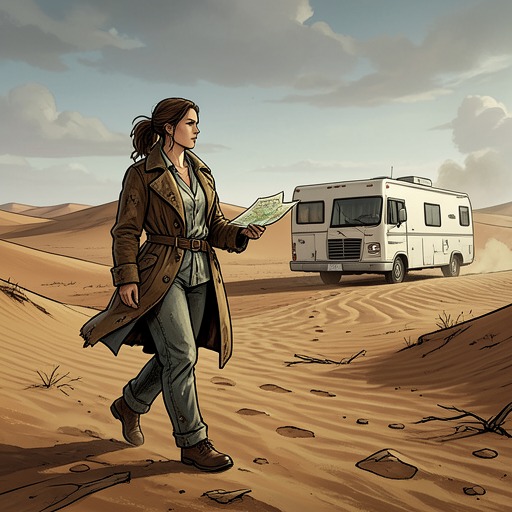
After driving south from [Fernley](entity:location-recall-location-738a56d6ab4c), Linda stopped in [Needles](entity:location-recall-location-needles-3308d868d74c) and spent the night parked near a twenty-four-hour gym. In the morning, her phone’s directions sent her in a circle while she searched for the DMV to renew her motorhome registration.
Once the paperwork was settled, she continued toward [Quartzsite](entity:location-recall-location-quartzsite-a4cf8d754a58) and the gathering she had heard about online. She had never been there, knew few people, and wondered whether a large motorhome would be welcomed among the smaller vans.
January 2014
Linda Finds Her Tribe
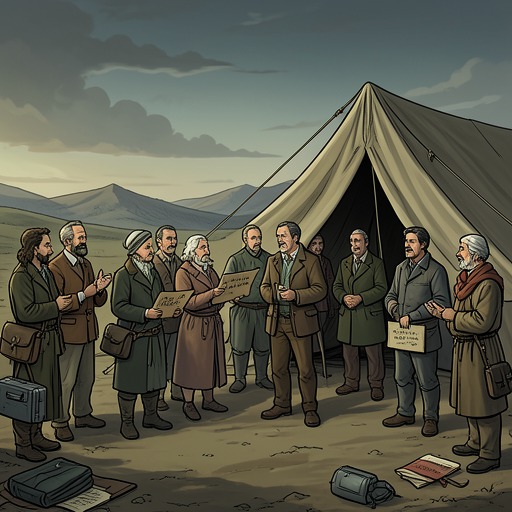
Linda reached the [Rubber Tramp Rendezvous](entity:event-recall-event-rubber-tramp-rendezvous-7fe1608991c4), where dozens of vehicles gathered around a central campfire. [Bob Wells](entity:character-recall-character-bob-wells-5e6a6a0057ee) organized talks and practical help, while participants shared meals, tools, skills, and a free pile of useful goods.
The seminars gave Linda ideas about budgeting, stealth parking, and work on the road. More important, the warmth of the gathering brought her a sense of joy and belonging that she had not felt in years.
January 2014
A New Friendship Forms
At the gathering, Linda met [LaVonne Ellis](entity:character-recall-character-lavonne-ellis-bf060da53811), a former broadcast journalist who had left office work after age and chemical sensitivities made employment difficult. LaVonne had begun living in a van and found in the nomads a community of people who offered acceptance rather than judgment.
Linda also connected with Lois Middleton and other travelers who had lost jobs, homes, or family support. Their scattered lives began to feel like a shared family, even as everyone knew that the group would soon disperse.
Late January 2014
The Gathering Disperses
When the public-land camping period ended, the Rendezvous broke apart. Some travelers moved in small groups toward new camps, while Linda followed part of the community to [Ehrenberg](entity:location-recall-location-ehrenberg-a60b98481db1) and then moved on to handle errands and clear a storage unit.
The parting made the cost of nomadic friendship clear: people came and went, and closeness could not guarantee anyone would stay. LaVonne wrote that Linda was the group’s surrogate mother and hoped to reunite with her while helping build her future home.
Early 2014
Linda Searches for Land
Linda explored cheap land in Arizona, hoping to find a place for her [Earthship](entity:object-recall-object-earthship-91ed8241ae2c). An isolated parcel in [Cochise County](entity:location-recall-location-cochise-county-6c4036798f80) did not appeal to her after the closeness of the Rendezvous; she wanted a place where family and friends could visit.
She cleared her storage unit and sold most of its contents, vowing never to rent storage again. The process of letting go of possessions made the project feel more possible, even though she had not yet found the right land.
2014
The Author Builds Halen
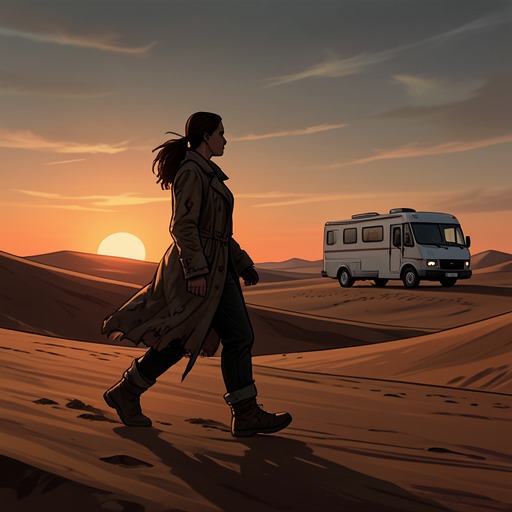
To report more deeply on the nomads, the author bought a used camper van and named it [Halen](entity:object-recall-object-halen-c6f1a8d554e1). With a friend’s help, she installed a solar panel, batteries, an inverter, and basic equipment for sleeping, cooking, and writing.
Living in the van proved harder than interviewing its inhabitants. She got stuck in desert sand, encountered mechanical failures and leaks, and learned how exposed vehicle living could feel. The experience brought her closer to the people whose stories she was trying to understand.
Spring 2014
Linda Hosts in Mammoth Lakes
Linda began camp-hosting at [Sherwin Creek Campground](entity:location-recall-location-sherwin-creek-campgr-54b2d5e967b7) near [Mammoth Lakes](entity:location-recall-location-mammoth-lakes-9ed612516038). Snow and cold tested her small home, but a repaired roof kept her dry, and she reached another year of sobriety while living among the mountains.
When her food dwindled, she stretched what remained into meals until her paycheck arrived. Even with little money, she described herself as happy and free, and continued looking for land where she could build a lasting home.
After a Rubber Tramp gathering in 2015
LaVonne’s Van Breaks Down
LaVonne’s van, [LaVanne](entity:object-recall-object-lavanne-8927440e6d13), broke down near [Ehrenberg](entity:location-recall-location-ehrenberg-a60b98481db1), leaving her stranded with no money for repairs and a loan still to pay. Friends helped her with groceries, but the dead van and rising temperatures made waiting increasingly difficult.
When a used-car salesman offered financing on a newer vehicle, LaVonne feared that refusing would leave her homeless. She bought [LaVanne Two](entity:object-recall-object-lavanne-two-f89103e15080), an uneasy rescue that also forced her to confront the boundary between being houseless by choice and being treated as homeless.
December 2014
The Author Sleeps Outside
In San Clemente, the author visited Linda while she was staying with family in a cramped apartment. The author chose to sleep in [Halen](entity:object-recall-object-halen-c6f1a8d554e1) in the parking lot, anxious that neighbors might call the police or someone might break in.
A dog bit her leg, and the strange lights and sounds of the lot made the first night feel far less simple than she had expected. In the morning, Linda welcomed her inside for coffee, a shower, and breakfast, then helped her learn to drive and outfit the van.
Thanksgiving 2014
Linda Gives Up Her Motorhome
Linda’s daughter’s family faced eviction after [Collin](entity:character-recall-character-collin-24e24b3c73f6) lost disability benefits and the rent became impossible. The household began selling its possessions, trying to fit what remained into a drastically smaller life.
Linda gave the family her old motorhome, despite worrying about how two adults, three teenagers, and several dogs could share it. She helped with the yard sale, but the crisis exhausted her and showed that her family’s financial troubles were deepening too.
December 2014
A Troubled Stop at Slab City
After helping her family settle, Linda returned to the road with LaVonne. The two visited [Slab City](entity:location-recall-location-slab-city-b541c0ed79e9) after dark and later learned that they had slept in an area known for drug activity.
Linda worried about the Squeeze Inn and her Jeep, then rushed back to find them unharmed. The uneasy experience pushed the friends to leave and reconnect with nomads in [Ehrenberg](entity:location-recall-location-ehrenberg-a60b98481db1).
Christmas Eve and Christmas Day, 2014
A Christmas Among Friends
In the desert near [Ehrenberg](entity:location-recall-location-ehrenberg-a60b98481db1), Linda and LaVonne joined a potluck with other nomads. The group shared stories, practical help, and companionship, while Linda made pumpkin pancakes with cranberry sauce for LaVonne on [Christmas](entity:time-recall-time-christmas-a573265d0167) morning.
Their care for one another was more than festive ritual. When LaVonne locked herself out of her van with her dog inside, Linda gave her a place to sleep and helped her wait for the fire department to free the animal.
January 2016
Linda Returns to the RTR
Linda returned to the [Rubber Tramp Rendezvous](entity:event-recall-event-rubber-tramp-rendezvous-7fe1608991c4) for the first time since her original visit. The gathering had grown substantially, with new seminars and a larger, more complicated community.
At one talk, a traveler demonstrated how he lived in a Prius and explained that a comfortable bed and the ability to cook made the small car feel like an adventure rather than homelessness. Linda also heard more about how legal and administrative requirements were making life harder for nomads.
January 2016
Linda’s Earthship Dream Falters
When asked about her [Earthship](entity:object-recall-object-earthship-91ed8241ae2c) at the gathering, Linda sounded less certain than before. She had given away some of her reference books while helping her family downsize and had not spoken much about a building plan.
The future of nomads troubled the author as well. Some had family to fall back on, but many faced old age, illness, and isolation without a safe place to land. Stories of travelers dying alone made the cost of life outside conventional housing impossible to ignore.
January 2016
The Rendezvous Reaches a Turning Point
The growing [Rubber Tramp Rendezvous](entity:event-recall-event-rubber-tramp-rendezvous-7fe1608991c4) brought new participants and activities, including a talent show, while the old informal character of the gathering began to change. Its increasing size raised questions about rules, privacy, and the limits of a community built on public land.
The author also reflected on the largely white population of the nomadic gatherings. Some travelers described overt racism, while others recognized the additional risks that stealth camping and encounters with police could pose for people of color.
After the 2016 Rendezvous
Linda’s Next Camp Job Vanishes
Linda believed she had secured another camp-hosting position, but the job was eliminated just as she was preparing to leave the gathering. Her seasonal cycle had seemed dependable enough to plan around, yet one employer’s decision could undo it.
She moved on with other nomads and later became ill with bronchitis. Friends brought food while she recovered in the Squeeze Inn, demonstrating the mutual care that often substituted for formal support.
2016, while camp-hosting in Sequoia National Forest
Linda Buys Desert Land
While working far from Arizona, Linda found a cheap five-acre parcel near Douglas advertised on Craigslist. She checked the land’s location and ownership through county records, then agreed to buy it in small monthly installments.
The parcel seemed to offer a chance to build outside many county building restrictions, and friends immediately offered to help. Linda imagined their labor as part of the price: each visitor could pack a tire full of earth for a day.
Summer 2016
Linda and Gary Head East
Linda planned to visit the land with [Gary Fallon](entity:character-recall-character-gary-fallon-d0c100d0069a), a friend who had worked alongside her and seemed interested in her project. A minor stroke delayed their plans, and the intense desert heat made the journey still less appealing.
They instead headed toward Kentucky to join [Amazon CamperForce](entity:organization-recall-organization-amazon-camperfor-d5187bca4723), where Linda hoped to earn the money needed to begin building. The job promised a path forward but carried the same risk of injury and exhaustion she already knew.
Summer 2016
The Author Tours the Parcel
Because Linda could not visit the land herself, the author drove from Phoenix to Douglas and streamed a tour to her by phone. From the screen, Linda and Gary saw the boundaries, mountain views, dry arroyo, and workable soil of the parcel.
Linda was more pleased than she had expected and began picturing the site of her home. The tour became tangible evidence that the long-delayed dream might be possible, though it could not answer every question about building or living in such a remote place.
During the author’s visit to Douglas, summer 2016
The Desert’s Dangers Emerge
After touring Linda’s land, the author searched for nearby residents and found isolated properties, a deserted shack, and signs of life in the borderlands. Her rental car became stuck in mud during the monsoon season, and a local tow operator pulled it free.
A ranch manager described drug couriers, gunfire, and the need to stay alert. The experience sharpened the author’s doubts about Linda’s plan, which also involved heat, flash floods, rattlesnakes, and distance from help.
From the 1980s through 2015
Douglas’s Industrial Decline
The author found that Douglas had been shaped by copper smelting and its eventual collapse. Pollution controls and the closure of the local smelter took hundreds of jobs and a substantial part of the town’s economy; the town’s hospital later closed as well.
The struggling economy helped keep land cheap, which suited Linda’s ambitions even as it signaled the isolation and limited services she might face. Douglas’s decline was not abstract background: it would form the setting for her experiment in self-sufficiency.
1990 and the years around the author’s visit
The Border’s Hidden Routes
The border region carried a history of trafficking, including the discovery of a sophisticated underground tunnel between Douglas and Agua Prieta in 1990. The author also learned of later smuggling methods and of a teenage courier promised money far beyond what his factory job paid.
Linda knew the area had dangers but believed she could avoid entanglement by keeping to herself. The border’s economic desperation and violence remained an unsettling backdrop to her plan for a quiet homestead.
Fall 2016
Amazon Work Tests Linda’s Convictions
At the Campbellsville warehouse, Linda worked among enormous quantities of merchandise destined for customers. The pace and repetitive tasks recalled her earlier [Amazon](entity:organization-recall-organization-amazon-7d39ae4f39ec) job, while the goods themselves made her increasingly troubled by waste and disposable consumer culture.
She described the warehouse as a place that depended on exploited labor and left her feeling morally compromised. The job was financing her dream, but she wondered how to honor money earned in a system she believed was deeply wrong.
Late September and early October 2015
The Author Works the Beet Harvest
The author joined a sugar beet harvest at [Drayton Yard](entity:location-recall-location-drayton-yard-6bb441bb3b22), where trucks delivered beets around the clock. On the ground crew, she shoveled spilled beets, cleared slippery mud, caught heavy samples, and cleaned the piler amid deafening noise and diesel fumes.
The work left her aching after only a short time, despite her being much younger than many of the workers. A broken harvester part threatened the machinery and crew, and a coworker fell on the slick floor. The author quit, recognizing that the laborers’ accounts had not exaggerated the strain.
November 2015
The Author Joins CamperForce
After passing a drug test, the author arrived at the [Amazon warehouse in Haslet](entity:location-recall-location-haslet-1e9791850edf), Texas, for CamperForce. Her orientation introduced a mostly older group to strenuous work, safety hazards, conveyor systems, productivity rules, and the warehouse’s robot-driven shelving.
She worked with people who had lost homes, jobs, or financial security, including Barb and [Chuck Stout](entity:character-recall-character-chuck-stout-244c6fc9bb28). The warehouse’s friendly slogans and free painkillers sat uneasily beside the pace and risks of the work.
After a week at the Haslet warehouse
The Kivas and the Last Shift
The author scanned goods brought to her by [Amazon](entity:organization-recall-organization-amazon-7d39ae4f39ec)’s Kiva robots, including an endlessly returning shelf of patchouli incense. Around her, workers dealt with faulty instructions, repetitive tasks, and a workplace organized around strict movement and production targets.
During her final shift, she considered running onto the restricted robot floor but chose not to risk her notes or turn reporting into a stunt. She left the warehouse after a week, carrying a sharper sense of the gap between Amazon’s playful workplace language and the labor itself.
After LaVonne’s van breakdown
The H Word Haunts LaVonne
Living in a van in the city made LaVonne feel exposed to the label of homelessness. She wrote about hiding in plain sight and recognizing that she shared more with people living on the street than she had wanted to admit.
Sameer urged her to come back to the desert, where she could live among friends and call herself a traveler rather than accept a stigmatized identity. Their exchange showed how deeply the difference between being houseless and being homeless mattered to people trying to retain dignity and choice.
Late 2015
The Family’s Eviction
Linda’s family was forced out of its rented home after [Collin](entity:character-recall-character-collin-24e24b3c73f6) lost disability benefits and could not keep up with the rent. Linda gave them her old motorhome, and the household sold furniture, clothes, books, and musical equipment to make a smaller life possible.
The teenagers’ possessions had to fit in small containers, and the family improvised further by putting a tent beside the RV. Linda helped, but the crisis consumed her energy and made it clear that she could not solve the family’s problems simply by staying close.
Late December 2015
Linda Returns to the Road
After helping the family get settled, Linda left [Mission Viejo](entity:location-recall-location-mission-viejo-c0595c895bc2) with LaVonne. The two traveled to [Slab City](entity:location-recall-location-slab-city-b541c0ed79e9) and, unsettled by their first night there, headed back toward friends near [Ehrenberg](entity:location-recall-location-ehrenberg-a60b98481db1).
They shared a mailbox and helped each other through the practical burdens of life on the road. Their friendship grew into a form of family that offered material help as well as affection.
Winter 2015 to 2016
LaVonne Loses Her Purse and Keys
After losing her purse somewhere inside her van, LaVonne later locked herself out with her dog Scout still inside. Linda and other friends tried to find a way in, but roadside assistance would not come to the unpaved camp.
LaVonne slept beside Linda in the Squeeze Inn while they waited for daylight. The fire department eventually freed Scout, and LaVonne spent the day at a Laundromat cleaning up after the frightened dog.
January 2016
A Growing Gathering
The [Rubber Tramp Rendezvous](entity:event-recall-event-rubber-tramp-rendezvous-7fe1608991c4) had grown to an estimated 250 participants, drawing both old-timers and newcomers. New sessions included living in small cars, and the talent show turned the desert gathering into a place for performance as well as practical instruction.
The event’s growth also intensified concerns about government scrutiny and the difficulty of maintaining a low profile. The author wondered what would happen to nomads who could no longer drive, work, or care for themselves.
During the 2016 Rendezvous
Nomads Face a Lonely Future
The author heard about nomads who had died alone in their vehicles, as well as friends who had no long-term plan for illness or aging. Even the possibility of assisted living in a program for RVers was financially out of reach for many.
[Patti DiPino](entity:character-recall-character-patti-dipino-6bcc74705109), whom the author had met years earlier, had died at sixty after losing her job and home and failing to reenter office work. Patti had dreamed of an organized community where older people could grow food and use their skills together; her death made that unrealized hope especially poignant.
Near the end of the 2016 Rendezvous
The Tribe Burns a Little Van
At the end of the gathering, nomads built a small van effigy from an [Amazon](entity:organization-recall-organization-amazon-7d39ae4f39ec) shipping box and threw it onto the fire. They sang a rewritten version of [Little Boxes](entity:expression-recall-expression-little-boxes-28d40f80d946), celebrating the variety of their lives and their refusal to be molded into conventional sameness.
The ritual expressed both affection for the community and resistance to the social expectations that had failed many of its members. It gave the gathering an ending even as the travelers prepared to disperse again.
Early 2016
Linda’s Job Is Cancelled
Linda and LaVonne had been seeking work for the coming season, and Linda believed she had lined up a camp-hosting position. The employer called to say the job had been eliminated.
The loss disrupted the seasonal rhythm on which Linda depended. She continued traveling with friends, but the cancellation underscored how little control a worker could have over whether the next paycheck would arrive.
Spring 2016
Linda Secures Five Acres
While working as a camp host in [Sequoia National Forest](entity:location-recall-location-56643003c15e), Linda found a listing for five acres near [Douglas, Arizona](entity:location-recall-location-douglas-arizona-7590116f3930). She researched the parcel remotely and bought it with a small down payment followed by monthly installments.
Friends offered to help clear the land and build. Linda’s [Earthship](entity:object-recall-object-earthship-91ed8241ae2c) idea had become a concrete project, though she still had to inspect the property herself and determine how its isolation, access, and desert climate would affect the plan.
Summer 2016
Gary’s Stroke Delays the Visit
Linda had planned to visit the new parcel with [Gary Fallon](entity:character-recall-character-gary-fallon-d0c100d0069a), but he suffered a minor stroke while the two were traveling. They took shelter with the nomad community near [Flagstaff](entity:location-recall-location-flagstaff-1b7424752a99) as he recovered.
The delay coincided with extreme heat and an early [Amazon](entity:organization-recall-organization-amazon-7d39ae4f39ec) start date in Kentucky. Linda was disappointed to miss the visit, but the decision reflected the physical and financial pressures that kept shaping her plans.
Summer 2016
A Remote Tour by Phone
The author traveled to Douglas without Linda and used a laptop and phone to show her the parcel in real time. Linda and Gary watched as the tour revealed the boundary markers, mountain views, vegetation, soil, and the arroyo crossing one corner of the land.
Linda liked what she saw and could picture a future home there. The land felt more real than a map or photograph, though the author’s later search for nearby habitation revealed how isolated the project would be.
During the author’s visit to Douglas, summer 2016
The Author Gets Stuck
Looking for neighbors near Linda’s land, the author drove into a rain-softened low spot and mired the rental car in mud. After unsuccessful calls for help, she reached a local towing company, whose crew pulled her free as storms gathered.
A ranch manager then described drug couriers and gunfire in the area. The author left with a clearer sense of the hazards surrounding Linda’s intended homestead, even as Linda remained determined to continue.
Summer 2016
Linda Reaches Kentucky
Linda and Gary drove east toward Kentucky, covering long distances each day while the heat wore them down. Linda hoped the warehouse job would bring her closer to building on her land, but she was already anxious about the work and the time it would take from her life.
She told the author that the desert parcel was beautiful and that Gary thought the plan was doable. Whatever their relationship became, she intended to keep the property in her own name and hold on to the goal as hers.
Weeks after starting work in Kentucky
Linda’s Moral Conflict
At the warehouse, Linda found herself surrounded by goods she believed were cheaply made, quickly discarded, and produced under exploitative conditions. The work was physically and spiritually draining, yet she needed its wages to finance her independent home.
She described the contradiction as a robber doing one last job before retirement. The [Earthship](entity:object-recall-object-earthship-91ed8241ae2c) represented escape from debt and consumer culture, but the money for that escape came from the very system she condemned.
Late 2016
A Home for the Family
The author revisited the implications of Linda’s remote land: distance from services, harsh heat, flash floods, dangerous wildlife, and the possibility of encountering armed traffickers. Linda, however, imagined friends arriving to help and saw the parcel as the foundation for a lasting home.
Her plans increasingly depended on a network of chosen family, including LaVonne and Gary. The prospect of building together gave the project a social dimension beyond shelter, even though the construction had not yet begun.
Late 2016
The Octopus Carries a Shelter
Linda shared a video of an octopus moving across the sea floor with two coconut shells. When danger approached, it pulled the shells around itself and carried them along like a portable shelter.
The image recalled Linda’s belief that people could escape the boxes imposed on them. The octopus had improvised both transportation and protection, a small living emblem of the resourcefulness at the center of her own plans.
The winter following Linda’s Kentucky season
The Tribe Gathers Again
As winter came, nomads began returning to [Quartzsite](entity:location-recall-location-quartzsite-a4cf8d754a58), where the mild desert climate drew both prosperous snowbirds and people surviving on low incomes. [Bob Wells](entity:character-recall-character-bob-wells-5e6a6a0057ee) prepared for a much larger [Rubber Tramp Rendezvous](entity:event-recall-event-rubber-tramp-rendezvous-7fe1608991c4), while LaVonne, [Silvianne Delmars](entity:character-recall-character-silvianne-delmars-5fc0e8ac21e9), and other travelers made new plans around seasonal work and companionship.
The gatherings offered warmth and mutual aid, but the people arriving carried the same unresolved questions about money, aging, health, and where they would go when the road became impossible.
After three years of reporting
The Invisible City of Brooklyn
Back in Brooklyn, the author began noticing camper vans, motorhomes, and converted buses parked beside warehouses and residential streets. Their curtained windows and improvised insulation revealed people living in vehicles within an otherwise ordinary city.
The sight made the nomads’ lives seem less remote. Many more people were improvising their way through impossible household budgets, even if they did not make the visible leap to vehicle living.
Near the book’s ending
Linda’s Journey Continues
After her seasonal job in Campbellsville, Linda set out west towing the Squeeze Inn behind her Jeep. She first hoped to visit [Taos](entity:location-recall-location-41298f97508b) and consult an architect, but a warning light and the threat of mountain snow led her to head directly for Douglas instead.
She reached the desert without incident, visited her parcel, and began buying practical equipment, arranging water delivery, and asking county officials about construction rules. The project had not yet become a house, but Linda had moved from imagining it toward preparing the ground.
Planned for late January, after Linda’s return to Arizona
The First Groundwork
Linda planned to begin by hiring an excavator to clear the access road, scrape a place to park the Squeeze Inn, and prepare a construction area. She had found an operator whose fee seemed manageable and reserved a date.
The book ends before the work begins. The future remains uncertain, but Linda has reached a decisive threshold: the land has been visited, the tools and services are being arranged, and a lifelong dream is about to meet the physical desert.