Borregaard Estate
OsloBorregaard Estate is the secluded Norwegian meeting place at the center of the play’s secret diplomatic channel: a place Terje Rød-Larsen arranged so Israeli and Palestinian representatives could meet away from the public negotiations between their governments. Its rooms give the channel a physical shape, from the cautious first introductions to the examination of draft documents and an offer to make the back channel official. The estate’s significance lies in this contrast: negotiations intended to alter relations between peoples begin in a remote, carefully managed setting, among a small group whose presence and conversations must remain concealed.
Location and Purpose
The estate is introduced first as a solution to a diplomatic problem. Terje Rød-Larsen proposes a second channel built against the model of grand pronouncements between governments: intimate discussions between people, held somewhere isolated where Palestinian representatives and the Israeli side can meet alone. He says he can oversee the model and arrange the place. The proposal makes location part of the method. Seclusion is not merely scenery; it is a condition for contact that the public process cannot yet accommodate.
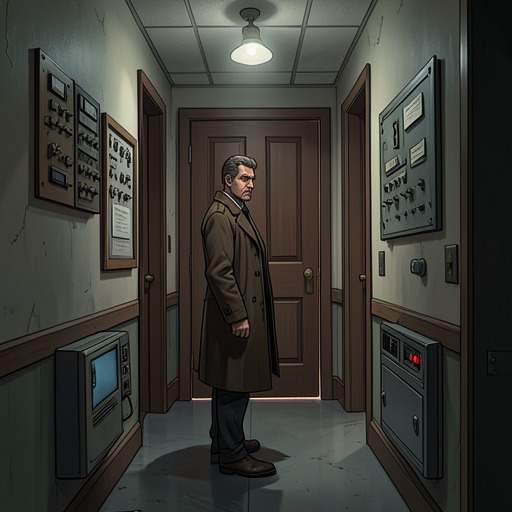
The play later identifies the venue as Borregaard Estate, south of Oslo and far from anywhere. Mona Juul describes Terje’s preparations: he asks to borrow the place and its staff, who must be sworn to secrecy. He rents cars, and the participants’ flights are checked and checked again. These logistical details show how the meeting place depends on an entire perimeter of discretion. The participants must be brought there without drawing attention, and the people working around them must keep silent. The preparations are exacting, but the account also registers their fragility: on the night before the planned gathering, disaster threatens the arrangements, though the cited scene does not specify its nature.
The Opening Meetings
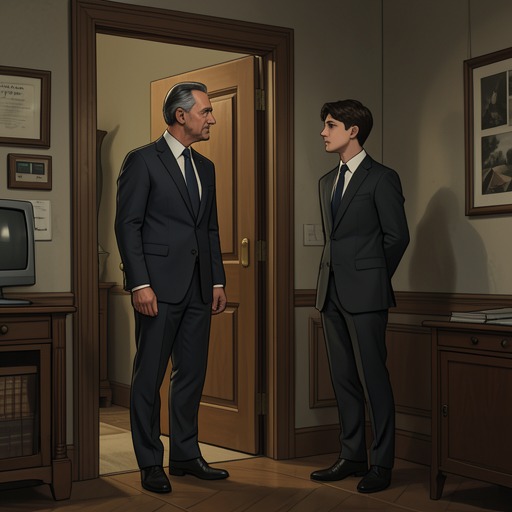
The reception room becomes the site of the channel’s official opening, though the channel itself is unofficial. In January 1993, Terje stands in the middle of a well-appointed room as Ahmed Qurie and Hassan Asfour face Yair Hirschfeld and Ron Pundak. The difference in dress is visible: the Palestinian representatives wear dark suits and ties, while the Israelis are more casually dressed. Terje acknowledges that some have met before, then calls for a proper introduction. At this threshold, the estate gathers people who have not yet formed a public negotiating delegation into a shared room and gives their exchange a beginning.
Mona Juul marks the scale and compressed timetable of what begins there: from the January opening, everything that follows in the play takes place within nine months. The room therefore serves not only as a discrete setting but as the starting point for a rapidly unfolding process. The smallness of the gathering contrasts with the reach of its intended consequences. The play does not present the estate as a government forum; it stages the effort to create a working connection before that connection has official standing.
Rooms, Work, and Pressure
The estate’s different rooms host different temperatures of negotiation. In the negotiating room, cigarettes, ashtrays, coffee cups, and piles of paper surround the work. Ahmed Qurie and Hassan Asfour sit reading copies of a document while Yair Hirschfeld and Ron Pundak stand watching. Nobody moves until Qurie looks up. The stillness makes the paper, rather than ceremony, the immediate focus: the document must be read, and the Israeli participants must wait for the Palestinian response. The room’s ordinary working objects place the political stakes inside a scene of concentrated, uncertain attention.
In the drawing room, the atmosphere shifts. Two weeks later, Terje seeks to calm a seething, pacing Qurie. The same estate that enabled the first encounter must also contain its strain; privacy does not dissolve disagreement. Instead, the drawing room provides a setting in which tension between participants is visible at close range, outside the public performance of government talks. The move between reception room, negotiating room, and drawing room gives the estate a practical dramatic geography: introductions, document work, and attempts to steady a volatile exchange occur in distinct spaces within the same secluded site.
The reception area also becomes a point of encounter as the channel develops. One night, Mona, Hirschfeld, Pundak, Qurie, and Asfour are there when Uri Savir enters with Terje. Elsewhere in the estate’s reception room, Terje stands before Savir, Hirschfeld, Pundak, and Joel Singer, while Thor Bjornevog, Trond Gundersen, and Toril Grandal are off to the side. The changing groups show that the location accommodates a widening circle of participants; it is not simply a private room for two interlocutors. Yet the stage directions continue to organize the work around rooms and small gatherings rather than a public assembly.
From Secret Channel to Official Offer
Borregaard Estate remains the setting as the negotiations turn toward a consequential change in status. In the reception room, Terje presents the Declaration of Principles (DOP) to Joel Singer, Uri Savir, Yair Hirschfeld, and Ron Pundak, asking them to determine whether the text can become a real, binding document. He makes the next step conditional on their judgment: nothing further can happen between Israel and the Palestine Liberation Organization unless they say it is a go. The setting thus contains a test of whether the informal channel can produce language capable of carrying formal obligations.
The culmination of this progression is an offer made on behalf of Prime Minister Yitzhak Rabin and the State of Israel: the back channel should become the official channel. Singer delivers it after the Israeli side has heard the Palestinian representatives’ answers; silence follows, and Qurie asks what will happen to the Washington-sponsored talks. The question keeps the transition unresolved in the moment. Borregaard Estate has made a confidential encounter possible, then hosted the work of examining a draft, and finally become the place where the channel’s possible official status is put before the Palestinians. Its theatrical importance rests in that sequence: an isolated venue enables contact, but cannot by itself settle the political consequences of what the participants have begun.