Lodge of the Vital Fluidum
PerfumeThe Lodge of the Vital Fluidum was an occult society founded in Montpellier in the summer of 1764 by the Marquis de la Taillade-Espinasse, based on his pseudo-scientific theory of the fluidum letale. It represents the culmination of the marquis's delusional ambition and the credulity of the age, and its fate mirrors the novel's themes of deception, power, and the human longing for transcendence.
Foundation and Doctrine
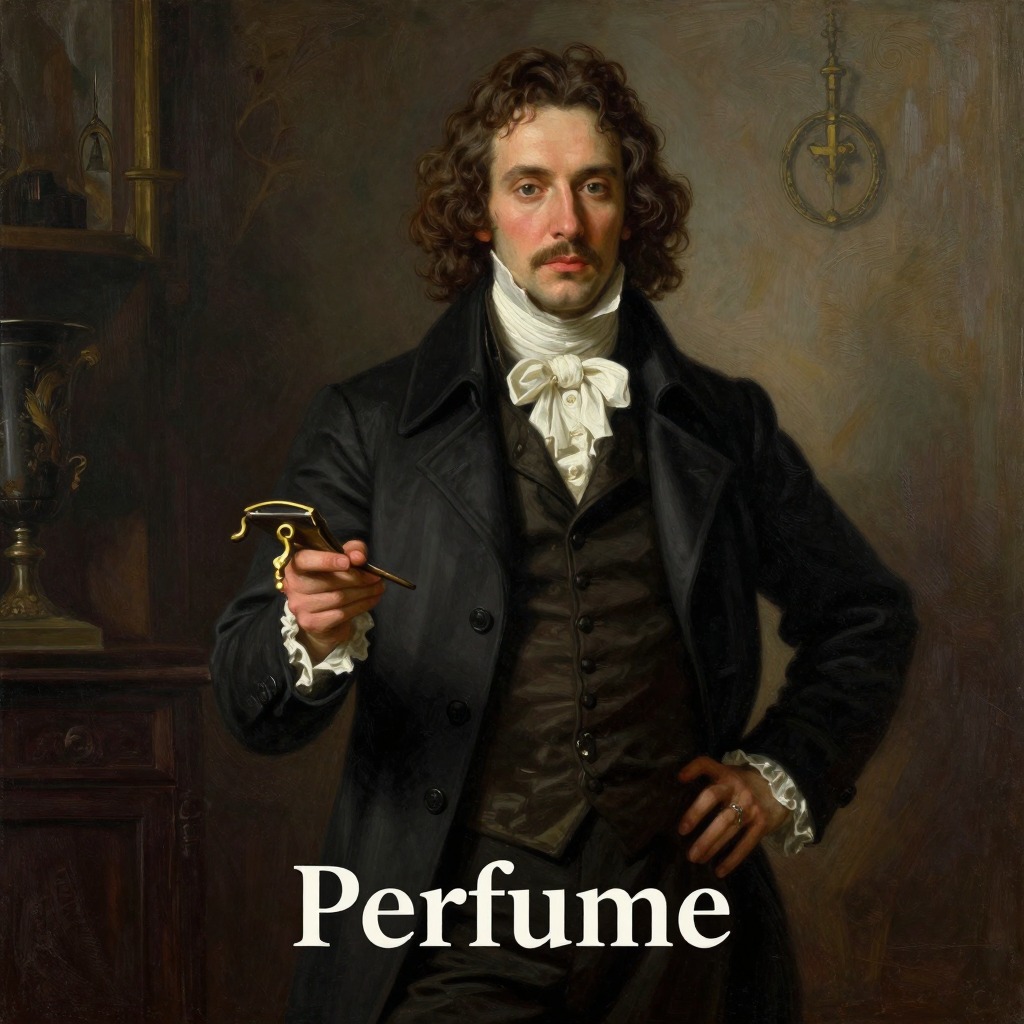
The Marquis de la Taillade-Espinasse, a retired courtier turned amateur scientist, had developed a grand theory that the earth itself emits a corrupting gas, a so-called fluidum letale, which lames vital energies and eventually extinguishes life. He believed that all living creatures must distance themselves from the earth to survive, and that his "vital ventilation machine" and special diet could reverse the effects of this lethal gas. After his spectacular "cure" of Grenouille—who had merely been disguised with a cleverly crafted perfume—the marquis's fame spread rapidly. An article about the fluidum letale Taillade appeared in the Journal des Sçavans and even in the Courier de l'Europe, and patients came from far and wide for his treatments. Emboldened by this success, he founded the first Lodge of the Vital Fluidum in Montpellier in the summer of 1764, with 120 members, and soon established branches in Marseille and Lyon.
Expansion and Ambition
The lodge was not merely a scientific society but a quasi-religious order that stood above all social rank, aiming to utterly vanquish the fluidum letale and replace it with purest fluidum vitale. The marquis had even promised to win Grenouille over as the first proselyte, though Grenouille had no interest in such nonsense. The lodge's growth reflected the marquis's escalating ambition: he decided to dare the move to Paris and from there to conquer the entire civilized world with his teachings. But first, he wanted to provide a propaganda base for his crusade by accomplishing a heroic feat that would overshadow the cure of the cave-man and all other experiments.
The Fatal Expedition
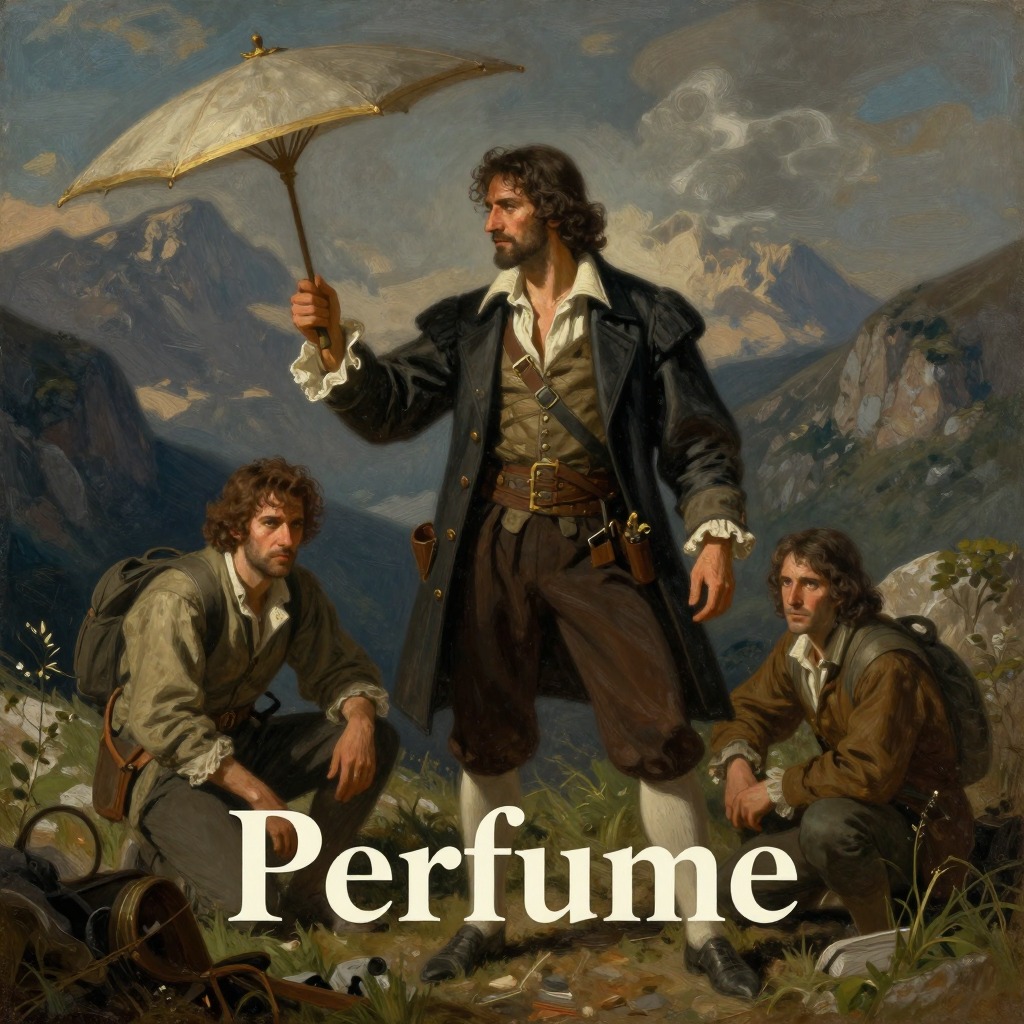
In early December 1765, the marquis assembled a company of fearless disciples and set out on an expedition to the Pic du Canigou, which he believed was on the same longitude as Paris and was considered the highest mountain in the Pyrenees. Though on the threshold of senescence, he announced that he would be borne to the summit at nine thousand feet and left there in the sheerest, finest vital air for three whole weeks, whereupon he would descend from the mountain precisely on Christmas Eve as a strapping lad of twenty. The disciples gave up shortly beyond Vernet, the last human settlement at the foot of the fearsome mountain. But nothing daunted the marquis. Casting his garments from him in the icy cold and whooping in exultation, he began the climb alone. The last that was seen of him was his silhouette: hands lifted ecstatically to heaven and voice raised in song, he disappeared into the blizzard. His followers waited in vain that Christmas Eve for his return. He returned neither as an old man nor a young one. When the most audacious of them went in search of him the following early summer, scaling the still snowbound summit, they found no trace of him: no clothes, no body parts, no bones.
Aftermath and Legacy
Remarkably, the marquis's teachings suffered no damage at all from his disappearance. On the contrary, a legend soon spread that there on the mountain peak he had wedded himself to the eternal fluidum vitale, merging with it and it with him, and now forever floated—invisible but eternally young—above the peaks of the Pyrenees. Whoever climbed up to him would encounter him there and remain untouched by sickness or the process of ageing for one full year. Well into the nineteenth century, Taillade's fluidal theory was advocated from many a chair at faculties of medicine and put into therapeutic practice by many an occult society. Even today, on both sides of the Pyrenees, particularly in Perpignan and Figueras, there are secret Tailladic lodges that meet once a year to climb the Pic du Canigou. There they light a great bonfire, ostensibly for the summer solstice and in honour of St John—but in reality it is to pay homage to their master, Taillade-Espinasse, and his grand fluidum, and to seek eternal life. The Lodge of the Vital Fluidum thus outlived its founder, transforming his absurd theory into a lasting cult that satisfied the same human yearning for transcendence that Grenouille's perfume would later exploit so devastatingly.