Demons
PleasureDemons are a supernatural people whose treatment by human magic-users becomes central to Valera’s judgment of the so-called necromancers. A captured Demon’s torture and transformation show her that the violence justified in the name of righteousness can itself expose the moral corruption of those who wield it.
Identity and Conflict
Demons belong to a world of multiple supernatural peoples, including Vampires, and are identified as enemies of Nightwalkers and human magic-users. Valera’s account describes a punitive consensus in which Demons, Vampires, and other peoples kill human magic-users, whom they call necromancers. That hostility forms the wider context for the danger she associates with her own magic.
Captivity and Transformation
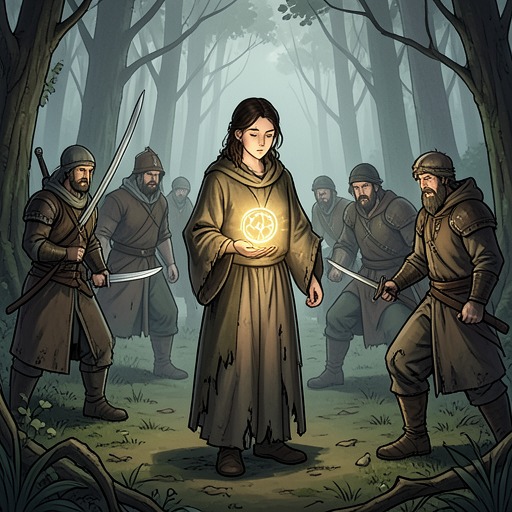
Valera’s decisive encounter is with a Demon captured by human magic-users. She watches them inflict a tortured transformation, stripping the captive of its beauty and civilization until a monstrous creature remains inside a magical pentagram. The captors treat the result as proof that the prisoner was evil, although Valera sees no evidence that could justify the ordeal.
The violence does not end with the transformation. Valera regards the imprisoned creature as less monstrous than the magic-users waiting to exploit it, eager to force it to use its power for their benefit. Their conduct turns the captive into both a victim of torture and a resource to be coerced, while their moral explanation serves to disguise that exploitation as justice.
Significance to Valera
The Demon’s suffering shapes Valera’s distrust of other human magic-users. Before she understood the difference between herself and them, she had felt relieved to find people with powers like hers; witnessing their cruelty instead revolted her. She came to believe that the corruption she had seen in them increased over time, and fled from their company.
Her response also complicates the simple division between supposedly evil magic-users and supposedly righteous hunters. The transformed Demon is used by its captors to confirm their judgment, but Valera reads the suffering required to produce that supposed evidence as a condemnation of the captors themselves. The scene helps explain why she fears the corruption of magic and tries to resist using her own power.