Event 1
Nicoya's poisoning and abduction of Sagan
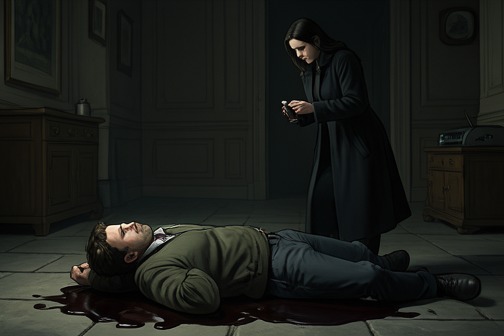
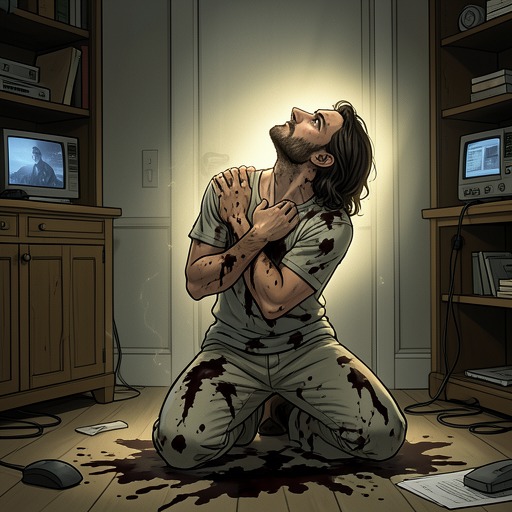
[Nicoya's poisoning and abduction of Sagan](entity:event-recall-event-nicoya-s-poisoning-and-98ea7d27103f) turns a small wound into a defeat with consequences that outlast the attack itself. The poison overwhelms [Sagan](entity:character-recall-character-sagan-41cd84ebf496) with hallucinations, leaves him in [Acadian](entity:character-recall-character-acadian-806423208fc3)'s custody, and—according to the healers—ultimately helps erase his memory of the insurrection and how he was poisoned. His later return to [Sanctuary](entity:location-recall-location-sanctuary-492f12f4a5c2) therefore does not restore the history that was taken from him.
## Causes and Stakes
Sagan understands the attack as a defeat in a wider conflict: he has lost a crucial battle against enemies of Sanctuary, the Shadowdweller religious house, and the royal house of the [Chancellery](entity:organization-recall-organization-chancellery-f57956b3c222). [Nicoya](entity:character-recall-character-nicoya-de53c5d2a9a2), whom he identifies as a k’ypruti and the source of the threat, has treated her weapons with a racially engineered poison. A scratch is enough to bring him down. The disparity between the slightness of the wound and the scale of its effects makes the attack feel less like a contest of strength than the sudden disabling of a defender.
The danger extends beyond Sagan. In his fevered reckoning, Nicoya will go unchallenged into the world to continue her evil, while Acadian, her mother, has her agents drag him away. Sagan imagines he is to become Acadian's newest plaything. He has already seen the scars and torture on a friend's body, so the prospect of what Acadian might do is not abstract to him. His account links Nicoya's poisoned attack to Acadian's coercive power and to the threats facing Sanctuary and the royal house.
## Poisoning and Captivity
The poison's first defining effect in the scene is not pain alone but hallucination. Sagan can scarcely distinguish what is real from the strange rushes filling his feverish mind. He tries to resist by repeating basic truths: his name, his priestly office, his identity as one of the gods' five elite chosen ones, and his work of hunting those who sin and forcing them to repent. He also reminds himself that he is a Shadowdweller and a Nightwalker, formed by a world of nighttime and darkness. These facts become a deliberate means of holding on to the present as his perception breaks apart.
That effort at self-grounding gives the poison's assault a personal as well as physical cost. Sagan's account moves from stable statements of identity to the blunt recognition that he is going to die. He takes comfort in that certainty and in his belief that [Drenna](entity:character-recall-character-drenna-78fac60b88f3) will welcome him into the [Beyond](entity:location-recall-location-beyond-7537fb0c6fef). The comfort does not mean the danger has passed: he expects death or, if he survives, Acadian's torture. His faith supplies a way to face the anticipated end, while the poison has stripped him of control over what happens next.
## Return and Lost Memory
The later account at Sanctuary changes the apparent ending of the capture. [Daenaira](entity:character-recall-character-daenaira-abda7355cbb5) tells Sagan that Nicoya is dead and that she is relieved he survived; Nicoya had claimed to have killed him. Daenaira and [Magnus](entity:character-recall-character-magnus-098304000edd) had feared that Acadian had taken him after they could find no trace of him and learned that Nicoya was Acadian's daughter. Sagan, however, cannot follow the explanation. He asks what Acadian has to do with the events, why he would fight Nicoya, and what happened to Henry. [Magnus and Daenaira](entity:relation-recall-relation-magnus-daenaira-9a36a00eccb6) support him as they bring him across the threshold into Sanctuary.
A day later, Magnus watches Sagan in the healers' clinic, where he appears quieter and more withdrawn than usual. The healers believe the trauma of the poison wiped out his memory. He has apparently escaped Acadian and made his way back, but cannot recall fighting Nicoya, her insurrection, or how he was poisoned. The return is thus a survival, not a recovery of the missing episode: Sagan is physically back among his allies while the attack remains inaccessible to him. Daenaira's anger at Nicoya's toxic weapon, and her wish that she could kill her again, underscores the violence that his amnesia has not undone.
## Narrative Significance
The event is presented first through Sagan's compromised awareness and later through the knowledge of those who receive him. During the poisoning, he can name the enemy, the weapon's effect, the capture, and his own likely death, but hallucination makes even immediate reality unstable. At Sanctuary, other characters can supply the outline of Nicoya's insurrection and Acadian's involvement, yet Sagan's questions show that explanation cannot simply return his experience to him. The shift between these accounts makes the gap in his memory part of the event's aftermath.
The episode also reverses the apparent finality of Sagan's conviction that he is dying. He survives, and Nicoya is dead, but survival leaves him without the memories that would connect the attack to his return. His priestly practice of naming who he is becomes especially poignant against that later loss: during the poisoning, repetition is an active defense against mental disorientation; afterward, the people around him know a history that he cannot retrieve. The attack therefore marks both a physical defeat and a rupture in his continuity with the events that brought him home.
Event 2
Valera rescues Sagan in Alaska
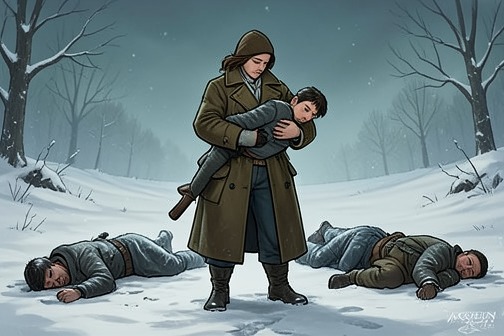
[Valera rescues Sagan in Alaska](entity:event-recall-event-valera-rescues-sagan-in-045534db92b6) when a pair of intruders bring a bound, poisoned man to her remote cabin. The encounter overturns the solitude she has guarded for nine years: [Valera](entity:character-recall-character-valera-d4102c4742ab) kills the attackers while trying only to incapacitate them, then discovers that the man they carried is still alive and begins a healing spell. The scene makes rescue inseparable from danger, unintended violence, and the sudden obligation to save a stranger.
## Isolation and the Intrusion
Valera’s life in the Alaskan wilderness depends on habits shaped by severe cold and distance. She keeps a fire going through the season, carries wood inside to thaw, checks the fuel in her large generator, and stores frozen meat in a heavy-duty building. Her nearest neighbor is a research station at least a hundred miles away and at a much higher elevation; she has never seen it. For nine years, her cabin has served as a place to disappear from the rest of humanity, known precisely only to the people who helped build it. Even her small carved sign on the door expresses that wish for privacy.
That protected routine is interrupted by a scrabbling noise around the shed. Valera first takes it for a bear, a familiar danger to her supplies and a less familiar one to her personal safety. She is already colder than is comfortable and cannot simply wait outdoors or remain in the unheated shed. But the intruders who emerge turn a wilderness hazard into a human threat. Davide grabs her and pushes her toward the cabin while Morrigan orders that a priest be fetched. Valera understands the danger in the remark, stays quiet, and watches carefully as Davide shoves her toward the entrance, his fingers bruising her arm through her parka.
## The Captors and the Body
The attackers take control of the cabin by extinguishing its fire and shutting off its lights. Valera resents the order to put out the fire, both because it is part of the home she has maintained and because cold will make the generator work harder and consume fuel faster. She nevertheless focuses on immediate survival: she switches off the lamps and fetches water to douse the fire. Davide then hustles her through the rest of the house, even unplugging her digital clock so its red numbers no longer glow. In the dark, he shoves her onto a couch.
Morrigan enters carrying a large burlap-wrapped burden over one shoulder and drops it hard onto the wooden floor. Valera recognizes at once that it contains a body. The silence after the impact gives the bundle a terrible uncertainty: it makes no sound to show either pain or life, and she cannot know what has happened to the priest the men mentioned. The invasion has also violated the refuge she deliberately built, a place where for years she expected not to encounter another person without warning.
## A Defense That Becomes Fatal
When Morrigan threatens to cut her throat, Valera answers quietly, then gathers her strength and thrusts both arms forward. She speaks a spell, and blue fire runs down her arms into her hands, forming two crackling balls of energy. Her aim is precise: each ball strikes one of the men, surrounding them in a bright field intended to shock them unconscious and hold them in stasis. Valera believes she has chosen a simple incapacitation spell, one that will let her defend herself without killing anyone.
Instead, both men burst into flame inside the fields. When the blaze goes dark, Valera finds two charred heaps contained by the blue stasis energy. She drops to her knees, releases the spell, and weeps; she had meant to protect herself, not kill her attackers, and cannot understand why the spell produced such a different result. Her response is not triumph but horror and self-reproach. Then a low grunt from the bundle interrupts her grief. She scrambles to its side, where she finds the burlap secured with heavy rope and steel chains, and calls for [Penchant](entity:character-recall-character-penchant-bfcee2199755).
## Freeing and Healing [Sagan](entity:character-recall-character-sagan-41cd84ebf496)
Penchant, Valera’s tiger-striped cat, comes into the room with the bell and silver pentacle charm on his collar jingling. He climbs onto the bundle, complains of the cold, and then uses a lick of pink energy to make the steel chain vanish. He removes the rope in the same way. Valera praises him and promises him a snack before peeling away the coarse burlap. The man inside is freezing. He wears a strange violet uniform, and an empty leather sword sheath hangs from his belt; his bound hands and feet, torn sleeve, and healing cut make clear that he has been captured and injured.
Valera finds no pulse at his throat, though she believes she heard him make a sound. When she puts a hand on his chest, Penchant identifies the immediate danger: the man is poisoned. Valera notices his powerful build beneath her hands, a striking contrast to the priest she had expected from the captors’ words, but the questions about his identity and circumstances can wait. She begins speaking a healing spell over his chest. In the following scene, Sagan opens his eyes in darkness, draws a breath as if he has gone a long time without air, and feels pressure against his chest. His awakening marks the turn from Valera’s isolated struggle for survival to the rescue of a captive stranger whose life she has begun to restore.
Event 3
Sagan and Valera's separation
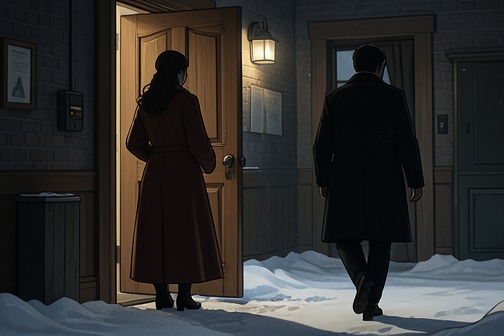
[Sagan and Valera's separation](entity:event-recall-event-sagan-and-valera-s-sepa-0b0e0385b7a6) turns their love into a choice neither can make painless. [Valera](entity:character-recall-character-valera-d4102c4742ab) recognizes that keeping [Sagan](entity:character-recall-character-sagan-41cd84ebf496) with her in the wilderness means asking him to abandon the people, work, and life he longs to recover; Sagan, unwilling to call their relationship sinful or deny his love, still cannot promise a future there. She urges him to go, and he ultimately leaves the cabin, while the depth of their attachment makes the separation feel less like a resolution than a wound both understand and cannot avoid.
## Causes and the decision to let him go
The crisis comes into focus in an ordinary domestic moment. Valera is washing the dishes after their meal; Sagan, who usually offers to take on the chore, has left before finishing, saying he is tired. His playful teasing had made her laugh, but at the sink she recognizes a more serious pattern. He is accustomed to extraordinary activity and to a life shaped by habits formed over 160 years. Here, those routines and the people connected to them are beyond his reach.
Valera understands his condition as homesickness and depression, even if Sagan has not named it himself. She has watched him need more rest than seems natural to a being of his health and power, and realizes that their physical intimacy cannot make up for what he has lost. Her reluctance to send him home is real, but so is her conclusion that he cannot be happy with her in the cabin. She sees the imbalance in their futures too: she is human and mortal, while he will remain young and beautiful. In her view, neither can simply follow the other into a life that fits.
When she finds him sitting on the end of the bed, absorbed in his thoughts and studying his hands, she understands what he is weighing. She kneels between his feet and fills his empty hands with hers. Valera tells him that in her cabin his hands can hold only her, whereas at home they could hold a sword and return to work, friends, family, and responsibilities he treasured. She frames his stay as a dream that has lasted too long and urges him to awaken to his real world. Her attempt to speak with wisdom and selflessness falters under her tears, but not her conviction: she believes he has to go.
## Love against the losses of return
Sagan resists the idea that leaving is a simple return to happiness. He tells Valera that he does not want to leave her and cannot imagine an eternity without watching her cook or touching her. He says that nine days of memories would not be enough, even as he keeps pushing that imagined limit further away. His urgency makes clear that the cabin is not merely a refuge to him; he has formed an attachment he fears he cannot relinquish.
Valera answers that love cannot solve the material and emotional costs of remaining. She does not want his identity to be hollowed out by a life confined to the cabin, and points out that he cannot even tell her who he was or who he has been. What gnaws at him, Sagan replies, is knowing whether the people he left behind are safe. Valera tells him that even if they are safe, he would still have to face a life constrained by the white nights, and that she cannot live forever any more than he can make this setting sufficient for both of them. Her argument is not that their love is false, but that it cannot erase the lives and needs outside it.
Sagan sharply rejects her description of their relationship as wrong. He insists that she is perfect and that what they have shared is too beautiful to be disparaged. Valera accepts his rebuke, but breaks down at the recognition that loving him does not give her a future with him. She remembers him as gentle, intelligent, and humorous, yet also capable of severity when circumstances demand it; in their intimacy, she has felt cherished. The tenderness that confirms their bond also deepens the grief of parting.
## Faith, fear, and the final rupture
Sagan sees another cost waiting at home. As a priest, he expects others to demand that he repent for his relationship with Valera and perform penance. He says he will refuse to treat her as a sin, even if that means losing his position and being expelled as an example. At the same time, he does not want to destroy his faith. His dilemma is therefore not simply whether to choose Valera or his former life: returning could put his religious office at risk, while staying would leave him separated from the community and responsibilities he misses.
Valera presses him to acknowledge that his family, friends, and culture matter to him. She says that she can feel and hear his fear for his people when he dreams, and argues that he could not remain idle with her while longing to help those in danger. The claim strikes his rawest nerve. Yet the argument cannot settle the separation, because neither of them can offer the other an uncomplicated future: he cannot deny the people he left, and she cannot ask him to stay without seeing what that costs him.
Sagan also needs to know whether his love is returned. He describes what began as lust as having become something more and asks whether Valera feels the same. She cries that she does not want to feel as he does, that the love hurts, and that she hates him for the pain. Her outburst is not indifference: she is overwhelmed by a love she believes she cannot bear. Sagan holds her against his heart as she sobs and tells him he must leave. He apologizes, tells her he has never loved anything so much, and then pries himself from their embrace.
## Departure and immediate aftermath
Sagan leaves Valera on her knees on the floor and walks out; the front door closes behind him. The departure gives the scene its decisive turn: Valera has succeeded in urging him toward the life he needs, but that practical choice does not lessen the loss or resolve what awaits him there. Several hours later, [Penchant](entity:character-recall-character-penchant-bfcee2199755), [Fat Baby](entity:character-recall-character-fat-baby-d1debe7b252f), and [Ulysses](entity:character-recall-character-ulysses-314e0b677c35) find her curled in bed, numb and staring at the darkened window. She asks what Sagan will do when daylight comes. The question leaves his next step open, while making plain that his departure has not made the future secure for either of them.
Event 4
Sagan's confession to Magnus and the new mission proposal
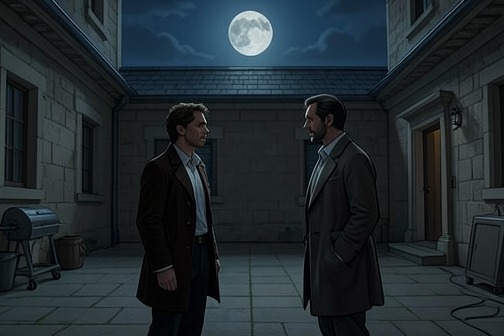
[Sagan](entity:character-recall-character-sagan-41cd84ebf496)’s confession to [Magnus](entity:character-recall-character-magnus-098304000edd) turns a breach of priestly law into a decisive change of direction. Sagan admits that he loves [Valera](entity:character-recall-character-valera-d4102c4742ab) and will not repent for that love; Magnus, rather than simply imposing penance, proposes that Sagan leave the priesthood and return to her with a new purpose. Their exchange reframes the question from whether Sagan can be made to regret the relationship to whether his devotion and Valera’s magic can serve a larger community.
## The Confession in [Sanctuary](entity:location-recall-location-sanctuary-492f12f4a5c2)
After arranging for Sagan to leave the infirmary, Magnus walks with him into Sanctuary’s rear courtyard. It is late, and the space is empty because the students are in class. Once he is sure they are alone, Sagan gets directly to the matter he has returned to discuss: he has defied one of the tenets of his priesthood. He meets Magnus’s eyes, expecting surprise or censure, but Magnus stays calm. His measured response draws on his own relationship with [Daenaira](entity:character-recall-character-daenaira-abda7355cbb5), which has made him recognize that powerful circumstances can lead people beyond the limits they once thought secure.
Sagan distinguishes between regretting the broken rule and regretting the relationship. He says he is sorry to have violated the oath he took, and stresses his love and respect for the temple and its laws. But he does not regret what followed from crossing that boundary. When Magnus identifies the distinction and asks how a violation of religious law can fail to be a sin, Sagan answers that the relationship was meant to happen. He understands it through the tension between fate and free will: Valera was present at the moment he needed her and became part of saving his life. The confession is not a denial that he chose; it is his insistence that choice and fate met in that choice.
## Refusal to Repent
Magnus initially treats the matter as a crisis of faith that the priests might help Sagan resolve. He says Sagan must repent before he can receive penance and forgiveness. Sagan reacts with a vehemence Magnus has never heard from him outside the fury of a hunt. He warns Magnus not to call the relationship a sin again. The intensity itself marks a change: the normally placid priest now makes clear that this is not a doubt he wants his superior to cure.
The disagreement also exposes a contradiction Sagan sees in the religious rules. Priests take the lives of Sinners without receiving penance, although murder ordinarily violates religious law. Sagan asks why that killing is exempt if every life is precious, while his love for Valera is treated as sinful. Magnus answers from the standpoint of faith and duty: if Sagan doubts the work and rules of the priesthood, he should renounce his office. Yet Magnus also tells him he is one of the finest priests he knows and is needed during Sanctuary’s crisis. Sagan’s answer makes the cost plain. He loves Valera too deeply to name that love a sin, and would sacrifice his position rather than kneel in repentance for it. He has returned to speak to Magnus, but not to ask to be talked out of loving her.
## Magnus’s New Purpose for Sagan
Magnus’s response shifts from correction to possibility. Sagan has described Valera as human and as a magic-user; Magnus recognizes that such a person would be of interest to Nightwalkers, particularly amid the war against necromancers. Valera might offer knowledge about magic and help the [Natural-Born Witches](entity:concept-recall-concept-9cf16df98bf3). Magnus also sees a possible connection between her abilities and the hope of repentance and reclamation for necromancers whose souls have been stained. He imagines that she could teach, while acknowledging that she would not necessarily choose to remain isolated if she could help others like herself.
For Sagan, Magnus proposes a path that joins rather than separates love and service. He urges him to resign, pray for forgiveness for breaking the rules, and return to Valera free of those rules. He then proposes bringing her to Sanctuary and preparing the two of them to travel through the Nightwalker courts. Magnus intends to speak with the Chancellors about presenting the offer to other Cultures. In his view, Valera’s presence could let Nightwalkers demonstrate a more generous treatment of magic-users and prove themselves equal to their own ideals. The mission would make Sagan more than a lover returning to the woman he left: it could make him her guardian and a diplomat carrying a new example between communities.
Sagan does not take the risks lightly. Valera is mortal, and he fears that her life could be taken if he fails to protect her. Magnus answers by placing that danger beside the risks faced even by supposedly immortal Nightwalkers, including destruction by a streak of light. His point is not that Valera is safe, but that fear of death should not condemn her or Sagan to a lesser life. Sagan’s response is joyful rather than cautious: the nine days he spent with Valera remain precious, and any further time with her is something he had scarcely dared to hope for. He says he had known their meeting was fate but could not see how it could work; returning to Magnus has made the way forward visible. In his delight, he leaps to Magnus and kisses his temple, a striking physical release from the reserve that has defined his manner.
## A Shared Life and Its Conditions
The proposed return raises a question beyond Sagan’s resignation: whether a human woman can live among Nightwalkers, and what a family with her might mean. Magnus lays out two possibilities concerning children. Sagan could continue drinking the tea that makes their men infertile throughout Valera’s childbearing years. Alternatively, they could choose a wholly Nightwalker life in the darkness, keeping the human world entirely out of the picture so that a hybrid child could be safe and healthy and raised as Nightwalker children are. Magnus emphasizes that these decisions need not be made immediately.
Sagan asks whether the Nightwalkers would welcome Valera and any half-breed children she might have. Magnus answers that they would have to, or they could find themselves answering to Sagan. He also points to another possible form of service: Sagan could guard the Chancellors, who need someone with his skills whom they can trust, especially [Malaya](entity:character-recall-character-malaya-cad63b814f71), whose religion matters deeply to her. The scene therefore leaves Sagan’s future open in practical terms. Magnus has proposed resignation, a return to Valera, a tour of the courts, and a life that could include children; the exchange does not settle every choice. Its decisive change is that Sagan can imagine remaining faithful to his gods without remaining a priest, and can pursue his love without treating it as a moral failure.
Event 5
Sagan and Valera's reunion and decision to build a life together
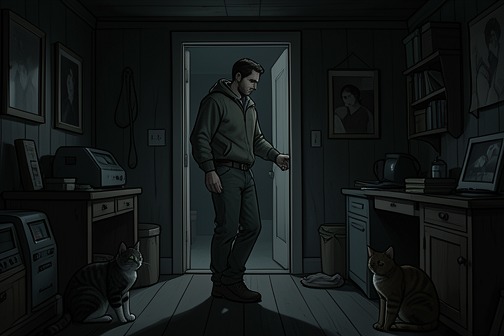
[Sagan and Valera's reunion and decision to build a life together](entity:event-recall-event-sagan-and-valera-s-reun-7a4b727d28f9) turns a painful separation into a joint future. [Sagan](entity:character-recall-character-sagan-41cd84ebf496) returns to the dark cabin, admits that he cannot bear to leave [Valera](entity:character-recall-character-valera-d4102c4742ab), and offers her more than a renewed romance: a place in his world and work that could help others like her. Valera accepts, choosing love and public purpose over the fearful isolation in which she has lived.
## Return to the cabin
Sagan finds the cabin dark and apparently lifeless. Valera has kept its windows sealed and removed the bulbs from their sockets; he searches the small house at speed, afraid that she is not there. His return is not an abstract promise made at a distance: he goes back to the place where he left her and seeks her out in the conditions of her secluded life.
The cats make clear what his departure has cost. They tell him that Valera cries because of him, and [Fat Baby](entity:character-recall-character-fat-baby-d1debe7b252f) even gathers the strength to hiss at him. Their anger makes the reunion answerable to more than Sagan's own longing. He wants Valera to come with him, but the question put to him is whether he will change his mind again, after already leaving her behind. Sagan insists that he will not, and says he will leave no one behind. The cats' guarded response, including [Ulysses](entity:character-recall-character-ulysses-314e0b677c35)'s warning that they will retaliate if Sagan hurts her again, keeps his vow from becoming an effortless reconciliation.
## Recognition and apology
When Valera wakes, she first takes the familiar presence beside her for an illusion. Her hand rests on Sagan's warm chest, where she can feel his heartbeat; seeing his face, she struggles to believe that he has returned rather than vanished as she feared. She has not stopped crying for days. The bodily certainty of his presence reverses the nightmare of abandonment, but it does not erase what he did.
The reunion is intimate and urgent: Valera kisses him, then breaks through the closeness to demand why he is there. Sagan answers plainly that he loves her, cannot let her go, and has found a way for them to keep one another if she wants it. His answer makes the encounter a negotiation as well as a reconciliation. Valera does not have to infer what his return means from the kiss; he names both his love and the possibility of a future, while her question requires him to account for the hurt that preceded it.
Sagan acknowledges that the cats have reproached him and that they are protective of Valera. He also accepts their condition without defensiveness: if he were to hurt her that badly again, he would deserve their punishment. He eases in beside her and draws her against him, but the tenderness matters alongside—not instead of—the admission of fault. The event's emotional turn depends on both: Valera can welcome his closeness, and Sagan must recognize the harm his departure caused.
## A life with purpose
Sagan's proposal joins private commitment to a difficult public purpose. The Nightwalkers want to learn about Valera and good magic; she could show them that humans like her exist and learn about Shadowdweller life, which she has long wanted to understand. He also sees her as able to help reclaim Witches who have turned to necromancy. The offer gives her a role grounded in her own experience: she has recovered from necromancy and can help others who might otherwise be treated as beyond saving.
Valera's excitement gives way to fear. She has spent ten years away from many people and does not know how she will respond to a crowd, especially one including [Vampires](entity:creature-recall-creature-vampires-1d7f37af175a) and [Demons](entity:creature-recall-creature-demons-6600dcc7335a). Sagan does not promise that everyone will welcome her. He acknowledges that some will be suspicious, and that their suspicion is their right; at the same time, he argues that her recovery makes her testimony and example valuable. She can help persuade the Nightwalkers that people who became addicted after making a mistake may still be reclaimed, rather than killed without hope of recovery.
Valera accepts that responsibility and asks whether Sagan will stay with her. He promises to share the rest of her life, contrasting that commitment with his earlier belief that nine days together would be enough. He offers to live with her in his world one night at a time, learn what they could not share before, and find another purpose if she becomes unhappy. His promise is not that fear or difficulty will disappear: he tells her she will be afraid, but believes she can overcome it. Valera, in turn, says that she loves him and agrees to make a new future both for them and for those who need their help.
## The cats and the new beginning
Valera's last immediate condition is that the cats must come with them. Sagan tells her they are already packing, confirming that the new life he proposes includes the companions who stayed with her through isolation and now serve as wary witnesses to his return. Their inclusion makes the decision concrete: leaving the cabin does not mean abandoning the small household that formed around her.
The scene closes with Valera remembering that Sagan's leaving was very bad, and Sagan turning back toward an apology. Their reconciliation therefore does not pretend that the separation never happened. It moves forward through an explicit promise, Valera's freely given acceptance, and a shared purpose that extends beyond the couple. She will no longer have to hide alone, and the experience that once marked her as a danger becomes the means by which she may help others find a way back.
Event 6
Shadowdweller Civil War
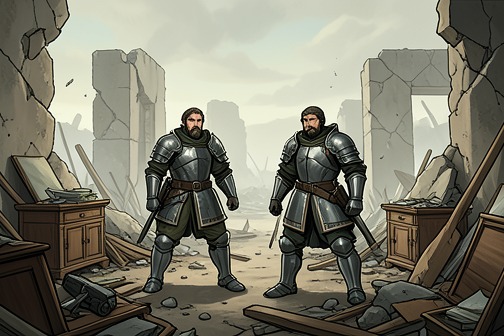
The [Shadowdweller Civil War](entity:event-recall-event-shadowdweller-civil-war-4f8243f33972) is the violent crucible behind [Malaya and Tristan](entity:relation-recall-relation-malaya-tristan-77043e882bf7)’s survival, [Guin](entity:character-recall-character-guin-1bc32c6044cd)’s lifelong service as [Malaya](entity:character-recall-character-malaya-cad63b814f71)’s protector, and the fragile political order that followed. The war’s private cost is clearest in the assault on the twins’ hideout: their escape plan kept them from searching for one another, but [Trace](entity:character-recall-character-trace-70585052f0df) was taken in the fighting and believed dead. The truth—that he survived and endured captivity—made the raid a wound that continued to shape the postwar struggle.
## Historical Frame
The prologue places the hideout attack about thirteen years before the present-day Senate proceedings. It presents the twins as imperial heirs and prospective Chancellors whose enemies had discovered their otherwise nondescript refuge. Their location had been betrayed, turning a concealed household into a battlefield. The conflict is described as a struggle among clans for power and belief, with the heirs’ survival essential to continuing their cause.
The twins’ bodyguards, Guin and [Xenia](entity:character-recall-character-xenia-be4297296447), had prepared for precisely this danger. Malaya and Tristan were kept at opposite ends of the same floor, each under a different protector, so that an attack would not force either sibling to waste time searching for the other. Their instructions were stark: reach safety independently, without hesitation or looking back. At least one heir had to survive if their side was to endure the war. The arrangement treated separation not as a failure of family loyalty but as a condition of political survival.
The war’s chronology is marked differently in separate recollections. The prologue dates the hideout episode to about thirteen years earlier, while [Sagan](entity:character-recall-character-sagan-41cd84ebf496) recalls losing his former handmaiden in the civil war almost twenty years earlier. The latter memory shows that the conflict’s reach extended beyond the heirs’ immediate struggle: it also cost Sagan the one permitted intimate relationship in his priestly life, after which he refused to appoint another handmaiden.
## The Attack on the Hideout
The assault began at night, while Malaya was in her rooms with Guin. He was following his nightly routine, kneeling outside her bedroom to open his bedroll; she was across the sitting room, braiding her hair beside the visible exit. The first violence sounded from the manor’s front rooms. Guin surged upright, and the distance between protector and charge—only several strides—became suddenly perilous. [Malaya and Guin](entity:relation-recall-relation-malaya-guin-f0bc264c00ce) met each other’s eyes as the crisis seemed to slow around them.
Guin called for K’yatsume as shouting and weapons clashing carried through the house. Malaya and Tristan were in separate locations, as their escape plan required. The attack was therefore not only a test of their defenses but of whether each heir could obey the plan under pressure: they were not to reunite first, even when the other’s safety was uncertain. The scene follows Guin’s concern for Malaya while the wider danger reaches the separate group protecting Tristan.
[Rika](entity:character-recall-character-rika-f2d428d5e31b), Malaya’s vizier and friend, joined them in the shadows, shaken and out of breath. She reported that Trace, Tristan’s vizier, had been helping defend Tristan and Xenia when a blade pierced his abdomen. Rika had seen him fall and feared he was dead. His wound and capture made that fear credible: even a strong fighter might not survive such an injury, especially in enemy hands. The report turned the escape from a question of protecting the heirs alone into one shadowed by the apparent loss of a close ally.
Tristan and Xenia then reached the group, looking battered but alive. Malaya threw herself into her twin’s arms, heedless of the blood on him. Xenia urged them to leave before an attacker discovered the hidden stairs. With the heirs reunited and the hideout no longer secure, survival meant abandoning the refuge rather than defending it. The scene ends with retreat, not victory: the immediate duty was to get out before the enemy found another way in.
## Trace’s Capture and the War’s Human Cost
Rika’s belief that Trace had died was mistaken. During the same invasion, [Acadian](entity:character-recall-character-acadian-806423208fc3) took him prisoner. She healed his wounds so that he would be alive and strong enough for her torture; he remained captive for the better part of a year while his companions believed him dead. When Guin eventually found him, Trace’s body bore the scars of that ordeal. Guin had respected Trace’s strength and intelligence, yet at first believed that little remained of him beyond his damaged body. Trace’s eventual recovery testified to a resilience that the raid’s first account could not reveal.
The aftermath of the capture reached beyond the rescue itself. Acadian had concealed her face, and no one Guin could locate knew what she looked like; he concluded that she had operated under another identity. Years later, [Nicoya](entity:character-recall-character-nicoya-de53c5d2a9a2) confessed that her mother was a member of the Senate. The revelation connected wartime torture to a continuing campaign against the twins’ rule: Acadian used legal deception and assassination attempts to weaken those around them. The old assault thus became part of a longer chain of political violence rather than an isolated battlefield episode.
The war also altered lives away from the battlefield. Sagan’s former handmaiden was killed during the conflict, ending his participation in the religious tradition that allowed a priest to have sexual relations only with his appointed handmaiden. He chose not to replace her, a decision that became a source of disagreement with other priests. His refusal persisted in part because [M’gnone](entity:character-recall-character-m-gnone-7f0b97a52966) [Magnus](entity:character-recall-character-magnus-098304000edd), head priest of [Sanctuary](entity:location-recall-location-sanctuary-492f12f4a5c2), did not press him to conform. The conflict’s losses therefore continued to shape private choices and institutional tensions after the fighting had passed.
## Postwar Order and Continuing Conflict
In the present-day Senate, the war’s settlement is described as recent enough to remain politically fragile. Jericho argues that the monarchy has been free of challenges for only about a decade and presents an ancient marriage law as a way to secure Malaya’s reign. Malaya answers that the law is 1,846 years old, made for an era of warring clans and hostile neighboring Nightwalkers. She points to the twins’ firm position in the [Chancellery](entity:organization-recall-organization-chancellery-f57956b3c222) and the defeat of challengers who confronted them directly. The debate shows how the memory of clan conflict can be invoked both to defend custom and to argue that old rules no longer fit the peace.
That peace is not the same as an end to violence. The clans have been dissolved, but some former members have become secret assassin guilds; some retain scruples, while others do not. A law drafted by Trace makes it a high crime for one Shadowdweller to kill another without provable and imperative cause, but clandestine groups remain outside the reformed order. Guin, once an insider among the clans, believes he can return to those hidden networks despite having left his people to serve Malaya. The war’s legacy is therefore both constitutional and personal: it produced a monarchy and new limits on violence, yet the old machinery of faction and revenge continues beneath them.
## Narrative Significance
The hideout episode gives the civil war a human scale through divided rooms, a bedroll at a doorway, a braid unfinished near an exit, and the hidden stairs that offer the survivors a way out. Its governing tension is between attachment and discipline: Malaya and Tristan must not risk both heirs by searching for each other, while Guin must protect his charge amid threats he cannot control. Their reunion brings relief, but the loss of Trace’s freedom remains concealed even from those who think they understand the night’s cost.
Later revelations revise the meaning of the raid without undoing its immediate terror. Trace’s supposed death becomes prolonged captivity; the unknown torturer becomes Acadian, whose daughter’s confession links her to Senate power and later assassinations. Meanwhile, the postwar Senate debate shows the civil war surviving as an argument over succession, custom, and who has authority to define peace. The conflict is both a past battle and the condition from which the characters’ present political dangers emerge.
Event 7
The attack on Malaya and Tristan's hideout

[The attack on Malaya and Tristan's hideout](entity:event-recall-event-the-attack-on-malaya-an-00f499149902) is a turning point in the [Shadowdweller Civil War](entity:event-recall-event-shadowdweller-civil-war-4f8243f33972) prologue: when their refuge is discovered, the twin heirs’ survival plan collides with [Malaya](entity:character-recall-character-malaya-cad63b814f71)’s determination to reach her brother. [Guin](entity:character-recall-character-guin-1bc32c6044cd)’s effort to keep her alive begins as a struggle against her disobedience and becomes a running battle through the manor, where protection depends on both his strength and her fighting skill.
## Background and Stakes
About thirteen years before the main narrative, the twins’ nondescript hideaway is compromised. Fighting breaks out only a few rooms away, with men shouting and weapons firing and clashing. The attack makes clear that the contest of spies and political intrigue has turned against the heirs: someone has revealed their location, and their enemies have reached the house. The immediate stakes are not territory or victory in the manor but whether either twin can survive to continue the war and defend their beliefs.
The safeguards they had prepared are built around the possibility of just such an assault. [Malaya and Tristan](entity:relation-recall-relation-malaya-tristan-77043e882bf7) are kept at opposite ends of the same floor, each under the protection of a designated bodyguard: Guin guards Malaya, while [Xenia](entity:character-recall-character-xenia-be4297296447) guards Tristan. The twins have been instructed not to waste time searching for one another if the hideout is attacked. Each must get to safety alone, without hesitation or looking back; the plan accepts separation as the price of giving at least one heir a chance to live through the war.
That arrangement is tested at the instant the first violence reaches Malaya’s rooms. She is in the sitting room, braiding her hair before a mirror near the suite’s visible exit; Guin is outside her bedroom, kneeling to open the bedroll where he routinely sleeps. The sound of the attack catches them several strides apart. Guin recognizes from Malaya’s expression that she means to run to Tristan, and understands that she is about to abandon the plan. He has known her for around forty years and reads her resolve before she moves, but the distance between them leaves him racing to stop her.
Malaya lunges into the hallway in her thin, midnight-blue k’jeet, heading for her brother’s rooms. Her choice is not a failure to understand the danger: she knows she must outrun both Guin and the threat outside the suite if she is to reach Tristan. Guin follows, gaining on her as she nears the landing, where crossing into the anteroom would expose her to the fighting. Their enemies are using firearms, rare among the light-sensitive Shadowdwellers because a muzzle flash can injure the person firing as well as the target. The flash of a weapon signals how desperate the attackers are—and puts Malaya directly in their sights.
Guin catches the streaming fabric of her gown and yanks her backward. It tears, but holds; Malaya crashes against him, and his arm locks around her waist. Her attempt to reach Tristan becomes a physical struggle with the person charged with keeping her alive. Guin hauls her over his shoulder and carries her back into the suite, then slams the door. She curses and bites him in anger, while he struggles to contain his own reaction; the violence outside has made their established protector-and-heir roles suddenly immediate and bodily. Malaya’s fury is rooted in the same family bond that threatens her safety: she wants her brother, and Guin has just made clear that he will not let her run into the attack.
## Counterattack in the Suite
The struggle between Guin and Malaya is interrupted when splintering wood announces that the bedroom door has been forced open. Guin grabs her hand and pulls her behind him just as the attacker fires. The muzzle flash blinds him, and the bullet tears into his left shoulder only inches above his heart. Though unable to see, he surges forward with his sword arm still working: three quick movements disarm, disembowel, and decapitate the assailant. The sequence turns his protective role into direct combat, but his injury and scorched retinas leave him vulnerable as other attackers press into the room.
Malaya’s warning helps Guin evade a second projectile, which passes close to his face. He knows his impaired sight makes him a danger to himself and a liability to her, and accepts her pushing him against the wall and out of the line of fire. As his vision begins to return, two more figures rush into the bedroom. Malaya meets them with the trained precision of a dancer: a pivoting kick crushes the first attacker’s face and stuns the second, then she hooks a knee into his throat, breaks his arm between her legs, and drives a heel into his throat. Her skill is not merely an echo of the earlier defiance that sent her toward Tristan; it becomes the force that clears their immediate path through the assault.
When the room falls quiet, Malaya reaches for Guin and urges him to leave with her. The change in their position is stark: moments earlier he had carried her back against her will, but now she leads him toward the hidden escape route while he follows with compromised vision and a wounded shoulder. Her resolve to protect those she loves has not lessened; the fight has made it necessary for Guin to depend on her in turn.
## Escape and Reunion
The escape route turned the manor’s architecture into a means of survival. Guin had chosen the old English house in part because its two bedrooms opened onto concealed stairways descending belowground, through a cavern and ultimately to a beach beneath the cliffs. The route offered a way out at any hour without exposure to light or sunlight, either of which could kill a Shadowdweller. Malaya led Guin to the closet and the hidden stairs; he followed her down six flights despite his damaged sight, along wood that grew damp and slick and was partly rotted. He had repaired the necessary sections, and the passage remained safe. By the time they reached the cavern floor, his vision had mostly returned.
Even while injured, Guin continued to carry Malaya from ledge to ledge out of habitual protectiveness, although she was agile enough to cross the gaps herself. Their flight paused when she pulled him to a stop and pressed him against the cavern wall. She laid her hands on his wounded shoulder and gripped his shirt beside the bullet hole, recognizing that he had been hit despite his curt dismissal. The bullet had lodged against his shoulder blade and would need to be removed because it interfered with his arm’s movement. Guin judged the wound against the danger it might have posed to Malaya, thinking it would have mattered more if it had passed through him and struck her.
[Rika](entity:character-recall-character-rika-f2d428d5e31b) found the group in the shadows, breathless and shaking with fear and adrenaline. Guin drew her close as if to shield her too, while Malaya put her arms around her advisor and friend. Rika reported that [Trace](entity:character-recall-character-trace-70585052f0df) had been taken: he had been defending Xenia and Tristan when a blade pierced his belly, and she had seen him fall. She feared he was dead. Guin understood the severity of the wound and the added peril of Trace being held by the enemy, but Tristan and Xenia then joined them, both appearing only somewhat worse for wear. Malaya threw herself into her twin’s arms, relieved to find him alive and unconcerned that he was covered in enemy blood.
Xenia urged them to leave before someone discovered the hidden stairs, and the survivors continued their escape. The reunion did not undo the cost of the attack: Trace was missing and presumed gravely wounded, while Guin carried a bullet in his shoulder. But the twins had survived the breach, and the separation built into their safety plan ended in an embrace once they were together again.
## Narrative Function
The scene’s form makes the attack feel like a collapse of the twins’ carefully managed distance. Its opening command, “K’yatsume! To me!”, returns as violence closes around Malaya, but the call cannot restore the plan: she moves toward Tristan while Guin tries to pull her away from danger. The narration stretches the instant in which they recognize each other’s intentions, then contracts time into abrupt physical beats—fabric tearing, a bullet striking, a blade falling, bodies moving through the escape passage. The shift from suspended recognition to bodily urgency gives the breach its force without obscuring the practical choices that shape it.
The encounter also unsettles the apparent division between guardian and guarded. Guin’s strength first appears as restraint, then as combat; when his sight fails, Malaya’s fighting skill and warning keep them alive, and she becomes the one who leads him toward safety. Their brief pause over his wound reverses that dependence once more: she recognizes what he has dismissed, while he measures the injury by the harm it might have caused her. The final reunion with Tristan offers relief but not restoration. Rika’s news about Trace and Xenia’s warning to leave keep the escape open-ended, so survival means carrying the attack’s losses and dangers with them rather than emerging untouched.
Event 8
Nightwalker Civil War
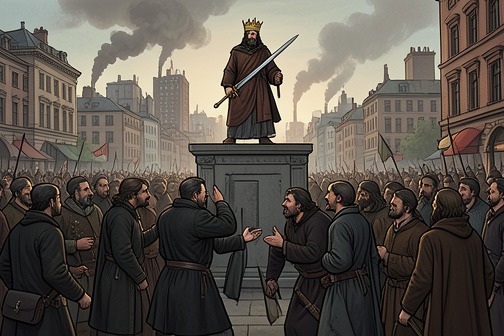
The [Nightwalker Civil War](entity:event-recall-event-nightwalker-civil-war-684fa7077045) was a conflict among rival clans that left a lasting mark on the city’s politics, law, and private lives. Its end made peace and a new monarchy possible, but did not settle what justice should mean for crimes committed during the fighting: a general pardon helped bind the population together while also shielding a torturer from prosecution for what she had done to [Trace](entity:character-recall-character-trace-70585052f0df).
## Clan Conflict and the Fragile Peace
The war grew out of a society divided among clans fighting one another for power. By the time of the later Senate debate over [Malaya](entity:character-recall-character-malaya-cad63b814f71)’s authority, Jericho could invoke that recent history to argue that the monarchy had been free of wartime challenges for only a decade. He presented the law under discussion as a means of securing Malaya’s reign, warning that the postwar peace remained young and that the population still depended on her respect for its religion and customs. His appeal made the conflict more than a memory: its recent violence remained an argument for preserving political order.
The war’s end brought a change in the shape of that order. The clans were dissolved for the most part, and former rivals began to live in a more peaceful city, with less of the quarreling that had characterized the conflict. Malaya’s long-serving bodyguard, [Guin](entity:character-recall-character-guin-1bc32c6044cd), saw that postwar flourishing as the beginning of a happier period for her: her smiles and enjoyment of life returned even as [Rika](entity:character-recall-character-rika-f2d428d5e31b) suffered from Crush. The peace therefore registered not only as a political settlement but as a change in daily life, fragile enough that later threats to Malaya’s happiness could feel like a reversal of what the war had finally made possible.
## The Invasion and Trace’s Captivity
One of the war’s defining personal losses began during an invasion of the twins’ household. Rika believed that Trace had been killed, but [Acadian](entity:character-recall-character-acadian-806423208fc3) had taken him prisoner. She healed his wounds so that he would be healthy when she began torturing him, and he remained in captivity for the better part of a year. The scars he bore afterward testified to the duration and brutality of the abuse.
Guin later remembered finding Trace as one of the best and worst moments of his life. He respected Trace’s power and intelligence, yet at the moment of the rescue he thought there was nothing left of him but his damaged body. Trace’s eventual recovery proved that impression wrong: his strength of will and character had survived what had been done to him. The rescue thus carried two truths at once—the sight of a person seemingly reduced to his injuries, and the evidence that those injuries had not erased him.
## Amnesty, Law, and the Limits of Accountability
The postwar settlement depended on pardoning acts committed during the war and giving people a clean slate. That decision helped knit the population together, but it also prevented Acadian from being tried for her crimes against Trace: legally, the torture was classified as a war crime covered by the amnesty. When Malaya protested that she should face punishment, Tristan explained why ordinary prosecution was barred. Malaya considered whether treason or sedition might offer another route, but recognized that such a case would require proof.
The distinction between wartime violence and postwar crimes remained consequential. The new law made it a high crime for one Shadowdweller to kill another without provable and imperative cause; it did not erase every danger left by the old clan order, nor could it make the pardon’s cost disappear for survivors. The narrative sets the settlement’s collective purpose against Trace’s unredressed suffering: peace required a shared legal reset, while that same reset closed the courtroom door on a particular victim’s case.
## The Clans’ Afterlife
Dissolution did not mean that every former clan member accepted the new order. The clans had once been Guin’s people, though he had left them fifty years earlier to serve Malaya. He understood that his abandonment had made him infamous among them, and that returning to their circles would be difficult. Yet his old insider’s knowledge remained useful when the threat to Trace’s wife, [Ashla](entity:character-recall-character-ashla-4207aa8d74e8), and her future child required him to investigate the assassins behind it.
With clan killing outlawed, those who had not reformed turned to secret assassin guilds and an illegal trade. Some guilds retained scruples and others did not; Guin believed the group hired to kill Ashla would be among the most treacherous. He also knew that very few clans would accept a contract to kill a child, knowledge that pointed toward an insider’s involvement. The civil war’s end had therefore changed the means by which violence operated without making its networks vanish. The conflict’s legacy lies in that uneasy transformation: former clans were formally dissolved, but their loyalties and skills could persist underground, where the new peace had less power to reach them.
Event 9
Karri's poisoned-weapon attack on Malaya and attempt to kill Magnus

Karri’s attacks on [Malaya](entity:character-recall-character-malaya-cad63b814f71) and [Magnus](entity:character-recall-character-magnus-098304000edd) connected an attempt on the queen’s life with a wider campaign against the people around her. Remembered through [Guin](entity:character-recall-character-guin-1bc32c6044cd)’s response to the attack on Malaya, the episode makes a poisoned weapon and a split-second act of protection part of a larger struggle over the twins’ rule.
## Background and Targets
The attacks took place amid sustained efforts to weaken Malaya and her brother, Tristan. Their opponents had spent months trying to turn the Senate against them, while violence reached beyond the rulers themselves: two attempts had been made on [Trace](entity:character-recall-character-trace-70585052f0df)’s life, and Magnus, Malaya’s priest and close friend, had also been targeted. Guin later understood Karri’s attempts against Malaya and Magnus as part of the same campaign, combining political pressure with attacks on those whose removal might leave the twins vulnerable.
## The Attack on Malaya
Guin’s memory centers on a [K’ypruti](entity:creature-recall-creature-k-ypruti-afc0c81b203d) assassin reaching to stab Malaya, the Chancellor he protected, with a poisoned weapon. He recalled recognizing the danger before Karri moved to make Malaya her target. His reflexes and instincts let him act against the threat, and he remembered taking satisfaction in making Karri pay for her crimes, despite her status as a so-called holy woman. The scene’s decisive tension lies in that narrow interval between the assassin’s intention and the threatened strike: Guin’s protection of Malaya becomes immediate action rather than a formal duty.
## Campaign and Significance
The attacks on Malaya and Magnus were not presented as isolated violence. Guin connected Karri’s actions to a broader effort to destroy the twins’ hold on power, which used both legal deceptions and illegal attempts to kill their allies. The earlier attempts on Trace, the attack on Magnus, and the danger to Malaya thus form a pattern of pressure on the royal circle. Karri’s assault shows how that campaign could reach directly toward the queen, while Guin’s recollection emphasizes the personal vigilance required to keep her safe.
Event 10
Trace's captivity and torture by the Acadians
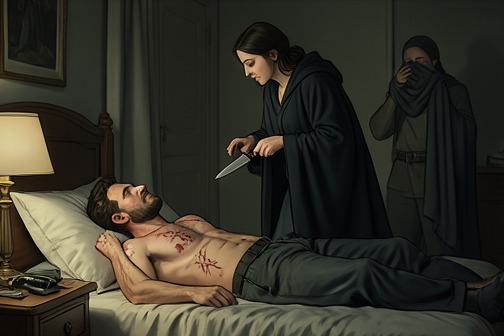
[Trace](entity:character-recall-character-trace-70585052f0df)’s captivity and torture by [Acadian](entity:character-recall-character-acadian-806423208fc3) is a wartime atrocity whose consequences outlast the imprisonment itself: Trace returns bearing lasting scars, [Guin](entity:character-recall-character-guin-1bc32c6044cd)’s rescue becomes one of the most painful moments of his life, and the pardon of wartime acts later blocks ordinary prosecution of the crime. The episode also establishes Acadian’s methods and concealed identity as continuing threats to the postwar order.
## Capture and Concealment
During the civil war, Acadian took Trace prisoner on the night of the invasion of the twins’ household. [Rika](entity:character-recall-character-rika-f2d428d5e31b) believed she had seen Trace die, and for much of the following year his allies shared the false assumption that he was gone. His disappearance thus concealed not a death but an extended captivity, leaving those closest to him without knowledge of what had happened.
Acadian’s treatment of Trace was deliberately sustained. She healed his wounds so he would be healthy when she began torturing him. The healing did not signal mercy; it served the torture, making his restored physical condition part of her method. Trace remained in her hands for the better part of a year, and the damage was visible afterward in horrific scars across his skin.
## Rescue and Recovery
Finding Trace was one of the best and worst moments of Guin’s life. Guin respected Trace’s power and intelligence, but when he reached him, he thought only of the damaged body before him and feared that little of Trace remained. The rescue therefore brought relief and devastation together: Trace was alive, but the length and brutality of his captivity had made his condition difficult to face.
That first impression did not define Trace’s ending. He recovered, demonstrating a strength of will and character that contradicted Guin’s fear that the torture had left nothing but damage. His recovery is a consequence of the event, but it does not erase the scars or turn the captivity into a temporary ordeal without lasting cost.
## The Captor’s Hidden Identity
Trace never saw Acadian’s face, and Guin could find no one who knew what she looked like. Her anonymity made the captivity more than a closed wartime crime: the person responsible could remain an unknown figure with power and access. After [Nicoya](entity:character-recall-character-nicoya-de53c5d2a9a2) confessed that her mother was a member of the Senate, Guin connected that disclosure to Acadian and concluded that the torturer had an alternate identity.
The captivity also belonged to a wider campaign against the twins’ hold on power. Acadian’s covert efforts included legal deception and illegal attacks on people around them; the attempts on [Malaya](entity:character-recall-character-malaya-cad63b814f71) and [Magnus](entity:character-recall-character-magnus-098304000edd), as well as two attacks on Trace, were understood as part of that campaign. The torture of Trace therefore joins private bodily harm to political violence, while the captor’s concealed identity frustrates attempts to establish responsibility.
## Amnesty and Accountability
The postwar settlement made the crime difficult to prosecute. Tristan explained that the population had been brought together by pardoning all acts of war and giving everyone a clean slate. Since Acadian’s torture of Trace was a war crime, she could not be tried for it under that settlement. Malaya’s turn toward possible treason or sedition reflects the resulting gap between the known harm and the available legal charge: proof might exist, but it first had to be found, and Acadian herself had to be located.
The episode’s consequences return in the later confrontation with Acadian. Magnus identifies her crimes as crossing both common and religious law and uses his truth-compelling third power to question her repentance. The scene does not undo the amnesty’s barrier to a trial for Trace’s wartime torture; instead, it shows another form of answerability being pursued. Trace’s captivity thus remains both a personal wound, marked on his body and answered by his recovery, and an unresolved test of how a society can seek accountability after granting wartime pardon.
Event 11
Nicoya's attempted coup at the Sanctuary
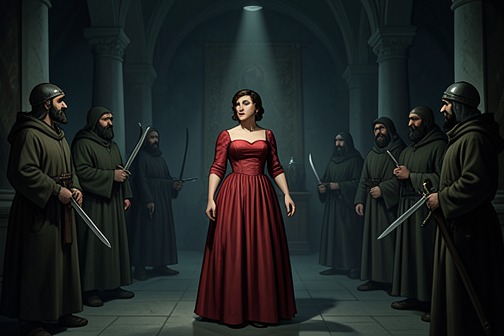
[Nicoya's attempted coup at the Sanctuary](entity:event-recall-event-e5f9fd68988c) was a near-successful seizure of the religious institution and a key part of a broader campaign to weaken the twins’ hold on power. Recalled as [Guin](entity:character-recall-character-guin-1bc32c6044cd) considers the danger still facing [Ashla](entity:character-recall-character-ashla-4207aa8d74e8) and her unborn child, it links violence inside [Sanctuary](entity:location-recall-location-sanctuary-492f12f4a5c2) to political subversion and a planned assassination beyond its walls.
## Causes and Political Stakes
Several weeks before Guin’s recollection, [Nicoya](entity:character-recall-character-nicoya-de53c5d2a9a2), a handmaiden, tried to take control of Sanctuary, the religious house and education center run by [Magnus](entity:character-recall-character-magnus-098304000edd). She came close: by killing some priests and turning others to her cause, she had created a path toward control of its religious authority. Sanctuary’s power was distinct from that of the royal household and common law. Because neither sphere commanded the city alone, control of both was necessary to secure power over its people.
The coup also revealed how closely the struggle over Sanctuary was connected to the twins’ wider political vulnerability. Nicoya was the daughter of [Acadian](entity:character-recall-character-acadian-806423208fc3), a [K’ypruti](entity:creature-recall-creature-k-ypruti-afc0c81b203d) renowned as a wartime torturer and an unidentified member of the Shadowdweller Senate. Before Nicoya died, she disclosed her mother’s identity. Guin understood Acadian to be working against the twins through legal deceptions as well as illegal attacks on those around them, including attempts on [Malaya](entity:character-recall-character-malaya-cad63b814f71) and Magnus and two attempts against [Trace](entity:character-recall-character-trace-70585052f0df).
## The Coup and Its Wider Campaign
Nicoya’s operation inflicted damage within Sanctuary: priests were killed or brought under her influence, and students became victims. The coup’s reach extended beyond the institution. Its associated plot involved hiring assassins to hunt Trace’s wife, Ashla, and their baby, with the killings scheduled to begin two months after the child’s birth. Guin knew the hired clan would not abandon the assignment until it was complete, and understood that very few clans would accept a contract to kill a child.
This threat was part of a longer campaign tied to Acadian’s wartime violence. During the civil war, Acadian had captured Trace and kept him prisoner for much of a year, healing his wounds so that she could torture him. Trace survived and recovered, but carried horrific scars; he had never seen his torturer’s face. The absence of anyone able to identify Acadian reinforced Guin’s suspicion that she used an alternate identity. In his account, the coup therefore appears not as an isolated seizure attempt but as one move in a campaign using concealed identity, political influence, and hired violence.
## Aftermath and Significance
Nicoya’s death and the defeat of her bid did not end the danger. Acadian’s remaining spies in Sanctuary had been destroyed or driven out, and the institution had been nearly cleared of her influence. Yet the failed coup sharpened Acadian’s personal motive for retaliation: she blamed [Daenaira](entity:character-recall-character-daenaira-abda7355cbb5) for killing Nicoya and regarded [Daenaira’s pregnancy](entity:state-recall-state-daenaira-s-pregnancy-aed06d5ef1c7) as an opportunity for revenge. The threat against Ashla and her child likewise remained active, with the planned hunt set to begin after the birth.
The episode’s significance lies in the separation—and interaction—of political and religious authority. Sanctuary could be targeted as an independent center of power, while attacks on the twins’ allies could make their royal position increasingly exposed. The coup failed to deliver control, but it disclosed the reach of the opposition and left its intended victims facing consequences beyond the institution itself.
Event 12
The plot to assassinate Ashla and her children
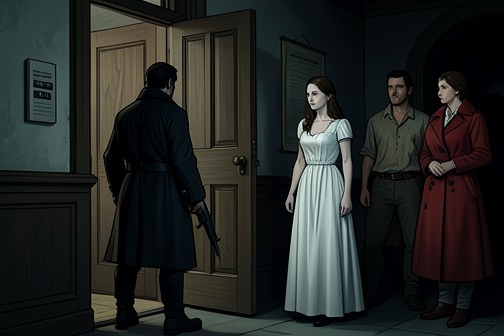
[The plot to assassinate Ashla and her children](entity:event-recall-event-8c4e2a31fc55) is a delayed, covert threat against [Trace](entity:character-recall-character-trace-70585052f0df)’s family, set in motion by [Nicoya](entity:character-recall-character-nicoya-de53c5d2a9a2) and carried forward through illegal assassin guilds. Because the planned hunt is to begin after [Ashla](entity:character-recall-character-ashla-4207aa8d74e8) gives birth, the danger is not immediate—but it gives [Guin](entity:character-recall-character-guin-1bc32c6044cd) time to act, and a reason to return to the criminal world he left behind.
## Origins and Targets
The scheme emerges from the aftermath of Nicoya’s attempted coup at [Sanctuary](entity:location-recall-location-sanctuary-492f12f4a5c2). During that upheaval, Nicoya arranged for assassins to hunt Trace’s wife and baby, with the killing scheduled to begin two months after the child’s birth. The plot thus extends the coup’s violence beyond its immediate victims: even after Nicoya’s death, the hired killers remain a threat.
Nicoya’s mother, [Acadian](entity:character-recall-character-acadian-806423208fc3), gives the threat a deeper history. During the civil war, Acadian captured Trace and kept him alive so she could torture him; Guin later found and rescued him. Trace survived, but the scars remained, and he had never seen his captor’s face. Nicoya’s confession that her mother was a member of the Senate, together with the absence of anyone who could identify Acadian, led Guin to suspect that she operated under another identity. The assassin plot is therefore linked to a wider campaign against the twins’ power, which had also included attempts on [Malaya](entity:character-recall-character-malaya-cad63b814f71) and [Magnus](entity:character-recall-character-magnus-098304000edd) and two attacks on Trace.
## The Delayed Hunt
Ashla is the immediate target, but the child is part of the plan from the outset. Guin understands that the hired clan will not abandon its assignment until it has completed it. He expects Ashla to give birth in about a year, with the hunt beginning two months afterward. The delay creates a narrow interval in which the threat can be traced or stopped; it does not lessen the intended outcome.
The choice of a child as a target also signals how serious the commission is. Guin knows that few clans would agree to kill a child, and that this knowledge belongs to someone familiar with the assassin world. He concludes that Nicoya would not have hired an ineffectual group, making the danger more than an empty threat against Trace’s family.
## Guilds and Guin’s Return
The old assassin clans have been dissolved, but their members have not all abandoned their work. Trace established a law making it a high crime for one Shadowdweller to kill another without a provable and imperative cause; those who continued outside that law reorganized as secret guilds. Their standards differ: some retain scruples, while others do not. Guin suspects the commission was given to the most treacherous among them, not to a weak or careless group.
Guin’s knowledge of the trade makes him useful, but his history complicates his return. He had run with his old clan fifty years earlier and still counts as an insider, yet the clans remember him as someone who left his people to stand beside a queen. To reach the killers, he will have to work his way back into the city’s darkest circles, despite the reputation that may close those doors to him.
## Travel and Stakes
The guilds are scattered: most operate within the city, but some are elsewhere. Pursuing them may require travel aboveground, which can be dangerous for Shadowdwellers. The Shadowscape offers a safer route, since its moonlight is the only light that does not hurt them, but it is not an unlimited refuge. Staying there for more than two days can bring on euphoria so overpowering that travelers may not realize they need to leave before their minds are destroyed.
The plot therefore places Guin in a race against a future deadline while forcing him to navigate both the human danger of the assassin networks and the limits of Shadowdweller travel. The available evidence establishes the threat, its likely reach, and Guin’s intention to pursue its perpetrators; it does not establish whether the guild is found or whether the planned attack is prevented.
Event 13
Malaya's vision of Acadian threatening Guin
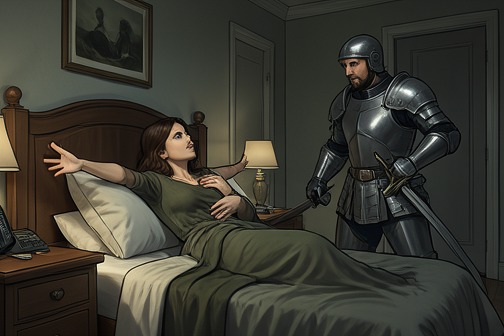
[Malaya](entity:character-recall-character-malaya-cad63b814f71)’s vision of [Acadian](entity:character-recall-character-acadian-806423208fc3) threatening [Guin](entity:character-recall-character-guin-1bc32c6044cd) is a moment of precognition that makes an unseen danger brutally personal: Malaya sees Guin chained and at Acadian’s mercy, then wakes to find him beside her and fears that his life will be traded for hers. The vision does not establish exactly what will happen, but it exposes the fear at the heart of their bond—that someone she loves may sacrifice himself to protect her—and makes Guin’s presence feel, to her, like the difference between safety and loss.
## The Vision and Guin’s Arrival
The scene opens not with an explanation but with Malaya screaming Guin’s name. He is armed and through the door almost at once. She sits upright in bed with her arms outstretched, reaching blindly while her whiskey-colored eyes stare sightlessly at the ceiling. Her repeated call turns the vision’s aftermath into an immediate alarm: Guin does not yet know what she has seen, only that she is desperate for him.
Guin understands that waking from a vision among other people is difficult for her, and he is conscious that her cries could bring the whole household running. Rather than summon an audience, he climbs into bed and gathers her into his arms. This physical response precedes explanation. Malaya’s reaching hands find the person she has called for, and his closeness gives her a place to come back to before she can recount the threat.
When she draws back, she is pale, her pupils wide with fear. Guin asks what she saw because her visions have warned them of trouble too many times for him to dismiss one. The question carries practical urgency, but the scene also registers his familiarity with her gift: her terror is not treated as an isolated nightmare or as evidence to be waved away. It is a warning he needs to understand.
## Acadian’s Threat in the Vision
Malaya identifies Acadian, but the vision has not shown her enemy’s face. What she remembers instead are Acadian’s hands and the artificial claws she wears: steel, brutally sharp, yet dull enough to make a wound painfully felt as it is dragged up Guin’s spine. The description makes the threat specific without making it complete. Acadian remains visually unseen, while the claws give her violence a recognizable instrument and a chilling physical detail.
The vision places Guin in chains, treated like an animal, with the claws and then their points at his throat. Malaya reports that Acadian made his life the price of hers. This is the scene’s central revelation, but not a confirmed account of an event that has already occurred: it is what Malaya has seen and fears will come to pass. Guin cautions that images in a vision may represent something else. His qualification preserves uncertainty; it does not make the sight less terrifying to her.
That gap between image and interpretation drives their exchange. Malaya insists that, whether Guin stays or leaves, the danger will ultimately become a choice between her life and his. The vision therefore supplies no simple instruction that guarantees safety. Instead, it makes every possible decision feel compromised and brings her worst fear into focus: that a loved one will give up his life because of her.
## The Plea to Stay
Guin initially redirects the fear toward Tristan. He argues that Malaya would herself trade anything, even her soul, for her brother’s well-being, and reasons that Tristan may be the person who would make Guin risk his life. He proposes speaking with Tristan and [Xenia](entity:character-recall-character-xenia-be4297296447) that evening and says they will work out how to protect him. His response tries to turn a terrifying vision into a problem with people to consult and a plan to make.
The explanation makes sense to Malaya, but it does not calm her. She makes the fear broader than the specific family danger Guin has identified: anyone she loves might sacrifice himself for her. Then she asks Guin not to leave, explicitly pleading with him as a friend. She says she would remain unmarried, even become an old maid, if that were what it took to keep him beside her. The prospect of marriage becomes, in her frightened reasoning, a means by which she might lose the protection she associates with him.
Guin laughs because he recognizes that her logic is flawed, not because the vision has ceased to matter. Malaya pouts and strikes his chest with a fist, insisting that she means what she says and offering to do anything if he will stay. The gesture brings the scene back from steel claws and chains to the two people in the bed, but it cannot settle the danger. Her request is both an immediate attempt to hold him near and a response to the uncertainty the vision has opened.
## [Precognition](entity:concept-recall-concept-e07a69810ef7), Protection, and Uncertainty
The scene draws force from the contrast between Malaya’s foresight and her inability to control what it shows. Her visions have been useful warnings, and Guin treats them seriously; nevertheless, the image cannot tell either of them whether its literal details will occur or how to prevent them. Malaya can perceive a possible future, but here that knowledge intensifies her fear rather than giving her a reliable escape from it.
The threat also exposes different meanings of protection. Guin sees protection as something they can organize: identify who might be at risk, talk with Tristan and Xenia, and find a way to keep him safe. Malaya experiences protection as his continued presence. Her claim that it is safe only when he is there is not presented as a settled solution; it is the desperate conclusion of someone who has just seen him helpless in Acadian’s hands.
The scene’s movement—from a scream, to the tactile image of claws, to a plea for Guin to remain—makes the vision consequential even while its fulfillment remains unresolved. It reveals Malaya’s fear of becoming the cause of a loved one’s death, and Guin’s first response is to hold her, question her, and promise to address the danger together. The warning’s immediate outcome is therefore not certainty but an exposed dependence: Malaya wants Guin near, while both must confront a future that the vision has made vivid without making fully knowable.
Event 14
Magnus and Daenaira learn of her pregnancy
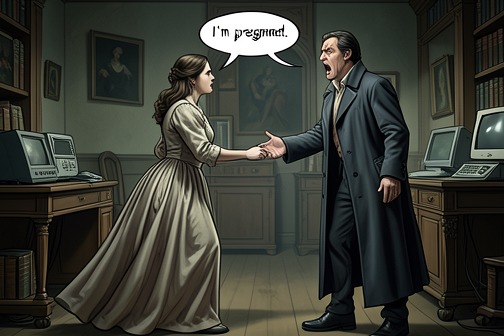
[Magnus and Daenaira learn of her pregnancy](entity:event-recall-event-ab33456992dd) in a private exchange that overturns their teasing into a life-changing disclosure. The news is at once a source of wonder and a physical danger in [Magnus](entity:character-recall-character-magnus-098304000edd)’s eyes: he must reckon with becoming a father by blood after more than two centuries of celibacy, while [Acadian](entity:character-recall-character-acadian-806423208fc3) recognizes the pregnancy as a means of revenge for [Nicoya](entity:character-recall-character-nicoya-de53c5d2a9a2)’s death.
## Background
[Daenaira](entity:character-recall-character-daenaira-abda7355cbb5) enters Magnus’s room with an unusually rapid string of endearments, a change in manner that makes him immediately suspicious. He tries to evade her approach and keep her from touching him until they have talked, recalling that she has previously distracted him from a lecture. When she says that a couple needs marriage counseling, Magnus assumes she means the two of them and asks what is wrong with their relationship. The playful setup delays the news by only a few exchanges, but it lets the disclosure arrive as both a joke’s reversal and a genuine rupture in the conversation.
## The Disclosure and Magnus’s Reaction
Daenaira states plainly, “I’m pregnant.” Magnus chokes on his breath; his vision blurs, the room seems to spin, and his heartbeat surges. Daenaira reads his stunned reaction as possible rejection and folds her arms defensively, unsure whether he regards the news as bad or disastrous. He tells her that neither is true and asks for a moment to recover. Seeing her hurt expression, he feels immediately ashamed of how his shock has appeared to her.
Daenaira helps him sit on the bed. Once he can focus again, Magnus draws her into his lap and explains what frightens him: she is very young physically, and he worries about the strain pregnancy may place on her body. His concern is sharpened by watching his son struggle as a frail woman carries his child. Daenaira insists that she is not frail; Magnus answers with a chuckle that he has had ample opportunity to discover her strength. The exchange does not erase his fear, but it turns his first stunned response toward affection and reassurance.
## Parenthood, Faith, and Daenaira’s Vulnerability
The pregnancy would make Magnus a biological father for the first time. He has already raised his foster son, [Trace](entity:character-recall-character-trace-70585052f0df), from toddlerhood, but he had never imagined having a child of his own. Before Daenaira came into his life, he had chosen celibacy and devoted himself to his work for more than two centuries. His new circumstances unsettle that settled plan: he understands the pregnancy as another instance of life departing from what he had expected, and credits Daenaira with having changed the course he had chosen.
The announcement also carries a social consequence that troubles Magnus on Daenaira’s behalf. A pregnant handmaiden is regarded by many of their people as an extraordinary blessing, and he expects others to want to touch her. Daenaira has spent nearly half her life under the whip of abusive slavery and dislikes being touched by strangers; Magnus has had to earn her automatic trust in physical contact over time. His attention therefore extends beyond the child’s safety to the possibility that public celebration could expose her to unwanted touch. The scene places the community’s reverence for pregnancy beside Daenaira’s personal history and boundaries.
## Acadian’s Response and the Stakes
The news reaches Acadian exactly five hours after Daenaira tells Magnus. Though most of Acadian’s spies in [Sanctuary](entity:location-recall-location-sanctuary-492f12f4a5c2) have been destroyed or driven out, she receives enough information to learn of the pregnancy. Her political ambitions have recently suffered a separate defeat: the religious house has been almost cleared of her influence, although only weeks earlier she had nearly placed her daughter in control of Magnus’s religious throne. Because Sanctuary’s religious law operates independently of the royal household and common law, Acadian understands that control of the city’s people depends on holding both spheres of power.
Acadian’s fury joins that political loss to her grief and hatred over Daenaira’s killing of Nicoya. She interprets the pregnancy as an opportunity to answer one child’s death with danger to another, framing revenge as a child for a child. She considers harming Daenaira after the birth or attacking during the pregnancy, when the mother might also be endangered, but explicitly does not seek Daenaira’s death as her goal: she wants her to suffer. The disclosure thus changes from private news into a threat-bearing fact. [Magnus and Daenaira](entity:relation-recall-relation-magnus-daenaira-9a36a00eccb6)’s hope for a child now exists alongside an enemy’s intention to make that child a means of retaliation.
Event 15
Malaya and Guin begin a sexual relationship
[Malaya and Guin begin a sexual relationship](entity:event-recall-event-4f5396f941b8) after years of guarded closeness and mutual desire, turning a flirtatious dance into an encounter that changes their bond. [Malaya](entity:character-recall-character-malaya-cad63b814f71) initiates the approach; [Guin](entity:character-recall-character-guin-1bc32c6044cd)’s response is immediate and forceful, but his fear of what intimacy may cost them persists even as he gives in to it.
## Background and Initiation
At a gathering among trusted friends, Malaya appears in transparent black silks associated with k’hutra dancers, a striking departure from her usual more conservative dress. She dances before the small company, which includes Tristan, [Magnus](entity:character-recall-character-magnus-098304000edd), [Daenaira](entity:character-recall-character-daenaira-abda7355cbb5), [Trace](entity:character-recall-character-trace-70585052f0df), and [Ashla](entity:character-recall-character-ashla-4207aa8d74e8). Guin tries to watch the room as her bodyguard, but his attention keeps returning to her. When Malaya crosses the room in a leap and turns against him, her movements become a private provocation in public view. She presses close, touches his face and shoulders, and secretly tests his arousal before moving away to continue dancing.
The scene makes their desire legible through bodily reactions before either names it. Guin grips his sword to keep from touching her, while Malaya registers his involuntary response and burns to return to him. Her teasing is not intended to expose or humiliate him before their friends; she wants him to recognize a desire she believes he has forced her to discover on her own. When Guin later storms into her suite, soaking wet and furious, the contrast between his controlled role as protector and the intensity of his response makes their long restraint impossible to ignore. He orders [Killian](entity:character-recall-character-killian-699fcbadc38c) out, then warns Malaya that touching him that way could be taken by another man as an invitation. Her pointed distinction between another man and Guin draws the conflict toward its real question: whether he will continue to deny what he wants from her.
## Confrontation and Surrender
Alone with Malaya after Killian leaves, Guin’s anger gives voice to the danger beneath his restraint. He warns that her touch could be read as an invitation by another man and condemns her for treating that risk lightly. Malaya challenges the distinction he is trying to preserve: if he objects to another man responding, she asks, why should Guin himself remain untouched by what she has done? Their argument turns on more than jealousy or frustration. He is trying to protect her and hold himself apart; she insists that his own desire is part of the truth between them.
Malaya presses him to admit what arouses him, and Guin’s control breaks into action. When he seizes the fabric of her gown, she recognizes that he is about to yield and feels triumph rather than surprise. He throws her onto a divan and kisses her with pent-up force, tearing the silk from her chest. The suddenness and aggression of his response mark a volatile turn in their encounter: the desire that had been played out through dance and taunts becomes physical, while his anger and the consequences of their closeness remain entangled.
The encounter soon shifts from his loss of control to Malaya’s deliberate attention to what he needs. After Guin reveals that he has gone thirty years without sexual intercourse, she releases him from the hold of her legs, but not so that he can retreat. She gets down between his feet and undresses him, refusing to let him hide again behind hesitation. When he tries to stop her, she gives him no opportunity to argue; he eventually places his hand over hers and guides her touch. His participation transforms the encounter from provocation and confrontation into a shared act, culminating in his release and his sense that nothing could have felt more relieving or perfect.
Guin scarcely pauses afterward before drawing Malaya into his lap and kissing her again, now softly. [Rika](entity:character-recall-character-rika-f2d428d5e31b)’s voice from outside the bedroom interrupts them, and Guin signals Malaya to stay quiet; the interruption makes their new intimacy immediately vulnerable to discovery. When Malaya asks why he waited so long, he answers that he should not be with her and questions why she is there with him. She says she wants him, recalling that her desire began weeks earlier, after he touched her breast while trying to bully her. She also suggests that she should have accepted his offer to guard her from the inside out. Their exchange replaces the earlier contest of implication with explicit mutual recognition: she names her choice, while he acknowledges the boundary he has believed he must not cross.
## A Chosen Intimacy and Its Risks
The first encounter does not resolve the conflict that brought them together; it gives them a new way to acknowledge it. After their initial, forceful intimacy, Guin asks whether this is to happen again or only that morning. Malaya answers that they can begin with a lot and see where it leads. Her measured phrasing meets his caution, but the choice itself is unmistakable: this is not merely a moment of surrendered control. Guin sets aside, for then, the worries and consequences he has long attached to wanting her, and wants both to receive what he has craved and to give her what she needs.
Their intimacy remains shadowed by the danger of distraction. After they make love, Guin recognizes how completely Malaya can consume his attention, a perilous state for someone charged with protecting her. Yet he cannot withdraw from the closeness he has finally reached. He lies beside her as she settles against him, and the tenderness of that quiet aftermath is set against his private fear that their time together may end. He imagines being content if she remains alive and his love stays hidden from her—a measure of how far his feelings exceed what he believes he can safely claim.
The relationship also takes shape within a political system that treats a female monarch’s marriage and childbearing as matters of succession. Malaya has already confronted the Senate’s reliance on an ancient law requiring a female ruler to take a mate, arguing that its rationale belonged to an era of rival clans and that she and Tristan had defeated their challengers. The senators later return with historical examples of arranged marriages, a one-year deadline, proposed husbands, and demands for an heir and guardians. Malaya counters with a draft that makes the rule apply without regard to the monarch’s sex, delays its force until the ruler is sixty if they have not chosen for themselves, and reserves final choice to the royal household. Her private bond with Guin thus unfolds alongside a public contest over who may decide whom she marries and what succession requires.
That conflict gives the prospect of children a personal as well as dynastic meaning. When Malaya asks Guin to say he loves her, she offers to identify him publicly as her choice and challenges the idea that he is unworthy: he has already given himself to the monarchy and helped shape it. Guin asks whether she means to marry him and bear his children as heirs, beginning to object that she cannot. Malaya answers that she can, wants his children, and expects them to be strong and beautiful. His response is to seize her and hold her against him. The relationship that began in private desire has reached the threshold of an openly chosen partnership, one that could answer the succession crisis while overturning the Senate’s attempt to dictate the terms of her marriage.
## The Wider Stakes of Family
The prospect of children in [Malaya and Guin](entity:relation-recall-relation-malaya-guin-f0bc264c00ce)’s relationship also resonates with a separate discussion of human–Shadowdweller families. Magnus tells [Sagan](entity:character-recall-character-sagan-41cd84ebf496) that one option is to keep drinking tea that renders Shadowdweller men infertile throughout a human partner’s childbearing years; the alternative is to build a wholly Shadowdweller life in the darkness, where a hybrid child could be safe, with the human world left behind. Sagan is startled by the possibility that Shadowdwellers might welcome a human woman and her children, and Magnus answers that they would have to. This exchange concerns Sagan’s circumstances, not a stated condition imposed on Malaya and Guin, but it makes clear that the promise of heirs belongs to a wider world where love, parenthood, and belonging across human–Shadowdweller boundaries carry practical as well as personal stakes.
Event 16
Acadian attacks Daenaira in the Dreamscape
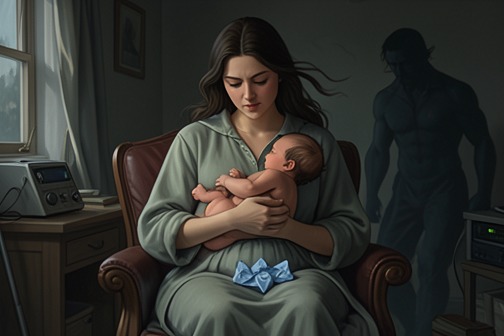
[Acadian attacks Daenaira in the Dreamscape](entity:event-recall-event-a9cb19c51723) and turns a scene of maternal tenderness into a trap. By binding [Daenaira](entity:character-recall-character-daenaira-abda7355cbb5) and threatening the child she carries, [Acadian](entity:character-recall-character-acadian-806423208fc3) makes her pregnancy the means of striking at [Magnus](entity:character-recall-character-magnus-098304000edd); her shifting faces also expose how identity and political respectability can conceal a deadly enemy. The attack’s menace crosses into waking life when Magnus finds Daenaira staring at the ceiling, unresponsive, with an envelope resting on her belly.
## From tenderness to threat
Before Acadian appears, Daenaira is holding her and Magnus’s child in the Dreamscape. The baby’s small weight and heat feel right to her, and she imagines the child as a blessing whose father’s importance will shape its future. Her thoughts turn to [Trace](entity:character-recall-character-trace-70585052f0df), Magnus’s foster son, now Chancellor Tristan’s vizier. That association brings a colder thought: [Ashla](entity:character-recall-character-ashla-4207aa8d74e8) and her baby are in danger, and Daenaira knows that her reputation for killing [Nicoya](entity:character-recall-character-nicoya-de53c5d2a9a2) has made her a heroine to some and an enemy to others. Acadian, she recognizes, is the most dangerous enemy of all.
The change in Daenaira’s thoughts changes the dream around her. The baby disappears from her arms; a dark breeze approaches, and the room falls away. A Senator’s robe scarf flies past, and Daenaira catches a black scrap of jersey material edged with forest-green curlicues. She studies the horizons using the first trick Magnus taught her for hunting in the Dreamscape. The detail briefly places her in the role of a capable dream-hunter, alert to her surroundings. But the attack arrives before that skill can protect her.
## The attack and the shifting faces
A light tap on Daenaira’s shoulder draws her around. A savage hand closes on her throat, her feet are kicked out from under her, and she hits the ground hard enough to lose her breath. The chokehold leaves her unable to draw air as she faces the woman bending over her: [Acadian Helene](entity:character-recall-character-acadian-helene-bc0227dca596), a Senator. Daenaira recognizes that this identity is not the whole truth, but the attacker controls the scene before she can respond.
Acadian turns the question of who she is into part of the assault. She presents the contradiction between Acadian Helene’s public image—charitable, supportive of the Chancellors, regular at Temple, and willing to accept penance after confession—and the possibility that the respected Senator is also Acadian. Her face then becomes Angelique’s, associated with opposition to [Malaya](entity:character-recall-character-malaya-cad63b814f71)’s power, before shifting again to Malaya’s. Finally, the image resolves into Acadian herself. The transformations do not clarify which public persona is genuine; they emphasize that Acadian can move among identities while her target is physically helpless.
The attack is both bodily and magical. Acadian uses the energies of the Dreamscape to bind Daenaira so tightly that she cannot fight back or use her [Third Power](entity:concept-recall-concept-515e49b7a110), the berserker fighting ability that would otherwise make her dangerous to face. The dream’s terrain and its magic, which had just offered Daenaira a hunting skill learned from Magnus, now serve Acadian’s control.
## Revenge aimed through Daenaira
Acadian identifies revenge for Nicoya’s death as the reason she intends to make Magnus suffer. She casts Daenaira not simply as a victim but as the instrument by which she will bring him to his knees. The threat is sharpened by [Daenaira’s pregnancy](entity:state-recall-state-daenaira-s-pregnancy-aed06d5ef1c7): Acadian says Daenaira may survive the trap, but claims that Magnus will kill the child when he frees her. She leaves open whether Daenaira will be allowed to tell him this, making the threatened knowledge itself another part of her control.
Acadian also connects her private vengeance to the political crisis around Malaya. She says she has secured the outcome of a meeting in which Malaya will try to escape an arranged marriage, and claims that Malaya will choose the man Acadian has selected. Acadian’s stated aim is to make that household fall. The attack therefore places Daenaira’s family danger beside a broader scheme directed at the ruling household: her threat to Magnus and the unborn child is part of a campaign with political consequences, not an isolated act of violence.
## Waking discovery and consequence
The narrative cuts from the dream assault to Magnus waking beside Daenaira. He has grown accustomed to her sleeping in his bed and lying across him, so the absence of her weight first registers as a disorienting sense that something is wrong. His hand reaches automatically toward her belly, where discoloration around her navel has confirmed the pregnancy to him. He is still absorbing the reality of their child and touches the spot to reassure himself of it.
Instead, his fingers encounter paper. Magnus draws an envelope from Daenaira’s belly and asks what it is, but she does not blink. Her stillness turns unease into panic: he calls to her, shakes her gently and then harder, and realizes that his heart has understood the danger before his mind can accept it. The envelope is present, but its contents are not disclosed in this scene. Magnus then calls for [Guin](entity:character-recall-character-guin-1bc32c6044cd); the narrative shifts as Guin wakes to [Rika](entity:character-recall-character-rika-f2d428d5e31b)’s frantic hands shaking him. The dream’s threat thus ends not with an explained rescue or diagnosis, but with Daenaira’s unexplained unresponsiveness and an urgent call for help.
Event 17
Daenaira is rescued from the Dreamscape but miscarries

[Daenaira is rescued from the Dreamscape but miscarries](entity:event-recall-event-863494b2fb23) in an ordeal that makes rescue itself a perilous choice: [Magnus](entity:character-recall-character-magnus-098304000edd) and [Guin](entity:character-recall-character-guin-1bc32c6044cd) free her from a lethal trap, only to return to [Sanctuary](entity:location-recall-location-sanctuary-492f12f4a5c2) and find that her pregnancy has ended. [Acadian](entity:character-recall-character-acadian-806423208fc3)’s later account reveals the cruelty behind that reversal: while the rescue was underway, she had already given a potion to the comatose [Daenaira](entity:character-recall-character-daenaira-abda7355cbb5) to expel the child. The episode joins physical danger, dream-world vulnerability, and concealed violence in a single sequence, leaving [Magnus and Daenaira](entity:relation-recall-relation-magnus-daenaira-9a36a00eccb6) to grieve a loss they had not been able to prevent.
## The Trap and Its Stakes
Magnus brings Guin into his rooms at Sanctuary, where Daenaira lies still among handmaidens and priests. She appears dead until Guin sees her chest gently rise. Magnus explains that he found her unresponsive that morning, with a crumpled but smoothed piece of sky-blue stationery resting on her stomach. Its message, a penance for the priest who killed Acadian’s youngest child, makes the attack a deliberate act of vengeance against Magnus.
In the Dreamscape, darkness accompanies Magnus and Guin as they navigate unfamiliar, surreal surroundings. They find Daenaira suspended naked and spread-eagled, bound by her wrists and throat; her hair is tied to the wall so that her neck is forced backward. Another blue note is fastened around her waist with a delicate gold ribbon. Her chest heaves as she becomes aware of their arrival, and her agitation warns Guin that the danger is not only what they can see.
The devices binding her are [Hurish restraints](entity:object-recall-object-hurish-restraints-99a387152b23): cuffs and a collar that Magnus recognizes as technology for controlling animals. These are not harmless dream-made bindings. Acadian has brought them across into [Fade](entity:location-recall-location-fade-062559e7eaa7), and they can inflict real harm. A fierce electrical shock, or light from the mechanism, could destroy Daenaira’s dreaming self while leaving her [Realscape](entity:location-recall-location-realscape-e240101f710a) body alive but irreparably damaged. The men therefore have to free her without triggering the restraints; even a fall or a careless movement could complete a lethal circuit.
## The Rescue
Magnus knows that saving Daenaira may cost the baby. He nevertheless refuses to preserve a child by leaving its mother unable to move or respond, and believes Daenaira would want to fight back against the person tormenting her. Guin recognizes how fear for Daenaira could make Magnus act rashly, and cautions him to stay alert. The conflict is not an abstract dilemma: the rescue demands a choice under threat, before Magnus can ask Daenaira what she wants.
Guin removes his weapons belt and leaps up to the chain at Daenaira’s wrist. His weight makes her swing and scream behind her gag, while the strain threatens her shoulder. He climbs the chain to inspect its ring and realizes that simply unlocking the chains could drop them onto the floor, complete the electrical circuit, and kill her. When he works on the restraints, he must balance speed against the danger of pulling Daenaira from her bindings or setting off the charge.
The release succeeds without a spark. Guin opens the collar, removes the wristlets, takes away Daenaira’s gag, and holds her while judging the distance to the floor. She tells him that her attacker came to her as Helene, then Angelique, then [Malaya](entity:character-recall-character-malaya-cad63b814f71); she could not tell which appearance was real. That account turns the rescue outward as well as inward: Guin immediately considers the danger to Malaya, who has a meeting after the Senate session and may encounter the women Daenaira named.
## Return to Sanctuary and the Loss
Magnus covers Daenaira with his tunic and holds her close. Though she is free in the Dreamscape, both fear what her body will reveal in Realscape. Magnus and Guin Unfade first into Shadowscape and then into Realscape, appearing at the Temple in Sanctuary. They ignore the attention their sudden, disheveled arrival draws and run to Magnus’s rooms, where they find more healers and servants than before.
Daenaira lies limp in a bloodied bed, the sheets soaked with blood between her legs. Magnus climbs in beside her despite the servants and healers trying to reach her, gathers her against his chest, and apologizes, saying he had to choose her. Daenaira answers that Acadian had threatened to take the baby either way. She had hoped the threat was a lie meant to frighten her and blames herself for not fighting, asking what use her power was if she could not save their child. Her response confirms the immediate consequence of the rescue: she is alive and able to speak, but the pregnancy is lost.
Guin leaves the room and Sanctuary, moving from a fast walk to a run through the city. The narrative then shifts to Acadian’s perspective, which supplies the fact the grieving couple do not yet know. Acadian says that when she left her first note, she had also given the comatose Daenaira a potion that expelled the child. The rescue therefore did not cause the miscarriage: Acadian had already ensured the loss while Magnus and Guin were occupied with freeing Daenaira. She regards their survival as an opportunity to torment them again and expects the knowledge of the child’s death to deepen Magnus’s suffering.
## Consequences and Significance
The event changes the meaning of Magnus’s choice. He enters the Dreamscape knowing that rescuing Daenaira might endanger the baby and decides that he will not sacrifice her to preserve a child she could not care for. On his return, the miscarriage seems to confirm the terrible cost of that decision. Acadian’s later revelation overturns that apparent cause: the pregnancy had already been made irretrievable by her concealed intervention. Magnus chose Daenaira, but he did not choose the loss Acadian had prepared for them.
The blue notes frame the attack as punishment, while the restraints turn that threat into a mechanism that could make Magnus himself the instrument of Daenaira’s destruction. Guin’s caution and technical ingenuity interrupt that design; the safe release saves Daenaira’s dreaming self, even though it cannot undo the harm already done to the pregnancy. Acadian’s delayed disclosure extends the violence beyond the trap: rescue ends the immediate danger, but the truth of what she did remains another weapon against Magnus and Daenaira.
Event 18
Malaya confesses her love and reconciles with Guin
[Malaya confesses her love and reconciles with Guin](entity:event-recall-event-adb5d2a2ea7b) after pursuing him from a dangerous tavern to his private rooms, transforming their estrangement into an openly acknowledged mutual love. The scene’s decisive change is not simply that they resume intimacy: [Malaya](entity:character-recall-character-malaya-cad63b814f71) recognizes the depth of [Guin](entity:character-recall-character-guin-1bc32c6044cd)’s devotion and offers him a future as her husband, while Guin finally explains why he has spent years withholding his love and believing himself unworthy of hers.
## Background and Pursuit
Guin has left Malaya and is living apart from her, intending to finish investigating the would-be killers of [Ashla](entity:character-recall-character-ashla-4207aa8d74e8) before leaving the city. Malaya comes looking for him without her guard, [Killian](entity:character-recall-character-killian-699fcbadc38c), whom she has managed to evade. She enters a tavern with [Fatima](entity:character-recall-character-fatima-ece3172c96c7), who is young and frightened, while Malaya herself remains confident in her own judgment and in the people she trusts. Her wealth makes her conspicuous and an immediate target, adding practical danger to a visit that Guin sees as reckless.
When Guin spots her, he crosses the room in alarm and demands to know what she is doing there and where her guard is. Malaya greets him as pleasantly as if they had arranged to meet somewhere safe. He tries to take her back outside, but she slips out of his grasp and returns to the middle of the room, even smiling at a male patron. Guin calls the tavern dangerous; Malaya’s composure and refusal to be managed make clear that she has not come merely to be escorted home.
## From the Tavern to Guin’s Rooms
The confrontation sharpens when Guin tries to end the encounter by taking Malaya away. She is sober and answers that he cannot stop her. She reminds him that he has abandoned his responsibilities toward her, although he can still use force to hurry her out of the tavern. She waves goodbye over her shoulder as he takes her, with Fatima following, to the small rooms he has rented.
The apartment consists of a living room, kitchen, and bedroom. It is dry and private but sparsely furnished: Guin has provided a bed large enough for his height and a chair, and little else. He has never learned to care about furnishing a personal space. Once inside, he locks the door tightly in case anyone followed them hoping for more time with Malaya. He leaves Fatima in the front room and takes Malaya into the bedroom, expecting the argument to continue.
Malaya rejects his authority over her. She tells him that he is no longer her guard or her friend, and that their relationship, as she understands it, has been reduced to queen and subject. Guin calls her a brat and asks whether she has come simply to have the last word. She answers that she came to bring him home: he no longer belongs in the city below. He says he will leave once he has worked on finding the people who tried to kill Ashla. Malaya responds that she needs him with her, but he insists that nothing she says or does will make him return.
## Malaya’s Confession and Offer
Malaya refuses to leave without him. She sits on his bed, folds her arms and legs, and declares that she will follow him when he leaves; she will stay constantly at his side, like a lover. Then she rises, moves close to him, and makes the offer unmistakably intimate. Guin’s resolve begins to falter, but he clings to the obstacle of her impending marriage.
When he asks why she is fighting so hard for him, he argues that she can make friends easily and train excellent guards, and that nothing about him is irreplaceable. Malaya answers that she cannot replace him: she needs her Guin. She embraces and kisses him, unable to accept the prospect of his leaving. The force of her fear makes the stakes explicit to her; his refusal would not be a minor disappointment but a devastating heartbreak.
She finally names what she feels: she loves him. Guin recognizes that this declaration is different from earlier occasions when she said the same words. Her understanding has changed as well. She tells him she can now see that he has been in love with her through the war, her relationships with other men, and the Senate’s deliberations. She regrets having taken his affection for granted and admits that she had wanted his closeness without committing her own heart.
Guin resists her confession because he sees himself as a killer with a brutal past and believes that Malaya deserves someone of better blood and character. She rejects that judgment. The qualities she values in him are his belief in her, his honesty, his protectiveness, his friendship, and his continual effort to become more honorable. She asks him to give her the one thing he has withheld: himself. When he raises the Senate and the law as objections, she says she will openly defend her choice and challenge anyone who calls him unworthy. She offers marriage and says she wants him to father strong children who could become her heirs. The offer puts their private love directly against the public and political barrier he fears.
## Guin’s History and the Reconciliation
Malaya’s offer prompts Guin to ask whether she truly means to marry him and have his children. Before he can believe he is worthy of that future, he tells her what lies behind his sense of shame. His mother was forced into an arranged marriage, in the old clan tradition of marrying the children of enemies to make peace. Her husband despised her. Starved of affection, she took a lover and conceived Guin; because her husband never touched her, he knew Guin was another man’s child and called him a bastard.
When Guin was seven, his stepfather dragged his mother to him by her hair and beat her to death in front of him, close enough for her blood to cover the child. Guin arranged and carried out his first killing against the man who raised him, hoping revenge would make him feel better. It did not. He says that afterward he felt bitter and vengeful, and that he killed other people who had done him no harm. His confession explains why he treats his own violence as proof that he cannot be a fit partner for Malaya; it also gives her a fuller account of the past she has asked him to trust her with.
Guin has loved Malaya since first seeing her in powder blue, waiting for a would-be killer and turning the situation against him. He says his devotion has lasted fifty years, through her other relationships and the gulf of status and rights that he believed placed her beyond his reach. Their physical intimacy had not satisfied him because he wanted the right to love her openly. Her conduct under the Senate’s marriage law had intensified his hurt, and he left rather than continue to offer only his body while denying his deeper need.
After Malaya listens and answers his shame with a direct declaration that he is the man she wants, Guin at last tells her he has loved her since that first encounter. He recalls how the sight of her, rather than the danger surrounding her, became the image that eclipsed every other woman for him. His spoken admission resolves the emotional obstacle that her offer alone could not remove: they now understand both the history of his devotion and the reason he had kept it unclaimed. Guin kisses her softly, in a way the narration distinguishes from their earlier kisses, and their accumulated emotion carries them into renewed passion. The reconciliation establishes mutual love and a possible marriage, but the scene does not show the wedding or settle the political consequences of her choice.
Event 19
Guin asks Talon to track down the guild contracted to kill Ashla's family
[Guin](entity:character-recall-character-guin-1bc32c6044cd)’s appeal to [Talon](entity:character-recall-character-talon-33405e211abd) turns a threat against [Ashla](entity:character-recall-character-ashla-4207aa8d74e8) and her newborn into a test of the assassin’s code: he asks Talon not merely to stop one killer, but to find and eliminate the entire guild that accepted the contract. The request carries a grim deadline, a deliberate method of terror, and the risk that Talon will be branded a traitor by his own kind. Talon does not accept at once; he agrees only to consider whether he is willing to undertake the work and its consequences.
## Causes and Stakes
The immediate cause is a contract on a pregnant woman and her future baby. Guin tells Talon that the woman who arranged it has already killed a baby, making the danger more than a speculative threat. The intended victims are to be murdered two months after the woman gives birth. The contract calls not just for their deaths but for a scene so cruel that the husband and father will return to find his family’s remains scattered throughout the home. Guin’s account makes the threatened violence a calculated assault on a family, not simply a killing for hire.
That specific target changes the scale of Guin’s request. He first distinguishes the matter from an ordinary mark: he needs Talon for something more complex, then states that the task is to take out an entire guild. There are three guilds that would accept so low a contract, so the responsible organization must first be identified among several possible suspects. The threat is thus both personal and institutional: Ashla and her child face the attack, while the search requires Talon to penetrate the world of the guilds that make such violence possible.
## The Assignment and Its Risks
Guin offers to provide all the particulars and gives Talon at least six to eight months, assuming the pregnancy continues without miscarriage. The time allowance is not a reason to delay. Talon must discover which of the three guilds took this particular contract, identify every assassin belonging to it, and kill them all. The wording of the assignment makes its completeness central: stopping the first attack would not satisfy Guin’s demand if the organization behind it remained intact.
The work also carries a cost beyond danger to the intended targets or to Talon himself. If his responsibility is discovered, he will be regarded as a betrayer of his own kind. Guin acknowledges the difficulty of conducting the investigation anonymously in such close quarters, rather than presenting the task as a simple exercise of Talon’s skills. The danger of exposure is built into the mission: to protect a family, Talon may have to turn his knowledge and position against the network from which that knowledge comes.
## Conscience and Allegiance
Talon initially reacts to the demand by standing up sharply and treating the conversation as over. Guin counters not with a promise of payment alone, but with the identity of the intended victims: a woman and a newborn. Talon hesitates, then sits again, visibly affected by the account. His response reveals a moral boundary beneath his cold-blooded exterior. He says that, even when he was young and eager for reasons to hunt and kill, he would not target a child, a pregnant woman, or an innocent.
Talon connects that boundary to Guin’s own break with the guild world. He recognizes that Guin likewise rejected violence against innocents, and recalls that Guin had once been deceived into believing he was hunting a power-hungry dictator who meant to crush the Shadowdwellers. Once Guin recognized [Malaya](entity:character-recall-character-malaya-cad63b814f71) for what she truly was, that false account could no longer justify the mission. Talon’s recollection makes the present request echo Guin’s earlier moral refusal: the same distinction between a supposed enemy and an innocent person now shapes the choice Talon must make.
## An Unsettled Decision
Guin offers Talon a way to leave the life of the guilds if the mission exposes him. Friends in the upper levels, he says, could use Talon’s abilities on the proper side of the law; the offer includes a possible change of career rather than only payment for one dangerous job. Talon laughs at the prospect and doubts that such work could absolve all his past sins. Guin does not claim that the transition would erase them. Instead, he presents the opportunity as a practical future attached to the present assignment.
Talon does not give Guin an immediate yes. He says he needs time to think, while expressing confidence that he can carry out the operation and uncertainty about whether he can do so anonymously. He weighs abandoning everything he knows against the money on offer, even as Guin suggests that a pretty face had been enough reason for him to make a comparable change. The event therefore ends at a decision point rather than with the guild found or the danger removed: the contract’s terms are clear, Talon’s scruples have been stirred, but his commitment remains pending.
Event 20
Sagan's Renunciation of the Priesthood
[Sagan](entity:character-recall-character-sagan-41cd84ebf496)’s renunciation of the priesthood is a decisive personal choice: after more than two centuries in the role, he gives up his status so that he can love [Valera](entity:character-recall-character-valera-d4102c4742ab) freely. The lost title and band of office make the sacrifice visible, but Valera’s concern for his happiness and their plans together frame it not as an emptying of his life, but as the beginning of another.
## The Choice and Its Cost
Sagan had known the priestly role for over two centuries. He relinquished it to be free to love Valera, making the choice a break with a longstanding identity as well as a commitment to their relationship. The scene offers no account of the formal process behind his departure; its emphasis is on what the choice means to the two of them.
The change has a visible sign: Sagan has removed the band of office from his arm along with the title of M’jan. Valera notices the absence and feels sad. Her reaction registers the loss even as Sagan insists that it does not mean an end to their life together.
## A New Beginning with Valera
Sagan answers Valera’s sadness by describing the change as a new beginning with her. His reassurance turns the renunciation toward a shared future rather than asking her to treat the lost office as inconsequential. Valera, in turn, worries that he will miss the priesthood or fail to find contentment in his new life, and resolves to do what she can to help him find it.
Their immediate plans give that future a practical direction: they intend to visit the different Nightwalker courts so Valera can prove what she is. They hope to show that Witches can be good and to help those who do not know how to use magic safely, including people who have become entangled in necromancy by accident. The proposed journey places their partnership within a larger purpose, though the account does not say that Sagan’s renunciation itself settles the courts’ views or resolves the dangers surrounding magic.
## Significance
The event joins a private act of love to the loss of public status. The missing band makes the change tangible; Sagan’s description of it as a beginning gives that absence a different meaning. Valera’s worry prevents the choice from being presented as costless: she understands that a role held for centuries may be missed, and their next life together will require her care as well as his commitment.
Event 21
Valera's Recovery from Black Magic
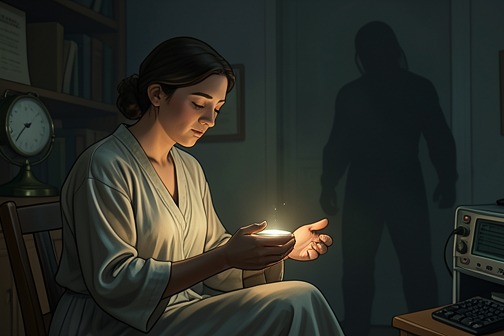
[Valera](entity:character-recall-character-valera-d4102c4742ab)’s recovery from black magic turns a personal deliverance into a challenge to Nightwalker policy: her survival shows that magic need not be evil and that those corrupted by necromancy may be recoverable rather than condemned outright.
## The Corruption and Recovery
The account describes Valera’s earlier involvement in black magic as accidental. The magic had stained her and overtaken her like an addiction, a condition presented as a sickness she had chosen to enter. It establishes the reality of her recovery, though it does not recount the process by which she recovered.
## What Her Recovery Proves
For [Magnus](entity:character-recall-character-magnus-098304000edd), Valera’s existence is evidence that good magic can exist in the world. Her recovery further suggests that natural witches who become necromancers may be saved from the sickness of necromancy. The significance reaches beyond Valera herself: Nightwalkers can no longer assume that every magic-user must be killed, and they need to be warned to exercise care instead of treating all magic as an undifferentiated threat.
## The Work That Follows
Valera and [Sagan](entity:character-recall-character-sagan-41cd84ebf496)’s most immediate task is to tour the different Nightwalker courts so she can prove what she is to them. The visits are meant to make her experience practical evidence: the courts must learn both that good witches exist and that people who have become entangled in necromancy without knowing how to use magic rightly may still be saved. Her recovery thus becomes the basis for a broader effort to change how Nightwalkers respond to magic-users.
Event 22
Asia's Abduction to Beneath
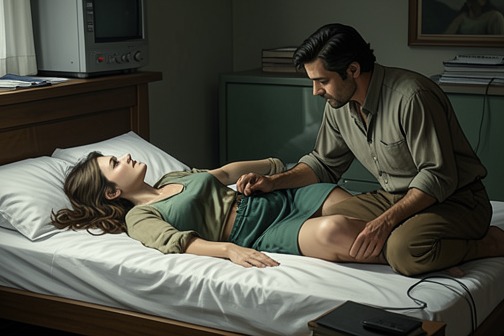
[Asia](entity:character-recall-character-asia-6fc2c52c3c79)’s Abduction to [Beneath](entity:location-recall-location-beneath-c775071715a3) is revealed through its aftermath: Asia wakes in a state of physical weakness, confronts [Julian Sawyer](entity:character-recall-character-julian-sawyer-b9953acf8811), and learns that he has taken her to Beneath, a plane below Earth from which he says she cannot return. The event makes captivity immediate in her body before it becomes comprehensible as a change of world. Her insistence that she has always saved herself collides with her present inability to move freely, while Julian’s explanation recasts the familiar Earth as only one level in a much larger existence.
## Awakening and Physical Aftermath
Asia opens her eyes slowly, with the effortfulness of someone who can barely complete the action. Memory returns at once, bringing fury and outrage; she tries to sit upright, but her body buckles and she falls face-first onto the bedding. White, gossamer fabric clings to her face as she struggles even to roll over and breathe freely. The bedding feels like a hammock, but firmer and more stable, an unfamiliar surface that cradles her while also underscoring how little strength she has to move herself.
Julian’s fingers around her throat and shoulder finally make it possible to turn her over. Their smooth touch produces a sudden, painful sensitivity in her skin. Asia grits her teeth against it as Julian rearranges her on the bed. The contrast is stark: he handles her gently enough to reposition and support her, yet the contact itself is unwanted and intensely felt. Her body registers his control before she can answer him or act against him.
The immediate vulnerability also contradicts the identity Asia claims for herself. She resists the idea of waiting helplessly for someone else to rescue her, insisting inwardly that she has always saved herself and that Julian will not take that from her. Yet she cannot summon the strength to strike him while he leans over her. Her anger remains active, but agency has narrowed to endurance, memory, and the resolve not to accept his version of what has happened.
## Julian’s Account and Asia’s Memory
Asia demands to know what Julian did to her. As she asks, fragments of the experience begin to return, although the narrative stresses that her recollection is not exact. She remembers enough to identify his manipulation as the cause of her loss of control: in her understanding, he stripped away her defenses and subjected her to an experience of overwhelming pleasure and need, leaving her ashamed of how she had writhed and seemed to beg for what she did not want. The remembered sensations do not turn the encounter into consent; instead, their involuntary quality sharpens her sense that her dignity has been taken from her.
Julian apologizes while sliding a hand beneath her head and slowly settling her more comfortably on the bedding. He says he had no choice and that, had the decision been his, he would have proceeded properly. He attributes the change to Asia drawing blood: after that, he claims, proceeding properly became impossible. This is his explanation, not an account that Asia accepts. Her recollection of the blood initially brings a smile, but the color of it makes her reconsider what she has seen and ask whether he is an alien.
The exchange establishes both a concrete cause within Julian’s version of events and a limit on what Asia can yet verify. He tells her that she is the alien in this place, rather than himself being alien to it. The reversal is more than a taunt: it prepares Asia to understand that the categories she brought from Earth cannot simply define everyone around her. Her panic follows as she recognizes that her worst fears about being somewhere beyond her familiar world may be true.
## Beneath and the Structure of the World
When Asia asks where she is, Julian names Beneath. He initially offers the name as though it should explain the situation, then chooses to elaborate. Asia notices that he has judged her capable of hearing a difficult truth. That judgment surprises her because men who have known her for years have often tried to protect her from matters she considers trivial or treated her condescendingly because she is a woman. A stranger’s willingness to explain, rather than shield her from the facts, unsettles her even as it gives her a clearer account of her circumstances.
Julian describes Earth and Beneath as separate planes of existence. He compares them to levels or dimensions, representing Earth with a flat hand and locating Beneath on a lower plane. In his account, there are three planes above Earth and three below it; Beneath is the lowest of the planes beneath Earth. He distinguishes these levels from what humans mistakenly call Heaven and Hell, which he says are different dimensions beyond the explanation he is giving. The disclosure changes the scale of Asia’s predicament: she is not merely in an unfamiliar place that happens to resemble Earth, but in a distinct plane within a layered universe.
Language supplies another boundary between the worlds. Julian speaks English because he has spent time in America and other countries on Earth. Native inhabitants of Beneath, he explains, communicate through a language of mind and energy, something humans only partly sense through forms such as body language. He predicts that Asia will eventually understand them. His forecast makes her displacement seem potentially lasting, while the mention of eventual comprehension offers knowledge without promising escape.
## Refusal and the Event’s Consequences
Asia answers the revelation with sarcasm, describing Beneath as the lowest level of hell and anticipating that Julian will claim it looks just like Earth. Her wit does not lessen the panic; it is a way of resisting an account in which she has no control over either her location or its meaning. The comparison to a familiar idea of hell registers her attempt to fit the impossible into language she already possesses, even as Julian’s explanation has denied that the human labels are accurate.
She then rejects Julian’s expectation that she will eventually adapt and states that she wants to go home. Julian answers that she cannot. That final denial fixes the immediate consequence of the abduction: Asia is not simply disoriented in a strange room but separated from Earth without a route back offered to her. The scene closes on the opposition between her demand for return and his assertion of impossibility, leaving her refusal intact while making the scale of her captivity unmistakable.
The event’s force lies in the way its revelations arrive through competing forms of knowledge. Asia knows the physical aftermath through weakness, sensitivity, and remembered loss of control; Julian supplies the geography and rules of Beneath, but he is also the person who has brought her there and whose actions she distrusts. His explanation may expand her understanding, but it cannot restore the agency taken from her. The abduction therefore ends its first disclosure not with acceptance or resolution, but with Asia naming what she wants and Julian denying that she can have it.