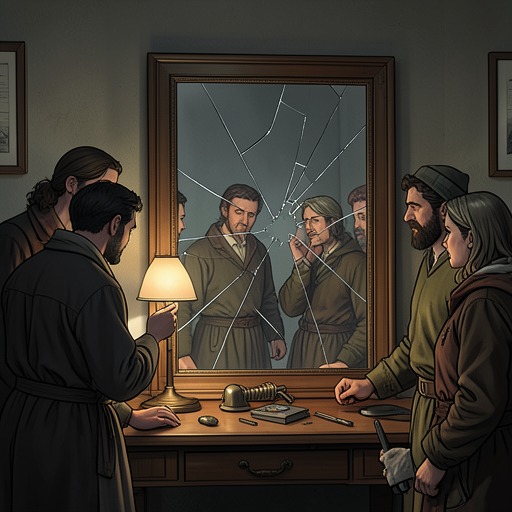
Fatima betrays Acadian and saves the captives
PleasureFatima’s betrayal of Acadian turns a captivity designed to erase Malaya and Guin into a rescue from within. After thirteen years of spying and serving her mother, Fatima acts on her own judgment: she secretly alerts the palace, opens the house to the rescuers, and ultimately exposes the supposed memory toxin as a lie. Her choice helps bring Acadian’s crimes into the open, but Fatima is gravely wounded and dies after saving the captives.
Causes and Background
The immediate danger grows out of Nicoya’s attempted coup at Sanctuary, the religious house and education center run by Magnus. Nicoya killed or turned priests to her cause, victimized students, and contributed to Sagan’s disappearance. Her plot also set assassins against Trace’s wife, Ashla, and their child, with the intended hunt due to begin two months after the baby’s birth. Nicoya’s mother was Acadian, a torturer from the wars whose identity and political position had remained concealed.
Acadian’s history makes the threat personal as well as political. During the civil war, she captured Trace after Rika believed he had died in an invasion of the twins’ household. She healed his wounds only to keep him fit for torture; Trace endured nearly a year of captivity and emerged with lasting scars. Guin’s rescue of him was among the best and worst moments of Guin’s life: he respected Trace’s strength and intelligence, yet feared that little remained of him beyond his injured body. Trace recovered, but the torturer had never let him see her face, and no one Guin could find knew what Acadian looked like.
The difficulty of holding Acadian to account was already part of the crisis. Tristan explained that the postwar pardon of acts committed during the war had been necessary to unite the population, but it also meant Acadian could not be tried for her crimes against Trace as war crimes. Malaya looked for another basis for prosecution, including treason or sedition, while the group recognized that proof—and Acadian herself—had to be found. The amnesty that helped secure peace thus left a grave old crime beyond ordinary prosecution even as new threats continued.
Guin understood how the assassination plot against Ashla and her child could persist. Few clans would accept the killing of a child, and that scarcity was knowledge available to an insider. Though he had been away from his old clan for fifty years, he still knew its hidden world and planned to work his way back into it. His reputation complicated that effort: the clan regarded him as a man who had abandoned his people to place himself beside a queen. Meanwhile, the danger extended beyond Ashla. Acadian had also been linked to Karri’s attempts on Malaya and Magnus and to two attempts on Trace, making the concealed Senate member a continuing threat to the twins’ power and their allies.
The Betrayal and Rescue
At Acadian’s torture house, Fatima asks to administer the injection being prepared for Guin. Her mother permits it, treating the request as a tentative attempt to take part in the work. Fatima takes the shot from Andonel and approaches Guin while he watches Malaya, believing he is about to lose his memories of her and their love. The apparent compliance gives Fatima a final moment beside the captives—and leaves Acadian unaware that her daughter has already chosen a different course.
Fatima makes that choice explicit: thirteen years of spying and service have taught her to think and act for herself. She has just run to the palace to reveal where Malaya and Guin are being held and what Acadian intends to do; she has also opened the house’s door to the rescuers. Her understanding of what she witnessed has changed during those years. She recognizes Malaya as a woman who sought to rule well despite her flaws, and Guin as a man who had restrained his feelings for years because he believed confessing them might damage Malaya’s happiness. These lessons, not obedience to her mother, now guide Fatima’s actions.
Andonel realizes what Fatima has revealed and lunges for the needle. She evades him by driving it into her own arm and pressing the plunger. At the same moment, Daenaira throws a sai from the stairs; it strikes Acadian in the left shoulder and knocks her against the torture table. Fatima slips free of Andonel, crosses the room, and drops to her knees in front of Malaya, embracing her. She tells Malaya that she has loved her for a long time, that fear of being sent away kept her silent, and that much of what she told Acadian had been lies or information too vague to matter. She had gone along with Nicoya’s rise because she believed it was the only way to protect Malaya. She also admits that someone at the tavern, not Fatima, disclosed the captives’ location; she had hoped the rescue would catch Acadian in the act and allow Malaya to hold her accountable.
The supposed memory toxin is exposed as a fiction: Fatima whispers that no such toxin exists, then collapses, her arms falling away from Malaya. Acadian celebrates what she assumes is her daughter’s death and reaches for a sharp implement, but the room is filling with armed rescuers. Magnus twists the sai in Acadian’s shoulder, brings her to her knees, and holds his katana at the back of her neck. He invokes his third power, which compels her to speak truthfully, and demands to know whether she regrets her crimes and will accept whatever penance the gods require. Acadian answers that she repents, but Magnus presses her on whether she would accept even a year serving Daenaira on her knees for her crime against her. The rescue therefore ends not only Acadian’s immediate control over the captives but also turns the confrontation toward religious accountability.
Death and Recognition
Once the rescuers have secured the room, Guin reaches Malaya and draws her into his arms. Her attention remains on Fatima, who is struggling to breathe, her gaze already fixed and glassy. Magnus bends over her and speaks softly, offering the possibility of absolution; Malaya hopes she can still be saved, but resolves that if she cannot, Fatima will be honored for the act that saved them both and may benefit their people for generations. The scene makes the cost of the rescue immediate: the captives survive, but Fatima’s final choice has placed her own life in jeopardy.
Magnus later confirms that Fatima has died. He explains that she volunteered to return and open the house because she knew a siege would prompt Acadian to kill the captives at once. Her betrayal was therefore not a sudden escape from danger but a deliberate decision to make the rescue possible on terms that might keep Malaya and Guin alive. Malaya calls Fatima a good girl; Guin answers that Fatima learned to love her because of who she was. His response frames Fatima’s loyalty not as a debt owed to power, but as an attachment formed through observing Malaya’s character.
Fatima’s death completes the reversal of her long service to Acadian. The daughter who had spent thirteen years spying and lying becomes the person whose independent judgment protects the people her mother sought to destroy. Her years of concealed proximity, once used to gather information for Acadian, instead make her uniquely able to deceive her mother, summon help, and open the captives’ way to rescue. Malaya’s promise to recognize Fatima’s heroism answers the injustice of a life in which her loyalty and motives remained hidden: though she is unrecognized in life, her sacrifice will be remembered in the community she helped preserve.
Truth, Repentance, and the Cost of Recognition
The rescue distinguishes compelled truth from chosen truth. Magnus’s third power can force Acadian to speak honestly, but it cannot make her first answer—an eager claim of repentance—sufficient evidence of remorse. He tests that claim against a concrete demand for penance, including a year serving Daenaira, shifting the question from whether Acadian will admit guilt to whether she will accept its consequences. Fatima’s earlier disclosures carry a different weight: she acts on what she has learned and risks her life without magical compulsion or assurance of reward. The contrast makes accountability more than the extraction of a confession; it depends on what a person is willing to do once the truth is exposed.