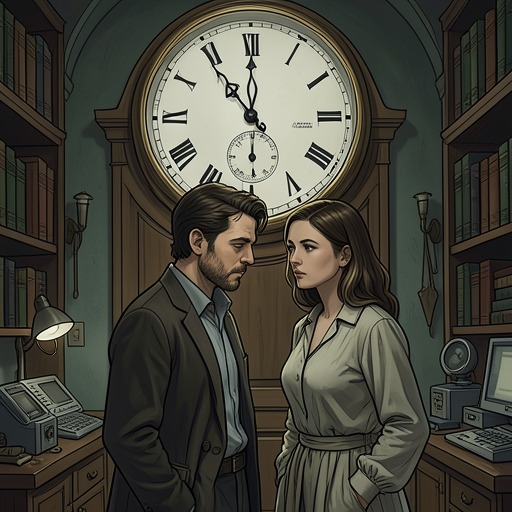
Sagan and Valera's separation
PleasureSagan and Valera's separation turns their love into a choice neither can make painless. Valera recognizes that keeping Sagan with her in the wilderness means asking him to abandon the people, work, and life he longs to recover; Sagan, unwilling to call their relationship sinful or deny his love, still cannot promise a future there. She urges him to go, and he ultimately leaves the cabin, while the depth of their attachment makes the separation feel less like a resolution than a wound both understand and cannot avoid.
Causes and the decision to let him go
The crisis comes into focus in an ordinary domestic moment. Valera is washing the dishes after their meal; Sagan, who usually offers to take on the chore, has left before finishing, saying he is tired. His playful teasing had made her laugh, but at the sink she recognizes a more serious pattern. He is accustomed to extraordinary activity and to a life shaped by habits formed over 160 years. Here, those routines and the people connected to them are beyond his reach.
Valera understands his condition as homesickness and depression, even if Sagan has not named it himself. She has watched him need more rest than seems natural to a being of his health and power, and realizes that their physical intimacy cannot make up for what he has lost. Her reluctance to send him home is real, but so is her conclusion that he cannot be happy with her in the cabin. She sees the imbalance in their futures too: she is human and mortal, while he will remain young and beautiful. In her view, neither can simply follow the other into a life that fits.
When she finds him sitting on the end of the bed, absorbed in his thoughts and studying his hands, she understands what he is weighing. She kneels between his feet and fills his empty hands with hers. Valera tells him that in her cabin his hands can hold only her, whereas at home they could hold a sword and return to work, friends, family, and responsibilities he treasured. She frames his stay as a dream that has lasted too long and urges him to awaken to his real world. Her attempt to speak with wisdom and selflessness falters under her tears, but not her conviction: she believes he has to go.
Love against the losses of return
Sagan resists the idea that leaving is a simple return to happiness. He tells Valera that he does not want to leave her and cannot imagine an eternity without watching her cook or touching her. He says that nine days of memories would not be enough, even as he keeps pushing that imagined limit further away. His urgency makes clear that the cabin is not merely a refuge to him; he has formed an attachment he fears he cannot relinquish.
Valera answers that love cannot solve the material and emotional costs of remaining. She does not want his identity to be hollowed out by a life confined to the cabin, and points out that he cannot even tell her who he was or who he has been. What gnaws at him, Sagan replies, is knowing whether the people he left behind are safe. Valera tells him that even if they are safe, he would still have to face a life constrained by the white nights, and that she cannot live forever any more than he can make this setting sufficient for both of them. Her argument is not that their love is false, but that it cannot erase the lives and needs outside it.
Sagan sharply rejects her description of their relationship as wrong. He insists that she is perfect and that what they have shared is too beautiful to be disparaged. Valera accepts his rebuke, but breaks down at the recognition that loving him does not give her a future with him. She remembers him as gentle, intelligent, and humorous, yet also capable of severity when circumstances demand it; in their intimacy, she has felt cherished. The tenderness that confirms their bond also deepens the grief of parting.
Faith, fear, and the final rupture
Sagan sees another cost waiting at home. As a priest, he expects others to demand that he repent for his relationship with Valera and perform penance. He says he will refuse to treat her as a sin, even if that means losing his position and being expelled as an example. At the same time, he does not want to destroy his faith. His dilemma is therefore not simply whether to choose Valera or his former life: returning could put his religious office at risk, while staying would leave him separated from the community and responsibilities he misses.
Valera presses him to acknowledge that his family, friends, and culture matter to him. She says that she can feel and hear his fear for his people when he dreams, and argues that he could not remain idle with her while longing to help those in danger. The claim strikes his rawest nerve. Yet the argument cannot settle the separation, because neither of them can offer the other an uncomplicated future: he cannot deny the people he left, and she cannot ask him to stay without seeing what that costs him.
Sagan also needs to know whether his love is returned. He describes what began as lust as having become something more and asks whether Valera feels the same. She cries that she does not want to feel as he does, that the love hurts, and that she hates him for the pain. Her outburst is not indifference: she is overwhelmed by a love she believes she cannot bear. Sagan holds her against his heart as she sobs and tells him he must leave. He apologizes, tells her he has never loved anything so much, and then pries himself from their embrace.
Departure and immediate aftermath
Sagan leaves Valera on her knees on the floor and walks out; the front door closes behind him. The departure gives the scene its decisive turn: Valera has succeeded in urging him toward the life he needs, but that practical choice does not lessen the loss or resolve what awaits him there. Several hours later, Penchant, Fat Baby, and Ulysses find her curled in bed, numb and staring at the darkened window. She asks what Sagan will do when daylight comes. The question leaves his next step open, while making plain that his departure has not made the future secure for either of them.