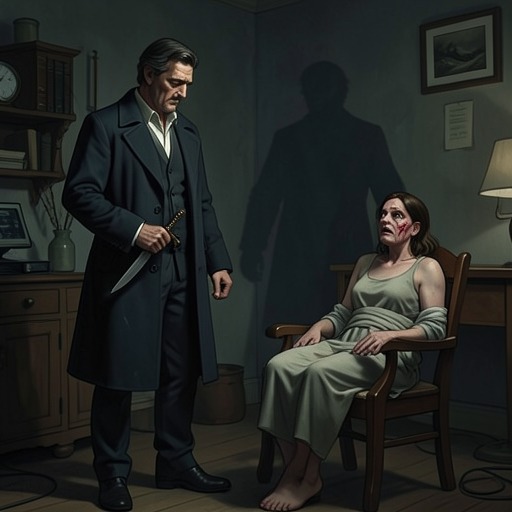
The plot to assassinate Ashla and her children
PleasureThe plot to assassinate Ashla and her children is a delayed, covert threat against Trace’s family, set in motion by Nicoya and carried forward through illegal assassin guilds. Because the planned hunt is to begin after Ashla gives birth, the danger is not immediate—but it gives Guin time to act, and a reason to return to the criminal world he left behind.
Origins and Targets
The scheme emerges from the aftermath of Nicoya’s attempted coup at Sanctuary. During that upheaval, Nicoya arranged for assassins to hunt Trace’s wife and baby, with the killing scheduled to begin two months after the child’s birth. The plot thus extends the coup’s violence beyond its immediate victims: even after Nicoya’s death, the hired killers remain a threat.
Nicoya’s mother, Acadian, gives the threat a deeper history. During the civil war, Acadian captured Trace and kept him alive so she could torture him; Guin later found and rescued him. Trace survived, but the scars remained, and he had never seen his captor’s face. Nicoya’s confession that her mother was a member of the Senate, together with the absence of anyone who could identify Acadian, led Guin to suspect that she operated under another identity. The assassin plot is therefore linked to a wider campaign against the twins’ power, which had also included attempts on Malaya and Magnus and two attacks on Trace.
The Delayed Hunt
Ashla is the immediate target, but the child is part of the plan from the outset. Guin understands that the hired clan will not abandon its assignment until it has completed it. He expects Ashla to give birth in about a year, with the hunt beginning two months afterward. The delay creates a narrow interval in which the threat can be traced or stopped; it does not lessen the intended outcome.
The choice of a child as a target also signals how serious the commission is. Guin knows that few clans would agree to kill a child, and that this knowledge belongs to someone familiar with the assassin world. He concludes that Nicoya would not have hired an ineffectual group, making the danger more than an empty threat against Trace’s family.
Guilds and Guin’s Return
The old assassin clans have been dissolved, but their members have not all abandoned their work. Trace established a law making it a high crime for one Shadowdweller to kill another without a provable and imperative cause; those who continued outside that law reorganized as secret guilds. Their standards differ: some retain scruples, while others do not. Guin suspects the commission was given to the most treacherous among them, not to a weak or careless group.
Guin’s knowledge of the trade makes him useful, but his history complicates his return. He had run with his old clan fifty years earlier and still counts as an insider, yet the clans remember him as someone who left his people to stand beside a queen. To reach the killers, he will have to work his way back into the city’s darkest circles, despite the reputation that may close those doors to him.
Travel and Stakes
The guilds are scattered: most operate within the city, but some are elsewhere. Pursuing them may require travel aboveground, which can be dangerous for Shadowdwellers. The Shadowscape offers a safer route, since its moonlight is the only light that does not hurt them, but it is not an unlimited refuge. Staying there for more than two days can bring on euphoria so overpowering that travelers may not realize they need to leave before their minds are destroyed.
The plot therefore places Guin in a race against a future deadline while forcing him to navigate both the human danger of the assassin networks and the limits of Shadowdweller travel. The available evidence establishes the threat, its likely reach, and Guin’s intention to pursue its perpetrators; it does not establish whether the guild is found or whether the planned attack is prevented.