Shadowdweller assassin guilds
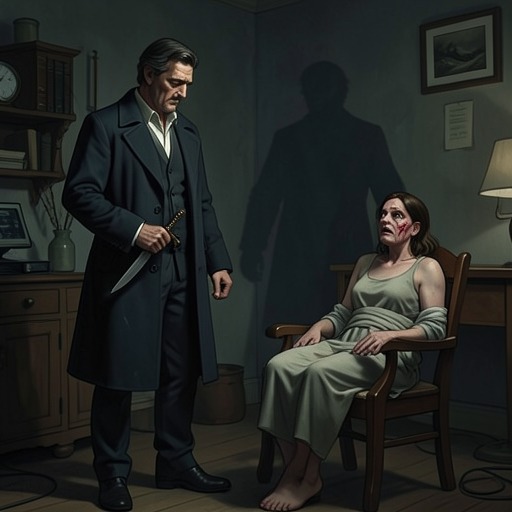
PleasureThe Shadowdweller assassin guilds are clandestine successors to the dissolved assassination clans, operating in an illegal trade that survived the end of the old clan system. They are not presented as a single, orderly organization: their members differ in scruple, their reach extends beyond the city, and the prospect of a child becoming a target marks the most ruthless edge of their work. Their threat draws on the persistence of old loyalties and expertise even as the society around them attempts to establish new laws and a more unified political order.
From clans to illegal guilds
The guilds emerged after the assassination clans were dissolved. Trace had created a law making it a high crime for one Shadowdweller to kill another without provable and imperative cause; with that prohibition in place, the surviving killers who had not reformed themselves became secret guilds conducting an illegal trade. The change is therefore more than a change of name: a formerly recognizable clan structure has been pushed underground, while its practitioners and capacity for violence remain.
That transition leaves the guilds morally and practically uneven. Some members have scruples and others do not, so the label does not imply a shared code that would reliably restrain them. Guin doubts that Nicoya would have selected careless or third-rate killers. He expects the hired group to be among the most treacherous, a judgment that makes the threat to Ashla more serious than a routine contract. The narrative does not identify the specific guild or establish a common command over the different groups; their danger lies partly in the fact that the illicit network is difficult to map from the outside.
Reach, secrecy, and the cost of pursuit
The guilds are distributed rather than confined to Shadowdweller city. Some killers are there, but others are elsewhere, making travel necessary for anyone trying to trace them. Travel aboveground can be dangerous for a Shadowdweller, and Shadowscape offers a safer route: its only light comes from the moon, the light that does not hurt Shadowdwellers. Yet this refuge has a strict limit. After two days, the environment can induce euphoria so absorbing that a traveler may fail to recognize the danger and remain until their mind is destroyed.
The pursuit of the guilds is thus constrained by more than concealment. Even a route suited to Shadowdweller travel cannot be used indefinitely without peril. The contrast between the apparent safety of Shadowscape and its fatal psychological risk gives the search a particular irony: the means of reaching distant suspects can itself endanger those seeking them. The guilds’ spread beyond the city turns investigation into a problem of movement, exposure, and limited time, not merely identification.
Guin’s insider knowledge and the threat to Ashla
Guin knows the assassination world from within. Although he had left his old clan fifty years earlier, he remains an insider in the knowledge that matters: he understands that very few clans would accept the killing of a child. That knowledge makes the prospect of an attack on Ashla’s future child especially alarming. A hired clan has set its sights on Trace’s beloved mate, and Guin believes it will not stop until the job is done; he anticipates that Ashla’s approaching childbirth, about a year away, will trigger the hunt.
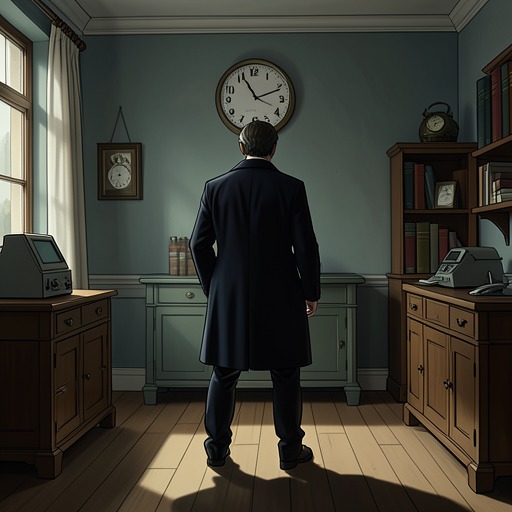
His former affiliation also complicates his return to that world. The clans saw him as having abandoned his people to place himself beside a queen, and he has become infamous among them for that choice. To work his way back into the city’s darkest circles, he must rely on a past that can make him useful while also marking him as a deserter. His knowledge is therefore not an uncomplicated advantage: it opens a route toward the killers, but his history may obstruct his passage into the circles he needs to penetrate.
Political violence and the search for proof
The guild threat belongs to a wider struggle over the twins’ rule. Guin understands the attacks on Trace and the danger to Ashla as part of an assassination legacy directed against those close to the royal household. In the same political climate, he connects earlier attempts on Malaya and Magnus to a campaign of legal deception and unlawful violence against the twins’ hold. These contextual connections do not establish that every attack was carried out by a guild; they show instead how secret killing functions alongside political maneuvering as a means of leaving the rulers isolated and vulnerable.
The effort to expose Acadian brings the problem into direct conflict with law and amnesty. Tristan explains that crimes committed during the war cannot be prosecuted because the settlement pardoned acts of war in order to reunite the population. Malaya considers treason or sedition but knows proof must first be found. Guin believes that following Acadian may lead to evidence of her crimes, while insisting that the pardon will not prevent her from paying for what she did to Trace. He also recognizes the danger that any action taken openly in Malaya’s name would be understood as her order. The guilds’ clandestine world consequently offers both a threat and a route into the hidden violence behind the political crisis.
Narrative significance
The guilds embody the incomplete reach of postwar reform. The law has made unauthorized killing a serious crime and dissolved the old clans, but neither measure has erased the skills, loyalties, or appetites of those willing to continue the trade in secret. Their existence makes the gap between legal settlement and lived security visible: peace can reorganize power without ensuring that every violent institution has disappeared.
Their plotline also tests the value of insider knowledge. Guin can anticipate the hired killers’ choices because he once belonged to their world, but returning to it demands that he cross old divisions and accept the dangers of pursuit. The threatened child raises the stakes beyond rivalry between political factions, while the two-day limit in Shadowscape gives the search a concrete physical constraint. Together, these details make the guilds not merely a hidden enemy but a remnant system whose reach, secrecy, and capacity for violence continue to challenge the new order.