“I’d just given birth to a queen”
QueenieThe expression “I’d just given birth to a queen” explains how Sylvie chose the name Queenie for her daughter and gives the name a meaning rooted in maternal recognition rather than delicacy or royal fantasy. When Sylvie later mouths “My queen” across a family table, the phrase returns as a private acknowledgment between them, linking Queenie’s birth to their renewed warmth.
From princess to queen
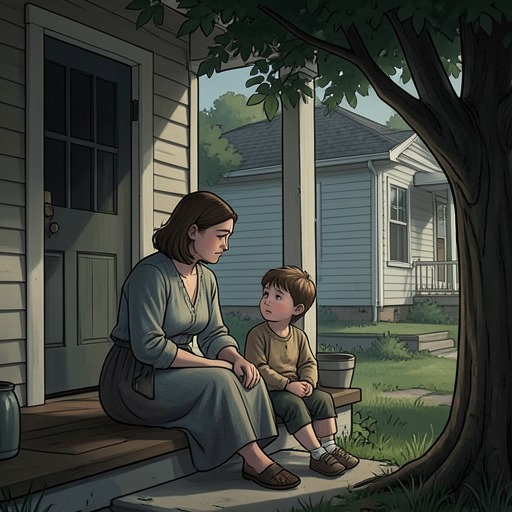
While pregnant, Sylvie imagined naming her child Princess, the name she had dreamed about for the daughter she expected. After Queenie was born, Sylvie recalled placing a finger in her tiny hand and feeling the baby squeeze it. Looking at her daughter, she no longer saw a delicate princess from a storybook: she saw someone more powerful, whom she hoped would grow up strong and brave. “I’d just given birth to a queen” names that realization and the decision to call her Queenie.
What the name carries
The phrase makes Queenie’s name an expression of Sylvie’s hopes for her daughter. Its contrast between “princess” and “queen” shifts the emphasis from a delicate, imagined figure to a child Sylvie understands as powerful. The words are also a story of naming: the name does not simply precede Queenie’s birth but emerges from Sylvie’s response to meeting and holding her. By recounting that moment, Sylvie gives Queenie an account of how she was seen and welcomed.
The phrase returns
At a family gathering later in the novel, Queenie looks around the restaurant and sees relatives sharing small, ordinary moments: Kyazike shows Diana a makeup video, Maggie shares pizza with Sylvie, and other family members talk at the table. Sylvie catches Queenie’s eye, smiles, raises her glass, and mouths, “My queen.” The brief phrase recalls the naming story without repeating it in full. Queenie smiles back, and the exchange gives the earlier declaration a present-tense counterpart: the mother who once named her daughter queen now addresses her that way directly.