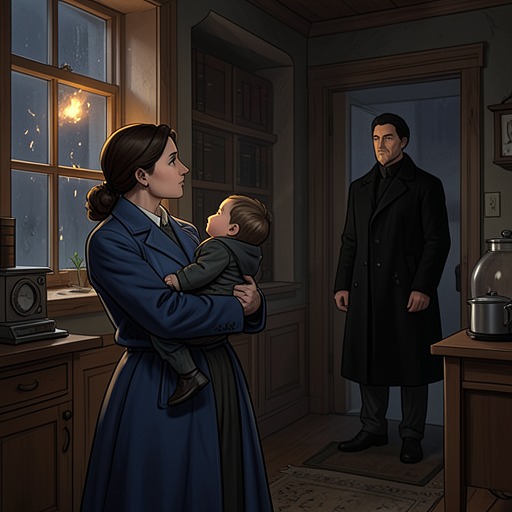
“Family isn’t some magical free pass”
REThe expression “Family isn’t some magical free pass” marks Tabitha Moore’s decisive refusal to treat kinship as an exemption from accountability. Spoken during a conflict over Lisa Moore, it transforms a familiar claim about family obligation into a boundary: relatives do not earn unlimited trust merely by being related, and protecting vulnerable children can require opposing the family itself.
Meaning and First Use
Tabitha uses the expression when her father argues that Lisa is family and should be helped. Tabitha rejects that reasoning directly, saying that family cannot automatically excuse harmful conduct or settle the disagreement. Her statement is not a rejection of family as such; it is a rejection of “family” as a magical justification that ends moral scrutiny. The phrase therefore distinguishes care from permissiveness and loyalty from complicity.
The wording gains force from Tabitha’s unusual position. Although she is thirteen, she insists that she is “a young woman now” and asks Alan Moore to teach her budgeting, meal planning, and time management. She is repeatedly treated as a child even while trying to reason about money, education, safety, and the conduct of adults. In that context, the expression becomes a claim to judgment: Tabitha insists that her assessment of danger cannot be dismissed simply because the person involved is an aunt or because the speaker is young.
Conflict with Lisa Moore
The phrase emerges from the Moore family’s Thanksgiving conflict. Lisa Moore pressures Aiden and the other children to eat food they had politely refused, threatening them with the loss of dessert and placing ham on their plates. Tabitha experiences the scene not as harmless family discipline but as another example of adults imposing themselves on children while expecting obedience to be mistaken for respect. Her anger is sharpened by Lisa’s treatment of her four sons and by the family’s readiness to absorb Lisa’s behavior under the word “family.”
Tabitha tells Alan Moore that she is finished with Lisa. When he argues that Lisa knew the family could drive her and that relatives should help relatives, Tabitha answers that family is not a free pass. The disagreement exposes a fundamental contrast between them: Alan responds to kinship with protection and assumes the best of people, while Tabitha judges Lisa by what she does to the children and by whether she can be trusted. His generosity, in Tabitha’s view, risks becoming a mechanism through which the rest of the household shoulders Lisa’s consequences.
From Slogan to Protective Action
The expression becomes more than a retort when Tabitha takes Lisa’s purse and seeks help from Karen Williams. She explains that she had been afraid to give details over the phone because Alan might not believe her and might try to cover for Lisa or take responsibility for her precisely because she was family. Tabitha also describes Shannon Moore’s severe anxiety around confrontation and Alan’s tendency to let people take advantage of his good heart. The word “family” has become painful in her mouth because it names the pressure preventing adults from acting.
Tabitha believes Lisa returned not to restore her relationship with her children but because she heard about settlement money. She suspects Lisa is using heroin and states that heroin has no place around children. Her immediate objective is protective rather than punitive: she wants the four boys removed from Lisa’s influence permanently because she cannot bear the thought of anything happening to them. Calling Karen is therefore the practical enactment of the expression. Tabitha moves from condemning a principle to finding an adult who will make the danger impossible to ignore.
Boundaries, Departure, and Consequences
The phrase also anticipates Tabitha’s decision to leave the Moore home. After adults argue over whether her accusations can be trusted, Tabitha says she will stay somewhere else for a while. Alan initially refuses, invoking parental authority, but Tabitha repeats that she is leaving and asks for permission to stay with the MacIntires. Shannon Moore then grants permission through tears and apologizes. The departure gives the expression a personal consequence: if family loyalty produces danger or silences the person identifying it, Tabitha is prepared to create distance from her own parents as well as from Lisa.
The same boundary distinguishes blood family from chosen protection. Mrs. Williams tells Tabitha that a mother should collect a child who feels unsafe first and sort out blame afterward, while Mrs. MacIntire offers to help determine whether Tabitha returns home or remains elsewhere. Tabitha’s decision is consequently witnessed and supported by adults who treat safety as prior to appearances. Her movement toward the MacIntire and Williams families shows that the expression does not leave her without family; it redirects her toward relationships defined by protection, listening, and responsibility.
Narrative and Thematic Significance
“Family isn’t some magical free pass” condenses the book’s conflict between inherited obligation and ethical responsibility. It challenges the assumption that blood relation automatically creates trust, authority, or a duty to endure harm. The phrase also reveals how Tabitha, burdened by knowledge and judgment beyond what adults expect from a thirteen-year-old, is forced into a protective role. She recognizes dangers that the adults around her minimize, yet she must fight to have that recognition taken seriously.
Its force lies in the tension between tenderness and refusal. Tabitha still cares about the children, worries about her parents, and seeks a safe place rather than simple revenge. What she rejects is the demand that care must mean silence. In the wider pattern of abuse, addiction, parental avoidance, and family estrangement, the expression becomes a compact moral rule: kinship may create an opportunity for help, but it cannot erase the need for accountability or override a child’s right to safety.