Goblins
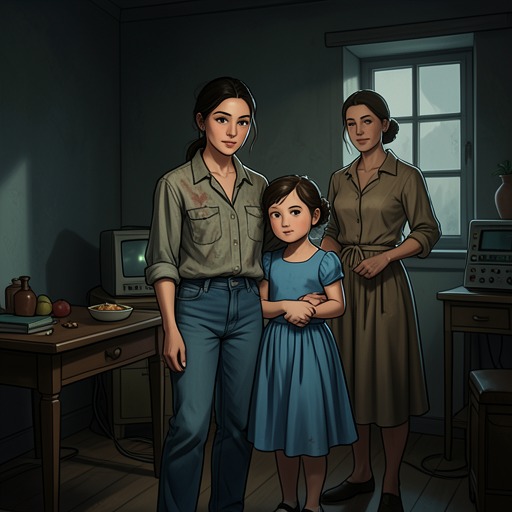
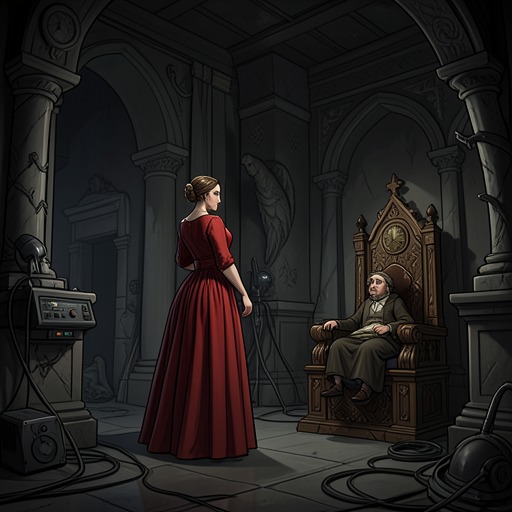
REIn Tabitha Moore’s Goblina project, Goblins are people rendered socially and physically subordinate by a society organized around magic. Those unable to use magic are deformed by it, classified as goblins, and either expelled to live as savages or retained as slaves and servants. The category therefore functions not merely as a fantasy species label but as an entire system of exclusion, labor, and inherited inferiority. Through its lowest-ranked protagonist and its rebellious free goblins, the project turns that imposed identity into the foundation of a struggle against the Magi.
Definition and Social Position
Goblins are defined by their lack of magical ability. In the world Tabitha describes, magic does not simply distinguish one group from another; it actively deforms those who cannot wield it. The resulting physical difference is then converted into a social verdict. Goblins are considered beneath the ordinary order of society and are denied the possibility of escaping servitude or opposing the Magi.
Their position combines expulsion with exploitation. Some are cast out and forced to live apart from civilized society, described as living like savages. Others remain within the Magi’s system as slaves and servants. These alternatives appear different but preserve the same hierarchy: whether excluded geographically or absorbed as labor, Goblins are treated as lives without equal standing. Their alleged inferiority is presented as permanent, making the social order seem less like a temporary arrangement than an unbreakable law of existence.
The Goblin Protagonist
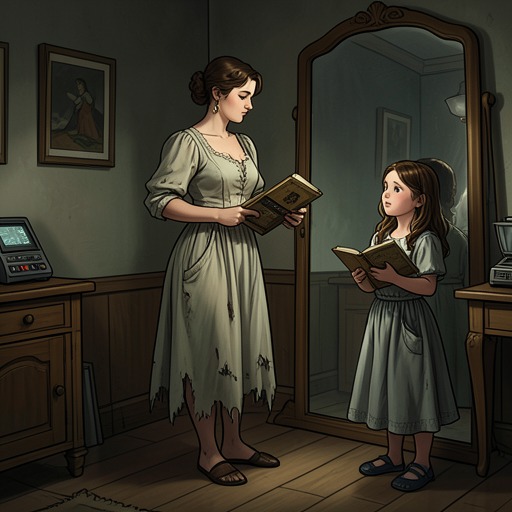
The protagonist of Goblina occupies the lowest position in this hierarchy, described as being beneath even the slaves. Everyone calls her a goblin, and she begins with nothing. The narrative withholds the world’s rules from the reader and allows them to emerge in fragments as the protagonist encounters and learns them, so that her marginal position also determines the story’s method of disclosure.
Tabitha identifies the protagonist directly with herself, saying that the goblin has always been her. This makes Goblina’s central conflict personal as well as political. The protagonist is not an abstract representative of an oppressed group detached from the author’s identity; she is the imaginative form through which Tabitha expresses a long-standing sense of being marked as lesser. Alicia understands that the story will involve the goblin opposing and overcoming the Magi, but Tabitha’s resolved response indicates that the anticipated triumph carries the force of a second attempt: this time, the goblin will prevail.
The protagonist’s eventual opposition is also connected to maturation. Tabitha explains that the allegory is intended to depict the final step of personal growth: leaving parental influence and standing independently as a person. The goblin’s resistance to the Magi thus joins social rebellion to the painful movement from dependence toward self-definition. The character’s starting position is absolute powerlessness, but the narrative gives that position interpretive authority: the reader learns the world as she does rather than receiving the Magi’s complete explanation in advance.
Free Goblins and the Labyrinths
The free goblins are not merely fugitives from the Magi’s order. In the planned second book, they actively alter the physical systems that sustain magical power. The Magi have forced Goblins to construct labyrinths around the leylines, designing them so that energy from a mana spring is focused and channeled along one precise route.
Free goblins break down some walls and build up others, transforming the intended labyrinth into a huge, sprawling maze. Their rebellion is therefore architectural as well as military or political. They use intimate knowledge of structures imposed upon them to make those structures unreliable. The Magi must navigate an underground deathtrap filled with rebel goblins while also determining which walls should be repaired and which should be demolished in order to restore the proper flow of magic.
This conflict gives Goblins an expertise the ruling Magi cannot simply dismiss. The same labor that marks Goblins as servants supplies the knowledge necessary to disrupt the magical order. Construction becomes sabotage; imposed infrastructure becomes a weapon; and the system’s dependence on Goblin labor exposes a weakness beneath its claim to superiority.
Allegorical and Narrative Significance
Goblins embody the project’s opposition between a hierarchy that calls itself natural and a person who refuses to accept the identity assigned to her. The Magi’s authority depends on the belief that magical ability determines worth, while the Goblin protagonist’s planned ascent challenges that belief at its foundation. The story’s basic movement is consequently an underdog transformation: the figure placed beneath slaves is made the center of the narrative and the possible victor over the ruling caste.
The Goblin metaphor also links bodily difference, social stigma, and family dependence. Tabitha’s explanation makes clear that the fantasy society’s treatment of Goblins is intended to illuminate the struggle to become an independent self. Yet the planned world does not reduce resistance to a single heroic confrontation. The protagonist must learn a complicated social and magical system from the bottom, while free goblins change the built environment that governs the flow of power. Individual growth and collective rebellion therefore operate on parallel levels.
Goblins are significant because the story refuses to leave them as a permanently inferior category. Their imposed name remains the language of domination, but it becomes the name attached to the protagonist, the rebel builders, and the knowledge capable of undoing the Magi’s control. In Goblina, the lowest place in the hierarchy is not only the site of deprivation; it is also where the system’s contradictions become most visible and where resistance finds its first durable form.