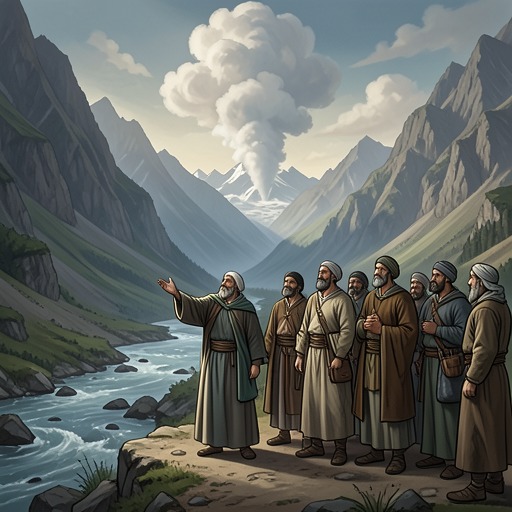
Sagara’s Sacrificial Horse
RamayanaSagara’s Sacrificial Horse is the steed designated for a royal sacrifice by Sagara. Sent roaming under watch, it is stolen by Indra on the appointed day. Its disappearance unsettles the priests and delays the rite, making the horse both a ritual offering and the object whose recovery drives a consequential search. The narrative ultimately connects its return to the fate of Sagara’s sons and to the effort to bring Ganga down from heaven.
Identity and Ritual Role
After many years, Sagara decrees that a sacrificial steed be slain. The horse is therefore not merely an animal accompanying the king’s undertaking: it is the chosen victim on which the completion of the rite depends. Its roaming gives the sacrifice a public, extended course beyond the immediate ritual setting, while the need to keep watch leaves the central object exposed to loss.
Anshuman is presented in connection with that watch, borne in a mighty car as he observes the horse roaming afar. The image places the steed in motion and under supervision rather than already at the altar. Its ritual status is thus inseparable from its journey: until it can be brought back, the sacrifice remains unfinished.
Theft and Interruption
Indra takes the horse by force on the appointed day, veiling his form in a demon’s guise. The timing turns the disappearance into a direct crisis for the ceremony. The priests, distressed at being deprived of the steed, address the master of the rite; the loss is not incidental trouble but an obstacle to the ritual’s progress.
The theft also changes the horse’s narrative function. What began as the object of a royal observance becomes the reason for an extended search. The ceremony’s completion now depends on recovering an animal that has been removed from the priests’ custody, and the search draws Sagara’s princes into events far beyond the sacrificial ground.
Search and the Wider Consequences
The horse’s disappearance is bound up with the fate of Sagara’s sixty thousand sons. During the episode, the princes see Kapila in the form associated with him. The horse’s trail therefore leads into an encounter that transforms the family’s immediate concern into a much larger calamity; the animal’s recovery cannot be considered separately from what happens to the princes.
The narrative gives the search a further purpose through the instruction that the Goddess be brought down from the sky and that the horse be taken along on the return. The sixty thousand, it is said, will be freed from sin and gain a home in Indra’s heaven. The steed thus stands at the junction of two kinds of resolution: the royal rite needs its missing victim, while the princes’ fate is linked to a task involving Ganga. The horse is a concrete object to be recovered, but its route opens onto a sacred undertaking whose reach exceeds the king’s original purpose.
Return and Narrative Significance
After hearing the mournful account, Sagara does not defer the rite any longer and proceeds with care and proper observance. The ending restores the sacrifice to its ritual course after the interruption caused by Indra’s theft. The horse’s return matters not simply as the recovery of lost property, but because it allows the suspended royal undertaking to continue.
The episode places the horse at the meeting point of ritual order and narrative disruption. Its prescribed role is to be sacrificed, yet before that can happen it must roam, be stolen, and become the focus of a search. Each change in its status carries a consequence: the roaming exposes the rite to interruption; the theft sends the princes after it; and the return makes renewed observance possible. The animal’s importance lies in this sequence. It is both the intended offering and the moving link between Sagara’s ceremony, his sons’ fate, and the descent of Ganga.