The Motif of Tears Restoring Sight to the Blind
RapunzelThe Motif of Tears Restoring Sight to the Blind gives the final reunion in Rapunzel a physical sign of recognition and restoration. After the prince loses his sight and wanders for years, Rapunzel’s tears fall into his eyes and he suddenly sees clearly again; the healing joins their reunion to the story’s movement from imprisonment and separation toward a shared life.
The Motif’s Place in the Story
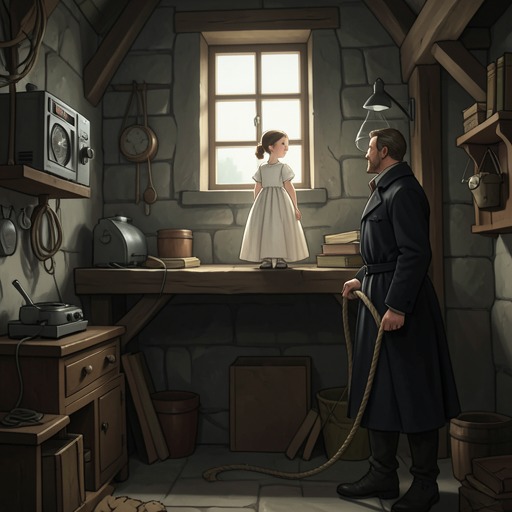
The restoration of sight is the final turn in a sequence of bodily changes that governs the lovers’ fortunes. Rapunzel’s long, fine hair first serves as the means by which the enchantress enters the tower: she lowers her braids from the tiny window, and the enchantress climbs them. The prince later uses the same route to reach Rapunzel, converting the means of her isolation into a path toward connection.
That passage is interrupted when the enchantress discovers the visits. In a fury, she cuts Rapunzel’s hair and exiles her to a desert. The severed braids remain useful as a deception: the enchantress ties them to the window latch, lets them fall when the prince calls, and draws him up to find Rapunzel gone. The ladder that had enabled access now helps stage the lovers’ separation.
Blindness and Loss
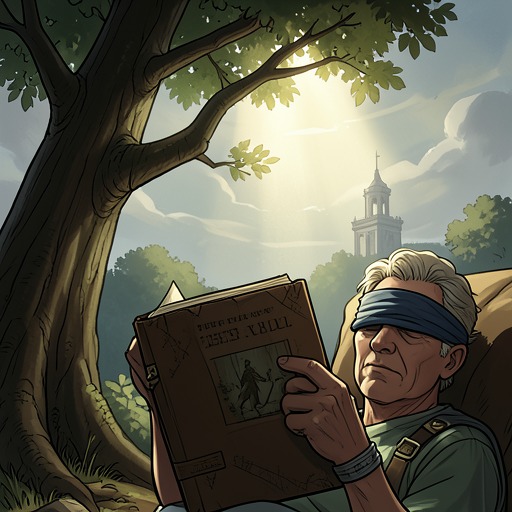
The enchantress tells the prince that he has lost Rapunzel forever and threatens that the cat will scratch his eyes. Overcome with grief, he leaps from the tower. He survives, but the brambles where he lands scratch his eyes, leaving him unable to see. His blindness is thus a consequence of the false encounter at the tower and his desperate response to the loss he believes final.
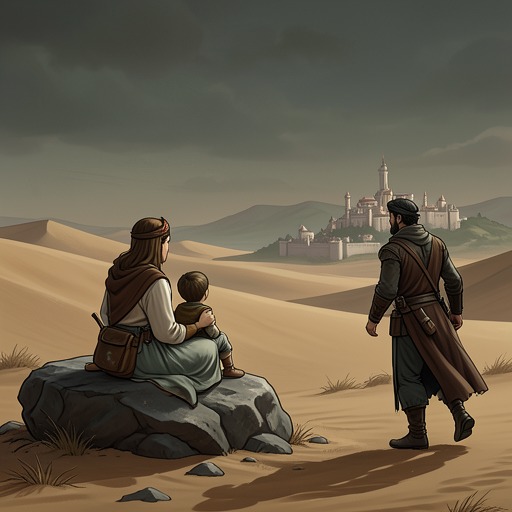
For many years he wanders through the forest, unable to see, eating only roots and berries and lamenting his wife. His long wandering carries the separation beyond the tower: Rapunzel has been exiled to a desert, while the prince roams in misery until he reaches the place where she is living with their twins, a boy and a girl.
Tears as Recognition and Restoration
The prince follows a familiar-sounding voice toward the person singing. Rapunzel recognizes him when he comes close, embraces him, and weeps. Two of her tears fall into his eyes; suddenly, he can see clearly as before. The scene makes reunion the condition of healing: Rapunzel’s recognition, embrace, and tears precede the prince’s restored sight.
The tears reverse the injury caused by the brambles, but the story presents the recovery not as an isolated cure. The prince has reached Rapunzel after years of wandering, and his sight returns at the moment their separation ends. They return together to his kingdom, where a great celebration follows, and they live happily for many years.
Narrative Function
The motif completes the story’s linked reversals of access, loss, and recovery. Hair first provides a ladder into the tower, then its cutting removes Rapunzel from the prince’s reach; the prince’s leap produces blindness, and Rapunzel’s tears restore sight when they find one another again. These changes give the ending a concrete shape: what was severed and what was lost do not remain the final conditions of their lives.
Sight’s return also resolves the prince’s extended wandering. The familiar voice leads him to Rapunzel before his eyes can see her, and her tears make that recognition physically complete. The story closes not with the tower or the desert as a place of confinement, but with the reunited pair returning to the prince’s kingdom and sharing a long, joyful life.