the cove
RebeccaThe cove is a small, secluded beach on the Manderley estate, reached by a winding path through the woods from the Happy Valley. It is a place of dramatic and deliberate contrast: the narrator, upon first seeing it, is struck by the sudden shift from the lush, fragrant valley to the "hard white shingle" and the open sea, a transition Maxim describes as a shock that "almost hurts" . This initial impression of a wild, beautiful, and isolated spot is quickly complicated by the discovery of a stone breakwater, a small natural harbour, and a stone cottage half-hidden at the edge of the woods, revealing the cove as a site of human activity and, ultimately, of concealed violence.
The Site of Rebecca's Secret Life and Death
The cove was Rebecca de Winter's private domain. A buoy marked "Je Reviens" was anchored in the tiny harbour, where her sailing boat was moored. The stone cottage, furnished with a desk, chairs, a bed-sofa, bookshelves, and model ships, was her retreat, used for "moonlight picnics" and clandestine meetings with her cousin and lover, Jack Favell. It was here, in this cottage, that Maxim de Winter shot Rebecca after a final, devastating confrontation. The cove is thus the physical location where the marriage's hidden rot—Rebecca's promiscuity, her cruelty, and Maxim's hatred—reached its bloody climax. The narrator's innocent exploration of the cottage, where she finds a handkerchief bearing Rebecca's monogram and the lingering scent of azaleas, becomes an unwitting trespass into this forbidden past.
The Scene of the Crime and Its Aftermath
After killing Rebecca, Maxim carried her body to her boat, sailed it out into the bay, and scuttled it by opening the seacocks and driving a spike through the planking. The cove was the starting point of this desperate, gruesome act. The narrator later witnesses Maxim's visceral reaction to the place: when she follows Jasper to the cove, Maxim refuses to go with her, and when she returns, he is white-faced and strained, confessing, "I never go near the bloody place, or that God-damned cottage. And if you had my memories you would not want to go there either." The cove is thus not merely a scenic location but a psychological wound for Maxim, a place he must avoid to maintain his fragile sanity.
The Return of the Repressed
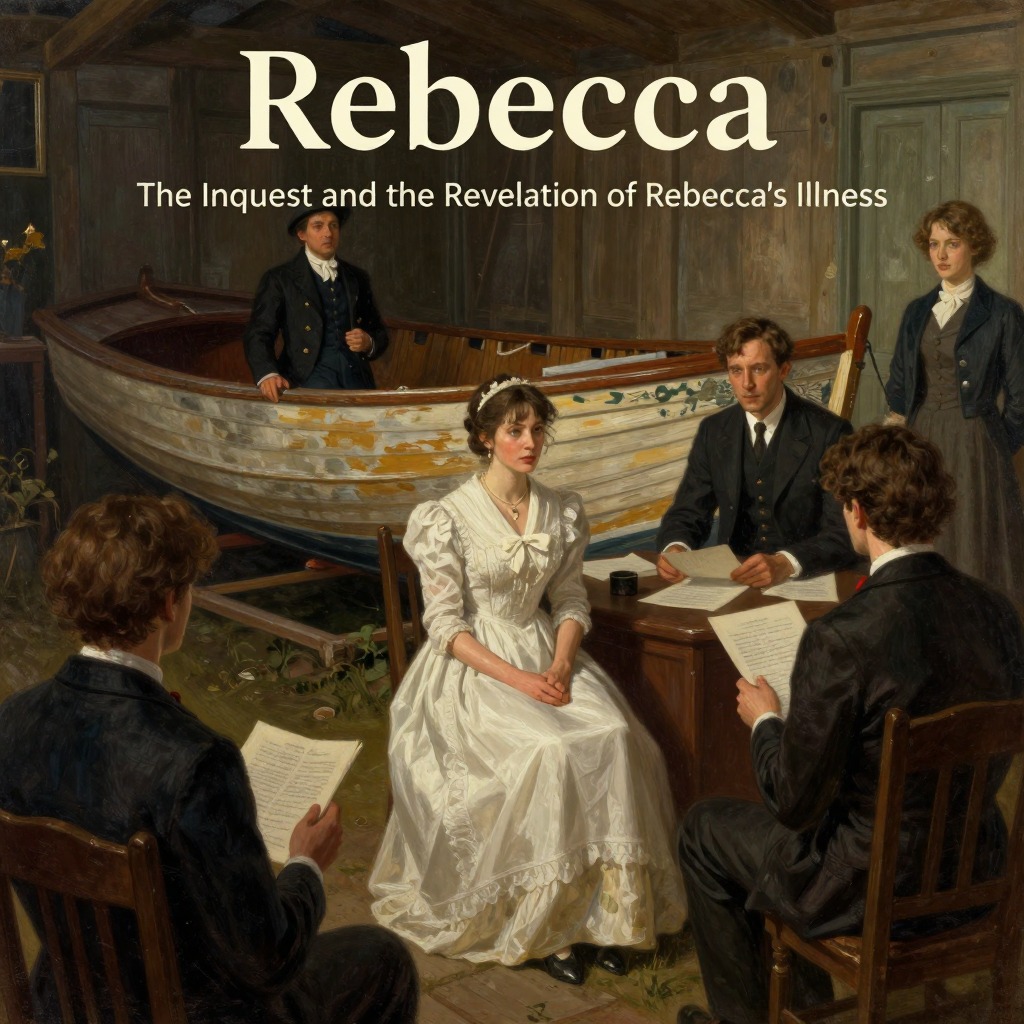
The cove's secret is violently unearthed when a stranded ship's diver discovers Rebecca's boat, intact, on the sea bed. The discovery of the boat, with its cabin door bolted and the seacocks open, directly contradicts the official story of an accidental drowning and forces the truth of Maxim's crime into the open. The cove, which had held its secret for over a year, becomes the catalyst for the novel's final crisis, forcing Maxim to confess to his wife and setting in motion the inquest and the subsequent confrontation with Favell. The place that was once a symbol of Rebecca's freedom and power becomes the undeniable evidence of her murder.
Thematic Significance: The Illusion of Peace and the Inescapable Past
The cove embodies the novel's central theme of the past's inescapable grip on the present. Its initial beauty and tranquility are a deceptive mask for the horror it conceals. The narrator's first visit, filled with the scent of azaleas and the sound of birds, is a moment of pure, unspoiled happiness, yet it is immediately followed by her discovery of the cottage and the handkerchief, which introduces the first tangible, unsettling trace of Rebecca. The cove is where the idyllic surface of Manderley—the Happy Valley, the rose-garden, the peaceful lawns—gives way to the dark, tangled woods and the cold, unforgiving sea. It is the place where the novel's romantic fantasy of a new life at Manderley is finally and irrevocably destroyed by the return of the repressed truth.