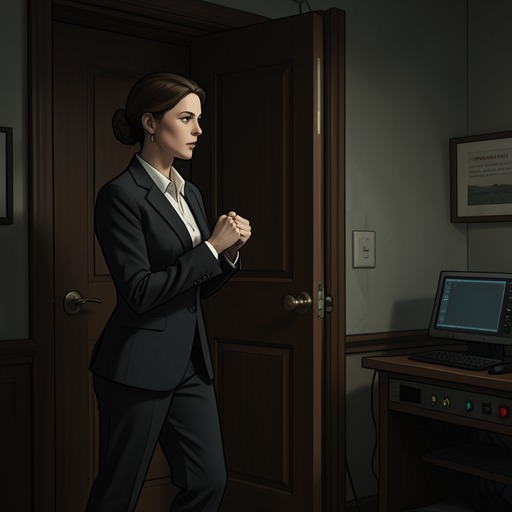
June 1988
RetributionJune 1988 marks the beginning of a wound that the story follows across more than a decade: Chloe Larson, then a law student in New York City, is assaulted, suffers lasting physical and psychological consequences, and later must confront the event again through the records and public proceedings connected to C.J. Townsend. The month is not merely a date stamp; it anchors the contrast between an ordinary, hurried life and the long institutional and personal aftermath that follows.
Setting and Before the Assault
In New York City, Chloe is rushing to meet Michael Decker and catch a train from Bayside. She has only minutes to change and reach the station, while the New York State Bar Exam weighs on her thoughts. Her evening is organized around familiar pressures—clothes, time, travel, and an anticipated question from Michael. The narrow domestic urgency of the scene establishes the life she expects to resume, before the assault abruptly breaks that continuity.
Assault and Medical Aftermath
The attack leaves Chloe seriously injured. She is found the following morning and taken to Jamaica Hospital in Queens. Doctors tell her that she has suffered severe injuries and substantial blood loss; an emergency hysterectomy is necessary to stop the bleeding. She also receives treatment for other wounds and is expected to recover, but the assurance of physical recovery cannot restore what the violence has taken from her. Her infertility and trauma remain part of the event’s consequences, not details that disappear with discharge.
Five days after arriving unconscious, Chloe is released from the hospital. The discharge frightens her: her shaking and racing heart persist as the time to leave approaches. Her mother has found her a one-bedroom apartment on the eighteenth floor of North Shore Towers in Lake Success. Chloe refuses to return to her old Bayside apartment or have its belongings transferred to the new one, apart from her parakeet. The move gives her a different address, but it also records the extent to which the former home—and especially its bedroom—has become uninhabitable to her.
Fading Protection and Isolation
In the hospital, a police guard initially stands outside Chloe’s room, but is removed when she is no longer considered in imminent danger. Detectives first visit regularly and then shift to daily calls, while the investigation is described as active. Chloe expects even those calls to diminish as the case makes room for newer arrivals. The tapering attention contrasts with the continuing effects of the assault: official urgency can recede while the injured person is still trying to comprehend what happened.
Her room fills with flowers, but she cannot bring herself to speak with most callers or see most friends. She does not want others to see her bandages and speculate about them, yet she also cannot return to ordinary conversation. Aside from a close friend, she withdraws from visitors. Michael’s discomfort and frustration at the hospital do not repair the distance between their experiences; Chloe increasingly feels that his ordinary routine continues while hers has been irreversibly changed. These reactions make June’s aftermath a story of isolation as well as medical recovery.
The Event’s Return in Later Years
More than a decade later, reading the old police and hospital records brings the assault back with unusual force. Chloe can remember the event in exact detail even as ordinary daily memories elude her. A former neighbor’s statements blame her clothing and behavior for the attack. Although she recognizes the speaker’s claims as demented and perverted, they revive guilt and shame she has struggled against in therapy. The old records do not simply document the case; they reopen the question of responsibility in the mind of the person who was harmed.
The past also enters C.J. Townsend’s later prosecution of William Rupert Bantling. When her judgment is challenged in connection with the case, C.J. discloses in court that she was violently raped while a law student in New York. She says Bantling has learned about the unsolved assault through old police reports and public records, and denies that he was her attacker. The disclosure makes the distance between June 1988 and the courtroom painfully visible: the event has survived in records, in private memory, and finally in public speech, while remaining distinct from the murder case C.J. is prosecuting.