Event 1
Chloe Larson’s 1988 assault
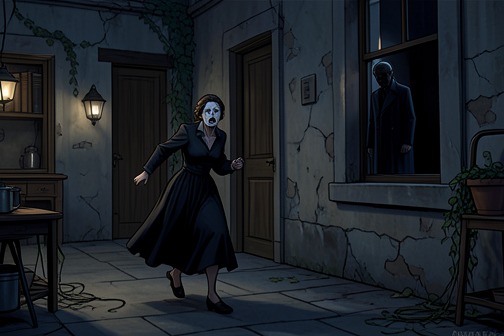
[Chloe Larson’s 1988 assault](entity:event-recall-event-chloe-larson-s-1988-ass-db8dd8d222e2) is the foundational trauma behind her later personal and professional conflicts. A masked intruder breaks into her apartment while she sleeps and assaults her; the injuries require an emergency hysterectomy. The crime remains unresolved for years, but its consequences persist in Chloe’s private life and return to the center of the story when she connects the attack to William Rupert Bantling while prosecuting him.
## The Night of the Assault
Before the attack, Chloe is hurrying to meet Michael, preoccupied with the answer she expects to give him. As she crosses the courtyard, she feels watched by Marvin, her reclusive neighbor, at his window. She tries to shake off the unease and focus on the evening ahead. The ordinary pressures of her life—her relationship, the bar exam, and her studies—make the violence that follows a rupture in an otherwise recognizable routine.
Later, after Michael has left, the assailant waits outside Chloe’s apartment. At 1:32 a.m., wearing a clown mask, he enters through a living-room window with a broken latch. Chloe is asleep after an exhausting day and is dreaming anxiously about the bar exam when she hears a voice above her. Confused for a moment by the collision of dream and reality, she realizes an intruder is in the room. He restrains and gags her, then assaults her through the night, until sunrise.
## Medical Consequences and the Investigation
Chloe is found the next morning by a friend and taken by paramedics to Jamaica Hospital in [Queens](entity:location-recall-location-queens-6c6ea4959925). She has lost a great deal of blood, and the severe injuries to her uterus make an emergency hysterectomy necessary to stop the bleeding. Doctors expect her to recover from the other wounds as well, but the surgery leaves a lasting consequence: she cannot have children. The hospital’s account of her recovery cannot undo the bodily and personal loss caused by the attack.
At first, a police guard remains outside Chloe’s room, and Detective Harrison visits daily. By Monday, however, the guard has been reassigned because Chloe is no longer considered in imminent danger, and the detective’s visits have become brief daily calls. Chloe suspects that even those will soon stop as the case is displaced by new arrivals. The investigation’s diminishing presence compounds her sense that the assault has not only changed her life but may also be slipping from institutional attention.
## Isolation, Memory, and Blame
Chloe’s hospital room fills with flowers, but she does not want to speak with most callers or let acquaintances see her bandages. She does not want to recount the attack, yet ordinary conversation feels impossible too. Apart from Marie, she avoids visitors. The assault has separated her from the life she remembers as normal, and she does not know how to recover it.
More than a decade later, reading the old police and hospital records brings the event back with painful clarity. Chloe recalls details of the attack while struggling to remember ordinary recent events. A statement by Marvin blames her clothing and behavior for what happened. Although she understands that his claims are the words of a perverted and unreliable person, they renew guilt and shame that she has fought for years. Her experience in therapy has included learning not to blame herself; the documents show how readily victim-blaming can reopen that struggle.
The records also place Chloe’s assault among a pattern of masked attacks on women in their homes. The assailant entered first-floor apartments at night, restrained and gagged the women, and left them with serious injuries. He used masks, including a clown mask, and a knife to terrorize his victims; the specific instruments of abuse varied. Investigators found no physical evidence linking him to the scenes. Chloe’s recognition of the attacker rests instead on intimate personal details he knew about his victims—information that made the crimes feel personally targeted even when the scenes offered no forensic identification.
## The Assault Returns to Court
The old case becomes newly consequential when Chloe is prosecuting William Rupert Bantling. [Lourdes Rubio](entity:character-recall-character-lourdes-rubio-a8328b3f4769) tells her that the defense has filed a motion to suppress evidence from the stop and intends to seek Chloe’s removal, arguing that her judgment may be clouded. The motion turns Chloe’s unspoken past into a threat to her role in the current prosecution, while Bantling’s presence makes the conflict immediate.
In court, Bantling raises the old rape and claims he was Chloe’s attacker. Chloe then tells Judge Chaskel that she was violently raped while a law student in [New York](entity:location-recall-location-75b9ea4bd176) and that her assailant was never caught. She says Bantling obtained the information from old police reports and public records, and denies that he was the man who attacked her. Her disclosure exposes the personal history on which the conflict-of-interest challenge rests, in a courtroom where the revelation is heard by everyone present. The assault thus returns not merely as a memory but as a public test of Chloe’s credibility, judgment, and ability to continue the case.
Event 2
Cupid murders
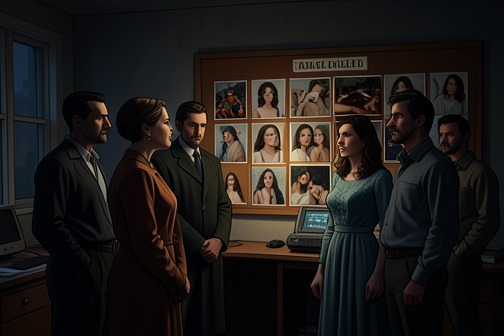
The [Cupid murders](entity:event-recall-event-cupid-murders-5b2de1fa9bfc) are a series of killings in [Miami](entity:location-recall-location-miami-28b8b009fa19) whose deliberate staging and repeated signature turn a widening investigation into a public reckoning. For [Dominick Falconetti](entity:character-recall-character-dominick-falconetti-32bc0be8d5cc), the victims’ photographs are not merely leads: they are a record of eleven young women who disappeared and of the investigative failures that left the killer free to continue.
## Emergence of the Case
During the eighteen months before Dominick studies the newest photographs, eleven women have vanished from [South Beach](entity:location-recall-location-south-beach-991ce43040e8) nightlife. Nine bodies have been found, sometimes weeks or months after the disappearances, at scattered locations across [Miami-Dade County](entity:location-recall-location-miami-dade-county-35f26f79eb4c), including an old sugar refinery in the [Everglades](entity:location-recall-location-everglades-1fafda1f3031), a vacant house in Liberty City, and an abandoned supermarket in Kendall. The places are remote or disused, but the killer has not simply hidden his crimes: the bodies have been left to be discovered, and their staging makes each recovery part of the case’s public record.
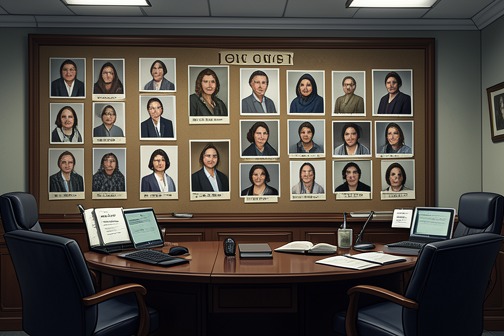
The victims are mostly in their early twenties. The oldest is twenty-five; the youngest is eighteen. Their families supply multiple photographs, and investigators choose the most detailed image of each woman for the corkboard they call [The Wall](entity:object-recall-object-the-wall-894f2e7bcb38). The board grows with the investigation: after eight months, six women are missing, three bodies have been found, and the task force still has no leads. Dominick’s first move when he joins is to obtain a larger board, a practical adjustment that also makes the mounting scale of the case impossible to overlook.
The murders share a distinctive pattern. The victims are sexually assaulted and their hearts removed, a repeated act that investigators read as the signature of a serial killer. The press gives the unknown killer the name Cupid, while the task force tries to identify the person behind that public label. The name captures the grotesque contrast between the romance associated with the city’s nightlife and the violence directed at women who disappear from it.
## The Investigation Widens
The task force is headquartered in a conference room at the [Florida](entity:location-recall-location-florida-1618e1042117) Department of Law Enforcement’s Miami Regional Operations Center. Twelve officers and detectives from five agencies work on the case full-time. The Florida Department of Law Enforcement supplies the room, equipment, an analyst, and administrative support; after months without progress, it assigns Dominick as well. The room’s former plaques and awards are displaced by The Wall, investigative folders, victim records, and boxes of personal materials. The investigation thus occupies not just a board but the entire working space, while each woman’s photographs remain visible among the paperwork.
As the murders continue, the pattern becomes more alarming rather than more legible. The intervals between disappearances and discoveries lengthen, the violence escalates, and the killer appears increasingly confident. Some victims are killed where their bodies are found; others are killed elsewhere and brought to deliberately selected locations. Investigators cannot determine why the scenes differ or what message their arrangement is intended to convey. The apparent organization of the crimes offers no clear route to the killer: each new scene deepens the evidence of planning while leaving the central questions unresolved.
## From Pattern to Suspect
[C.J. Townsend](entity:character-recall-character-c-j-townsend-61cc4c0fbc19)’s search for earlier crimes shifts the investigation from the repeated signature of the Miami killings to a possible history behind it. Searching newspaper archives for attacks involving a woman, a rape, a knife, and a clown mask, she finds reports of three assaults in California: a college student attacked in [Los Angeles](entity:location-recall-location-a4be76fb5f5a) in 1991, a bartender attacked in Hollywood in 1993, and another student attacked in [Santa Barbara](entity:location-recall-location-433b36b956ee) later that year. The accounts share a masked assailant and attacks in first-floor apartments at night. A further case in [San Luis Obispo](entity:location-recall-location-01df4138c0b4) involves a similar method but an alien mask, widening the possible pattern without proving that the same offender was responsible.
She then searches cities where William Rupert Bantling had lived before moving to Miami. Reports describe comparable assaults in [Chicago](entity:location-recall-location-73935e623d95) in 1989 and [San Diego](entity:location-recall-location-52525e0dc69c) in 1990, and Bantling’s recorded addresses place him within ten miles of each reported victim. The geographic overlap gives C.J. a reason to pursue the connection, but the articles alone cannot establish that he committed the attacks. Her search of South Florida newspapers produces no comparable reports, leaving the earlier cases as a separate investigative trail rather than a direct account of the Miami murders.
The material obtained from six police departments makes the similarities more specific. The cases describe intrusions into first-floor apartments while victims slept, restraint and gagging, and an assailant wearing a clown or alien mask. The weapons and implements varied, while the reports consistently recorded severe lasting harm; investigators found no physical trace that identified the attacker. For C.J., however, the decisive connection is not simply a recurring method. The assailant appears to have known intimate facts about the women, including their routines and personal preferences. That combination of repeated procedure and individualized knowledge leads her to identify Bantling as the likely perpetrator, turning a resemblance across cases into a focused suspicion.
C.J. asks Investigator Christine Frederick of [INTERPOL](entity:organization-recall-organization-interpol-378be8d33f6c) to check records beyond the United States. Frederick reports matching wanted notices for assaults in [Rio de Janeiro](entity:location-recall-location-496e5530395a), [Caracas](entity:location-recall-location-53f9ffffb1d8), and [Buenos Aires](entity:location-recall-location-caf56b79d5c4), as well as four cases in [the Philippines](entity:location-recall-location-8b86fdcbfca5) from 1991 to 1994. The masks described in those reports vary, and Frederick cautions that the notices have not yet been confirmed with the relevant consulates or police agencies. They suggest as many as ten additional victims in four countries, but remain leads requiring verification. Set beside the earlier American reports, they enlarge the possible scope of Bantling’s offending while preserving an important distinction: the expanding pattern points toward him, but each case still depends on evidence capable of linking a particular crime to a particular offender.
## Evidence and the Trial’s Turning Point
The investigation’s most consequential breakthrough came in Key Largo, where Dominick Falconetti and Manny Alvarez found a mobile home that had belonged to William Rupert Bantling’s deceased aunt, Viola Traun. A civil contempt warrant connected Bantling to the property: as its guardian, he had failed to file an accounting after her death. The trailer-park owner allowed the agents access under right-of-possession papers because the home was facing foreclosure for unpaid lot rent. In the kitchen freezer they found the victims’ hearts and photographs showing women on a metal gurney against a black background. The discovery supplied a physical connection between the missing victims and the crimes that the earlier pattern-based investigation could not provide on its own.
The new evidence changed the atmosphere of the murder trial. C.J. Townsend reopened the case on Wednesday, and after Falconetti testified, the jurors viewed material recovered from the trailer, including [Anna Prado](entity:character-recall-character-anna-prado-d5202185ed9f)’s preserved heart and photographs connected to the other victims. The evidence visibly unsettled members of the jury and Prado’s mother, while Bantling’s earlier confidence gave way to a more nervous, defiant manner. During the lunch break, Falconetti charged Bantling with ten additional counts of first-degree murder and lodged ten further arrest forms at the [Dade County Jail](entity:location-recall-location-dade-county-jail-40e45a4ece62), ensuring that the other cases could proceed even if the jury acquitted him in Prado’s murder.
The discovery also shaped the separate penalty phase, which began six weeks after the jury’s guilt decision. Because the question was now whether Bantling should live or die, the state could present evidence of the other ten abductions and deaths, including the hearts and photographs recovered from Viola Traun’s trailer. Those materials had not been available to support the original conviction, but could be considered in deciding the sentence. The case’s evidentiary horizon therefore widened at the moment of punishment: what had begun with the prosecution of Anna Prado’s murder now included the broader series that the investigation had struggled to establish.
## Personal History and the Case’s Human Cost
The investigation’s history intersects with C.J. Townsend’s own experience of sexual violence. In 1988, while she was a law student in [New York](entity:location-recall-location-75b9ea4bd176), she was assaulted so severely that surgeons at Jamaica Hospital in [Queens](entity:location-recall-location-queens-6c6ea4959925) performed an emergency hysterectomy to stop life-threatening bleeding. She survived and was expected to recover physically, but the aftermath did not end with discharge. The police guard assigned to her hospital room was removed once she was no longer judged to be in imminent danger; detectives reduced their visits to a daily telephone call, and C.J. feared even those calls would soon dwindle. Though flowers filled her room, she avoided most visitors and could not return friends’ calls. She felt that the assault had taken her former life, while ordinary routines and other people’s lives continued around her.
Years later, reviewing her old police reports and medical records as she pursued the earlier masked assaults, C.J. found that the investigation itself had preserved a further injury: a former neighbor’s statement blamed her clothing and behavior for the attack. Although she understood the statement as the product of a perverse and unreliable witness, reading it revived guilt and shame she had struggled to overcome. Her experience of the case therefore reaches beyond the search for a shared offender. The records that help her recognize patterns also return her to the unresolved emotional consequences of her own assault, including the work of resisting the belief that she was responsible.
That private history becomes a courtroom issue when [Lourdes Rubio](entity:character-recall-character-lourdes-rubio-a8328b3f4769) files a motion to suppress the vehicle stop and formally seeks C.J.’s removal, arguing that personal circumstances may have clouded her judgment. The challenge turns C.J.’s fitness as prosecutor into part of the public case. She then tells the court that she had been raped as a law student and says Bantling is not the man who attacked her, while alleging that he has used old police records and public searches to make a misleading accusation and cast doubt on the prosecution. Her disclosure exposes a personal history she had kept closed for twelve years, under the pressure of defending both her professional role and the case. The Cupid investigation is thus bound to questions of evidence and institutional credibility, but also to the cost of pursuing justice when the work brings a prosecutor’s own trauma back into view.
Event 3
Discovery of Anna Prado's body and arrest of William Bantling
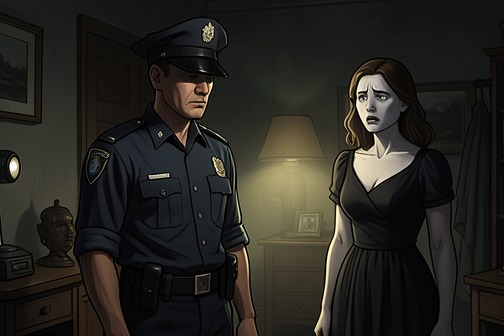
The discovery of [Anna Prado](entity:character-recall-character-anna-prado-d5202185ed9f)’s body and the arrest of William Rupert Bantling begin with an ordinary traffic stop that abruptly becomes a homicide investigation. When [Dominick Falconetti](entity:character-recall-character-dominick-falconetti-32bc0be8d5cc) arrives at the scene, the missing young woman from [Level nightclub](entity:location-recall-location-level-5957136e78d9) has been found in Bantling’s car, and the suspect is in custody. The case’s immediate force lies in that reversal: a broken taillight and a suspected odor draw police to the trunk, where they find the victim and the evidence that connects the scene to the [Cupid murders](entity:event-recall-event-cupid-murders-5b2de1fa9bfc).
## From Traffic Stop to Murder Investigation
Sergeant Lou Ribero of the [Miami Beach Police Department](entity:organization-recall-organization-miami-beach-poli-a22642e33565) called Dominick with news that the task force might have found its Cupid. Earlier that evening, rookie officer Victor Chavez had followed a black Jaguar traveling above the speed limit on Washington Avenue toward the [MacArthur Causeway](entity:location-recall-location-macarthur-causeway-de86d0c8383e). After the car continued onto the highway, Chavez also noticed a broken taillight and pulled it over. The driver was alone and identified himself with a [Florida](entity:location-recall-location-florida-1618e1042117) license bearing the name William Bantling.
## The Trunk and the Victim’s Identification
Bantling refused Chavez’s request to search the trunk. Chavez called for backup and a canine unit, and held the driver until help arrived. The dog alerted at once; officers opened the trunk expecting to find drugs and instead discovered a woman’s body. She had been killed elsewhere and left in the car, and her missing heart linked the discovery to the pattern the investigators associated with the Cupid murders.
The victim was identified as Anna Prado, who had disappeared from Level nightclub only a couple of weeks earlier. Although her disappearance was not recent, the condition of her body indicated that she had died within roughly a day. When Dominick examined her at the scene, he found that her hands had been bound and that her heart was missing. The contrast between a comparatively recent death and a weeks-long disappearance sharpened the immediate question of what had happened to Anna in the intervening time.
## Scene Examination and the Arrest
The discovery rapidly drew officers from multiple jurisdictions, along with senior officials, turning the causeway into a crowded public scene. Dominick found that crime-scene personnel had already photographed it, while officers had kept the car and its contents undisturbed. His examination reinforced the distinction between where Anna had been found and where she had died: the evidence at the car indicated that the killing had taken place elsewhere. Near the vehicle, he also noticed a fragment of red taillight and pocketed it, a small piece of physical evidence amid the larger discovery.
With the investigation attracting federal attention as well as local police, Dominick insisted that Bantling be treated as their suspect and brought in for questioning. He approached the cuffed man as an agent of the Florida Department of Law Enforcement and asked him to come with him. Bantling remained expressionless, said he knew who Dominick was, and invoked his right to remain silent and speak with a lawyer. The attempted questioning ended there: the arrest had placed Bantling in custody, but his response established that he would not answer questions without counsel.
## The Case Takes a New Shape
The discovery turns the Cupid investigation from a search for a killer defined by a recurring pattern into a case centered on a named suspect and a newly identified victim. Yet the scene does not resolve how Anna Prado spent the weeks since she disappeared, or where she was killed; it establishes that the place where her body was found was not the place of death. Nor does Bantling’s custody produce an immediate account of what happened: he refuses questioning and asks for a lawyer. The result is a decisive investigative reversal, but not a completed explanation—the evidence gives the task force a suspect and a case to pursue while leaving crucial parts of Anna’s final weeks unanswered.
Event 4
Bantling's first appearance and C.J.'s recognition of her attacker
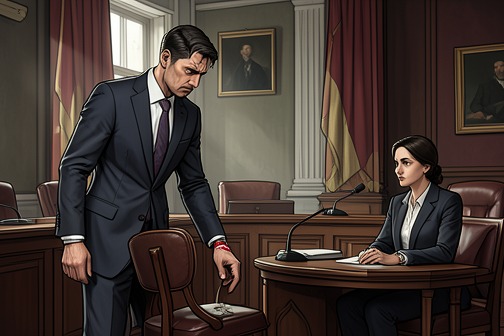
William Rupert Bantling’s first appearance in court turns a routine murder hearing into a moment of recognition for [C.J. Townsend](entity:character-recall-character-c-j-townsend-61cc4c0fbc19). As the judge considers whether Bantling should be held without bond, the defendant’s angry protest brings back the voice and identifying scar of the man C.J. remembers from the assault that altered her life. The case against Bantling and her own past suddenly occupy the same courtroom.
## The First Appearance and Recognition
Judge Irving J. Katz opened the hearing in the matter of The [State of Florida](entity:location-recall-location-7145a4a461e6) v. William Rupert Bantling. C.J. Townsend appeared for the state, and [Lourdes Rubio](entity:character-recall-character-lourdes-rubio-a8328b3f4769) represented Bantling. After reviewing the arrest form, Katz found probable cause to hold Bantling for trial on the first-degree murder charge in [Anna Prado](entity:character-recall-character-anna-prado-d5202185ed9f)’s death and ordered that he be held without bond. Rubio asked the court to consider Bantling’s community ties, lack of a criminal record, willingness to surrender his passport, and proposed electronic monitoring and house arrest. Katz rejected the request, citing the violent murders under investigation and the discovery of Anna Prado’s body in Bantling’s car.
As Katz continued, Bantling abruptly stood, knocking his chair against the railing, and protested that he was innocent and had never seen Anna Prado. He turned toward Rubio, tugging at her jacket with his handcuffed hands and demanding that she act. The sudden commotion drew the corrections officers’ attention and disrupted the hearing, but for C.J. the decisive detail was smaller: the jagged S-shaped scar on Bantling’s left arm, visible above his watch. His voice and the scar brought recognition together. She understood, in that instant, that the man now before her as a murder defendant was the person she remembered as her attacker.
C.J. could not respond at once. The courtroom seemed to fall silent for her as Bantling was taken from the defense table, still protesting; [Dominick Falconetti](entity:character-recall-character-dominick-falconetti-32bc0be8d5cc), seated among the spectators, reached her and tried to bring her attention back to the judge calling her name. The recognition did not remain a private realization for long. With reporters pressing for comment, C.J. left the courtroom and hurried out of the courthouse, while the encounter marked the return of a nightmare she had thought belonged to the past.
## The Past Behind the Recognition
The courtroom recognition reached back to an assault that had left C.J. Townsend hospitalized at Jamaica Hospital in [Queens](entity:location-recall-location-queens-6c6ea4959925). Doctors told her that she would recover, but the emergency hysterectomy required to stop her bleeding meant that recovery could not restore everything the assault had taken. When she began describing how her attacker had immobilized her, Detective Harrison told her that the assault was not her fault. The reassurance answered the question of blame directly, but it could not make the event easier to speak about or return her to the life she had known before it.
The investigation’s gradual retreat made the past feel less settled, not more. The guard assigned to protect C.J. was removed when she was no longer considered in imminent danger, and Detective Harrison shifted from daily visits to a daily phone call. C.J. withdrew from most visitors, including well-wishers whose flowers filled her hospital room, and dreaded being seen with her bandages or drawn into conversations about the assault. Later, when Detective Harrison stopped calling, C.J. called every day herself to ask about the case. With no identification, fingerprints, or other physical evidence, she feared it would disappear into the cold-case files; continuing to call became a way of insisting that the investigation, and the assault, had not simply gone away.
The memory returned with force when C.J. later read the old police reports and hospital records. A former neighbor’s account blamed her clothing and behavior for the assault, reviving feelings of shame and responsibility that she had worked to resist. That history helps explain why Bantling’s appearance in court was not only a sudden identification but also a collision between her professional role and an unresolved personal wound. When Lourdes Rubio later sought C.J.’s removal from the case on the ground that her judgment was clouded, C.J.’s past had become an argument within the prosecution itself.
At the trial, the private wound became public. C.J. told Judge Leopold Chaskel that she had been raped years earlier while studying law in [New York City](entity:location-recall-location-new-york-city-65df0a129d4c), then stated that Bantling was not the man who had attacked her. She said he had learned about the assault through old police reports and public records and was using a midnight confession to make the proceedings appear improper. Rubio told the court that she had reviewed the reports, spoken with C.J., and did not support Bantling’s accusation. The later account complicates the apparent certainty of the first courtroom recognition: the recognition begins the event’s crisis, while the public disclosure shows how the assault’s history could be invoked, contested, and turned into a question about C.J.’s fitness to prosecute.
## Recognition in Public
The recognition unfolded under the eyes of a courtroom already prepared to turn the hearing into news: reporters watched, cameras recorded, and sketch artists worked as William Rupert Bantling’s outburst broke the proceeding. C.J. Townsend’s realization therefore became entangled at once with a public spectacle. After leaving the courtroom, she hurried through the courthouse and past reporters pursuing her; at the later trial, when she disclosed her past assault to Judge [Leopold Chaskel III](entity:character-recall-character-leopold-chaskel-iii-25f62042aab6), the courtroom answered with a collective gasp and the revelation was framed as breaking news. The sequence shifts her history from a private memory into contested public knowledge, while making clear that Bantling’s accusation could force her to speak about the assault before the very court where she was prosecuting him.
## The Case Behind the Hearing
The prosecution had emerged from an investigation built to connect individual disappearances into a larger pattern. At the [Florida](entity:location-recall-location-florida-1618e1042117) Department of Law Enforcement’s [Miami](entity:location-recall-location-miami-28b8b009fa19) Regional Operations Center, the [Cupid task force](entity:organization-recall-organization-cupid-task-force-c6936f4b95a0)’s wall of family photographs and case records placed the missing women’s lives beside the evidence of what had happened to them; investigators also collected personal materials such as diaries, letters, and photographs. Against that accumulated record, the first appearance gave the Anna Prado case a formal court proceeding, while C.J. Townsend’s recognition introduced a different kind of consequence: the investigation’s central defendant was also linked, in her memory, to an assault that had never been solved.
Event 5
FBI request to enter Bantling's residence denied
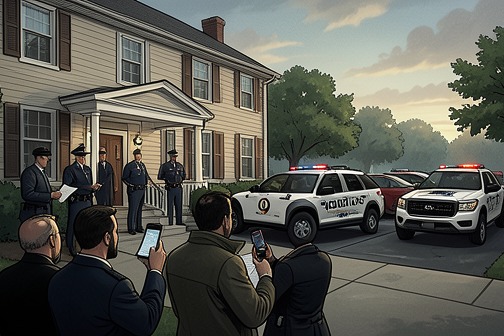
The FBI request to enter Bantling’s residence denied is a jurisdictional confrontation in which [Dominick Falconetti](entity:character-recall-character-dominick-falconetti-32bc0be8d5cc) holds the line against a federal effort to enter an active state search scene. The exchange makes the limits of the warrant explicit: the FBI’s claim to investigate a homicide on federal land does not, in Falconetti’s view, authorize its agents to join a search based on the [Anna Prado murder](entity:event-recall-event-573d83ae1784). Entry is refused unless the Bureau obtains its own warrant, with access left possible after the state search is complete.
## Background and Competing Claims
The dispute unfolds while officers are searching William Rupert Bantling’s house after his arrest in the Prado murder investigation. The federal presence is conspicuous before Falconetti speaks with its agents: FBI personnel are outside the house, talking on cell phones, making notes, and giving interviews to reporters about their investigation. Their arrival is presented publicly as a possible takeover of the case, while crime-scene vehicles remain in the driveway, partly blocked by the federal agents’ parking.
Falconetti has already encountered two of the agents, Carl Stevens and Floyd Carmedy, on the causeway the previous night. When he learns they are now outside Bantling’s residence, he objects that the state search warrant does not name federal agencies among those authorized to enter. A [Miami Beach Police Department](entity:organization-recall-organization-miami-beach-poli-a22642e33565) officer has initially kept them out. Falconetti backs the officer’s decision and makes clear that the boundary is not an informal preference: it follows from the warrant governing the search.
Mark Gracker, the FBI’s special agent in charge, arrives to press the request himself. He says the Bureau needs access to the crime scene and invokes its jurisdiction in the Siban murder, which he says occurred on federal land. His claim establishes the competing investigative interest, but it does not erase the distinction Falconetti draws between that homicide and the basis for searching Bantling’s house.
## The Confrontation at the House
Falconetti meets Gracker outside, in front of the house and within view of a television crew. Gracker’s request is direct: the FBI needs entry. Falconetti responds by identifying the legal scope of the state warrant. It authorizes specified state and local agencies, not the Federal Bureau of Investigation, and he tells Gracker the Bureau’s assistance will not be needed for this search.
The argument turns on the connection between the residence search and the two investigations. Falconetti stresses that Bantling has been arrested for the Prado murder and that the warrant for his house is based on facts gathered in that homicide. If the search uncovers evidence linking Bantling to the Siban murder, Falconetti says he will notify the FBI. He does not claim that the Bureau has no interest in the second investigation; instead, he refuses to let that interest serve as a substitute for authorization to enter under the existing warrant.
Gracker asks whether Falconetti is forcing the Bureau to obtain a federal warrant. Falconetti confirms that it will be necessary. He also makes the limit of the refusal clear: the FBI may inspect the house after the state team has finished. The answer is therefore not a permanent denial of all federal access, but a refusal to admit the agents on the strength of their claim alone while the state-authorized search is underway.
## Immediate Outcome
Falconetti turns away from Gracker and returns toward the house, leaving the FBI official visibly angry and frustrated. He quietly praises the young [Miami Beach](entity:location-recall-location-miami-beach-1ba638669276) officer who had kept the agents out, reinforcing that the officer’s decision had support from the investigator in charge of the state search. Falconetti then calls a final greeting to Gracker, underlining the personal familiarity behind their formal dispute without changing its substance.
The immediate result is that the state team retains control of its search scene at that point. The passage does not establish what the search ultimately uncovers, whether the FBI later obtains a warrant, or what evidence, if any, links Bantling to the Siban homicide. Its precise outcome is procedural: federal agents are not allowed inside under the state warrant, and the Bureau is directed to seek separate federal authority or wait until the state search ends.
## Significance
The scene frames investigative authority as something exercised through defined permissions, not simply claimed through institutional status. The FBI’s public presence and stated jurisdiction give its request weight, but Falconetti’s answer depends on the warrant’s named agencies and the homicide that supplied the factual basis for the search. He preserves cooperation in principle—promising to pass along any Siban connection—while rejecting an entry that would exceed the warrant as he understands it.
The confrontation also places the investigation before an audience. Reporters and a camera crew are close enough to make the agents’ arrival a media event, and Falconetti suspects Gracker has used the press in an effort to reach him. The scene thus contrasts the appearance of a federal takeover with the narrower procedural question being contested at the house. Its tension comes not from a completed transfer of control but from the unsettled boundary between two investigations and the insistence that access must be obtained through the proper warrant.
Event 6
Chloe Townsend recognizes Bantling as her attacker
[C.J. Townsend](entity:character-recall-character-c-j-townsend-61cc4c0fbc19)’s recognition of William Rupert Bantling transforms a courtroom encounter into the return of a trauma she had spent twelve years trying to contain. His voice and a scar above his wrist identify him, in her understanding, as the man who assaulted her when she was a law student in [New York](entity:location-recall-location-75b9ea4bd176). The discovery gives a name to the attacker she had never seen unmasked, but it also makes the case she is prosecuting inseparable from her own history.
Event 7
New York rape case barred from prosecution by the statute of limitations
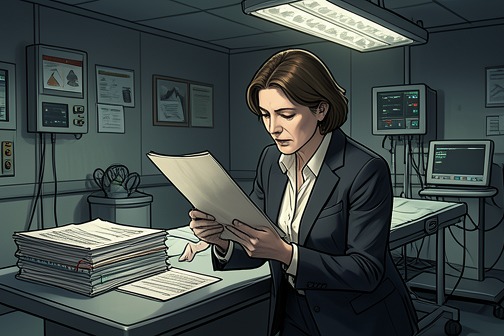
The [New York rape case barred from prosecution by the statute of limitations](entity:event-recall-event-478c37747ff4) is a turning point for [C.J. Townsend](entity:character-recall-character-c-j-townsend-61cc4c0fbc19): after recognizing William Rupert Bantling as the man who assaulted her when she was a law student, she learns that the old case cannot be tried. The discovery makes the past newly specific but offers no route to prosecution. C.J. can still pursue Bantling for the murders under investigation in [Florida](entity:location-recall-location-florida-1618e1042117), yet the assault that shaped her own life lies beyond the reach of a [New York](entity:location-recall-location-75b9ea4bd176) trial.
## The old case and the search for a remedy
The assault took place in New York in 1988, while C.J. was a law student. She was hospitalized with severe injuries and underwent emergency surgery. At the time, investigators did not identify a suspect or make an arrest. Years later, when she begins trying to find out what can be done, the absence of an arrest sends her from the Special Victims unit to the [NYPD Cold Case Squad](entity:organization-recall-organization-nypd-cold-case-s-c4c93da369e2). The effort produces no immediate answer: the detective who handles cold sex crimes is unavailable, and C.J. is asked to call again.
The search for help underscores how little of the original case remains active. C.J. learns that the detectives who handled it have retired or died, and that the file is now a cold case. The case’s unresolved status is not the same as evidence that nothing happened; it means that no suspect had been identified and no arrest made. With the person she believes responsible now in custody in Florida, she turns to the [Queens County District Attorney’s Office](entity:organization-recall-organization-queens-county-di-4d41c3f0cb08) and its Extraditions Unit for guidance on whether New York can proceed.
## Recognition without prosecution
C.J.’s recognition of Bantling follows a courtroom moment in which she sees a mark above his wrist as he pulls at [Lourdes Rubio](entity:character-recall-character-lourdes-rubio-a8328b3f4769). In her conversation with [Gregory Chambers](entity:character-recall-character-gregory-chambers-41d726249620), she says she knows it is him, but does not know what to do. The recognition connects the unsolved assault to the man now facing a separate prosecution; it does not reopen the old case or erase its procedural history.
C.J. tells Chambers that she would testify, but that there will be no New York trial: the [statute of limitations](entity:concept-recall-concept-statute-of-limitation-33f3125f9645) has expired. She understands it to have run seven years earlier. The deadline therefore predates her recognition by years, leaving her unable to prosecute Bantling for the assault, attempted killing, and other harm she associates with the case. Her frustration is sharpened by the timing: she has finally found the person she believes attacked her, only to discover that identifying him cannot restore the lost opportunity to bring that charge.
The obstacle is not reluctance to face court. C.J. makes clear to Chambers that she is willing to testify. Nor, as she explains it, is the problem that authorities have already tried and failed to convict a named suspect: there was never a suspect or arrest in the original investigation. The limitation period has run before the case could reach that point. Her account separates a victim’s willingness to participate from the law’s continuing power to prosecute.
## The wider pattern she uncovers
As C.J. examines Bantling’s history, the old case becomes part of a much broader pattern of masked sexual assaults. Newspaper searches find reports from California of attacks on women in first-floor apartments, at night, by assailants wearing clown masks; she also finds a case involving an alien mask. Similar reports emerge from cities where Bantling had lived, including [Chicago](entity:location-recall-location-73935e623d95) and [San Diego](entity:location-recall-location-52525e0dc69c). His recorded addresses place him within ten miles of victims in those two cases. These geographic and behavioral similarities lead C.J. to suspect that the assaults are connected, but they are not, by themselves, proof that Bantling committed every reported crime.
The police reports she obtains describe recurring features: victims were attacked while asleep in ground-floor apartments, and the assailant wore a latex clown or alien mask. C.J. sees a further, more personal resemblance in details the attacker knew about his victims, including preferences, routines, and private information. She comes to believe that the pattern identifies Bantling, while the cases’ spread across jurisdictions and years helps explain why investigators had not connected them earlier. The investigation expands the apparent scale of his violence; it does not change the fact that the New York case is time-barred.
A call from an Interpol investigator adds reports from South American countries and [the Philippines](entity:location-recall-location-8b86fdcbfca5). The investigator describes similarities in the reported methods and masks, but cautions that the information comes from wanted notices and has not yet been confirmed with the relevant authorities. The tentative assessment is that there may be about ten additional victims across four countries. C.J. regards Bantling as responsible for a much wider series of assaults and killings, but the distinction between a compelling pattern and independently verified findings remains important. None of these leads supplies a remedy for the expired New York charge.
## Public disclosure and the continuing conflict
The old case later becomes an issue inside the Florida proceedings. Lourdes Rubio presents a motion to suppress the stop and tells C.J. that the defense intends to seek her removal, claiming her judgment may be clouded. This turns C.J.’s personal history into a question about her role as prosecutor. The unresolved assault is no longer confined to a private conversation or an old police file; it now bears on whether she can continue the case against Bantling.
In court, C.J. publicly discloses that she was violently raped while a law student in New York. She says Bantling has learned of the unsolved assault through old police reports and public records and has made a confession intended to raise accusations of impropriety. She then tells the judge that Bantling was not the man who attacked her and says she had already advised his attorney of that position. This courtroom statement contrasts with her earlier private recognition of him as her attacker. The scene establishes the public pressure surrounding the case, but does not resolve that contradiction; it shows how the accusation and the question of C.J.’s impartiality become part of the trial’s conflict.
The event’s central injustice is procedural rather than evidentiary: C.J. believes she knows who assaulted her, yet the passage of time has closed the route to a New York prosecution. She continues to seek accountability through the Florida murder case, but that pursuit cannot make the old charge legally available again. Recognition brings the past into the present; the expired limitation period determines what the court can do with it.
Event 8
Anna Prado autopsy reveals drug-induced control and conscious paralysis
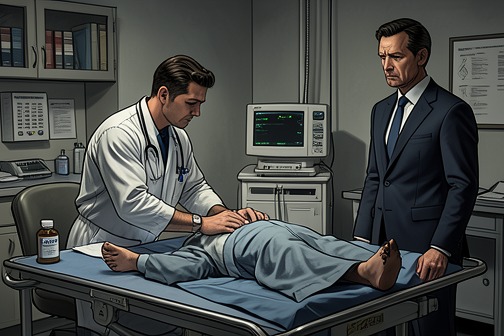
The autopsy of [Anna Prado](entity:character-recall-character-anna-prado-d5202185ed9f) reveals that drugs may have been used to keep her subdued and that a muscle relaxant could have left her conscious but unable to move. The turning point is not a single dramatic discovery but a chain of forensic reconsideration: a medication found at the suspect’s home prompts additional testing, which gives new meaning to small marks on Anna’s body and leads investigators to recognize a second drug. Together, the results change their understanding of how she may have been controlled before her death, while leaving important details of the precise sequence unconfirmed.
## A Second Look at the Evidence
Anna’s body lay on a metal gurney at the medical examiner’s office. Dr Neilson told [Dominick Falconetti](entity:character-recall-character-dominick-falconetti-32bc0be8d5cc) that he had run additional tests after Dominick reported finding Haldol at the suspect’s home. The new results were available that morning. That link between a medication recovered during the investigation and a question raised at autopsy prompted the medical examiner to revisit what had previously seemed inconclusive.
Dr Neilson explained that haloperidol, sold under the brand name Haldol, is a powerful antipsychotic used to manage delirium and other serious symptoms. It can calm a patient and suppress hallucinations or delusions; at sufficiently high doses, it can also cause catatonia, unconsciousness, coma, or death. The drug was not included in the medical examiner’s standard toxicology screens. Finding it therefore required investigators to suspect its presence and specifically test for it.
That limitation helped explain why earlier examinations had not identified the substance. The weight of the lungs in the autopsies of Anna and Nicolette Torrence had raised suspicion that they had taken a depressant, but tests for several familiar drugs had not identified one. After Dominick mentioned the Haldol recovered from the suspect’s home, Dr Neilson considered haloperidol a possible match and ordered further testing. The retest detected it in Anna’s system. The finding did not by itself establish exactly when or how she received the drug, but it gave the investigators a previously unavailable connection between the recovered medication and the victims’ toxicology.
## Haloperidol and Possible Incapacitation
Dr Neilson noted that the prescription bottle specified twenty milligrams twice a day, a strong dosage. He explained that a single twenty-milligram pill could incapacitate a person of low body weight who had no tolerance to the drug. If taken in a drink, he said, it could begin affecting coordination, speech, motor control, and reaction time within about fifteen minutes. He also explained that haloperidol could be injected, producing more immediate effects, and that time-release injections could last for weeks.
These were explanations of what the drug could do, not a complete reconstruction of Anna’s treatment. Dr Neilson could not provide an exact amount of haloperidol in her system. He described the levels as substantial and thought the drug might have been used to keep her subdued for a period before her death. The autopsy therefore supported a disturbing possibility without establishing every step: haloperidol could have impaired Anna, but the test results alone did not specify the route, timing, or duration of its administration.
## Injection Marks and a Second Drug
A closer examination of Anna’s body added physical evidence to the toxicology findings. Dr Neilson identified two pinprick-sized marks and explained that the surrounding tissue was consistent with injection sites. Bruising had been difficult to recognize because lividity had developed in the area, and the medical examiner had not initially been looking for evidence of injections. The marks acquired significance only when the new drug results gave him a specific possibility to investigate.
He also identified a mark in the inside of Anna’s elbow consistent with an intravenous line. Two other veins, one in her opposite arm and one at her ankle, had been damaged in what he considered possible attempts to establish access. The combination suggested that an IV had been used, although the marks alone could not identify what had passed through it. Dr Neilson initially reconsidered the tissue findings in light of the haloperidol hypothesis; further testing then provided a reason to distinguish the injections from that drug’s possible use.
The additional toxicology screen detected [Mivacron](entity:object-recall-object-mivacron-a43d7437f923), the brand name of mivacurium chloride. Dr Neilson explained that it was a skeletal muscle relaxant administered intravenously. It could paralyze the muscles without providing anesthesia or pain relief. In other words, a person affected by it could remain conscious while unable to move or speak. The result gave the IV evidence a new importance: it offered a possible explanation for why Anna had received an intravenous drug in addition to haloperidol.
Dr Neilson could not quantify the Mivacron, but judged the amount sufficient to have paralyzed Anna completely. Because the drug acts for a short time and has a short postmortem half-life, he thought she probably died while still connected to the IV. He treated the freshness of the mark as consistent with that timing, rather than as proof of every detail of the final sequence.
## What the Findings Change
The examination also revealed adhesive residue on Anna’s eyelids and missing eyelashes. Dr Neilson interpreted this as evidence that her eyelids had been taped open. In the context of the Mivacron finding, this suggested that she might have been prevented from moving while remaining aware, and that her eyes may have been held open. The investigators had to confront the possibility that paralysis had not meant unconsciousness. The medical evidence thus altered not only their theory of drug use, but their understanding of Anna’s possible experience.
Dominick Falconetti and Manny Alvarez reacted with anger as the findings accumulated. Their initial questions exposed the limits of inference: small puncture marks could have more than one explanation, and a drug’s presence did not establish a psychiatric diagnosis or prove precisely how it had been given. Dr Neilson explicitly declined to diagnose the suspect based on a Haldol prescription. What the autopsy did establish was narrower and more consequential: Anna had haloperidol and Mivacron in her system; her body bore marks consistent with injections and an IV; and the second drug could produce paralysis without unconsciousness.
The autopsy therefore becomes a forensic recognition scene. The evidence does not simply identify substances; it changes the meaning of details that had been overlooked, from a toxicology screen’s blind spot to pinprick marks obscured by lividity. Its central revelation is the distinction between being unable to move and being unconscious—a distinction that turns the investigation’s account of Anna’s final period into something far more troubling, while preserving the uncertainty that the evidence cannot resolve.
Event 9
Chloe discovers Bantling's earlier masked rapes
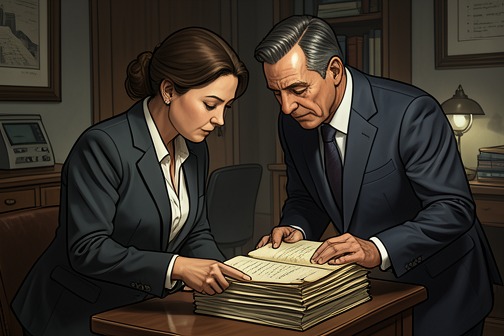
[C.J. Townsend](entity:character-recall-character-c-j-townsend-61cc4c0fbc19)’s search into William Rupert Bantling’s past turns an apparently isolated serial-murder investigation into a much wider pattern of violence. By tracing old newspaper accounts, obtaining police reports, and seeking international assistance, she identifies earlier masked rapes that had never been linked. The discovery gives her a compelling reason to believe Bantling was responsible, but it also exposes how little certainty resemblance alone can provide, how easily separate jurisdictions can leave cases disconnected, and how the passage of time may prevent recognition from becoming prosecution.
## Searching Bantling’s past
As the [Cupid task force](entity:organization-recall-organization-cupid-task-force-c6936f4b95a0) began examining Bantling’s history, C.J. understood that its investigators would be looking for a murderer. She approached the same record from a different angle: she searched for earlier sexual assaults that might have gone unnoticed because they did not resemble the killings. Using Westlaw, the State Attorney’s Office’s legal research service, she searched newspapers in cities where Bantling had lived, beginning with [Los Angeles](entity:location-recall-location-a4be76fb5f5a), where he had spent much of the period from 1990 through 1994. She tried combinations of terms associated with missing women, attacks, and murders, then repeated the search in papers serving [Chicago](entity:location-recall-location-73935e623d95), [San Diego](entity:location-recall-location-52525e0dc69c), and [New York](entity:location-recall-location-75b9ea4bd176). The broad searches yielded no pattern resembling Cupid.
A narrower search changed the direction of the inquiry. C.J. entered five terms concerning women, rape, knives, clowns, and masks. Three articles appeared in the Los Angeles Times: one about a UCLA student attacked in January 1991, another about a Hollywood bartender attacked in July 1993, and a third about a college student in [Santa Barbara](entity:location-recall-location-433b36b956ee) attacked in December 1993. Each account described a masked assailant and an assault in the victim’s ground-floor apartment. C.J. found another case in [San Luis Obispo](entity:location-recall-location-01df4138c0b4) with a similar pattern, though that attacker was reported to have worn an alien mask.
The accounts came from different places and years, and no one had connected them. C.J. continued searching and found two more reports: an attack in Chicago in September 1989 involving an alien mask, and one in San Diego in early 1990 involving a clown mask. Those six reports were only the cases she could locate in the American cities she searched, not a confirmed count of all victims. Bantling’s old addresses placed him within ten miles of the reported Chicago and San Diego attacks. That proximity strengthened the pattern she was assembling, but did not by itself establish who had committed them.
## From resemblance to recognition
C.J. then obtained the police reports from all six departments. By seven o’clock that evening, records staff had faxed her a copy of each report. Taken together, the files described repeated features: attacks at night in first-floor apartments, victims restrained before the assault, and a masked attacker who used a knife to control and frighten them. Reports referred to clown and alien masks, while accounts of the assaults and the means of intimidation differed. Investigators had found no useful physical trace linking the cases.
For C.J., the decisive connection was not simply that the attacks looked alike. The assailant appeared to know private facts about the women: personal preferences and routines, details about their clothes and relationships, and information specific to their lives. Among the reported particulars were a UCLA student’s grades and the amount of the Hollywood bartender’s recent credit-card bill. C.J. interpreted those intimate details as part of the pattern, not as incidental similarities. Their recurrence across the files convinced her that Bantling was responsible. She also saw that the cases had remained unsolved and unconnected: there had been no arrests, identified suspects, or leads that joined them together before her review.
That conviction emerged against the background of C.J.’s own assault. Reading the records of attacks that recalled her experience made the work personally difficult; while reviewing her old police and medical files, she had to interrupt her reading because the memories overwhelmed her. Her investigation therefore involved more than matching dates and methods. She was examining evidence that echoed a crime in her own past, while trying to assess it as a prosecutor rather than let the resemblance stand in for proof. The distinction matters: her certainty about the pattern is part of the story, but the reports she gathered were not described as producing physical evidence that independently identified Bantling.
## Legal limits and a widening map
The discovery raised an immediate question about whether any of the old cases could still be prosecuted. C.J. checked the relevant law as well as the evidence. The Chicago rape had occurred more than a decade earlier, and her research showed that Illinois imposed a ten-year limitation period. She concluded that the case was no longer prosecutable on that basis. Another California attack had occurred on March 23, 1994, a little over six years before the present investigation. Because California had changed limitation periods for some sexual offenses, C.J. examined the state code to determine whether time remained. The evidence establishes that she investigated the possibility; it does not establish that the case could ultimately be brought.
C.J. also examined Bantling’s travel history. His passport recorded business trips to Brazil, Venezuela, Argentina, Mexico, [the Philippines](entity:location-recall-location-8b86fdcbfca5), India, and Malaysia. The work had taken him to cities repeatedly, sometimes for weeks at a time. These journeys suggested further places to check, but travel alone could not show that additional crimes had occurred. She contacted Christine Frederick, an investigator at [INTERPOL](entity:organization-recall-organization-interpol-378be8d33f6c) with whom she had previously worked, and asked her to look for comparable cases abroad.
Frederick’s later response extended the inquiry to South America and the Philippines. She reported similar wanted notices for rapes in Rio, [Caracas](entity:location-recall-location-53f9ffffb1d8), and [Buenos Aires](entity:location-recall-location-caf56b79d5c4), as well as four attacks in the Philippines between 1991 and 1994. The descriptions involved a masked white male and methods that Frederick considered consistent with the pattern, although the masks varied. She estimated that the material might point to about ten victims in four countries, but stressed that her information came from wanted notices and had not yet been confirmed by the relevant police agencies or consulates. C.J. understood the scale as potentially much greater than the cases she had found in American newspapers; she regarded Bantling as a serial rapist and predator who had assaulted more than seventeen women and killed at least ten, perhaps eleven or more. Those larger totals remain her assessment of an incomplete record, not a confirmed international case count.
## Significance and consequences
The investigation changes the meaning of the Cupid case by placing its suspect within a possible history that began years before the [South Beach](entity:location-recall-location-south-beach-991ce43040e8) murders and crossed jurisdictional borders. The reported pattern contains both recurring features and variation: masks and methods changed, while the attacks’ settings and the assailant’s apparent familiarity with victims helped C.J. make connections. Her work shows how comparison can generate an investigative hypothesis from scattered records, and why further confirmation is necessary before that hypothesis can be treated as established fact.
The files also reveal a cost of fragmented investigation. Attacks reported in separate cities and jurisdictions had not been linked, and public follow-up on at least one case was slight. By the time C.J. assembled the evidence, the age of some offenses had created a legal barrier even where she believed the connection was clear. International wanted notices raised the possibility of more victims but left key details unverified. Thus the discovery expands the known pattern without resolving every question it opens: it supplies C.J. with a persuasive account of Bantling’s earlier crimes, while confronting her with the difference between recognizing a perpetrator, proving responsibility, and obtaining a prosecution.
Event 10
Chloe Larson raped and nearly murdered
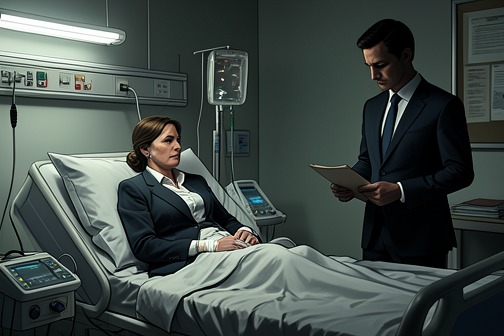
[Chloe Larson raped and nearly murdered](entity:event-recall-event-0929ee0a1aee) is a formative event in Chloe Larson’s life and the buried history behind [C.J. Townsend](entity:character-recall-character-c-j-townsend-61cc4c0fbc19)’s later prosecution of William Rupert Bantling. The attack left Chloe alive but gravely injured, and its consequences continued long after the immediate medical crisis: the assailant remained unidentified, the case became time-barred, and the eventual recognition of Bantling placed her past in direct conflict with her professional role.
## The Assault and Its Immediate Aftermath
Chloe was a law student in [New York](entity:location-recall-location-75b9ea4bd176) when she was attacked on June 30, 1988. Her later statement began with an argument with [Michael Decker](entity:character-recall-character-michael-decker-3504cb4325b5) in his car, which spilled into the courtyard, and continued with her account of the assault and her final memory of being injured. The account was recorded in the police file; years later, reading it again brought the events back with unusual force.
A friend found Chloe the following morning, and paramedics took her to Jamaica Hospital in [Queens](entity:location-recall-location-queens-6c6ea4959925). Her injuries included severe internal damage and substantial blood loss. Doctors performed an emergency hysterectomy to stop the bleeding, leaving her unable to bear children. Other wounds required treatment, but the hospital expected her to recover physically. That prognosis did not undo the life-changing consequences of the operation or the trauma of the attack.
## The Investigation and Its Limits
In the first days after the assault, a police guard stood outside Chloe’s hospital room. After two days, the guard was reassigned because she was no longer considered to be in imminent danger. The police continued to describe the investigation as active, but Detective Harrison stopped visiting daily and began calling once a day instead. Chloe feared that even those calls would soon taper off as investigators turned to newer cases.
The early investigation did not identify the attacker. Twelve years later, Chloe opened the thick police-report file, whose first report was dated June 30, 1988, at 9:02 a.m. The file also included hospital and laboratory records and witness statements. Reading it took hours, with breaks as the memories became overwhelming. A statement by her former neighbor Marvin Wigford blamed her clothing and behavior for the assault. Although Chloe understood that his claims were abusive and unfounded, they revived guilt and shame she had struggled to overcome in therapy.
The delay had a legal consequence as well as an emotional one. When Chloe later told Dr. [Gregory Chambers](entity:character-recall-character-gregory-chambers-41d726249620) that William Rupert Bantling was the man who had attacked her, she explained that New York’s [statute of limitations](entity:concept-recall-concept-statute-of-limitation-33f3125f9645) had expired seven years earlier. She said she would have testified, but there could be no New York trial for the rape or attempted killing. Recognition could identify the man she believed responsible without reopening a prosecution for the old crime.
## The Long Personal Aftermath
After leaving the hospital, Chloe found it difficult to resume ordinary contact with others. Her room had filled with flowers, but she could not bring herself to answer the telephone or receive most visitors. Marie Catherine Murphy was the exception. Chloe did not want people to see her bandages and wonder about the attack, and she had no wish either to recount what happened or to make conversation as if nothing had changed. She longed for her former life but felt that it was no longer available to her.
The assault also altered her relationship with Michael. He visited during her hospitalization, but the sight of her treatment and recovery left him frustrated and helpless. Chloe, increasingly detached from his feelings, resented that his work and daily life continued while hers had been overturned. The account does not present the injury as a single event that ended when she left the hospital: fear, shame, isolation, and the strain on close relationships persisted beyond the immediate emergency.
## Recognition and Public Contradiction
Years later, Chloe told Dr. Chambers that Bantling was both the man who raped her and the killer known as Cupid. This private recognition connected her old, unsolved assault to the murder case she was pursuing. It also created an acute conflict: she was not only the prosecutor in the case but someone who believed herself to be one of Bantling’s victims, while the old offense itself could not be tried.
The conflict became public in court. When Bantling raised the old assault and accused Chloe of impropriety, she disclosed that she had been raped as a law student in New York and said he was not her attacker. She told the judge that Bantling had learned of the unsolved case through old police reports and public records, and characterized his claim as an effort to cast doubt on the proceedings. Her courtroom denial stands in sharp contrast to her earlier private identification of him. The episode therefore leaves the assault’s legal history and its later use in the trial in tension, while showing how an unresolved crime could be turned into a challenge to the prosecutor’s credibility.
Event 11
Cupid serial murder case
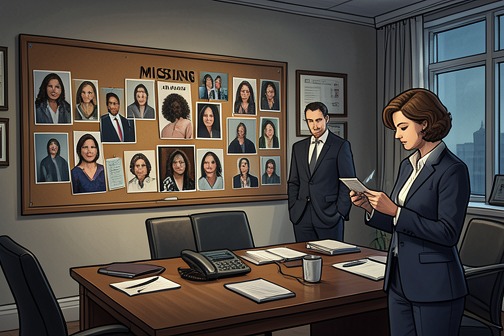
The [Cupid serial murder case](entity:event-recall-event-cupid-230f7120154f) is both a hunt for a serial killer and an effort to turn a mounting pattern of violence into evidence that can withstand a trial. Across [Miami-Dade County](entity:location-recall-location-miami-dade-county-35f26f79eb4c), eleven young women disappear over eighteen months; nine bodies are found, while the task force struggles to identify the perpetrator and establish what can be proved against William Rupert Bantling.
## The Investigation and Its Record
The case takes shape in the [Florida](entity:location-recall-location-florida-1618e1042117) Department of Law Enforcement’s [Miami](entity:location-recall-location-miami-28b8b009fa19) Regional Operations Center, where a conference room becomes the [Cupid task force](entity:organization-recall-organization-cupid-task-force-c6936f4b95a0)’s headquarters. At first, the room’s ordinary corkboard is too small for the investigation. As the number of missing women and recovered bodies grows, Special Agent [Dominick Falconetti](entity:character-recall-character-dominick-falconetti-32bc0be8d5cc) replaces it with a larger board, turning it into [The Wall](entity:object-recall-object-the-wall-894f2e7bcb38): a chronological record that sets photographs supplied by families beside case images and cards summarizing each woman’s identity, disappearance, and recovery. The families’ photographs preserve different moments in the women’s lives; the board’s arrangement makes their disappearances and deaths part of one accumulating case. Investigators also gather police reports, interviews, financial records, diaries, letters, photographs, and emails. These private materials become public evidence, placing the women’s lives—not only the crimes—at the center of the inquiry. The task force draws officers and detectives from five agencies, while the Florida Department of Law Enforcement supplies its workspace and investigative support. After eight months without a lead, Dominick joins the effort. The scale of the evidence expands further after Bantling’s home and cars are searched: investigators execute three warrants, seize 174 boxes, and complete almost seventy interviews in a single phase of the investigation.
## The Pattern and the Victims
The disappearances followed a recurring route through [Miami Beach](entity:location-recall-location-miami-beach-1ba638669276) nightlife: over eighteen months, young women vanished from crowded clubs and popular gathering places, often without an immediate report because companions believed they had left with someone. Their bodies were later found in remote, widely separated locations across Miami-Dade County. Investigators saw more than a series of isolated crimes in that pattern. The careful staging and repeated features suggested a perpetrator who selected victims in public and wanted the cases—and their connection—to be discovered. The nickname Cupid gave the investigation a single identity for a killer whose actions had made a growing number of women’s lives part of one case.
Marilyn Siban’s disappearance illustrates how ordinary assumptions could delay recognition of the danger. She left Club Liquid on [South Beach](entity:location-recall-location-south-beach-991ce43040e8) after going to a bar for a drink; her friends thought she might have met someone and gone with him. They reported her missing only after she failed to appear at her waitress job two days later. Her family supplied a recent photograph taken during a photo shoot for a used-car dealer in the Keys, one of the images that would later help investigators represent her on The Wall. The contrast between that record of her life and the case documentation sharpened the task force’s central responsibility: to reconstruct not only where each woman had been found, but the circumstances of her last known movements.
The killings had a repeated signature: the victims were sexually assaulted, their chests were opened, and their hearts were removed. Investigators treated these recurring features as a basis for linking the cases, while the photographs, reports, and records assembled at headquarters supplied the individual details needed to distinguish one victim and one timeline from another. The public-facing nickname captured the killer’s brazen selection of women among crowds; the investigative record had to convert that disturbing pattern into specific, verifiable evidence.
## Tracing an Earlier Pattern
The inquiry widened beyond the Florida murders when C.J. searched newspaper archives for assaults involving a mask. Three reports from California described attacks on women in first-floor apartments: a UCLA student in 1991, a Hollywood bartender in 1993, and a [Santa Barbara](entity:location-recall-location-433b36b956ee) student later that year. A further case in [San Luis Obispo](entity:location-recall-location-01df4138c0b4) involved an alien mask rather than a clown mask. The assailants had not been identified. Their shared circumstances raised the possibility that the reports documented a connected series rather than unrelated crimes.
C.J. found two more reports in cities where Bantling had previously lived: a masked assault in [Chicago](entity:location-recall-location-73935e623d95) in 1989 and another in [San Diego](entity:location-recall-location-52525e0dc69c) in 1990. Bantling’s AutoTrack addresses placed him within ten miles of each victim’s residence. The proximity strengthened the investigative connection, but did not by itself establish that he had committed the assaults. When C.J. obtained reports from six police departments, she found recurring details in the accounts, including nighttime entry into ground-floor apartments, restraints, masks, and a knife. The reports also described different implements and injuries; the scenes yielded no reported semen, hair, fibers, fingerprints, or other physical evidence linking an assailant to a particular case.
What made the reports especially consequential to C.J. was not only their recurring method, but the private knowledge the assailant appeared to possess about each woman. The reports included intimate details such as favorite restaurants and perfumes, work schedules, partners’ names, birthdays, and other personal information. C.J. regarded these details as a crucial point of recognition in connecting the assaults to Bantling, rather than relying on surface similarities alone.
A later inquiry through Christine Frederick at [INTERPOL](entity:organization-recall-organization-interpol-378be8d33f6c) extended the suspected pattern overseas. Frederick reported wanted notices describing similar masked assaults in [Rio de Janeiro](entity:location-recall-location-496e5530395a), [Caracas](entity:location-recall-location-53f9ffffb1d8), and [Buenos Aires](entity:location-recall-location-caf56b79d5c4), as well as four cases in [the Philippines](entity:location-recall-location-8b86fdcbfca5). She had not yet confirmed the reports with the relevant consulates or police agencies, and the notices did not provide a complete historical record. C.J. nevertheless understood them as a substantial lead: her estimate that Bantling had assaulted more than seventeen women and might have killed ten or eleven was an investigative conclusion, not a count established by confirmed international findings.
## The Evidence and Its Limits
The investigation accumulated evidence that could support a case against Bantling while also exposing the prosecution to difficult questions. Investigators found a Haldol prescription issued to him by a [New York](entity:location-recall-location-75b9ea4bd176) doctor, and Dominick connected that medication with a drug found in at least six victims. The prescription offered a possible evidentiary link, but it also made Bantling’s mental health relevant to trial strategy. Dominick recognized that the prosecution would have to establish not only that Bantling committed murder, but that he understood his actions and their consequences; the defense might otherwise argue that his history of mental illness affected his responsibility.
The legal case remained narrower than the suspected pattern. At one point, Bantling had not been charged with the other nine murders, and the investigation had no confession or incriminating statement from him. A prosecutor cautioned that serial cases were complicated and that a mistake could jeopardize the effort. The distinction between a persuasive pattern and admissible, charge-specific proof therefore shaped the task force’s work: similarities across victims could direct investigators, but each accusation still depended on evidence capable of sustaining a prosecution.
## [Anna Prado](entity:character-recall-character-anna-prado-d5202185ed9f) and Forensic Reconstruction
Anna Prado’s case gave the investigation a particularly consequential forensic reconstruction. Investigators found that William Rupert Bantling had been prescribed Haldol, and Dominick Falconetti proposed that the drug may have been used to keep Prado incapacitated before she was killed. He further theorized that she was later given a paralytic while remaining conscious. These details were investigative inferences, not a complete account established by direct testimony; the distinction mattered in a case where the prosecution had to turn a pattern into provable acts.
The medical examination supplied a separate, concrete clue: adhesive residue on Prado’s eyelids, together with missing eyelashes, led investigators to believe her eyes may have been held open. The evidence suggested deliberate control and possible forced witnessing, but it did not independently settle every detail of what had happened. Keeping observation distinct from reconstruction was essential: the scene could support a careful account of the crime without making every inference equivalent to proof.
The examination also made the scale of the violence impossible to treat as an abstraction. Manny Alvarez saw Prado not as a case number but as someone’s daughter, sister, and girlfriend, a young woman whose earlier life stood in stark contrast to the condition in which she was found. That recognition complements the task force’s accumulating records: forensic findings identify actions and connect evidence, while the investigation’s attention to the victims’ lives resists allowing the killer’s repeated signature to erase the individuals within the series.
Event 12
Anna Prado murder
[Anna Prado](entity:character-recall-character-anna-prado-d5202185ed9f)’s murder is presented as a turning point in the Cupid investigation: examination of her body disclosed evidence of a method of drugging that helped investigators understand how the killer could control his victims, while the case against William Rupert Bantling brought the wider inquiry to his home and its evidence.
## Case context
The investigation took shape against a growing record of young women who had disappeared and been found dead. At the [Florida](entity:location-recall-location-florida-1618e1042117) Department of Law Enforcement’s [Miami](entity:location-recall-location-miami-28b8b009fa19) Regional Operations Center, investigators assembled photographs and case information on a board known as [The Wall](entity:object-recall-object-the-wall-894f2e7bcb38). The photographs supplied by families were chosen to represent the women before their disappearances; alongside them, investigators arranged records of the crimes and the dates and locations associated with each case. The board’s scale grew with the investigation, turning a conference room into a visual record of the victims and the work still to be done.
The task force brought together officers and detectives from several local agencies, with the Florida Department of Law Enforcement providing headquarters and investigative support. When Anna’s case was being pursued, evidence from the Prado homicide also supplied the basis for a search of Bantling’s house. A dispute over access followed: federal agents asserted jurisdiction in another murder investigation, but [Dominick Falconetti](entity:character-recall-character-dominick-falconetti-32bc0be8d5cc) maintained that the state warrant concerned the Prado case and did not authorize federal agents to enter. The jurisdictional disagreement therefore arose from the case’s practical consequences as well as from competing claims over the broader series.
## Anna’s Last Known Movements and the Forensic Findings
Anna Prado disappeared from Club Liquid on [South Beach](entity:location-recall-location-south-beach-991ce43040e8) on a Friday night. Her four friends recalled that she went to one of the main bars for a drink and did not return. Because they thought she might have met someone and left with him, they did not report her missing to the [Miami Beach Police Department](entity:organization-recall-organization-miami-beach-poli-a22642e33565) until two days later, when she failed to appear for her waitress job. The photograph her parents provided for investigators came from a used-car dealer’s photo shoot in the Keys, taken two days before she vanished. These ordinary details—friends, a workplace, a recent photograph—became the last visible outline of Anna’s life before the investigation turned to forensic evidence.
At the medical examiner’s examination, a second toxicology screen identified haloperidol, the drug sold under the name Haldol, in Anna’s system. The pathologist noted pinprick marks consistent with injections and found a further injection site in a vein, as well as evidence of attempts to place intravenous lines elsewhere. In his account, the findings suggested that the drug had been administered to keep her subdued before her death. The evidence supplied investigators with a possible explanation for how a victim could be incapacitated without an obvious struggle at the point of abduction.
The examination also identified [Mivacron](entity:object-recall-object-mivacron-a43d7437f923), an intravenously administered muscle relaxant that does not cause unconsciousness or relieve pain. The pathologist explained that it could leave a person unable to move while remaining conscious; its short duration and a fresh mark at the intravenous site led him to believe Anna had died while still connected to an IV. This discovery transformed the investigation’s understanding of the method used against her: the drug evidence pointed not simply to restraint, but to a victim kept conscious and unable to respond. Adhesive residue on her eyelids and missing eyelashes led the pathologist to conclude that her eyes had been taped open. Dominick Falconetti, hearing the findings, began to reconstruct a sequence in which Anna was drugged, held, and later killed; the reconstruction was his investigative interpretation of the medical evidence, not a separately witnessed account.
The emerging theory gained weight as investigators assembled evidence about William Rupert Bantling. Club staff recognized him as a frequent customer at several venues where women on The Wall had last been seen, including Level, and described him as arriving well dressed with a different young blonde woman. Yet no witness could place him with any of the victims, or establish that he was at the right club on the night of any particular disappearance. Other facts appeared to connect him to the case: his Haldol prescription corresponded to a drug found in at least six victims, and investigators believed human blood and a likely murder weapon had been found in his shed. The convergence made Bantling a compelling suspect in Anna’s murder, while the gaps in eyewitness identification remained part of the evidentiary picture.
## The Case's Personal and Procedural Consequences
The prosecution of William Rupert Bantling also brought an undisclosed conflict into the open. [Lourdes Rubio](entity:character-recall-character-lourdes-rubio-a8328b3f4769) told [C.J. Townsend](entity:character-recall-character-c-j-townsend-61cc4c0fbc19) that the defense believed her judgment was clouded and would ask Judge Chaskel to remove her from the case. The challenge turned the investigation back on its prosecutor: Bantling’s lawyer was questioning whether C.J. could continue to handle the case impartially.
In court, C.J. disclosed that she had been raped years earlier while attending law school in [New York](entity:location-recall-location-75b9ea4bd176) and that her attacker had never been caught. She explained that Bantling had learned of the unsolved assault through old police reports and public records, then claimed in a late-night confession to have been the attacker. C.J. denied that he was the man who had raped her and said she had already told Lourdes that his accusation was false. The revelation made the case’s personal stakes public, while separating the prosecution of Anna Prado’s murder from Bantling’s claim about C.J.’s past.
## The Investigative Record and Its Human Cost
The [Cupid task force](entity:organization-recall-organization-cupid-task-force-c6936f4b95a0)’s account of Anna’s murder was built within a larger archive of missing women. On The Wall, investigators arranged each woman’s portrait in the order of her disappearance, not the later discovery of her body. Beneath the portraits, case photographs and index cards linked names and ages to disappearance and discovery dates and locations, as well as the medical examiner’s estimated time of death. The sequence made the widening pattern visible while preserving the difference between when each woman vanished and when investigators learned what had happened.
That public display depended on a far less visible accumulation of personal material. Boxes in the task-force room held reports and interviews alongside victims’ financial records, diaries, date books, letters, photo albums, and emails. These items could help reconstruct lives and investigative timelines, but their collection also turned private thoughts and possessions into part of the state’s case record. Anna’s murder thus entered an inquiry that sought connections among victims while confronting the human cost of making their lives legible as evidence.
Event 13
Chavez and others cover up the illegal stop
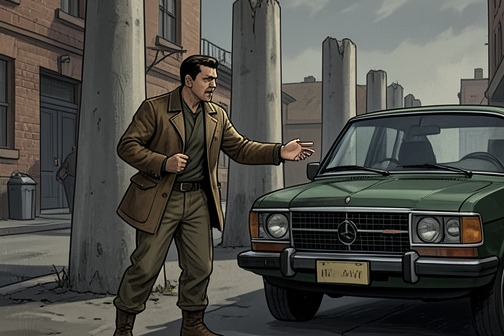
The cover-up of the illegal stop begins when [C.J. Townsend](entity:character-recall-character-c-j-townsend-61cc4c0fbc19) tests Victor Chavez’s sworn account against the street layout and his changing explanations. The stop had produced the discovery of [Anna Prado](entity:character-recall-character-anna-prado-d5202185ed9f)’s body in William Rupert Bantling’s Jaguar, but the legal basis for stopping and searching the car was weak. When Chavez finally reveals that an uncorroborated anonymous tip set the pursuit in motion, his sergeant, Lou Ribero, proposes a different account. C.J. recognizes the fabrication and its stakes, yet ultimately agrees to proceed with it, trading professional integrity for the chance to keep Bantling in custody.
## The account begins to unravel
C.J. confronts Chavez after determining that his claim to have kept the Jaguar in sight does not fit the streets he described. Sixth Street was one-way and did not continue through; cement pilings prevented the turn he would have needed to make to reach Washington in the manner his story implied. His account of watching the car therefore could not explain how he had followed it. C.J. presses him on the contradiction, making clear that she suspects he is lying and expects the truth under oath.
Chavez eventually admits that he was outside his patrol car on Sixth Street, speaking with tourists, when he received a radio call about an anonymous tip. The caller reported that a late-model black Jaguar XJ8 was heading south on Washington toward the airport with two kilos of cocaine in its trunk. Chavez says he saw a Jaguar pass, drove after it, lost it, then spotted a car on the [MacArthur Causeway](entity:location-recall-location-macarthur-causeway-de86d0c8383e) and pulled it over before it left his jurisdiction. His version supplies no plate number, driver description, or explanation of how the caller knew about the alleged drugs.
That omission matters. C.J. explains that an anonymous caller’s credibility cannot be assessed and that the sparse description did not establish probable cause. Nor could Chavez show that the Jaguar on the causeway was the same car described in the tip. When she points out that he had already lost the vehicle, his silence further undermines the pursuit story. His admission changes the stop from a routine account of police work into a serious evidentiary problem.
## From suspicion to a fabricated stop
Chavez says that after stopping Bantling, he asked for his license and registration, asked where he was going, and asked what was in the trunk. Bantling reportedly said he was going to the airport and told Chavez to leave him alone. Chavez then called for a K-9 unit. When the drug tip yielded no drugs, Chavez offered another justification: he claimed he had smelled something like a dead body coming from the trunk. C.J. rejects this as another shifting explanation, noting that the body had been dead only a day and accusing him of inventing a smell after the search failed to produce drugs.
Chavez admits that Ribero arrived after the trunk had been opened and was told the full story. Ribero understood that the case might be thrown out, but insisted that Bantling could not simply be allowed to walk. According to Chavez, Ribero said they needed another reason for the stop, one unrelated to the tip. C.J. asks who broke the taillight; Chavez does not answer. He then indicates that Officer Lindeman also knew about the call. The scene establishes not a lone officer’s false account but a widening effort among police personnel to conceal the stop’s actual basis.
## The official version and C.J.’s decision
The account C.J. later presents recasts the stop as the result of traffic violations. It places Chavez in a marked patrol car at Washington and Sixth at about 8:15 p.m. on [September 19, 2000](entity:time-recall-time-september-19-2000-2a587eab58ad), and says he saw Bantling’s black Jaguar XJ8, bearing license plate TTR-L57, traveling faster than the posted 25 miles per hour. After following the car onto the MacArthur Causeway, the official version says Chavez noticed a broken taillight and an unsignaled lane change, then activated his lights and siren.
The account continues by describing Bantling as nervous, with shaking hands and little eye contact. It says Chavez saw a substance that looked like blood on the bumper and detected an odor of marijuana, then requested permission to search the car. These details provide an alternative narrative for the stop and the search. Set beside Chavez’s admission that an anonymous tip prompted him to pursue the Jaguar, and his failure to answer C.J.’s question about the taillight, the account reads as a deliberate reconstruction rather than a clarification of what happened.
C.J. understands the legal consequence. An unlawful stop can make a subsequent search unlawful unless an independent basis supports it; evidence obtained through that search may be excluded as the fruit of the poisonous tree. Without the stop and search, police would not have found Prado’s body in the trunk. C.J. reasons that they also would not have discovered the evidence at Bantling’s home, including Haldol, blood, a suspected murder weapon, and pornographic tapes. She believes the prosecution could collapse if Chavez’s real account is exposed.
After Ribero and Chavez leave her office, C.J. recognizes that the pact is made and cannot be reversed. For the first time in her career, she has compromised herself on a case. She justifies the choice as a small sacrifice for the greater good: the effort to keep a suspected serial killer from going free. But the narration also makes the cost explicit. The stop was unlawful, the search was tainted, and C.J. now knows that the prosecution rests in part on a false account. Her decision is therefore not simply a tactical accommodation; it entangles the prosecutor herself in the concealment.
## Consequences for the prosecution
The bargain does not resolve the case’s vulnerability. During the trial, the defense presents evidence that Bantling’s Jaguar had been at Louie’s House of Tinting on September 18 and 19, and had remained overnight in an unsecured lot where more than ten employees could access it. The owner says no one had looked in the trunk since Bantling dropped the car off. The testimony supplies a possible opportunity for others to access the vehicle, complicating the prosecution’s account of the evidence found there.
The defense also challenges the forensic interpretation of a number-five scalpel found in Bantling’s shed. The blood on it was too scant for reliable DNA testing; tests indicated animal blood, probably from a bird, and the red blood cells had nuclei, unlike human red blood cells. A pathology expert further characterized the patterns that had seemed to match Anna’s blood as manufactured, including three drops on the shed floor. These trial developments do not undo the earlier concealment, but they intensify the uncertainty surrounding a prosecution already burdened by questionable evidence and C.J.’s decision to let a false stop narrative stand.
## Significance
The cover-up turns the law into both the prosecution’s obstacle and its instrument. C.J. knows that exclusion rules can prevent a jury from hearing evidence pointing to a grave crime, yet her response is to help disguise how that evidence was obtained. The contrast is central to the event: a case pursuing a dangerous suspect is advanced through conduct that threatens its legitimacy. The remote crime scene, where forensic teams find no prints, hairs, foreign DNA, or other useful traces, forms part of the larger investigative pressure, but it does not make the unlawful stop lawful. C.J.’s choice may preserve the case for the moment; it also leaves her compromised and the prosecution exposed to the very doubt the cover-up was meant to prevent.
Event 14
Bantling Indicted by Grand Jury for Anna Prado’s Murder
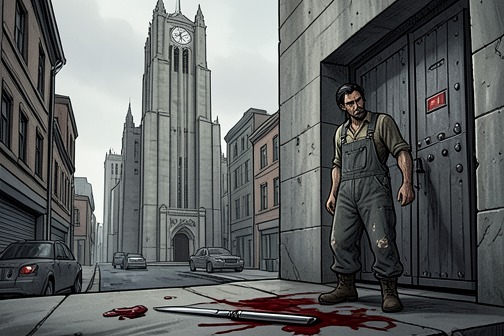
The indictment of William Rupert Bantling for [Anna Prado](entity:character-recall-character-anna-prado-d5202185ed9f)’s murder is a decisive procedural victory for the prosecution, but not an uncomplicated one. A grand jury returned a capital first-degree murder charge after less than an hour of deliberation, converting a case built on physical evidence into a public court proceeding. Beneath that swift result lay an unresolved vulnerability: the investigation appeared persuasive, yet a revelation about the vehicle stop threatened to undermine the evidence on which it relied.
## Background and Stakes
The case concerned the death of Anna Prado, whose body had been mutilated. Investigators had assembled evidence they believed connected Bantling to the killing. DNA results were not yet available, but blood found in Bantling’s shed matched Prado’s O-negative blood type. A scalpel recovered by Special Agent Jimmy Fulton carried trace amounts of blood, and haloperidol found in Prado’s system corresponded to a prescription located at Bantling’s home. Taken together, these findings made the case look strong in the reports prepared for the prosecution.
The apparent strength of the evidence was shadowed by a disclosure from Victor Chavez concerning the stop that had brought Bantling and his Jaguar to police attention. That development arrived just as the prosecution was preparing to present its case. [C.J. Townsend](entity:character-recall-character-c-j-townsend-61cc4c0fbc19) did not tell [Dominick Falconetti](entity:character-recall-character-dominick-falconetti-32bc0be8d5cc) about the problematic stop. She instead persuaded herself that the anonymous tip and the vehicle Chavez had stopped might not have been connected. Her decision kept the issue from the broader investigative team, but did not resolve the legal risk it posed.
## Grand-Jury Presentation and Indictment
Chief Assistant Martin Yars scheduled the case for the grand jury on Wednesday, September 27, shortly before Bantling’s arraignment, then scheduled for October 2. Falconetti was to present the investigation into Prado’s death and seek an indictment for capital first-degree murder. At this stage, only the state presented evidence: there was no defense presentation or presiding judge, and hearsay was admissible. The process therefore offered prosecutors a relatively direct route to a formal charge, not a trial-level determination of guilt.
The grand jury took less than an hour to return the indictment. The narrative punctures the gravity of the moment with a practical detail: deliberations lasted long enough for the jurors to order lunch, and the state would pay the bill only if they finished eating before completing the case. The wry aside underscores the speed of the decision without changing its legal consequence. Bantling was indicted for first-degree murder in Prado’s death; the charge remained an accusation, not a finding of guilt.
## Public Announcement and Court Appearance
The news spread almost immediately. Reporters gathered at the marble steps of the [Miami-Dade County Courthouse](entity:location-recall-location-miami-dade-county-co-c979f854154d), where Yars, caught off guard on his way to his car, struggled through questions from the press. His visibly uneasy announcement became part of the public event: the state had secured the charge, but its first explanation of the result appeared strained before television audiences.
C.J. Townsend learned of the indictment during a meeting with State Attorney [Jerry Tigler](entity:character-recall-character-jerry-tigler-2187a943dcbc), the U.S. Attorney for the Southern District of [Florida](entity:location-recall-location-florida-1618e1042117), and the FBI’s [Miami](entity:location-recall-location-miami-28b8b009fa19) Special Agent in Charge. A secretary brought in the news and turned on the television; those present watched Yars’s courthouse appearance live. The sudden broadcast placed the state’s legal milestone inside a wider contest over the case and its handling, rather than allowing the announcement to remain a routine courtroom step.
At the later court appearance, the proceeding formalized the grand jury’s decision. On the twenty-first day, C.J. appeared for the state and [Lourdes Rubio](entity:character-recall-character-lourdes-rubio-a8328b3f4769) appeared for the defense. C.J. handed the indictment to the clerk, and Judge [Leopold Chaskel III](entity:character-recall-character-leopold-chaskel-iii-25f62042aab6) asked Bantling to enter a plea. Rubio entered a not-guilty plea on his behalf, waived formal reading of the charges, and demanded a jury trial. Bantling himself remained silent. The contrast between the grand jury’s rapid action and the defense’s demand for a trial made clear that the indictment began the adversarial process rather than settling the case.
## Consequences and Significance
The indictment also intensified scrutiny of how the prosecution had been assembled. Rubio later presented a motion to suppress the stop and said the defense would seek C.J.’s removal, arguing that her judgment in the case was clouded. The challenge turned the concealed complication into a direct threat to the prosecution’s conduct and to C.J.’s role in it. The indictment had advanced the case, but it could not insulate the evidence from a later challenge.
The event’s significance thus rests on a tension between procedural certainty and factual or legal exposure. The grand jury’s decision established that the state could proceed with a capital murder charge, supported by a body, a blood-type match, a blood-marked scalpel, and a drug prescription. Yet the still-pending DNA results and the disputed stop left important questions open. The swift indictment looked like momentum; the suppression motion showed how quickly that momentum could become contested.
Event 15
Federal Prosecutors Contest Jurisdiction over the Cupid Case
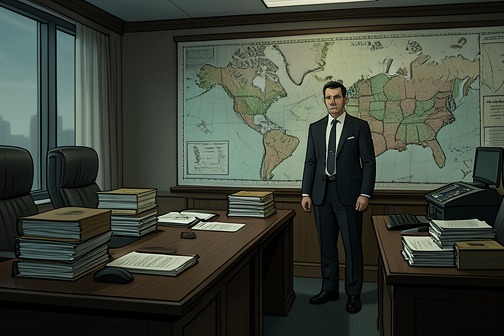
[Federal Prosecutors Contest Jurisdiction over the Cupid Case](entity:event-recall-event-cupid-272cafb6ebd8) became a struggle over who could investigate, control the evidence, and prosecute the [Cupid murders](entity:event-recall-event-cupid-murders-5b2de1fa9bfc). The federal government used Marilyn Siban’s discovery on federal land to assert jurisdiction, while [C.J. Townsend](entity:character-recall-character-c-j-townsend-61cc4c0fbc19) argued that this did not give federal prosecutors authority over the other murders. The conflict was fought through legal theories, court orders, evidence requests, and public pressure; it also tested whether the state task force could retain control of a case whose reach exceeded the federal government’s clearest claim.
## Background and Competing Claims
The dispute grew out of an investigation already divided among agencies. The [Cupid task force](entity:organization-recall-organization-cupid-task-force-c6936f4b95a0) had twelve officers and detectives assigned full-time from five police agencies. At the governor’s request, the [Florida](entity:location-recall-location-florida-1618e1042117) Department of Law Enforcement had supplied a conference room at the FDLE [Miami](entity:location-recall-location-miami-28b8b009fa19) Regional Operations Center, along with equipment and support staff. After eight months without leads, Special Agent [Dominick Falconetti](entity:character-recall-character-dominick-falconetti-32bc0be8d5cc) joined the task force; the growing investigation had outgrown its first corkboard and filled the room with files and boxes. The task force’s work depended on cooperation, but the scale and visibility of the case also created incentives for agencies to claim its direction and eventual credit.
A central jurisdictional opening appeared when Marilyn Siban’s body was found on federal land. Dominick Falconetti recognized that this gave the Federal Bureau of Investigation a claim in her murder, despite his suspicion that the Bureau wanted the case’s public profile as much as its investigative responsibilities. The conflict was not merely theoretical: FBI agents had already sought access to a crime scene, while the state warrant named certain state and local agencies but not the FBI. The state’s position was that the warrant did not authorize federal entry; the FBI answered that the federal location of Siban’s murder gave it jurisdiction.
The formal contest intensified after the state secured an indictment against William Rupert Bantling for [Anna Prado](entity:character-recall-character-anna-prado-d5202185ed9f)’s murder. In a meeting called at the joint request of the FBI and the U.S. Attorney’s Office for the Southern District of Florida, federal officials offered to assume the entire criminal investigation and reexamine the task force’s evidence at the FBI crime laboratory. The U.S. Attorney, Tom de la Flors, argued that federal prosecutors could handle all the murders, not only Siban’s. His case for intervention also drew strength from the intense media attention and criticism of the state’s handling of the investigation.
## C.J. Townsend’s Legal Challenge
C.J. Townsend challenged both the federal government’s account of the case and its proposed scope. She corrected Mark Gracker when he referred to eleven victims: the investigation had ten bodies, and Morgan Weber’s remains had not yet been found. She explained that the state had not indicted Bantling for the other nine murders because it lacked physical evidence linking him to those victims. Prosecuting the one case the office believed it could prove, she maintained, was a considered decision rather than evidence of incompetence.
She then separated the federal government’s strongest claim from its broader demand. Only Siban’s murder had occurred on federal land, she argued, so the location did not automatically establish jurisdiction over the other killings. De la Flors invoked a continuing criminal enterprise theory, pointing to the victims’ haloperidol and alleging that Bantling had administered it. Townsend acknowledged the drug evidence but challenged whether the theory’s requirement of five or more conspirators could be met when, as far as the investigation knew, Bantling was the only suspect. The exchange turned the meeting from a contest of resources into an argument about the legal elements the government would have to establish.
When De la Flors raised the [Hobbs Act](entity:rule-recall-rule-2618ca7dcf9f), Townsend again disputed its reach: a theory tied to robberies would not, by itself, establish jurisdiction over the murders. De la Flors countered that the victims had been found nude and without their hearts, characterizing the taking as robbery. He proposed that federal prosecutors could bring separate robbery cases and keep Bantling in federal court for years, even if the state retained its murder prosecutions. The proposed route offered a way around the jurisdictional obstacle Townsend had identified, while threatening to delay the state’s own case.
## Evidence, Access, and Negotiation
The federal claim was accompanied by a warrant and court order from U.S. Magistrate Carol Kingsley, authorizing access to Bantling’s house, cars, and evidence seized under the state warrant. De la Flors presented the order as part of the demand for the task force’s materials. Townsend did not accept an unrestricted transfer. She offered copies of seized documents, reports on laboratory testing, and a personal walkthrough of the evidence held at the Florida Department of Law Enforcement, while warning that any demand for more would have to be tested in court. Her response distinguished cooperation with a parallel investigation from surrendering the state’s control of evidence.
After the meeting, Dominick Falconetti asked whether the federal prosecutors could take Cupid. Townsend explained that they could fight the effort to prosecute the other murders, since Siban’s was the only one with the clear federal-land basis. The federal government still wanted the state’s materials for the Siban case, but its proposed robbery prosecutions gave it another route into the larger investigation. When Dominick asked whether the task force would comply, Townsend’s answer was partial: the federal side would receive copies of documents and laboratory reports, not the original evidence. The distinction preserved a practical channel for cooperation without conceding ownership of the case.
The dispute also demonstrated how jurisdictional pressure could be exercised through more than a courtroom argument. Federal officials invoked their investigative resources and experience, while the state faced criticism over the time elapsed before an arrest and the fact that Bantling had been indicted for only one murder. Townsend rejected the implication that those criticisms justified a transfer. She answered the political pressure with questions about jurisdiction and proof, and treated the court order’s boundaries as a matter to enforce rather than an instruction to hand everything over.
## Later Dispute and Significance
The jurisdictional struggle resurfaced after Morgan Weber’s remains were found in a fishing shack in the [Everglades](entity:location-recall-location-everglades-1fafda1f3031). Townsend spent Saturday determining whether the shack stood on federal land or [Miami-Dade County](entity:location-recall-location-miami-dade-county-35f26f79eb4c) property. She relied on the land survey to establish that the site was county property, then threatened trespassing and obstruction-of-justice charges when de la Flors and other Justice Department lawyers continued pressing the matter. The federal officials called off their agents at the scene, though de la Flors vowed retaliation against Townsend and her office. The episode showed that the location of a discovery could alter which government claimed authority, and that a concrete boundary survey could matter as much as an abstract theory of jurisdiction.
The event’s outcome was therefore not a single, final transfer or settlement. Federal prosecutors continued to seek a role through the Siban murder, the proposed robbery cases, and demands for investigative materials; Townsend maintained the state’s claim to prosecute Bantling for murder and limited what the federal side received. The contest exposed a tension between shared investigative interests and competing institutional authority: the agencies could possess overlapping information and pursue the same defendant, yet disagree over who controlled the evidence, the legal theory, and the public account of the case.
Event 16
Bantling Reveals C.J.’s Victimhood During a Jail Meeting
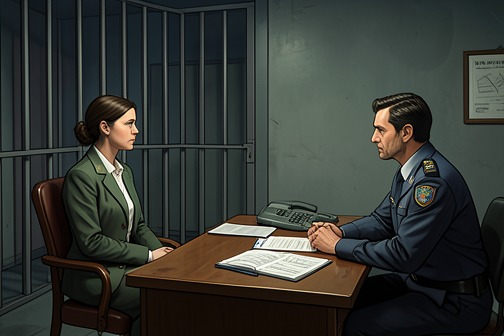
William Rupert Bantling’s jail meeting with [C.J. Townsend](entity:character-recall-character-c-j-townsend-61cc4c0fbc19) turns a prosecution meeting into an attempt to make her past the case against her. By revealing that C.J. had been Chloe Larson, and claiming that he assaulted her twelve years earlier, Bantling gives his defense a way to portray her as personally compromised. C.J. answers him directly, but the encounter also makes the threat behind that strategy unmistakable: the man she is prosecuting knows intimate details of her history and is willing to use them to unsettle her.
## Background and Stakes
Twelve years before the meeting, Chloe Larson was sexually assaulted in [New York](entity:location-recall-location-75b9ea4bd176) while she was a law student. The injuries required emergency surgery, including a hysterectomy, and she was told that she was expected to recover physically. The consequences were not so easily contained. After the assault, she withdrew from most visitors and telephone calls, while the police guard assigned to her room was removed when she was no longer considered in imminent danger. The gradual reduction in police contact left her fearing that her case would be pushed aside.
Years later, as C.J. Townsend, she encountered her old police reports while investigating William Rupert Bantling. Reading them brought back the assault and the self-blame she had struggled to overcome. One former neighbor had blamed her clothing and behavior for what happened; although C.J. understood that the remarks reflected the speaker’s perversity, they revived feelings of shame. The jail meeting therefore lands on ground already made vulnerable by the earlier assault, its investigation, and the damaging language preserved in the case file.
The immediate legal stakes are different. C.J. is prosecuting Bantling in a murder case, while his attorney, [Lourdes Rubio](entity:character-recall-character-lourdes-rubio-a8328b3f4769), presents a motion to suppress evidence from the stop and formally seeks C.J.’s removal, arguing that her judgment is clouded. Rubio says Bantling maintains that he was C.J.’s attacker and that C.J. has recognized him. Because the [statute of limitations](entity:concept-recall-concept-statute-of-limitation-33f3125f9645) has expired, he cannot be prosecuted for that New York crime; the defense claims that C.J. is now pursuing a vendetta and withholding evidence because she knows he is innocent. The allegation thus joins a private history to a public question about whether the prosecutor can remain on the case.
## The Jail Meeting
C.J. is caught off guard as Rubio sets out the accusation. Bantling watches her while his attorney speaks, appearing pleased by the disclosure. When he addresses C.J. himself, he claims to remember the assault and uses the nickname Beany, a detail that makes the confrontation feel less like an abstract legal maneuver and more like a deliberate intrusion into her private past. His words are presented as a claim, not proof that he was the attacker.
C.J.’s physical response registers the force of the encounter: her knees shake, she sweats, and she feels an urge to flee. Yet she remains seated. After holding Bantling’s gaze, she challenges the use of her old case in the litigation and rejects the implication that the accusation gives him an advantage. The scene’s decisive movement is from involuntary fear to a response she chooses to deliver: she speaks forcefully about her determination to see him convicted and sentenced, and says she will be present at his execution. Her words make plain the personal anger in the room, even as they expose how readily Bantling’s tactic can be framed as evidence of bias.
C.J. then turns to Rubio. She calls the disclosure unethical and says she will raise it with Judge Leopold Chaskel and possibly the bar. She also insists that future communication come through written motions filed with the court, rather than private exchanges. Her response draws a boundary around the encounter and redirects the dispute to formal legal channels; it does not, however, make the meeting emotionally safe or settle the accusation.
## Bantling’s Outburst and Its Aftermath
As C.J. prepares to leave, Bantling turns visibly agitated. He protests that he is innocent and should not be sent to death row, then shouts abuse and threatens that she cannot escape him, invoking the same past identity and nickname he has just exposed. His outburst shifts the encounter from a lawyer’s allegation into an open attempt to intimidate the prosecutor. C.J. leaves through the secured doors visibly shaken, struggling to breathe steadily and steadying her hand as she signs out.
The meeting’s impact continues beyond the jail. At a later court appearance, C.J. addresses Judge Leopold Chaskel and publicly acknowledges that she was raped while a law student in New York. She says Bantling learned of the old case through police reports and public records, and that his claim was an attempt to discredit the proceedings with accusations of impropriety. Most importantly, she tells the court that Bantling was not the man who attacked her and says she had already told Lourdes Rubio as much. The public disclosure transforms the defense’s attempt to expose C.J. into a moment in which she states both the fact of her victimization and the limit of Bantling’s claim.
## Significance
The encounter makes the past an active pressure within the murder prosecution rather than a closed episode. Bantling’s claim gives him a tactical opening because C.J.’s history could be used to question her neutrality, while the expired limitation period prevents that old assault from being prosecuted as a separate New York case. C.J. must therefore confront the accusation in the very proceeding where her professional judgment is under attack.
The scene also distinguishes disclosure from truth. Bantling knows C.J.’s former name and uses a private nickname, but those details do not establish that he committed the earlier assault. C.J.’s later statement to the court directly denies his claim. The meeting’s lasting significance lies in this tension: Bantling tries to turn the recognition of her past into leverage, while C.J. insists that acknowledging the assault does not make his account true or invalidate her work on the murder case.
Event 17
C.J. Recognizes and Takes the Old Mask and Pendant from Evidence
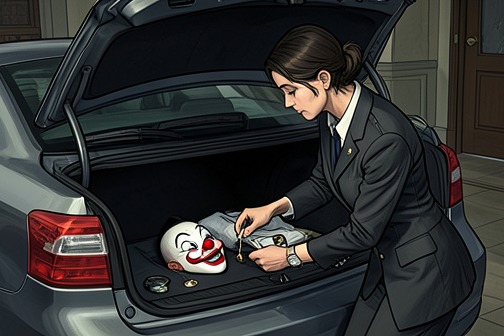
[C.J. Townsend](entity:character-recall-character-c-j-townsend-61cc4c0fbc19)’s discovery of the clown mask and [Michael Decker](entity:character-recall-character-michael-decker-3504cb4325b5)’s anniversary pendant in William Rupert Bantling’s seized property makes her past assault materially present inside the Cupid investigation. Recognizing both objects, she privately identifies Bantling as the man who attacked her; taking them, she compromises the evidence to protect herself and the prosecution from a conflict she has not disclosed.
## Background: A pattern beyond the murders
The discovery follows C.J.’s investigation into whether Bantling had committed earlier assaults. The [Cupid murders](entity:event-recall-event-cupid-murders-5b2de1fa9bfc) had established a distinctive pattern: women were abducted, killed, and left in staged scenes, while their hearts were removed. That pattern had earned the unknown killer the name Cupid. The murders and the older assaults were different crimes, but C.J.’s research began to connect them through the repeated use of masks and the attacker’s methods.
Searching newspaper archives, she found accounts of assaults in California, [Chicago](entity:location-recall-location-73935e623d95), and [San Diego](entity:location-recall-location-52525e0dc69c). The reports described nighttime attacks in first-floor apartments and assailants wearing rubber clown or alien masks. Bantling’s AutoTrack records placed him within ten miles of two victims’ addresses. C.J. then obtained reports from six police departments. Their accounts showed recurring similarities in how victims were restrained and threatened, while the attacker left no physical evidence that could identify him. What made the pattern decisive for her was not resemblance alone: the assailant knew intimate details about his victims, information C.J. recognized as part of the crimes’ personal, targeted character.
Her inquiry extended beyond the United States. Christine Frederick of [INTERPOL](entity:organization-recall-organization-interpol-378be8d33f6c) reported possible matching cases in Rio, [Caracas](entity:location-recall-location-53f9ffffb1d8), [Buenos Aires](entity:location-recall-location-caf56b79d5c4), and [the Philippines](entity:location-recall-location-8b86fdcbfca5). The wanted notices suggested as many as ten additional victims across four countries, but Frederick had not yet confirmed the reports with local police or consulates. C.J. nevertheless felt sure Bantling fit the larger pattern. The evidence-room discovery would give that accumulated suspicion a more personal and immediate form.
## The evidence room
C.J. examines the property inventory alone in a dim conference room, with the photographs of the dead women on [The Wall](entity:object-recall-object-the-wall-894f2e7bcb38) above her. The immediate legal context is a motion to suppress the vehicle stop and search. Bantling’s attorney, [Lourdes Rubio](entity:character-recall-character-lourdes-rubio-a8328b3f4769), has also raised the allegation that C.J. was raped by Bantling and is concealing that connection while prosecuting him. C.J. knows that the accusation may be more than a procedural tactic: Bantling could possess something that supports it.
The inventory directs her to three large boxes marked Exhibits 161A, 161B, and 161C. She sets aside ordinary household materials and concentrates on the category labeled personal effects. The lists include photographs, albums, videotapes, books, clothing, costumes, and jewelry. She checks the photographs and clothing without finding what she is looking for; the other listed property yields no answer either. The methodical search matters because the objects are not presented to her as a prepared revelation. She reaches them by following a broad inventory into the least specifically described container.
Exhibit 161C, Item 11, is listed only as miscellaneous costumes. Inside the blue storage container, C.J. finds a clown mask with a red smile and shaggy synthetic eyebrows. She recognizes it from the assault she survived. Her response is immediate and physical, but the scene does not turn the discovery into a new account of the attack: the mask itself is enough to bring the past into the present. She places it in a black plastic bag and closes the container.
## The pendant and the decision to take it
The next item is a clear evidence bag labeled as miscellaneous jewelry recovered from a bedroom drawer. Among watches, bracelets, necklaces, cuff links, rings, and unmatched earrings, C.J. recognizes a gold double-heart diamond pendant. Michael gave it to her for their anniversary twelve years earlier. Its uniqueness makes it more than a personal keepsake: she understands it as the one object capable of incontrovertibly connecting her to Bantling.
C.J. recalls that the pendant was taken from her during the assault. Its reappearance among Bantling’s possessions confirms to her that the attacker and the man under prosecution are the same person. The discovery therefore changes the stakes of the evidence search. The mask identifies the means by which she remembers him; the pendant links his property directly to her. At the same time, the pendant gives Bantling’s allegations a basis that she cannot safely ignore, especially with Rubio challenging her ability to remain on the case.
Instead of preserving the objects through the proper evidentiary process, C.J. slips the pendant into the bag with the mask, hides the bag in her purse, and reseals the jewelry evidence bag before returning it to the box. She does not report what she found. The distinction between the two objects is significant: the mask is an incriminating object she recognizes, while the pendant is personal property that can connect her to Bantling and expose her private history. Together, they offer her a form of protection, but only by placing her outside the rules she is supposed to uphold.
## Consequence: A private truth and a public case
C.J. considers the other jewelry as possible trophies taken from Bantling’s victims, although she cannot determine its origins. The thought enlarges the meaning of the evidence without resolving the identities of the jewelry’s owners. What she knows directly is narrower and more consequential: her pendant is there, and she has taken it. She recognizes that the act makes her a criminal and rationalizes it as a small sacrifice for the greater good. The case’s moral pressure has crossed into her conduct; the prosecutor who has pursued a concealed connection to Bantling now conceals evidence herself.
[Dominick Falconetti](entity:character-recall-character-dominick-falconetti-32bc0be8d5cc) enters just as C.J. is preparing to leave, interrupting her solitary handling of the evidence. The episode thus ends not with a formal confirmation or a lawful seizure, but with the objects hidden and the discovery undisclosed. Later, during Bantling’s trial, C.J. publicly acknowledged that she had been raped as a law student in [New York](entity:location-recall-location-75b9ea4bd176) but denied that Bantling was her attacker, presenting his claim as an effort to undermine the proceedings. Her courtroom statement stands in sharp contrast to the private certainty established by the mask and pendant. The evidence-room scene makes that contradiction legible: she knows who he is, yet has chosen secrecy as a way to keep control of the case and of the history he can use against her.
Event 18
Bantling’s Motion to Suppress Evidence Hearing
[Bantling’s Motion to Suppress Evidence Hearing](entity:event-recall-event-bantling-fa5cf21ae765) tests the legal foundation of the case against William Rupert Bantling: the stop of his Jaguar and the search of its trunk. Defense counsel [Lourdes Rubio](entity:character-recall-character-lourdes-rubio-a8328b3f4769) must show that the stop was unlawful, while prosecutor [C.J. Townsend](entity:character-recall-character-c-j-townsend-61cc4c0fbc19) knows that the evidence discovered afterward may be lost if the challenge succeeds. As Officer Victor Chavez’s account falters under questioning, the hearing becomes a contest not only over what happened on the road, but over the integrity of the prosecution that depends on it.
## Background and Stakes
The case began with an anonymous tip claiming that a black Jaguar carried cocaine. C.J. presses Chavez on how little the caller had supplied: no driver description, license plate, explanation of how the caller knew, or further detail that would make the allegation reliable. A car and an unsupported claim of drugs, she argues, were not enough to justify a stop. Chavez says he acted because the Jaguar was about to leave the jurisdiction; C.J. counters that he had already lost sight of it on Sixth Street. The route and street layout make his account harder to accept: Sixth was a one-way dead end, and cement pilings prevented the turn he would have needed to make to keep the car in view.
The stakes are especially high because the stop led to the trunk search and the discovery of [Anna Prado](entity:character-recall-character-anna-prado-d5202185ed9f)’s body. C.J. understands that if the search is ruled unlawful, the resulting evidence may be excluded. In her earlier private reckoning, she recognizes that without the search there would have been no body, no case, and no police search of Bantling’s home. That search had produced further evidence linking him to the murders. The suppression motion therefore threatens more than a single piece of evidence: it may sever the chain that brought Bantling before the court.
## Chavez’s Testimony Under Pressure
Judge Leopold Chaskel opens the hearing by identifying Rubio’s motion to suppress the stop and subsequent search. Because the defense has brought the motion, Rubio bears the burden of proving that the stop was improper; the prosecution does not have to establish its validity for her. Her first witness is Chavez, the officer whose conduct is at issue. As Rubio approaches the witness box, Chavez realizes that his account may not withstand examination.
Chavez testifies that he saw Bantling’s Jaguar speeding south on Washington Street toward the [MacArthur Causeway](entity:location-recall-location-macarthur-causeway-de86d0c8383e). He says he followed it, watched it make an unsafe lane change without signaling, noticed a broken taillight, and then pulled it over. He describes seeing what looked like blood on the bumper, smelling marijuana, and asking to search the trunk. After Bantling refused, Chavez says he called for a police dog and backup; the dog alerted, and the officers opened the trunk.
Rubio tests that narrative against the route Chavez claims to have taken. When she asks how he got back onto Washington Street to follow the Jaguar, he says he went up Sixth to Collins, then up Fifth and past Washington to the causeway. The account sits uneasily beside the geography and the earlier suggestion that he had lost sight of the car. Rubio also asks what Chavez actually suspected he would find in the trunk. He initially answers that he was not sure, then says he stopped Bantling for speeding and traffic violations. His explanations shift between traffic enforcement and the later suspicion of contraband.
## The Tip and the Fracturing Account
Rubio’s questions bring the anonymous tip back to the center of the hearing. She asks whether Chavez thought from the start that the Jaguar was carrying drugs. C.J. objects, but Judge Chaskel allows the question. Chavez denies that the tip influenced him and insists that speeding was the reason for the stop. C.J. objects again when Rubio asks what his instincts suggested might be in the trunk and what someone else had told him could be there. The sequence makes plain that C.J. knows about the tip, and that she is trying to prevent the questioning from exposing the prosecution’s vulnerable starting point.
Rubio then asks directly what Chavez expected to find. He answers that he was looking for drugs or weapons, though he had not been sure which, and points to the dog’s reaction as confirmation that something was wrong. The hearing thus separates the grounds Chavez gives for stopping the car from the suspicions that may have shaped his actions. A dog alert and what officers later found cannot, by themselves, erase the questions about whether the initial stop was justified.
The surrounding circumstances sharpen the credibility problem. In a later account of the hearing, Chavez’s confidence is tied to his public image as the officer who caught Cupid. He had been drinking at the Clevelander when strangers asked him about the arrest, and he boasted about the case to a woman there. That earlier boasting becomes consequential when the courtroom account he presents does not comfortably align with what the examination reveals. Rubio presses; C.J. repeatedly objects; and the officer’s explanations leave the stop’s original basis increasingly unsettled.
## Outcome and Consequences
Bantling rises during the hearing to call Chavez a liar and says that the court needs to know something. Judge Chaskel refuses to hear an unsworn interruption, directs Bantling to sit, and tells him that anything the court needs to know must come through counsel. The moment heightens the personal tension in the courtroom, but Bantling does not get to disclose anything at the hearing. Rubio ends her questioning without pursuing the exchange further.
The motion is ultimately denied. Afterward, a colleague tells C.J. that she won the motion, while criticizing Chavez’s performance and saying that he needs preparation before testifying at trial. C.J. answers that both she and his sergeant have tried to improve him. The immediate result preserves the prosecution’s ability to use the evidence gathered after the stop, but it does not make Chavez’s account more convincing or remove the concerns that the hearing has exposed.
For C.J., the victory is compromised by what she has already chosen to do. She has accepted that the stop lacked probable cause and that the search was therefore legally vulnerable. She nevertheless helped maintain the prosecution’s position because she believed that losing the search evidence would allow Bantling to escape accountability for the murders. The hearing gives that compromise a public, procedural form: the state retains its case, but the officer whose conduct supports it has been shown to be unreliable. Its outcome preserves the prosecution while leaving the conflict between legal integrity and the desired result unresolved.
Event 19
The Murder of Anna Prado
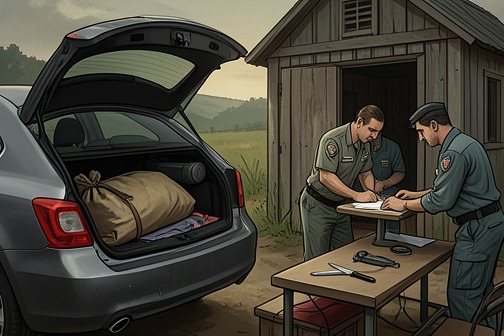
The murder of [Anna Prado](entity:character-recall-character-anna-prado-d5202185ed9f) is the case that turns a developing suspicion of William Rupert Bantling into a prosecution supported by physical evidence, while later discoveries place her death within the broader pattern investigated by the [Cupid task force](entity:organization-recall-organization-cupid-task-force-c6936f4b95a0).
## Investigation and Forensic Evidence
The investigation took shape against the background of a task force already pursuing multiple disappearances and murders. Its headquarters held [The Wall](entity:object-recall-object-the-wall-894f2e7bcb38), a chronological display of the missing women, with photographs and case information assembled from records and materials supplied by their families. Investigators also collected private documents, including diaries, correspondence, and financial records, as they tried to reconstruct each woman’s life and identify connections. In Anna’s case, investigators found human blood in Bantling’s shed and her body in the trunk of his Jaguar, evidence that helped make him the focus of the inquiry. During the trial, forensic testimony further connected the crime to an instrument seized from Bantling’s residence: testing showed that the Number Five scalpel matched the relevant forensic evidence. The testimony presented Anna’s death as the result of a deliberate act and made the link between the seized object and the prosecution’s case explicit.
## From Suspect to Wider Pattern
As investigators revisited the clubs where women on The Wall had last been seen, staff recognized William Rupert Bantling as a frequent customer who arrived well dressed and with different young blonde women. But no one could place him with any of the victims or at a particular club on the night of a disappearance, leaving the nightclub inquiry suggestive rather than conclusive. Other strands strengthened the case: Bantling’s girlfriends described violent, sadistic behavior and difficulty accepting rejection; his Haldol prescription connected him to a drug found in at least six victims; and his taxidermy hobby involved tools relevant to the investigation. The case widened further when investigators found, in the mobile home of his deceased aunt Viola Traun in Key Largo, the victims’ hearts and photographs documenting their torture and deaths. Those discoveries placed Anna’s murder within a larger pattern and extended the investigation beyond the evidence initially assembled for her case.
## Anna Prado’s Disappearance and the Medical Evidence
Anna Prado disappeared from Club Liquid on [South Beach](entity:location-recall-location-south-beach-991ce43040e8) after going there with four friends. They told police she went to one of the main bars for a drink and did not return. Believing she might have met someone and left with him, they waited two days before reporting her missing, after she failed to appear for her waitress job. The photograph her parents supplied had been taken for a used-car dealer in the Keys just two days before she vanished, preserving a glimpse of her life immediately before the case turned to her disappearance.
At trial, medical testimony supplied a precise account of the fatal mechanism and linked the prosecution’s evidence to an instrument seized from William Rupert Bantling’s residence. The witness said Anna’s aorta had been severed and her heart removed, causing her immediate death. Testing showed that the Number Five scalpel from Bantling’s home matched the forensic evidence from the cuts described in court. Together, the testimony and comparison gave the murder case a concrete evidentiary chain: Anna’s death was not only reconstructed for the jury, but connected to a specific object recovered from the defendant’s residence.
## Trial Conflict and Public Disclosure
The prosecution became entangled with a separate question about [C.J. Townsend](entity:character-recall-character-c-j-townsend-61cc4c0fbc19)’s impartiality. [Lourdes Rubio](entity:character-recall-character-lourdes-rubio-a8328b3f4769) presented a motion to suppress the traffic stop and said the defense would ask Judge [Leopold Chaskel III](entity:character-recall-character-leopold-chaskel-iii-25f62042aab6) to remove C.J. from the case, arguing that her judgment was clouded; Rubio also planned to raise the issue with the State Attorney. The challenge made the prosecutor’s own history part of the courtroom dispute, even as the case concerned Anna Prado’s murder.
C.J. then told the court that she had been raped years earlier while she was a law student in [New York](entity:location-recall-location-75b9ea4bd176), and that Bantling had learned of the assault through old police reports and public-record searches. She said his claim that he was her attacker was an effort to cast the proceedings as improper, denied that he had raped her, and stated that she had already told Lourdes Rubio she did not believe his accusation. The disclosure brought a previously private history into the murder trial, while C.J.’s denial separated Bantling’s claim from the evidence being presented in Anna’s case.
Event 20
Anonymous 911 Tip and Search of the Jaguar’s Trunk
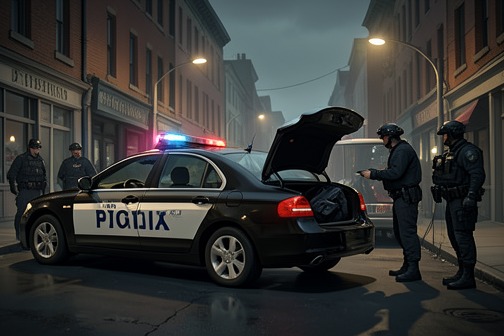
An anonymous 911 tip turned a routine-looking traffic stop into a pivotal, disputed search of [William Bantling’s Jaguar XJ8](entity:object-recall-object-william-bantling-s-jag-9ad55c2cdbf4). The caller reported cocaine in the trunk and supplied a route toward the airport; the car’s trunk held evidence central to the case. Later, [C.J. Townsend](entity:character-recall-character-c-j-townsend-61cc4c0fbc19) listened to the recording repeatedly and saw the tip not simply as a lead, but as a clue that the caller may have known what the police would find. The episode joins discovery to doubt: the search advanced the prosecution, while questions about why the car was stopped threatened the evidence obtained from it.
## The Tip and the Search
The caller identified a late-model black Jaguar XJ8, said it was heading south on Washington Avenue from Lincoln Road, and predicted that its driver would take the [MacArthur Causeway](entity:location-recall-location-macarthur-causeway-de86d0c8383e) to the airport. The caller also claimed there were two kilos of cocaine in the trunk. When the dispatcher asked for a name and location, the line went dead. The information was specific enough to direct officers toward a particular car and route, but the caller supplied no identity that investigators could use to assess the source’s reliability.
The accusation of cocaine became suspect in retrospect. C.J. found no evidence that Bantling used or dealt illegal drugs, and the account of the call offered no independent explanation for why the caller knew the Jaguar’s movements. Its most consequential instruction was not the drug allegation itself, but the assertion about the trunk: it gave officers a reason to search the place where the case’s central discovery awaited. The tip thus worked on two levels, presenting an apparently actionable claim while directing police toward information the caller may already have possessed.
The recorded voice offered only limited identifying detail. C.J. had listened to the tape at least thirty times. The voice sounded muffled, as if the caller had covered the phone with cloth, but it was clearly male to her; it was also calm rather than hurried or angry. Faint music, perhaps opera, could be heard behind it. These details sharpened the mystery without resolving it. They could describe the call, but did not establish the caller’s identity or prove how he knew about the trunk.
## Why the Trunk Changed the Case
The discovery mattered because the investigation concerned a killer known as Cupid. In the preceding eighteen months, eleven women had disappeared around [Miami](entity:location-recall-location-miami-28b8b009fa19)’s nightlife districts; nine bodies had been found, and the victims’ hearts were missing. The task force was pursuing an exceptionally serious series of crimes, but the scale and brutality of that investigation did not make every lead reliable. In the trunk episode, the distinction between what the caller alleged and what investigators encountered became essential: a claim about drugs drew police to a search that bore on a murder investigation.
When C.J. returned to the tape, she tested possible explanations for the call against what the case had established. An angry motorist seemed inconsistent with the caller’s measured voice, and the drug claim had no apparent support in Bantling’s known activities. The remaining possibility chilled her: the caller could have wanted the trunk searched because he knew the gruesome contents police would find. That was an inference, not a confirmed identification. The tape raised the possibility of foreknowledge, but it did not reveal whether the caller was involved in the crime, how he learned what was in the car, or why he chose to summon law enforcement.
The call also sat within a broader effort to connect crimes through patterns rather than assume that resemblance alone proved identity. C.J.’s research uncovered earlier masked rapes in cities where Bantling had lived, with victims describing similar methods of entry, restraint, and assault. Later, information relayed by Interpol pointed to reported cases in South America and [the Philippines](entity:location-recall-location-8b86fdcbfca5). This wider pattern intensified the stakes of the [Florida](entity:location-recall-location-florida-1618e1042117) investigation, but it did not answer the narrower question posed by the 911 recording: who had arranged for the Jaguar’s trunk to be searched, and on what knowledge?
## The Stop Under Challenge
The search’s value to the prosecution made the lawfulness of the stop consequential. In a later exchange, C.J. confronted Officer Victor Chavez over his account of pursuing the Jaguar. She pointed to the street layout: Sixth Street was one-way and did not run through, while cement pilings prevented a turn south onto Washington Avenue. On that account, an officer facing west would have had to turn north and make a U-turn farther up the road; he could not have continuously followed the car as claimed. The physical geography therefore challenged the story offered to justify the stop, rather than merely adding atmosphere to it.
The defense moved to suppress evidence arising from the stop, and [Lourdes Rubio](entity:character-recall-character-lourdes-rubio-a8328b3f4769) told C.J. that the defense also intended to seek C.J.’s removal from the prosecution, arguing that her judgment was clouded. Those developments tied the anonymous call to two distinct vulnerabilities: the circumstances of the search and the prosecutor’s personal conflict. The evidence located through the stop could not be considered apart from the means by which officers reached it, and the prosecutor’s stake in the case became part of the defense’s challenge as well.
At trial, Rubio argued that Bantling’s Jaguar had been at a repair shop for two days before he collected it on [September 19, 2000](entity:time-recall-time-september-19-2000-2a587eab58ad), and that it had been outside his care and control. She maintained that he had not looked in the trunk before placing an overnight bag in the back seat and heading to the airport on scheduled business. This was the defense’s account, not an established finding in the evidence presented here. Its purpose was to separate Bantling from the trunk’s contents and to dispute the state’s claim that he knowingly carried them.
## Evidentiary Meaning
The event’s force comes from the collision between an apparently useful tip and its unanswered motive. It gave police a vehicle description, a direction of travel, and a destination, yet the caller disappeared as soon as asked to identify himself. Its cocaine allegation was not supported by evidence of Bantling’s drug involvement, while the trunk search produced evidence relevant to the murder case. The recording therefore invited investigators and readers to ask whether its stated reason was a pretext for its actual effect.
That suspicion remained distinct from proof. A muffled male voice and faint background music could not identify the caller; the caller’s apparent knowledge could not, by itself, establish participation in the murder; and evidence discovered in the trunk did not settle whether the stop and search were lawful. The episode keeps those questions in tension. The tip helped expose evidence, but the disputed stop gave the defense grounds to attack how that evidence had been obtained. In a case built around uncovering hidden crimes, the search also turned attention toward the possibility that someone had knowingly guided the investigators to what they sought.
Event 21
William Bantling Murder Trial
The [William Bantling Murder Trial](entity:event-recall-event-william-bantling-96389923f295) is the courtroom culmination of the investigation into the [Cupid murders](entity:event-recall-event-cupid-murders-5b2de1fa9bfc) and a contest over how much weight the jury could place on a chain of circumstantial evidence. The prosecution’s case appeared to falter under challenges to the Jaguar evidence and the legality of the stop, then changed dramatically when investigators found victims’ hearts and photographs in Viola Traun’s mobile home. The verdict resolved Bantling’s guilt in [Anna Prado](entity:character-recall-character-anna-prado-d5202185ed9f)’s murder, while the trial also forced prosecutor [C.J. Townsend](entity:character-recall-character-c-j-townsend-61cc4c0fbc19) to address her own history of assault in open court.
## Investigation and the case before trial
The case against Bantling drew on evidence that seemed to connect him to the victims and to the methods used in the murders. At clubs where victims had last been seen, waitstaff recognized Bantling as a frequent customer, often accompanied by a different young blonde woman. They could not, however, place him with any victim or reliably put him at the right club on the night of a disappearance. The distinction between a pattern that raised suspicion and evidence tying him to a particular crime would become central at trial.
The investigation had also assembled extensive records about the missing women. Families provided photographs, and investigators arranged the victims’ portraits on [The Wall](entity:object-recall-object-the-wall-894f2e7bcb38) in the order of their disappearances, with crime-scene and autopsy photographs beneath them. Boxes held police reports, interviews, financial records, diaries, letters, photographs, and other private materials. These records helped reconstruct individual lives and timelines, but they also made the women’s intimate histories part of the state’s investigative file.
C.J.’s own past complicated her role. Years earlier, after she was sexually assaulted while a law student in [New York](entity:location-recall-location-75b9ea4bd176), she underwent emergency surgery that left her unable to have children. Detective Harrison told her the assault was not her fault, but the investigation made little visible progress; she called regularly for updates as the case drifted toward cold-case status. When she later read a former neighbor’s degrading account of her conduct, old self-blame returned despite her understanding that his accusations were abusive and unjustified. Those experiences form the personal history behind the courtroom conflict, not evidence that Bantling had committed the earlier crime.
## Jury and opening arguments
The jury of five women and seven men was sworn shortly before the courthouse closed early for the [Christmas](entity:time-recall-time-christmas-a573265d0167) holiday. Its members ranged from a twenty-four-year-old deep-sea-diving instructor to a seventy-six-year-old retired bookkeeper. All lived in [Miami](entity:location-recall-location-miami-28b8b009fa19); although they had heard of or read about the Cupid murders, they said they had not formed an opinion about Bantling’s guilt and could judge the case impartially. [Florida](entity:location-recall-location-florida-1618e1042117) juries were not sequestered, so the jurors went home during the trial.
C.J. gave a concise opening for the prosecution. [Lourdes Rubio](entity:character-recall-character-lourdes-rubio-a8328b3f4769) then urged the jury to separate the disturbing nature of the allegations from proof of the defendant’s guilt. She emphasized the presumption of innocence and argued that the jurors might have been influenced by the prosecution’s vivid account and by the public label of serial killer. Her presentation framed the case as a test of whether revulsion could be kept distinct from evidence. After hearing her, C.J. recognized that the prosecution’s case was in serious trouble.
## Doubts about the prosecution’s evidence
The defense developed reasonable doubt through concrete alternative explanations and challenges to the investigation. It presented testimony that Bantling’s Jaguar had been at a tinting shop over two days and had remained overnight in an unsecured lot, where more than ten employees could access it. The owner said no one had looked in the trunk after Bantling dropped off the car. That testimony gave the defense a basis to contest the prosecution’s reliance on evidence associated with the vehicle.
The defense also drew on Bantling’s reputation as a taxidermist, a craft recognized by the [American Taxidermy Association](entity:organization-recall-organization-american-taxider-d9b3efb7de71). Its witnesses addressed the use of a number-five scalpel in taxidermy and argued that blood evidence could have an explanation connected to the work. In combination with the contested vehicle evidence, this testimony weakened the prosecution’s effort to make each item in its case point in only one direction.
The legality of the stop was another fault line. In questioning Officer Chavez, C.J. confronted his account directly, and the physical layout of the streets contradicted his claim that he had kept the Jaguar in sight: Sixth Street was one-way and not a through street, while cement pilings prevented the turn his account required. Lourdes later sought to suppress evidence from the stop and formally asked that C.J. be removed from the case, arguing that her judgment was clouded. The possibility of exclusion and the challenge to the prosecutor’s impartiality put both the evidence and the conduct of the prosecution under pressure.
## Discovery changes the trial
The decisive reversal came when [Dominick Falconetti](entity:character-recall-character-dominick-falconetti-32bc0be8d5cc) and Manny Alvarez located Viola Traun’s mobile home in Key Largo. A civil contempt warrant connected Bantling to his late aunt’s property, and the trailer-park owner allowed the investigators to enter under the property’s circumstances. Dominick took care to establish their right to be there and said they needed a warrant before searching further. In the kitchen freezer, they found the victims’ hearts along with photographs of victims on a metal gurney, some showing them during their torture or deaths. The discovery supplied evidence far more direct and difficult for the defense to explain away than the disputed material from the Jaguar.
C.J. reopened the prosecution’s case on Wednesday. After Dominick testified, the jury saw Anna Prado’s heart preserved in an evidence bag and viewed the photographs recovered from the freezer. The room’s response marked a sharp change in the trial: jurors who had avoided looking toward Bantling now recoiled from the new evidence; two men wept and three women became physically ill. Anna’s mother again had to be escorted from the courtroom in distress. The exhibits did more than intensify the emotional force of the case: they connected the evidence found at the trailer to the victims and to the prosecution’s account of Bantling’s crimes.
During the lunch recess, Dominick charged Bantling with ten additional counts of first-degree murder and lodged ten more arrest forms at the [Dade County Jail](entity:location-recall-location-dade-county-jail-40e45a4ece62), in case the jury acquitted him in the case then being tried. Lourdes waived Bantling’s right to a first-appearance hearing, and later announced that he would not testify. His earlier confidence gave way to visible strain, accompanied by quiet disputes between him and his lawyer at the defense table.
## Verdict and courtroom disclosure
On January 5, 2001, the jury found William Rupert Bantling guilty of first-degree murder in Anna Prado’s case. The jurors avoided looking toward him as the verdict was read. The finding answered the charge before them; it did not itself resolve the additional murder counts filed during the trial.
After the verdict, Bantling publicly accused C.J. of having been raped by him years earlier. C.J. told Judge Leopold Chaskel that she had indeed been violently raped while a law student in New York, but denied that Bantling was her attacker. She said he had learned about the unsolved assault through old police reports and public records and was using the claim to suggest impropriety and prejudice. Lourdes, having read the police reports and spoken with C.J., told the court she did not support Bantling’s accusation. The disclosure exposed the personal stakes C.J. had kept bound to the prosecution, even as she denied that the defendant’s claim was true.
The trial’s movement—from a vulnerable circumstantial case, through reasonable-doubt arguments, to evidence recovered in the freezer—makes its verdict a consequence of changing proof rather than courtroom certainty from the outset. Its final confrontation also places two questions beside each other: whether Bantling murdered Anna Prado, and whether the prosecutor could be made to appear compromised by a claim about her own victimization. The jury’s guilty verdict resolved the first question in the state’s favor; the courtroom disclosure made the second part of the trial’s public aftermath.
Event 22
Bantling’s Murder Conviction and Courtroom Outburst
William Rupert Bantling’s murder conviction turned a closely watched trial into a moment of public rupture: after the jury found him guilty, he challenged the proceedings by accusing prosecutor [C.J. Townsend](entity:character-recall-character-c-j-townsend-61cc4c0fbc19) of a past assault and claiming she had framed him. The courtroom had first delivered its verdict in a formal, decisive act, only to have Bantling’s response expose the personal history he said lay behind the case.
## The Verdict
The jury began deliberating after closing arguments concluded on Friday afternoon. The court had instructed the twelve remaining jurors on the law after dismissing the two alternates. Earlier that day, during the lunch break, [Dominick Falconetti](entity:character-recall-character-dominick-falconetti-32bc0be8d5cc) had charged Bantling with ten additional counts of first-degree murder and lodged ten more arrest forms with the [Dade County Jail](entity:location-recall-location-dade-county-jail-40e45a4ece62), preserving the possibility of further custody if the jury acquitted him. Bantling’s attorney, [Lourdes Rubio](entity:character-recall-character-lourdes-rubio-a8328b3f4769), waived his right to a First Appearance Hearing; later, she told the judge Bantling would not testify in his own defense. His previously cocky expression had given way to a nervous, defiant twitch, and quiet, heated disputes between him and Rubio could be heard at the defense table.
At 4:27 P.M., the jury was sent out to decide Bantling’s fate. Less than an hour later, a knock at the jury-room door signaled that a verdict had been reached. The foreman, a [Miami Beach](entity:location-recall-location-miami-beach-1ba638669276) garbageman in his forties, confirmed the verdict to the judge while cameras and microphones recorded the moment. The judge returned the verdict form to the clerk, and the jurors watched the bench uneasily, avoiding Bantling’s gaze.
The clerk read the jury’s finding: on January 5, 2001, in [Miami-Dade County](entity:location-recall-location-miami-dade-county-35f26f79eb4c), [Florida](entity:location-recall-location-florida-1618e1042117), the jury found William Rupert Bantling guilty of first-degree murder. A choked sob followed, which C.J. Townsend suspected came from Mrs. Prado. The verdict closed the jury’s decision, but not the courtroom’s confrontation: Bantling’s reaction immediately redirected attention from the formal judgment to the prosecutor he accused.
## The Outburst and Accusation
As the courtroom absorbed the verdict, Bantling began screaming, a sound C.J. Townsend recognized from an earlier encounter with him and Lourdes Rubio in the Dade County Jail. He pointed at Townsend and claimed that he had assaulted her years earlier in her [New York](entity:location-recall-location-75b9ea4bd176) apartment, then accused her of framing him for the murders. He demanded a new trial and a new lawyer, alleging that Rubio knew his accusation was true but was not defending him properly because she pitied Townsend.
The outburst forced Townsend’s concealed history into the open. She stood and told Judge [Leopold Chaskel III](entity:character-recall-character-leopold-chaskel-iii-25f62042aab6) that she had been violently raped while she was a law student in New York, but denied that Bantling was the attacker. She said he had learned about the unsolved assault through old police reports and public records and was using that information to cast doubt on the prosecution. Rubio, who had reviewed the reports and spoken with Townsend, told the judge she considered Bantling’s accusations baseless and did not support them. The courtroom disclosure answered his public claim, but made Townsend’s private experience part of the trial’s spectacle.
## Removal and Immediate Aftermath
Bantling’s accusation gave way to a physical disruption when he shoved over the defense table and protested the verdict. Three corrections officers restrained him, and Judge Chaskel declared the matter concluded and ordered the bailiff to silence him. Bantling then fell quiet as the bailiff taped his mouth, ending the outburst without undoing the public disclosure of Townsend’s past.
The consequences followed Townsend beyond the courtroom. That night, reporters had found her carefully guarded address at [Port Royale](entity:location-recall-location-port-royale-4f8008836da6) and were waiting in the parking lot; news crews had driven past the security guard to get there. Unable to return home, Townsend stayed in her office at 10:30 P.M. and called hotels, seeking somewhere to stay until the reporters left. The verdict had ended the jury’s deliberations, but Bantling’s accusation had made her private history a public spectacle and disrupted her ability to go home.
## The Unresolved Past Behind the Disclosure
The history exposed in court began years earlier, when C.J. Townsend was a law student in New York. After the assault, she was taken to Jamaica Hospital in [Queens](entity:location-recall-location-queens-6c6ea4959925) with severe injuries and substantial blood loss; doctors performed an emergency hysterectomy to stop the bleeding. Although they expected her to recover physically, the consequences extended beyond her hospital stay. In the days that followed, the police guard was removed once she was no longer considered in imminent danger, and a detective’s daily visits became brief phone calls. Townsend feared that her case would soon be pushed aside for newer arrivals, while the bandages and the prospect of explaining them made her withdraw from most visitors and calls.
The old case remained painful in part because its records preserved the judgments of people around her as well as the facts of the assault. While reviewing reports and hospital records more than a decade later, Townsend encountered an ex-neighbor’s allegation that her clothing had invited what happened. Though she recognized the statement as the product of a distorted and perverted view, it revived self-blame she had struggled to overcome in therapy. This history clarifies the personal cost of Bantling making her assault a public claim: the courtroom did not merely disclose an old case, but brought its shame and the struggle to speak about it back into the present.
Townsend’s later review of unsolved cases also placed that history beside a much wider pattern. Searching newspaper archives, she found reports of assaults on women in California involving masked intruders, then located further cases associated with cities where Bantling had lived. Police reports described recurring features, including victims attacked in their first-floor apartments at night and masked assailants; the records also contained intimate details about victims that, in Townsend’s judgment, connected the crimes. She contacted an investigator at [INTERPOL](entity:organization-recall-organization-interpol-378be8d33f6c), who reported matching wanted notices for assaults in South America and [the Philippines](entity:location-recall-location-8b86fdcbfca5), while making clear that the notices had not yet been confirmed with local agencies. The accumulating reports gave the trial accusation a disturbing context, but Townsend rejected Bantling’s claim in court, and the account of the verdict scene presents his words as an attempt to undermine the prosecution rather than as proof accepted by the judge.
Event 23
William Bantling Sentenced to Death
William Bantling’s death sentence was the culmination of a capital case whose final phase widened the jury’s view beyond the murder for which he had been convicted. The state presented evidence connecting him to ten other victims, while the court imposed restraints to keep his conduct from disrupting the proceedings. In less than twenty-five minutes, the jury recommended death; Judge Chaskel then sentenced Bantling to death by lethal injection.
## From the conviction to the penalty phase
Six weeks after the guilt phase, the penalty phase began. The distinction mattered: Bantling’s guilt was no longer at issue. The question before the jury was whether he should live or die for his crimes. Both sides could offer testimony, and the state had three days to present its case for a death sentence.
The trial’s larger context was the [Cupid murders](entity:event-recall-event-cupid-murders-5b2de1fa9bfc), in which women had been abducted and killed, their bodies bearing a distinctive pattern that included the removal of their hearts. That record had helped establish the case against Bantling, but the sentencing hearing also brought forward evidence from other crimes. The phase therefore shifted the trial’s focus from determining responsibility for [Anna Prado](entity:character-recall-character-anna-prado-d5202185ed9f)’s murder to showing the scale of the violence attributed to Bantling and assessing its consequence.
## Restraints and the state’s case
Judge Chaskel ordered Bantling gagged, handcuffed, and shackled. Before doing so, he had held a hearing to determine whether Bantling could behave without restraints. Bantling responded with an obscene outburst directed at the judge and prosecutor within the first four minutes. Chaskel then ordered the restraints, seeking to prevent another prejudicial disruption from affecting the jury after the guilt phase had concluded.
[C.J. Townsend](entity:character-recall-character-c-j-townsend-61cc4c0fbc19) presented the state’s case over three days. The jurors heard about evidence recovered in the search of Viola Traun’s mobile home, including material connected to ten additional victims. They saw crime-scene photographs of ten other hearts found in a freezer alongside trophy photographs; Anna Prado’s heart was part of the same collection. The jurors also heard about ten other abductions and victims whose empty chests bore the same black cross. Evidence that had not been usable to secure the conviction could now be presented to support the state’s request for a death sentence.
Bantling remained seated beside his attorney, [Lourdes Rubio](entity:character-recall-character-lourdes-rubio-a8328b3f4769), with his mouth taped shut. The image of the restrained defendant ran alongside the state’s account of the crimes: the court controlled his ability to interrupt, while the evidence presented the breadth of what the state attributed to him.
## Bantling takes the stand
On the fourth day, after the state had rested and before the defense began its case, Judge Chaskel cleared the jury from the courtroom. Rubio said that Bantling wished to be the defense’s sole witness and testify on his own behalf. The judge recognized his right to do so and directed that the gag be removed so the court could see whether he would follow the rules.
Bantling immediately shouted that he was being framed and accused C.J. of framing him. The gag was put back on. His testimony did not develop into a defense account: the brief opportunity to speak became another outburst, and the judge had the jury removed before it occurred.
## Recommendation and sentence
The jury took less than twenty-five minutes to return a unanimous recommendation: death. Judge Chaskel did not delay the next step. He sentenced Bantling to death by lethal injection, ordered him removed from the courtroom, and cleared the room. Three corrections officers dragged Bantling out as he screamed behind the gag.
The courtroom emptied into a public aftermath. Reporters hurried into the hallway to contact editors and seek interviews with jurors. [Dominick Falconetti](entity:character-recall-character-dominick-falconetti-32bc0be8d5cc), Manny Alvarez, Chris Masterson, and Eddie Bowman were separately approached by television stations for live comment. Inside, only the clerk, C.J., and Lourdes remained, packing the files from the case. As Lourdes prepared to leave, C.J. offered her hand and said it had been good working with her, a small gesture of professional recognition after their adversarial roles had carried them through the hearing.
## The personal stakes and aftermath
The sentence followed a trial in which C.J.’s own history became public. During the proceedings, she told Judge Chaskel that she had been raped years earlier while a law student in [New York](entity:location-recall-location-75b9ea4bd176). She explained that Bantling had learned of the unsolved assault through old police reports and public records, and that his claim to have been her attacker was an effort to undermine the case. She denied that he was the man who had assaulted her and said she had already told Rubio as much. The revelation exposed a conflict that had shadowed C.J.’s work, even as she continued to prosecute him.
That public disclosure followed a long private reckoning with the assault. At Jamaica Hospital, doctors told her that the injuries required an emergency hysterectomy. Later, as the police guard was removed and the daily visits from Detective Harrison became phone calls, C.J. feared that attention to her case would fade. Friends’ flowers filled her room, but she did not want visitors beyond Marie; she could not face explaining her bandages or making conversation with curious acquaintances. When she later read her old police file, a former neighbor’s victim-blaming account revived guilt she had worked through in therapy. These experiences form the background to her appearance in court: the penalty phase concluded Bantling’s prosecution, but it did not make the assault or its consequences disappear.
After the courtroom revelation, C.J. took time away from work while press interest subsided. She spent several days in Key West with Dominick. The two did not need to discuss the assault in detail for his knowledge of it, and his continued love, to matter to her. The penalty phase thus closed one legal question with an irrevocable sentence while leaving the personal history that had entered the courtroom to be faced beyond it.
Event 24
Gregory Chambers Kidnaps and Attempts to Kill C.J.
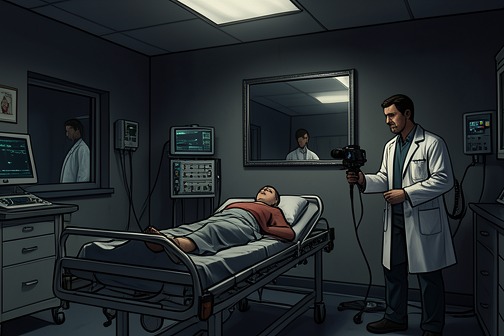
[Gregory Chambers](entity:character-recall-character-gregory-chambers-41d726249620)’s attempt to kill C.J. transforms a trusted professional relationship into a direct struggle for survival. By revealing his desire and using a human heart to confront her, Chambers exposes the threat behind his earlier role as a therapist; C.J. resists, wounds him, and ultimately escapes from the room where he has confined her.
## From therapeutic trust to betrayal
Chambers invokes the difficulty of having William Rupert Bantling as a patient and C.J. as a person who has placed him in a difficult position. The explanation collapses when he makes clear that his difficulty is bound up with wanting her. A human heart concealed in an ice bucket confirms that the meeting is not a professional conversation: Chambers has brought the threat of violence into the relationship in which C.J. had trusted him for help.
When C.J. tries to leave, Chambers stops her and incapacitates her with an injection. She wakes restrained on a gurney in a small, dark room, beneath a ceiling mirror, with a camera set up across from her. The arrangement makes her both captive and watched. Chambers later enters through the room’s door and prepares equipment, revealing that her confinement is deliberate and that his control extends beyond the initial attack.
## Resistance and escape
As the effects of Haldol began to wear off, C.J. regained enough awareness to resist Chambers. She used a scalpel to wound him and, when he tried to overpower her again, seized a second blade. Her actions reversed the balance between captor and captive: Chambers had arranged the room to keep her helpless and under observation, but his control was no longer secure.
When Chambers tried to inject her with [Mivacron](entity:object-recall-object-mivacron-a43d7437f923), C.J. found scissors on the floor and used them to break his hold. She then pulled herself toward the door, struggled to reach its handle, and made her way down the stairs. The sequence turns the scene from confinement into escape through a series of limited, deliberate efforts; even when she could not stand, she continued toward a way out.
C.J. recognized the house as the Spanish-style home on Almeria where she had attended her psychiatrist’s office. She reached the lower level and waited there for the police. The discovery reframes the place of treatment as the setting of her captivity, while her survival comes not from the professional trust that had brought her there but from her own resistance and eventual escape.
## The history made public
Before Chambers’s attack, C.J. had already been forced to disclose a private part of her past in open court. She told Judge Chaskel that she had been raped years earlier while she was a law student in [New York](entity:location-recall-location-75b9ea4bd176), and that the assailant had never been identified. She also directly rejected William Rupert Bantling’s claim that he had been the attacker, explaining that she had told his attorney as much in an earlier meeting. The disclosure made her history public, but did not make Bantling its author; that distinction remains essential to understanding the later betrayal.
## Earlier harm and diminished protection
C.J.’s history of violence preceded the confrontation with Chambers by more than a decade. After she was assaulted as a law student in New York, she spent time at Jamaica Hospital in [Queens](entity:location-recall-location-queens-6c6ea4959925) recovering from severe injuries, including an emergency hysterectomy. The attacker remained unidentified. The immediate medical crisis passed, but recovery did not restore the life she had known: C.J. avoided most visitors, could not bring herself to speak on the telephone, and felt unable to return to her former self.
The investigation’s attention also receded. The police guard assigned to her hospital room for its first two days was removed when she was no longer considered in imminent danger. Detective Harrison stopped making daily visits and began calling once a day instead. C.J. feared even those calls would soon dwindle as the case made room for newer victims. Flowers filled her room, but they could not substitute for the protection or ordinary connection she had lost; apart from Marie, she did not want friends to see her bandages or ask what had happened.
Years later, reviewing her old police reports and hospital and laboratory records brought the assault back with painful force. A former neighbor’s testimony blamed C.J.’s clothing and behavior for the crime. Although she understood that the testimony reflected the witness’s own degradation, it revived the guilt and shame she had struggled against for years. Her experience of therapy included learning not to hold herself responsible, but the old records made that work precarious rather than final.
By the time Chambers attacked her, C.J.’s private history had also become entangled with her prosecution of William Rupert Bantling. [Lourdes Rubio](entity:character-recall-character-lourdes-rubio-a8328b3f4769) formally challenged C.J.’s judgment and planned to ask Judge Chaskel to remove her from the case. The move placed C.J.’s fitness to prosecute under scrutiny just as Bantling’s knowledge of her past had made that past a weapon in court. Chambers’s own reference to Bantling as his patient gave the ensuing betrayal a professional dimension: the person C.J. had trusted in a therapeutic setting was not outside the case’s conflicts, but implicated in them.
This convergence gives the attempted killing a significance beyond the immediate contest for survival. C.J. had already endured an assault that remained unsolved, the fading of institutional attention, and the return of self-blame through the very records meant to document what happened. Now the place associated with psychiatric care became the site of captivity. Her escape does not erase those earlier harms, but it changes the direction of the scene: the violence does not end with her immobilized, and the person who had arranged the conditions of her helplessness does not retain control.
Event 25
Appeal of Bantling’s Murder Conviction Denied
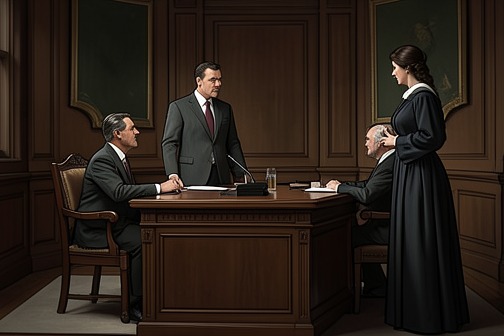
The denial of William Rupert Bantling’s appeal affirmed his murder conviction and rejected his effort to turn [C.J. Townsend](entity:character-recall-character-c-j-townsend-61cc4c0fbc19)’s history of sexual assault into grounds for reversal. The ruling addressed claims of prosecutorial conflict, conspiracy, inadequate representation, and newly discovered evidence; it found none sufficient to disturb the verdict. For C.J., the decision brought relief from a case that had made an old trauma public, though it did not end the possibility of further appeals.
## Background and Stakes
The appeal’s central personal issue had surfaced before the verdict. C.J. had been raped years earlier while she was a law student in [New York](entity:location-recall-location-75b9ea4bd176), and the attack remained unsolved. During Bantling’s murder trial, he claimed that he had been the assailant. C.J. told Judge Leopold Chaskel that she had been a victim, but denied that Bantling was the man who attacked her. She also explained that Bantling had learned about the old case through police reports and public records, and that she had already told his attorney, [Lourdes Rubio](entity:character-recall-character-lourdes-rubio-a8328b3f4769), that she did not believe his accusation.
The disclosure put a private history into the public courtroom and made C.J.’s role as prosecutor a question for the court. Earlier, Rubio had told her that the defense believed her judgment might be clouded and intended to ask for her removal. C.J. reacted with alarm, while Bantling watched her closely during the conversation. The eventual appeal revisited that conflict claim, turning the question of whether C.J. could prosecute the case into one of the grounds on which Bantling sought to overturn his conviction.
## The Court’s Decision
The decision reached the prosecution through the Chief of Legal, who approached C.J. at the courthouse before the press began calling. The opinion had been faxed from the clerk of the [Third District Court of Appeal](entity:organization-recall-organization-third-district-c-2293d7347ae0) through the Attorney General’s Office. The Chief told her that the court had ruled unanimously for the state and had upheld the conviction on every issue presented.
On the conflict question, the appellate court rejected Bantling’s assertion that he had raped C.J. The opinion described the allegation as opportunistic and inflammatory and noted that independent evidence did not corroborate it. It also rejected the proposition that a bare accusation, made after the limitation period had expired, could by itself establish a conflict requiring recusal. The court warned that accepting such claims without substantiation would invite defendants to search for damaging information about prosecutors or judges and use it to change who handled their cases.
The ruling rejected Bantling’s conspiracy theory as well. It found no merit in his claim of ineffective assistance of counsel, concluding that Rubio’s representation was adequate. The record, the court said, showed that Bantling’s decision whether to testify had been his own. The appellate court therefore declined to treat his choice about testifying as evidence that his conviction should be set aside.
## Newly Discovered Evidence and the Verdict
Bantling also argued that new evidence warranted relief. The appellate court noted that Judge Leopold Chaskel had already considered that argument during a hearing on Bantling’s motion for a new trial the previous spring, and the appellate judges likewise found it unpersuasive. In particular, [Gregory Chambers](entity:character-recall-character-gregory-chambers-41d726249620)’s assault on C.J., standing alone, did not constitute newly discovered evidence sufficient to undo Bantling’s conviction.
That issue joined the later attack on C.J. to the murder appeal without making the two events equivalent. The court’s conclusion was limited: Chambers’s assault by itself did not satisfy the standard Bantling invoked. The jury had also rejected his newly discovered evidence argument at trial and convicted him of murder. The appellate decision left that verdict intact rather than reopening the case on the basis of the assault or the other claims.
## Aftermath and Significance
The news came as a sharp reversal of C.J.’s expectation. When the Chief first approached, she feared the appeal had freed Bantling and that the nightmare would begin again. Instead, the unanimous ruling gave her room to breathe. Its affirmation resolved the issues before that court, including the challenge to her continued participation as prosecutor, but did not promise that litigation was over.
The Chief identified the [Florida](entity:location-recall-location-florida-1618e1042117) Supreme Court as the next possible step and said Bantling could later continue through the federal system, potentially as far as the U.S. Supreme Court. Those were possible future stages, not outcomes established by the decision. The appeal’s immediate consequence was narrower and decisive: Bantling’s conviction survived review, and his claims about C.J.’s past, his representation, and the alleged new evidence did not dislodge it. The ruling thus closed one major challenge while leaving the prospect of further proceedings open.