Spinning wheel
RumplestiltskinThe Spinning wheel is the practical and symbolic center of the miller’s daughter’s three straw-to-gold trials. The King supplies it alongside the straw and the threat that she must finish before morning, but she cannot perform the impossible work herself. The little man takes the wheel in exchange first for her necklace, then her ring, and finally a promise of her future first child. Its repeated turning brings wealth to the King and changes the daughter’s status, while binding her to a debt that returns after she becomes queen.
Introduction and First Trial
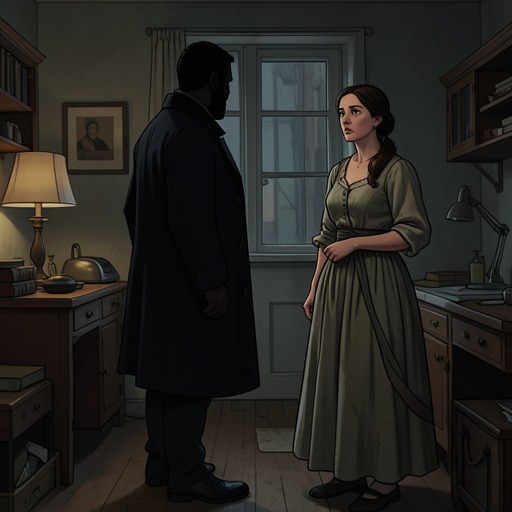
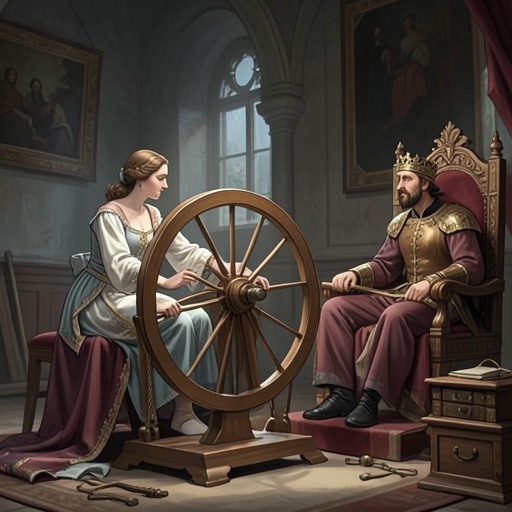
The wheel appears in the King’s palace, where the miller’s daughter has been shut alone in a chamber with a great heap of straw. Her father’s boast that she could spin gold has turned into a mortal ultimatum: the King orders her to finish before morning, and the locked door leaves her without help. The wheel is thus introduced not as an ordinary tool for useful labor but as part of a coercive arrangement: the King controls the room, the raw material, the deadline, and the threatened consequence, while the daughter has no means to fulfill what has been demanded.
When she weeps over the task, a strange little man enters and offers to do it for a price. The daughter gives him her necklace. He sits at the wheel, whistles and sings, and makes the work go quickly; by the time the King returns, the straw has all become gold. The contrast is decisive: the daughter is powerless before the wheel’s assigned task, whereas the stranger can operate it to produce the very treasure the King desires. The transformation is presented as magical, not explained as a craft or a technology, and the narrative gives the wheel’s motion and song the place of a visible sign that the impossible work is being done.
Repeated Work and Escalating Bargains
The King’s astonishment does not satisfy him. After seeing the gold, he shuts the daughter up again with a fresh task, and the wheel returns as the means by which the little man answers the renewed demand. This time she pays with the ring on her finger. Again, he works at the wheel and sings the same refrain, and again the task is complete long before morning. The repeated use makes the wheel part of a pattern: a royal demand creates danger, the little man’s labor resolves the immediate crisis, and the daughter gives up another possession in return.
The second success only intensifies the King’s appetite. He takes her to a yet larger heap of straw and promises that she shall become his queen if she spins it all that night. The scale of the task grows, but the wheel’s function remains constant: in the little man’s hands it turns the straw into the gold on which the King’s reward depends. By this third trial, however, the daughter has nothing left to offer. The wheel is no longer paid for with an ornament she already owns; its operation is secured by a promise that reaches forward into her life as queen, the first child she may have.
The little man spins the final heap while repeating the familiar song. In the morning, the King finds the gold he wanted and keeps his promise to marry the daughter. The wheel’s work therefore helps bring about her rise from the miller’s household to the throne, but that change in rank does not cancel the bargain made in the chamber. The wealth is accepted and the marriage follows; the cost attached to the third turning remains unpaid until the child is born.
From Production to Claim
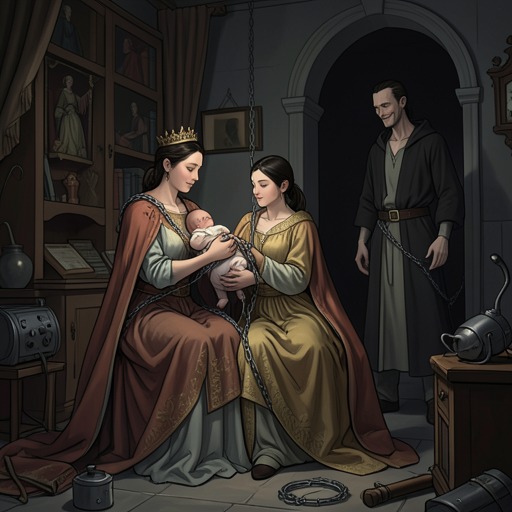
When the queen’s first child arrives, she is glad and has forgotten the promise. The wheel itself is no longer at the center of the scene, but the terms established through its three uses return with the little man, who comes into her room while she is playing with the baby and reminds her of the agreement. The chain of production has led beyond its apparent result: gold and queenship were not the end of the transactions, because the last payment was deferred until the queen had a child.
The queen begs to be released and offers all the wealth of the kingdom, but the little man refuses. At last her tears soften him, and he gives her three days to discover his name; if she succeeds, she may keep her child. This condition reverses the logic of the earlier scenes. The wheel made the little man’s labor effective and his price binding; the queen’s escape now depends not on making more gold or finding another object to exchange, but on obtaining knowledge that can defeat his claim.
Narrative and Thematic Significance
The wheel links three successive conversions, each with a different stake. First, straw becomes gold in exchange for the necklace; then another heap is transformed for the ring; finally, the largest task is completed in return for the future first child. The material result becomes increasingly valuable to the King, while the payment demanded of the daughter moves from possessions to a relationship and responsibility that she cannot treat as a mere ornament. The sequence exposes the unequal terms of exchange: the King captures the benefit of the gold, while the daughter bears both the immediate threat and the long-delayed obligation.
The wheel also gives the trials their recurring form. Each time, the daughter faces a fresh heap and a renewed danger; each time, the little man sits down to work and sings the same refrain as the straw disappears into gold. This repetition makes the magical solution seem dependable even as its price grows more severe. Its importance lies not in any independent power attributed to the object, but in how the tale uses the same tool and repeated action to connect royal greed, supernatural labor, the daughter’s changing status, and the eventual claim on her child.