
Rumplestiltskin
Overview
“Rumpelstiltskin” is a German folktale best known through the version collected and edited by Jacob and Wilhelm Grimm. It appeared in their collection Children’s and Household Tales (Kinder- und Hausmärchen), whose first volume was published in 1812. The Grimms were collectors and editors of traditional narratives, rather than the sole inventors of this tale. The story belongs to the fairy-tale tradition: it combines an impossible task, a supernatural helper, a dangerous bargain, and a final test in which knowledge becomes a means of escape.
A miller boasts to the king that his daughter can spin straw into gold. The king has the young woman brought to his castle, confines her in a room full of straw, and orders her to complete the task, threatening her if she fails. In despair, she is visited by a strange little man who offers to do the spinning in exchange for her necklace. The next night the king places her in a larger room and demands another supply of gold. The little man returns, this time taking her ring as payment. On the third night the king promises to marry her if she succeeds, but she has nothing left to give the visitor. She promises him her first child instead, and the straw is again transformed. After she becomes queen and gives birth, the little man comes to claim the child. He offers to release her from the bargain if she can discover his name within a set time. She sends a messenger to search, learns the name Rumpelstiltskin, and speaks it just in time. In the familiar Grimm version, the enraged little man departs, and the queen keeps her child.
Themes and storytelling
The plot traces a chain of boast, coercion, exchange, and attempted escape. The miller’s lie exposes his daughter to danger, while the king’s appetite for gold turns an impossible demand into a threat to her life. The girl’s predicament is not simply a contest between equal opponents: first her father’s claim and then the king’s authority deprive her of meaningful choice. The bargain with the little man brings another danger, one whose cost is postponed until the child’s birth. Against these forms of power, the heroine’s eventual resource is information. Discovering and uttering the little man’s name breaks his hold over her, making knowledge and attention central to the resolution. The story invites reflection on greed, the consequences of promises, vulnerability under unequal authority, and the ingenuity required to survive a trap.
Collection history and legacy
The Grimms’ work grew out of an early nineteenth-century interest in folk tradition, language, and the cultural past of the German-speaking lands. They gathered stories from oral tellers and other sources, then shaped and revised the material for publication. Children’s and Household Tales went through seven editions between 1812 and 1857, with changes across the successive versions; it is therefore better understood as a developing edited collection than as a transparent transcript of an unchanging oral original. Nor was the collection conceived simply as a modern children’s book. “Rumpelstiltskin” has endured because its memorable images and escalating bargains make its conflict easy to retell, while its ending leaves room for debate about coercion, responsibility, and the price of a promise. It remains one of the best-known Grimm tales and a lasting example of how the brothers’ collection helped carry European folktales into international literature and popular culture.
About the Author
Early life and education
Jacob Grimm and Wilhelm Grimm, known together as the Brothers Grimm, were German scholars, linguists, cultural researchers, and authors. Jacob was born in Hanau on January 4, 1785; Wilhelm was born there on February 24, 1786. They spent much of their childhood in Steinau. Their father, Philipp Wilhelm Grimm, worked in law and died in 1796, leaving the family in difficult circumstances. The brothers attended school in Kassel and later studied law at the University of Marburg. Their university years helped shape a shared interest in language, medieval literature, and German cultural history. Their close relationship and similar scholarly interests sustained a long partnership in research and publication.
Scholarship and major works
The Grimms’ achievements extended well beyond fairy tales. They collected and studied folk narratives, historical and literary materials, and evidence of language change. Their most widely known work is Children’s and Household Tales (Kinder- und Hausmärchen). Its first volume appeared in 1812 and its second in 1815. The brothers continued to revise and enlarge the collection; seven editions appeared between 1812 and 1857. The tales drew on oral traditions and other sources, but the published versions were shaped by the brothers’ editorial work. The collection should therefore be understood both as a record of traditional storytelling and as a literary work altered over time.
Jacob made major contributions to historical linguistics. His German Grammar appeared in 1819, and his German Mythology was published in 1835. He also worked on the extensive German Dictionary, a project that continued beyond the brothers’ lifetimes. Wilhelm played a particularly important role in editing and refining the literary form of the collected tales. Although their scholarly interests and strengths differed, they collaborated closely and published many works together. Their research connected language and literature with the study of cultural history, and their collecting helped make folk tradition a serious subject of scholarly attention.
Later life and legacy
Wilhelm married Dorothea Wild in 1825. Jacob never married, and the brothers remained closely connected in their personal and intellectual lives. Wilhelm died on December 16, 1859, and Jacob died on September 20, 1863. They are remembered as central figures in nineteenth-century German scholarship, as well as among the most influential collectors and editors of European folktales. Their collection includes stories familiar around the world, among them “Snow White,” “Cinderella,” “The Frog Prince,” “Hansel and Gretel,” and “Rumpelstiltskin.”
The brothers’ lasting reputation rests on more than the popularity of individual stories. Their sustained attention to oral narratives, language, and historical culture helped establish folklore and German philology as fields of lasting importance. The successive editions of Children’s and Household Tales show that collecting was an active editorial process rather than simple transcription. Translations and retellings carried the stories into many languages and generations of readers, giving local and regional traditions an international life. The Grimms thus remain influential both as scholars who helped preserve and study cultural materials and as the editors through whose work many of the world’s best-known fairy tales entered literary history.
StoryFlow
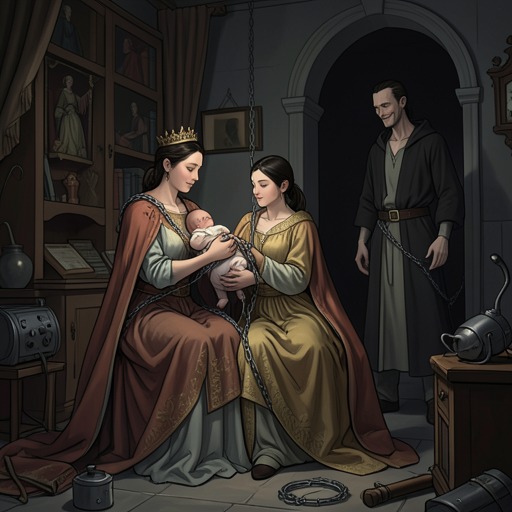
The Daughter’s Coercive Ordeal
This flow traces how The Miller’s Daughter and Queen is trapped by a boast, forced through escalating tests, and finally uses knowledge to protect her child.
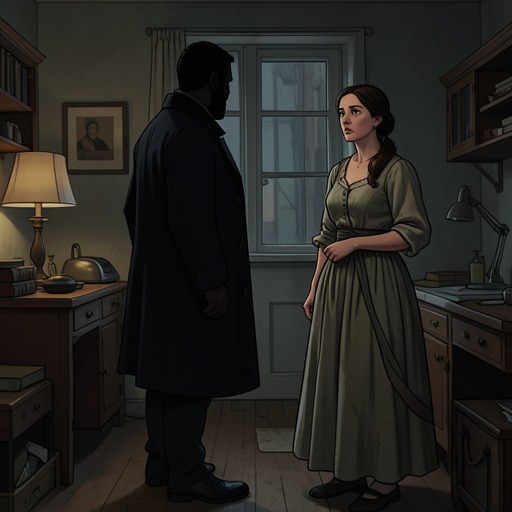
The Terms of the Dwarf’s Deal
This flow follows Rumpelstiltskin’s repeated assistance as it changes from paid labor into a claim on the queen’s child.
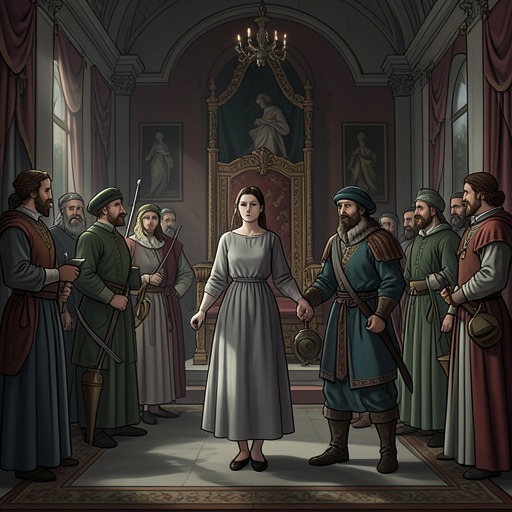
From Miller’s Daughter to Queen
This flow traces the transformation of The Miller’s Daughter and Queen from a powerless young woman into a mother able to act within the court.
