The queen’s bargain with Rumpelstiltskin
RumplestiltskinThe queen’s bargain with Rumpelstiltskin is the escalating supernatural debt at the heart of the miller’s daughter’s rise to queenship: after paying for two rounds of gold-making with a necklace and a ring, she promises her future first child for the third. The obligation appears to survive her change in status and the birth of the baby, but Rumpelstiltskin’s claim is made conditional on her discovering his name within three days. The threat is finally undone not by wealth or royal authority, but by the name she learns and speaks before her court.
From Payment to Personal Debt
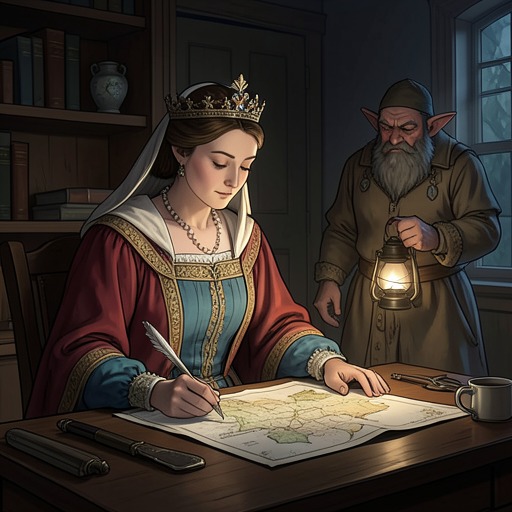
The bargain grows out of a series of coerced tasks. The miller’s daughter has been brought to the King after her father boasts that she can spin gold from straw. Locked in a chamber and told that the straw must be spun before morning if she values her life, she cannot fulfill the demand. Rumpelstiltskin offers to do the work in return for her necklace. The next time, the King leaves her with a larger heap; she gives Rumpelstiltskin her ring for his labor. These first exchanges have immediate, tangible prices: adornments pass from her to the helper, while the straw becomes gold.
For the third task, the King sets an even larger heap and promises that if she completes it, she will become his queen. When Rumpelstiltskin asks what she will give him, she has nothing left. He names a different price: her first little child, should she have one as queen. She agrees because she sees no other way to get the task done, and because she thinks the contingency may never come to pass. The bargain is therefore made under pressure, as the cost of surviving an impossible royal demand; unlike the necklace and ring, its promised payment is a future child, not an object she can surrender at once.
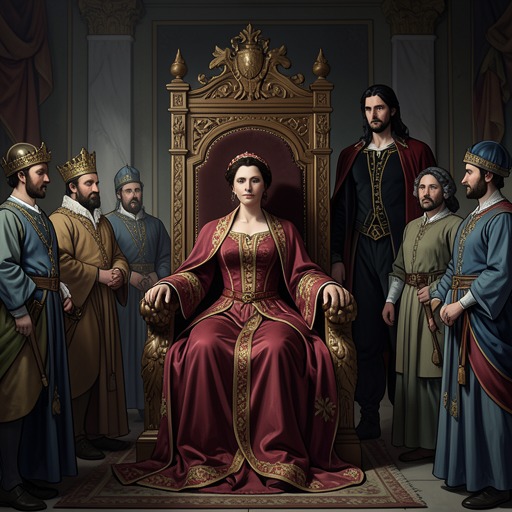
The wheel turns again, and Rumpelstiltskin spins the heap into gold. The King finds that he has obtained all he wanted and keeps his word, marrying the miller’s daughter, who becomes queen. That marriage makes the promised condition possible: the child she had treated as a distant possibility is now born into the life secured through the bargain. The helper’s service has brought about the queen’s new rank, but the price attached to that service reaches forward into her motherhood.
The Claim and the Reprieve
At the birth of her first child, the queen is glad and forgets both Rumpelstiltskin and what she said. The reprieve of ordinary happiness ends when he appears in her room as she sits playing with the baby and reminds her of the promise. The scene makes the bargain’s delayed cost immediate: the child, once only the condition of a desperate agreement, is now present and cherished. The queen grieves at her misfortune and offers all the wealth of the kingdom if Rumpelstiltskin will release her. He refuses that offer at first, making clear that the older pattern of exchange—valuable objects or riches for his work—cannot simply be repeated to cancel the child’s claim.
Her tears alter the terms without erasing the promise. Rumpelstiltskin gives her three days’ grace and sets a test: if she can tell him his name within that time, she may keep her child. The bargain has now become conditional in a new way. Its resolution will not depend on offering him something of greater material value; it depends on whether the queen can find and identify the person who has held the agreement over her. The name challenge creates a narrow route out of an obligation that had seemed settled by her earlier consent.
Three Days of Naming
The queen spends the first night turning over unusual names and sends messengers across the land to find more. On the first day she tries names she remembers, including Timothy, Ichabod, Benjamin, and Jeremiah, but Rumpelstiltskin rejects each one. On the second day she offers comical names such as Bandy-Legs, Hunchback, and Crook-Shanks, and again receives the same refusal. The repeated failures show how little ordinary guessing can do: a list, however long or strange, does not by itself reveal the particular name that matters.
The decisive information comes from a messenger returning on the third day. After two days of travel, the messenger reports having seen a little hut among the trees of the forest, on a high hill where the fox and the hare bid each other good night. Outside the hut, a dwarf dances on one leg around a fire and sings about making a feast, brewing and baking, then reveals that his lady does not dream his name is Rumpelstiltskin. The queen’s chance to keep her child depends on this accidental discovery beyond the palace: the name comes not from courtly speculation but from a messenger who witnesses Rumpelstiltskin disclose it himself.
The Courtroom Reversal
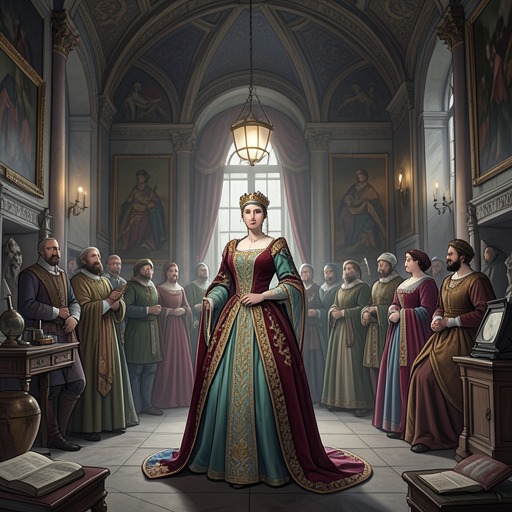
When Rumpelstiltskin arrives, the queen sits on her throne and gathers her court to enjoy the contest. The nurse stands beside her holding the baby, as though the child is ready to be surrendered. Rumpelstiltskin chuckles at the thought of taking the child home to his hut in the woods and asks the queen for his name. She begins with John and Tom, then offers Jemmy; he denies them all. These preliminary guesses repeat the structure of the first two days, but the court and the child are now present, so the naming test unfolds under the pressure of the threatened transfer.
The queen then asks whether his name can be Rumpelstiltskin. He cries that some witch must have told her, and in his rage drives his right foot so deep into the floor that he has to seize it with both hands to pull it free. His reaction marks the bargain’s reversal: the name that had been hidden from the queen is now spoken by her, and the claimant’s composure gives way. Rumpelstiltskin makes his way off; the nurse laughs, the baby crows, and the court jeers at him, wishing him a good morning and a merry feast. The child remains with the queen, while the would-be beneficiary of the promise leaves empty-handed.
The Bargain’s Meaning in the Tale
The sequence distinguishes the child bargain from the earlier payments without making the exchanges unrelated. Each task begins with the miller’s daughter trapped by the King’s demand; each time, Rumpelstiltskin supplies the ability to turn straw into gold. But the price rises from her necklace to her ring, then from possessions she can hand over to a first child whose birth lies in the future. The King’s expanding appetite for gold drives the repeated service, while the queen’s later plea shows that royal wealth cannot automatically discharge the debt once it concerns her baby.
The ending resolves the obligation through information rather than force or compensation. Rumpelstiltskin sets the name as a condition of release, and the queen succeeds because a messenger brings back the precise knowledge his challenge requires. His name becomes the means by which the queen prevents the transfer he expected; the bargain’s terms are not debated in a court or paid off with the kingdom’s riches. Instead, the tale turns a private promise into a public test, and the court witnesses the child’s safety and the claimant’s departure together.