Reciting Om and falling into deep sleep
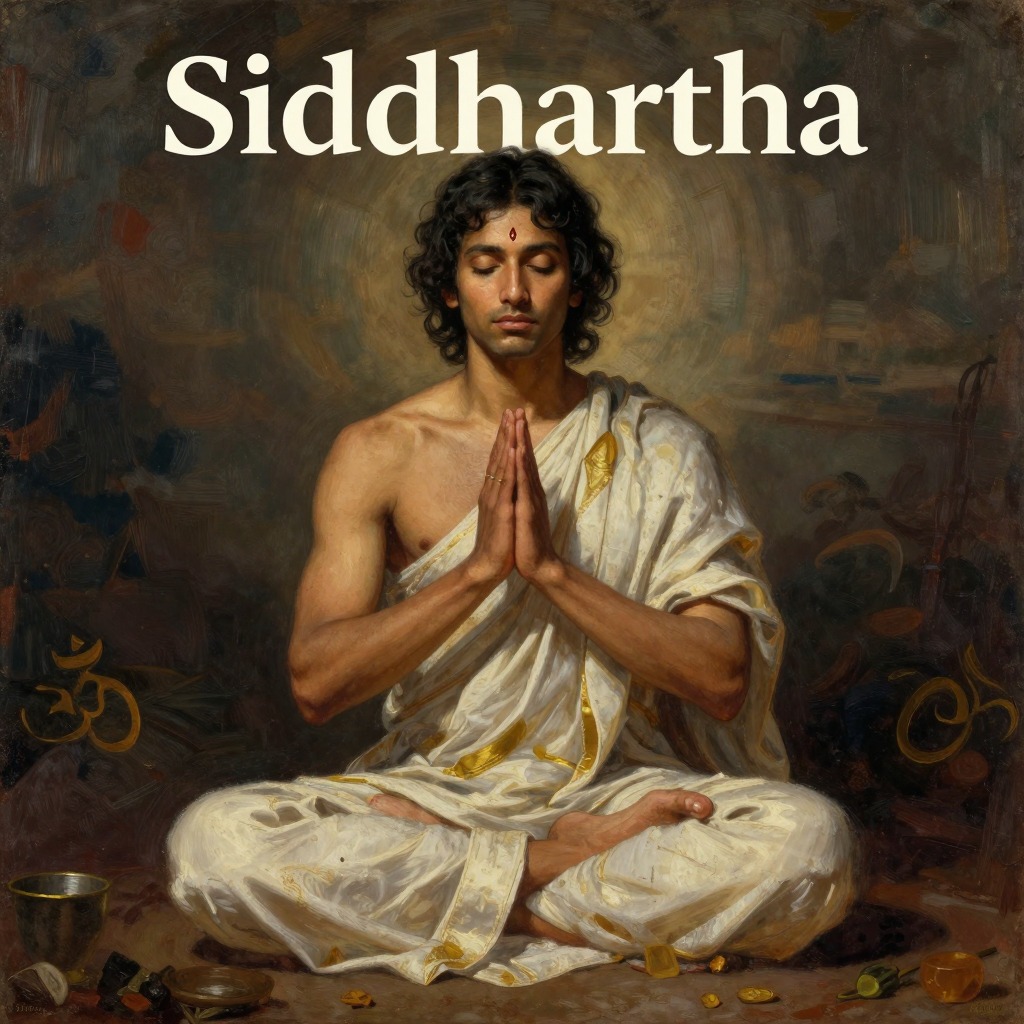
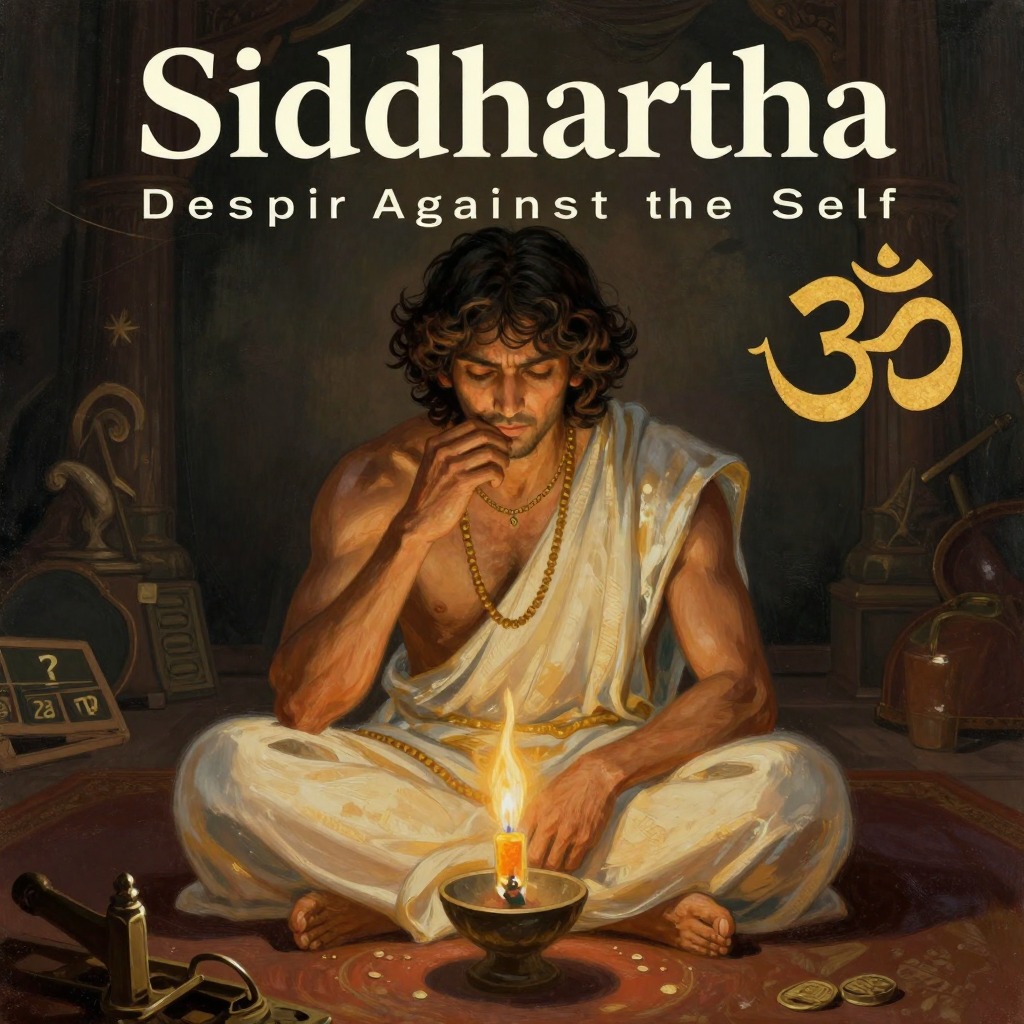
SiddharthaReciting Om and falling into deep sleep marks the decisive turning point in Siddhartha's spiritual journey, the moment when the sacred syllable Om breaks through his suicidal despair and he collapses into a profound, dreamless sleep that leaves him reborn as a new man. This event, occurring by the same river where a ferryman had once transported the young Samana, is the culmination of his long descent into worldly disgust and the threshold of his final awakening.
The Desperate Prelude
After years of wealth, gambling, and sensual excess, Siddhartha had reached the absolute nadir of his existence. Standing by the river, he was filled with a "frightening emptiness" and a "terrible emptiness in his soul," and he leaned against a coconut-tree, looking down into the green water with the wish to let go and drown. He saw his reflection and spit at it, preparing to let himself fall straight down, to finally drown. In that moment of utter hopelessness, when he was ready to annihilate himself, a sound stirred from the remote areas of his soul: the old word "Om," which roughly means "that what is perfect" or "the completion." The moment the sound of Om touched his ear, his dormant spirit suddenly woke up and realized the foolishness of his actions. He became aware of himself in his misery and error, and knew again about Brahman, the indestructibility of life, and all that is divine, which he had forgotten.
The Deep Sleep and Rebirth
Struck down by tiredness, Siddhartha collapsed by the foot of the coconut-tree, mumbling Om, and fell into a deep sleep without dreams—a sleep unlike any he had known for a long time. When he woke up after many hours, he felt as if ten years had passed. He heard the water quietly flowing, and his past life seemed to him like a very old, previous incarnation, an early pre-birth of his present self. He realized that his previous life had been abandoned by him, and that he had come to his senses with the holy word Om on his lips. The sleep itself seemed to have been a long meditative recitation of Om, a submergence and complete entering into the nameless, the perfected. He felt refreshed, renewed, rejuvenated—as if he had really died, drowned, and been reborn in a new body. This Siddhartha was transformed, strangely well rested, awake, joyful, and curious.
The New Relationship with the World
Emerging from this sleep, Siddhartha saw the world with new eyes. He saw the river, and it was no longer an instrument of death but a source of love and teaching. He decided to stay by this river, the same one he had crossed long ago on his way to the childlike people, and to seek out the friendly ferryman who had guided him then. The river, which he had intended to drown himself in, now seemed to have something special to tell him. He felt a deep love for the rushing water and decided not to leave it very soon. This moment of reciting Om and falling into deep sleep thus becomes the foundation for his entire subsequent life as a ferryman, a listener, and ultimately, a perfected being.
The River as Teacher
The river itself becomes Siddhartha's primary teacher after this event. He learns from it to listen, to pay close attention with a quiet heart, without passion, without a wish, without judgement. The ferryman Vasudeva tells him that the river has taught him to listen, and that Siddhartha will learn from it as well. The river knows everything, and everything can be learned from it. Siddhartha learns that the river is everywhere at once—at the source and at the mouth, at the waterfall, at the ferry, at the rapids, in the sea—and that there is only the present time for it, not the shadow of the past or the future. This realization that time is not real becomes central to his final understanding of the oneness of all life. The river's voice contains all voices—of a king, a warrior, a bull, a bird of the night, a woman giving birth, a sighing man, and a thousand others—and when one succeeds in hearing all of them at once, they speak the single word Om: the perfection.
The Stone and the Oneness
Siddhartha's new understanding, born from this sleep, extends to all things. He picks up a stone and explains that it is a stone, but also animal, god, and Buddha—not because it could turn into these things, but because it is already and always everything. He loves the stone for its veins and cavities, its yellow and gray, its hardness, the sound it makes when knocked, its dryness or wetness. Every stone prays the Om in its own way; each one is Brahman, but simultaneously and just as much a stone. This love for things, as opposed to words and teachings, becomes the hallmark of his final wisdom. He can love a stone, a tree, or a piece of bark, but he cannot love words. Teachings are no good for him because they have no hardness, no softness, no colors, no edges, no smell, no taste—they have nothing but words.
The Laughing River and the Final Lesson
Even after this profound rebirth, Siddhartha's wound—his love for his son—continues to burn. One day, driven by yearning, he prepares to go to the city to look for his son. But the river laughs at him, clearly and brightly. He sees his face reflected in the water and recognizes in it his father's face, the Brahman. He remembers how he had forced his father to let him go, how he had left and never come back. The river's laugh teaches him that everything comes back, that the same pain is suffered over and over again until it is solved. He returns to the hut, and in listening to the river with Vasudeva, he finally hears the thousand voices as one, the single word Om. In that hour, his wound blossoms, his suffering shines, and his self flows into the oneness. He stops fighting his fate, stops suffering, and his face flourishes with the cheerfulness of a knowledge that is no longer opposed by any will, that knows perfection, that is in agreement with the flow of events, full of sympathy for the pain and pleasure of others, devoted to the flow, belonging to the oneness.