Second Phase of the Invasion
StrikeThe Second Phase of the Invasion is the planned escalation from the Retros’ first assault into a scorched-earth campaign against the past. Its decisive significance is the change in both scale and urgency: the next offensive is expected to destroy cities before a later wave eliminates the surviving population, while the resistance has little capacity to replace what it has already lost. The threat makes control of the Bridge dome a race against a campaign that may begin before the people of the past can respond.
Causes and Background
The danger becomes clear when Kenny Sokol explains why SYLO cannot simply destroy the Bridge with a nuclear weapon. The invasion has already struck the arsenals of the past, leaving them unusable, and SYLO can no longer replace even conventional weapons because manufacturing capability has been lost. The problem is therefore not merely that SYLO lacks a decisive weapon: its ability to sustain a prolonged defense has also been damaged.
The Sounders’ account makes the imbalance stark. The Future United States Air Force can continue sending death machines through the Bridge, lose a hundred in an hour, and replace them with two hundred the following day. SYLO, by contrast, is expected to be worn down and defeated. In that projection, continuing the existing resistance does not prevent the invasion’s outcome; sealing the Bridge is presented as the remaining way to stop the campaign and give the past’s population a chance to rebuild.
The second phase differs from the first in its intended treatment of the physical world. Most structures in the past remained intact during the initial wave, but the coming campaign is described as one that will make entire cities disappear. The promised sequence is deliberate: cities first, then the population at large. This is not simply another battle for military advantage. It is a plan to destroy the conditions of life in the invaded era and then finish off those who remain.
The Deadline and the Fight for the Dome
The invasion timetable turns the strategic warning into an immediate operational problem. Kenny Sokol says the group must act before the next Air Force campaign begins, because the Bridge dome will then be crowded with personnel and equipment and the device cannot be brought inside. The choice is not between a convenient and an inconvenient moment: the Sounders regard it as their only opportunity to secure the dome and carry out their plan.
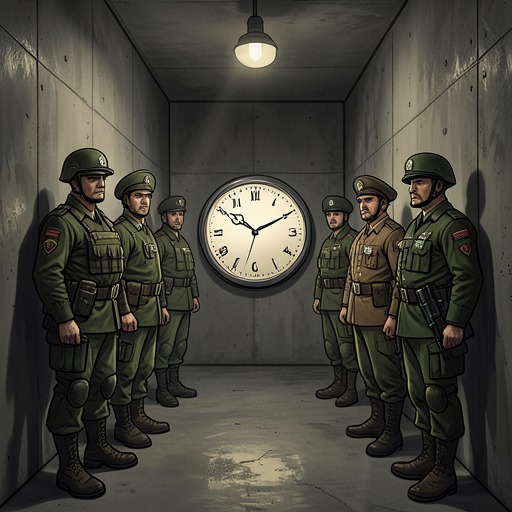
The countdown is organized around the bomb’s scheduled detonation at six o’clock. Captain Granger recognizes the danger after Tucker reports that a dozen large planes are lined up on the far side of the Bridge, waiting for nightfall. Tucker’s account identifies both the force poised to enter and the sequence of destruction the group fears. When Captain Granger asks whether the Retros are preparing a second wave, Tucker answers with confidence; Captain Granger then accepts that Tucker, Tori Sleeper, and Kent Berringer are telling the truth. The forecast has thus become credible to a military commander who had previously been in conflict with Tucker.
The Opening Attack at the Camp
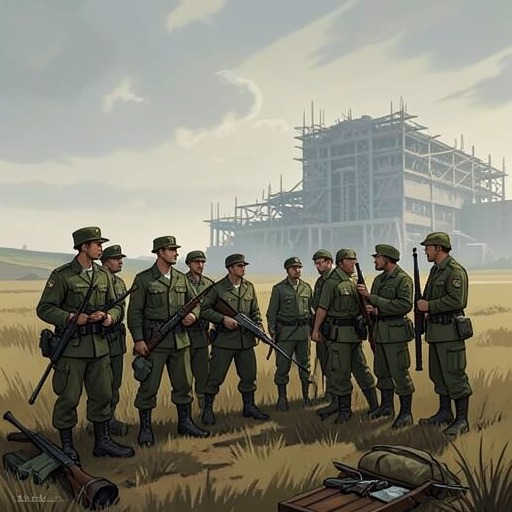
The fighting at the Retro camp shows the second phase beginning amid confusion rather than as a cleanly coordinated advance. The Retro soldiers have orders and have been attacked before, but this time their own planes appear to turn against them. The defenders are uncertain whether the aircraft overhead are theirs or hostile, and that hesitation costs them time.
Artillery gunners fire from the desert floor, but realize too late that they should have been shooting at their own planes. The drones then sweep down and direct their firepower at the big guns. The episode makes the danger of divided command concrete: the defenders’ uncertainty gives the attacking aircraft time to strike the very weapons that might have opposed them.
Inside the camp, most guards herd the prisoners into barracks and lock them inside, apparently responding to the prisoners’ escape into the desert during an earlier air raid. That choice leaves only a few dozen soldiers to go to the dome, where Kenny Sokol’s commandos meet them. The guards’ effort to contain the prisoners therefore weakens their response at the point the battle is being decided. The scene does not establish that the entire planned campaign has run its course; it depicts an opening engagement in which the defenders’ divided attention and mistaken response help the assault gain ground.
Consequences and Significance
The second phase gives the struggle over the Bridge dome its larger stakes. Securing the dome is necessary to the Sounders’ effort to stop the invasion, while delay risks placing the facility beyond their reach once the next campaign brings in more personnel and equipment. The six o’clock detonation deadline and the anticipated nightfall attack press two dangers into the same window: the resistance must act before the invasion expands and before its own plan reaches its fixed limit.
The episode also distinguishes the Sounders’ position from SYLO’s. The SYLO commanders do not know the Sounders exist, and the Sounders cannot simply command SYLO to intervene. They must persuade it to act even as the military balance favors the invading Air Force. Captain Granger’s change from skepticism to belief is one consequence of that effort: Tucker’s warning becomes actionable because the commander accepts the evidence about the planes and their intended targets.
By beginning the camp battle with aircraft that seem to betray their own side, the narrative gives the invasion’s overwhelming resources a practical, immediate form. The threat is not only the possibility of future destruction; it is already visible in the gunners’ hesitation, the prisoners locked away from the fight, and the small force that reaches the dome to face Kenny Sokol’s commandos. The Second Phase of the Invasion is therefore both a forecast of mass destruction and the pressure that makes the present battle decisive.