The 1950s
StrikeThe 1950s are the setting for the four time travelers’ first year of life after their return to the past, a fresh beginning shadowed by secrecy and the knowledge they must not share. The decade offers them a life far removed from the one they left: technology has regressed, social rules feel strange, and ordinary friendships are constrained by the future they know but are forbidden to reveal.
A Hidden Life at Area 51
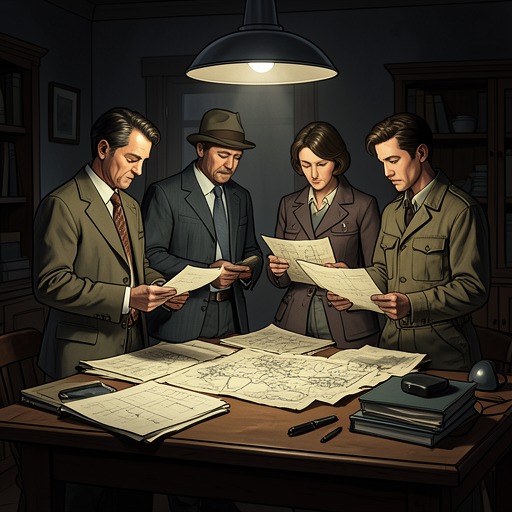
The group spent the next year at Area 51, a military base sixty miles from where the dome had been built. Their presence was concealed from almost everyone; only a small circle of senior military personnel, scientists, and government officials knew who they really were. Even within that circle, knowledge did not bring them closer to others. Most people who knew their identities avoided contact, either because they feared being influenced by information about the future or because the visitors frightened them.
Rumors nonetheless escaped the base. Headlines speculated that something unusual was happening at Area 51 and revived suspicions that aliens were being hidden there. The narrator distinguishes the group from the aliens those rumors imagined, while acknowledging the unsettling resemblance: the travelers were alien to their new world and were, in fact, being kept hidden. The account punctures the familiar Area 51 legend without resolving it into a simple joke; the supposed secret visitors are real, though not extraterrestrial. The narrator adds that no other aliens were encountered at the base.
The Everyday Shock of the Past
Life in the 1950s made technological regression an expected inconvenience. There were no computers or smartphones; theaters showed one movie at a time, and black-and-white television offered only four channels. Without an iPod, the narrator had to listen to music on records played on a turntable. The brief clarification that these objects are called records turns a personal adjustment into a small lesson in how the past names its ordinary things.
Other adjustments were less predictable and more intimate. Jeans were not acceptable school clothing, the narrator had to keep their hair short to avoid being called a girl if it fell over their ears, and cigarette smoking was commonplace. These details make the decade’s distance felt through clothing, appearance, and habit, not just through obsolete devices. The travelers have crossed into a different historical world, but adapting means negotiating its everyday expectations as well as its technology.
Knowledge They Cannot Share
Making friends was difficult because almost anything the narrator said risked exposing knowledge of what lay ahead. The travelers could not tell people that Neil Armstrong would become the first man on the moon, that the Beatles would soon transform popular music, or that terrorists would attack the World Trade Center. Even mentioning the World Trade Center’s future existence was out of bounds. Their silence was not merely a precaution against revealing their identities: it also denied them the ordinary intimacy that comes from sharing what one knows and expects.
That restriction carried a further burden. The group knew of horrific events they might have the power to prevent, but they had to let history unfold naturally. The decade therefore places them in a painful gap between knowledge and action: they can foresee catastrophe, yet are required to withhold both warning and intervention. Their inability to speak freely limits their connection with people around them and makes the past feel less like a second chance than a life governed by restraint.
The Beach and an Unwritten Future
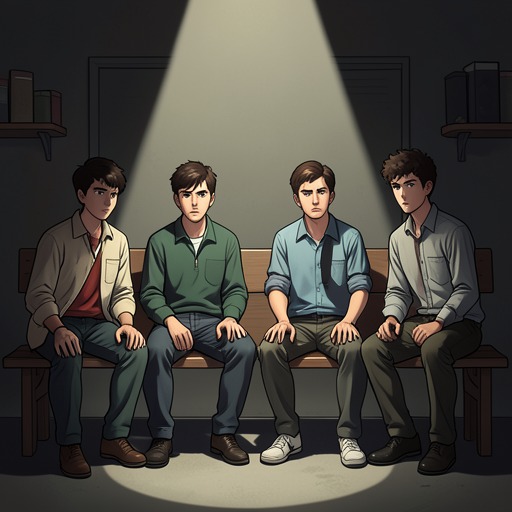
The four companions—Tori Sleeper, Kent Berringer, Olivia, and the narrator—were all fostered by kind people, but none felt complete without the others. They missed one another and relied on weekends together, usually at the beach, where they could speak without being overheard and be themselves. At first those meetings gave them room to revisit their true pasts and talk about the people they cared about; the repeated telling offered relief from the pressure of their separate lives.
Over time, the substance of those conversations changed. Once their stories had been told more than once, they spoke less about the past they shared and more about a future that had not yet been written. That movement—from guarded recollection toward an unknown future—gives their life in the 1950s its emerging direction. On a warm day at Manhattan Beach, sitting on a blanket beside the surf, the four reached another turning point. The account marks the moment as a change in their lives without yet disclosing what follows, leaving the decade poised between an imposed silence and a future they might shape.