Survival and Morality
StrikeSurvival and Morality names the story’s central ethical conflict: whether the desperate struggle to preserve one’s own people can justify sacrificing the lives and humanity of others. The question is made concrete when Tori Sleeper asks Tucker whether he would destroy the entire population of 2324 to stop the invasion. Tucker says yes; Tori refuses, even while insisting that she is prepared to fight. Their disagreement becomes a measure of how war changes them, and of what they fear losing beyond life itself.
A catastrophe with human causes
Olivia’s account of the future gives the moral dispute its material ground. Climate change has melted the polar ice caps and flooded low-lying regions: Lower Manhattan and much of Los Angeles are underwater, New Orleans is gone, and Pemberwick Island no longer exists. Population growth continues as livable land and farmland shrink. Cities crowd people into government-controlled housing, while buildings are made from recycled plastic and other waste. The crisis is not an abstract warning but a transformed world in which ordinary room to live has become scarce.
The exhaustion of fossil fuels brings another rupture. With natural gas, oil, and coal spent, the Middle East falls into anarchy, commerce collapses, and the world approaches a loss of power. Nuclear energy becomes the practical replacement, but it is adopted so quickly that precautions are neglected; radiation from billions of nuclear-powered devices is associated with a thousandfold increase in cancer cases. The apparent solution carries its own human cost. This history complicates the idea that survival is simply a matter of finding a way to keep the lights on: decisions made to avert immediate collapse also shape the dangers people inherit.
Olivia argues that leaders from the past glimpsed the coming disaster but failed to change its course. They did not secure safe alternative fuels or act effectively on climate change, while population growth continued and food supplies dwindled. Nearly seventy years of diplomacy between the governments of the two eras failed as well. In the future, people hold the past responsible for seeing the danger and doing too little. That accusation supplies the Retros’ justification for invasion, but it does not make the people they intend to replace responsible as individuals for the whole history that preceded them.
The button and the opposing answers
Tori’s challenge grows out of the group’s own conduct. She objects that they condemn the Retros for invading the past while accepting deaths when those deaths serve their purposes. The issue is not limited to an already doomed individual: she recalls the people killed when the group sabotaged a Retro fleet and acknowledges that she herself shot people. Her question turns accusation inward. If resistance condemns the enemy’s disregard for life, it must also examine the lives its own actions have taken.
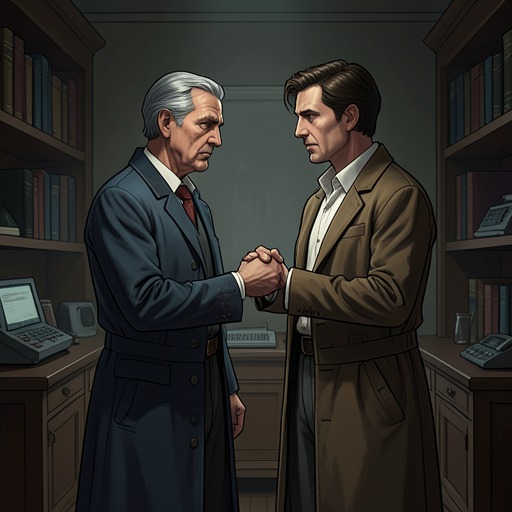
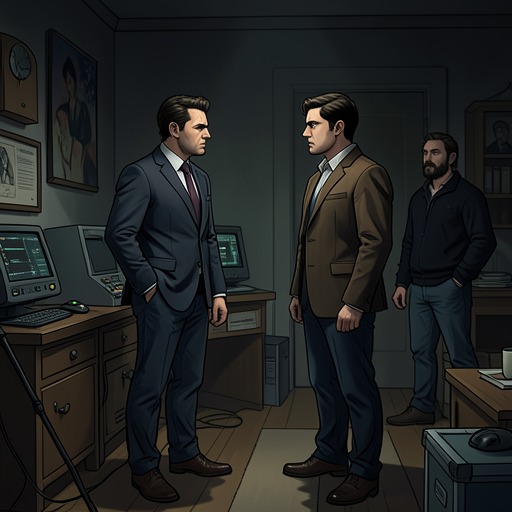
Tucker initially answers from the scale of the threatened populations. He distinguishes a few deaths from the deaths of billions and considers the conflict a war of self-defense. When Tori makes the hypothetical more exact—whether he would press a button that ended the invasion and saved his own time by wiping out everyone in 2324—his answer is yes. He sees the choice as survival against destruction and says that, under those conditions, he would choose survival. The answer is not presented as an easy victory in argument: the prospect of erasing a whole population leaves him frozen before he responds.
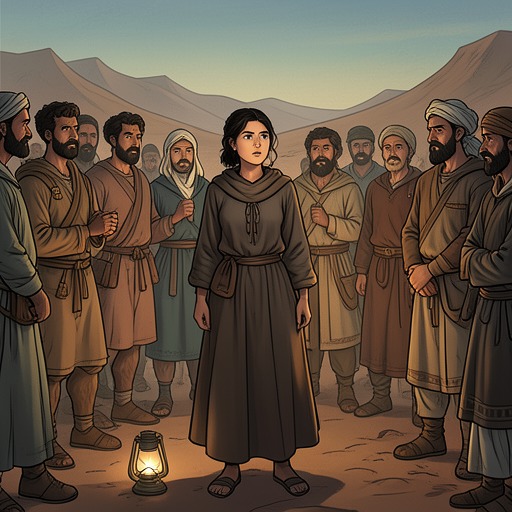
Tori’s answer rests on a different limit. She says that before the conflict she might have chosen the button, but experience has made her unwilling to become someone who strikes out like an animal when cornered. Her refusal is not pacifism. She is willing to fight back; what she will not surrender is her humanity. The distinction matters: for Tori, moral restraint does not mean accepting the invasion or abandoning the people she loves. It means refusing to treat the destruction of an entire population as an acceptable price of protection.
The exchange leaves the two positions unresolved. Tucker asks whether Tori would sacrifice herself and those she loves, while she insists that fighting and retaining a moral boundary can coexist. He wonders whether the basic drive to survive makes any act permissible and whether the Retros see the past’s failure to prevent catastrophe as an attack in its own right. The argument exposes the danger in both a simple condemnation of the future and an unconditional appeal to self-defense: the first can ignore inherited causes, while the second can make mass destruction seem necessary.
Blame, invasion, and the machinery of consent
Colonel Feit gives the conflict a political scale. He describes a future of seven countries—among them the United States, Newchin, Europa, Ambia, Brazilia, Australia, and the New Arctic—locked in a continuing struggle for space, water, energy, and life. He tells his captives to consider the hatred of people who look back at a society that saw disaster coming and did nothing. Tori challenges the implication that this history justifies mass murder; Feit replies that the past’s failure can be called just as heinous as the invasion now being carried out.
The colonization plan makes the moral stakes explicit. Kenny Sokol describes Colonel Feit as an officer he knows from the Academy and characterizes Major Bova as especially punitive toward native workers. He explains that the operation is not simply the conduct of two officers: it has been planned for years by the military and the United States government, with the goal of replacing the twenty-first-century population with people from the twenty-fourth century. Sokol says that some within the system want the plan to end, but they are a minority; public opinion supports the invasion, and merely refusing individual duties would not stop the larger apparatus. The Sounders arise from that failure of ordinary dissent. The account places responsibility both on the leaders and on the political machinery that allows the plan to proceed, without making the threatened population interchangeable with the institutions acting in its name.
War’s effect on Tucker
Tucker’s later thoughts show how the dilemma operates as more than a hypothetical. Walking through the future city with Tori Sleeper and Kent Berringer, he registers its filth, pollution, and burning rain. He can understand how desperation might have produced the invasion, and tries to make the future’s tactics seem justified. He recognizes, however, that this attempt is also a way of making sense of his own feelings, not simply a reasoned acquittal of the invaders. He admits that, if given the button, he would wipe out the future population to save his own time.
That readiness has a history in the group’s ordeal. Tucker recalls that he once feared the handgun Tori kept in the car; later, he could fire a Pulser at anyone he considered a threat without hesitation or guilt, because he believed his side was good and had not begun the war. Revenge had become one of his motives alongside discovering the truth and stopping the suffering. Scottie’s death deepens his sense that he has changed: he believes he has become numb to human loss and doubts that he can return to his former self. His willingness to do anything to survive and stop the Retros leaves him asking whether he has become like them.
Yet at a later moment, as the group considers what victory would mean, Tucker recognizes that defeating the enemy would not by itself ensure a better world. He wonders whether humanity could rebuild without repeating the mistakes that produced the future’s crisis. Instead of treating killing as an uncomplicated instrument of victory, he tells Tori that it has to stop somewhere, then runs toward Colonel Feit. The action does not erase his earlier willingness to choose annihilation or his desire for revenge. It marks a change in what he is prepared to do next: even amid combat, stopping the cycle becomes part of the objective.
After victory: justice and responsibility
The return to 1952 changes what accountability can mean. Tucker tells Army interrogators that Colonel Feit had a role in the genocide preceding the invasion, but recognizes that the atrocities he describes belong to a future that has not happened in this timeline. When Kent hopes Feit will be executed, Tucker points out that there is no evidence to prove crimes that, in this world, never occurred. Years later, Tucker remains unsure what became of Feit; he thinks it more likely that Feit was released and forgotten than imprisoned for an unprovable future crime.
The restraint does not settle the larger question of justice. It distinguishes responsibility for actions that can be established in the present from punishment for a future history that has been prevented. The people of the future still had real reasons to fear ecological and resource collapse, but those reasons cannot make the planned replacement of another population morally harmless. Nor does defeating the invasion automatically guarantee that the returned world will avoid the same failures. At Manhattan Beach, Tori warns that history is repeating itself: only a handful of people know what may be coming, while the wider society appears not to act. The ethical challenge therefore survives the war. Protecting life means more than winning the immediate fight; it also means resisting the habits of denial, vengeance, and collective blame that could make another catastrophe seem inevitable.