The exile of four time travelers
StrikeThe exile of four time travelers is the consequence of a new timeline in which there is no Bridge back to the future: Tucker, Tori Sleeper, Kent Berringer, and Olivia cannot return to their former lives, families, or homes. Their displacement is not simply a change of era. It leaves them without legal identities or a place in the history they remember, so their survival in 1952 depends on accepting lives constructed for them by the United States Army.
Recognition of Exile
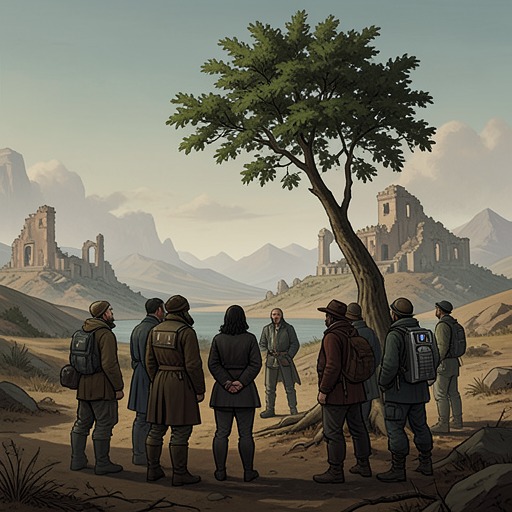
The four confront the permanence of their situation while considering the three realities that now exist: the twenty-fourth century in which Olivia was born, the early twenty-first century from which Tucker, Tori Sleeper, and Kent Berringer came, and the new timeline that began on January 24, 1952, without a Bridge to the future. That last reality is where they are now. Its separation from the future means that the Retros will not invade this timeline, but the protection comes with a cost: there is no route back to the worlds they knew.
Kent Berringer voices the question none of them can avoid: how can they return to their own time, and their own reality? Tucker answers that they cannot. Tori Sleeper gives the practical consequence its emotional weight: the other life will continue without them, and the four must make a new life here. Kent begins to object, but cannot find a reason that changes the answer. Their shared silence marks the point at which possibility gives way to acceptance.
The Loss of Home and Family
The loss is specific, not abstract. They will never see their families again, and they cannot return to Pemberwick Island—not to the Pemberwick Island they remember. Kent Berringer resists the prospect of living in the past; Olivia responds with equal bluntness. Their different reactions register the same dislocation: survival in a safer timeline does not make that timeline feel like home.
For Tucker, separation from his parents is especially painful because their history makes the loss complicated. In another dimension, they are mourning their son. They had joined SYLO and moved to Pemberwick Island to protect him; though they could not know it, the move did protect him from the first Retro attack. Tucker hopes they do not blame themselves for losing him and believes they would be proud that the student who earned solid B-minus grades and failed to apply himself helped save the world. That belief offers consolation, not reunion. He misses his parents and expects always to do so.
The four also face the impossibility of contacting their grandparents. They do not know what they could tell them, and any contact would expose the fact that their remembered histories do not fit the new timeline. Their severance is therefore both intimate and structural: the people they love remain real to them, but they have no safe, truthful way to re-enter those families' lives.
Manufactured Identities and Resettlement
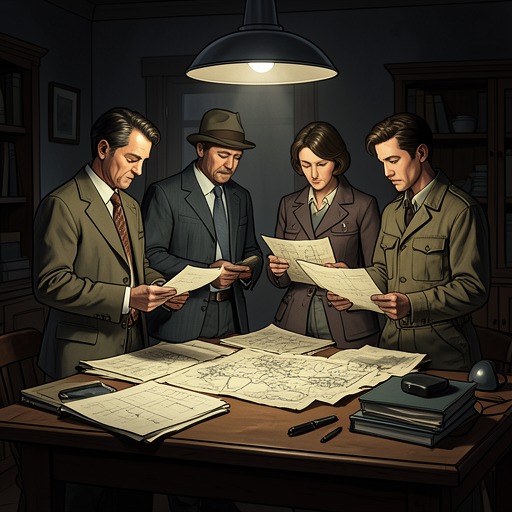
The United States Army must decide what to do with four people who have no families in this timeline, no birth certificates, and no verifiable histories. The possibility that they might be kept hidden in the desert troubles Tucker, but the Army instead arranges new identities and fabricated records. Each history describes its bearer as abandoned at birth and raised in foster homes. The invention supplies a plausible past where none exists on paper, allowing the four to enter ordinary life without disclosing their origins.
The Army finds families willing to take them in. The four are placed in different homes, but all in the Los Angeles area, close enough that they can continue seeing one another. The arrangement cannot restore the family they lost, yet it preserves the bond they still possess: Tucker regards the others as his true family, and none of them feels complete unless they are together. Their new identities separate them administratively while their shared resettlement keeps them connected in practice.
Before they leave the base, the unit commander advises them to forget both the past and the future and live as normally as possible. Their records will be sealed, their true identities will remain unknown, and the Army will check on them from time to time. The plan offers protection through concealment, but normality is something they are asked to perform while carrying a history they cannot share.
Life in the New Timeline
Living in the 1950s makes the difference between their former lives and their new circumstances tangible. There are no computers or smartphones; theaters show one movie at a time, and black-and-white television offers only four channels. Without his iPod, Tucker listens to music on records played on a turntable. These details give the exile a daily texture: the four are not only cut off from familiar people and places, but also from the technologies and habits that had made their own era feel ordinary.
They try to warn people about the future's exhaustion of fossil fuels, pollution, and overpopulation. Their listeners take note without seeming especially worried. The episode echoes the difficulty people from the four's own time had faced when warning the world about coming disaster. Their knowledge survives the journey, but its usefulness is uncertain; the new timeline gives them the chance to live, not the power to make others heed every warning.
Secrecy and the Meaning of Their Exile
Their settlement is accompanied by the deliberate burial of what happened. The dome is dismantled, no above-ground atomic test will take place, and Project Alcatraz is abandoned. The secret of the other dimension and time is expected to die with the people the four met there—and eventually with the four themselves. Tucker asks what happened to Colonel Feit, but receives no clear answer; he is told that Feit has been taken care of or that it is best to forget him, leaving his fate unresolved.
The four's exile thus combines rescue with erasure. The new timeline is spared invasion, and the travelers are given homes and identities, but neither outcome restores their original relationships or history. Their past cannot be publicly acknowledged, while their future is no longer theirs to return to. What remains is a small community formed by proximity and shared loss: different households, one region, and the continuing presence of one another.