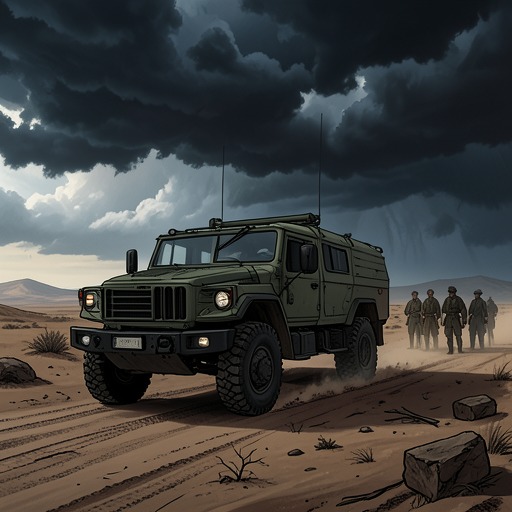
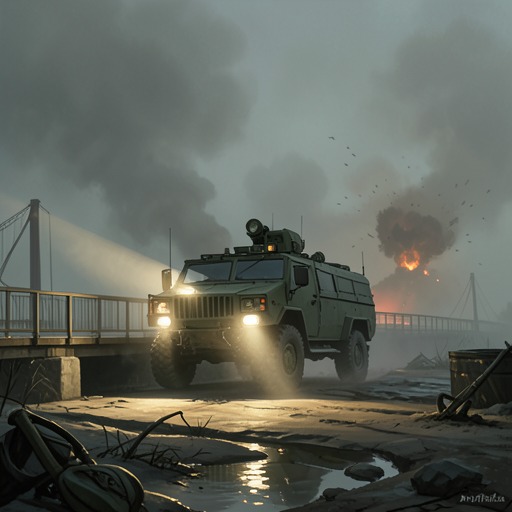
The resource-depleted future of the 24th century
StrikeThe resource-depleted future of the 24th century is the devastated world that gives the novel’s time-crossing war its history and its moral stakes. Climate change, overpopulation, and the exhaustion of fossil fuels have made ordinary life precarious; nuclear power keeps the lights on but brings its own immense cost. The future’s leaders and citizens respond to this inheritance in opposing ways: some try to warn the past, while others turn their desperation into a plan to conquer it.
A Planet Reshaped by Environmental Change
Olivia presents the future first through a globe whose landmasses remain recognizable but whose coastlines and inhabited spaces have been transformed. Melting polar ice has flooded low-lying regions. Lower Manhattan is underwater, much of Los Angeles is submerged, New Orleans and a dozen other major cities are gone, and Pemberwick Island no longer exists. As livable land and farmland shrink, the population continues to grow, tightening the pressure between the number of people and the resources available to sustain them.
That pressure reaches into everyday life. Olivia describes cities as overcrowded places where people live in government-controlled housing rather than private homes. The buildings that appear beautiful to visitors are made from recycled plastic and other waste. The contrast between their appearance and their discarded material underlines how thoroughly scarcity has entered the built environment: even the structures of daily life are assembled from what the old economy threw away.
The damage is cumulative rather than confined to a single disaster. Climate change and pollution become parts of an altered world whose consequences include lost cities, restricted living space, and diminished food-producing land. When Tucker Pierce and the others later warn people in the past about pollution, fossil-fuel exhaustion, and overpopulation, they find that listeners take note without seeming greatly alarmed. Their experience echoes the earlier failure to make gradual danger politically urgent.
Energy, Scarcity, and a World at War
The depletion of natural gas, oil, and coal turns environmental pressure into economic and political crisis. Olivia recounts that the Middle East descends into anarchy as oil wealth disappears, while the stock market crumbles because familiar rules of commerce no longer apply. The world comes close to losing its power supply. Private industry had not developed practical alternatives because they were too expensive, leaving nuclear power as the only realistic source available at the necessary scale.
Nuclear energy becomes the foundation of the future’s infrastructure. Planes, cars, weapons, and computers all run on it; it is practical and seemingly inexhaustible. But development happens so quickly that precautions are neglected. Radiation from billions of nuclear-powered devices is associated with a thousandfold increase in cancer cases. The energy system that prevents one immediate catastrophe therefore contributes to another enduring public-health crisis.
Feit’s account of the political map shows scarcity expressed as continual interstate conflict. He describes seven countries: the United States, extending across North America to the old Arctic; Newchin across what had been Asia; Europa, formed from a division of Russia; Ambia, occupying Africa; Brazilia, controlling South America and what had been Central America; Australia; and the New Arctic. Brazilia has been lost in a war. The apparent neatness of seven governments conceals constant fighting over space, water, energy, and life. Feit distinguishes this struggle from conventional competition for wealth, prestige, or power: survival is its stated object, though that framing does not make mass killing morally acceptable.
Failed Warnings and the Invasion of the Past
The future’s catastrophe is also presented as the consequence of decisions made before it arrived. Leaders from the past had glimpsed what was coming, but efforts to alter its course failed. They did not secure the development of safe alternative fuels, in part because business saw no profit in them, and they could not persuade enough people that climate change was real. Consumption and coal burning continued while the population grew and the food supply dwindled. The central indictment is not that disaster was invisible, but that recognition did not produce sufficient change.
Olivia places that failure at the heart of the war. For nearly seventy years, governments from the two eras pursued diplomacy in an attempt to avert the future, but the negotiations failed. The future government and military then devised a plan to save their people and planet by invading the past. Its public campaign had prepared people to accept that decision: the Bridge and the failed negotiations were revealed, while hostility toward the past was cultivated. Olivia explains that changing the past was no longer expected to help the billions already diseased and starving in her era. With no colonies on other planets, the past became the imagined territory into which the future could expand.
The stated case for conquest combines real collective suffering with a political choice about who should bear its costs. Feit asks his listeners to consider the hatred directed toward people of the past by a future society that believes it was abandoned to disaster. Tori Sleeper answers that such resentment cannot justify mass murder. The future’s history makes the grievance intelligible without erasing the distinction between being harmed by earlier failures and choosing to inflict violence on others.
The Future as Warning in the New Timeline
After returning to the past, Tucker Pierce, Tori Sleeper, Kent Berringer, and Olivia Kinsey share what they can about the future’s exhaustion of resources, pollution, and overpopulation. They withhold specific future events, wary of granting a few people knowledge that could alter the course of history, but they do speak about the broad conditions that produced the catastrophe. Their warning receives the same limited response that earlier warnings had met: people take note, yet do not appear sufficiently concerned.
At Manhattan Beach, Tori recognizes that history is repeating itself. She sees a new world on a path toward the disaster that created Olivia’s future, with only a handful of people aware of the danger and no assurance that those in authority believe them. Kent initially argues that the future’s people deserve whatever follows from their own history; Tori counters that they became killers through the conditions they suffered, without claiming that their actions were justified. Their disagreement turns the future into more than a record of ruin: it tests whether knowledge of how violence developed can break its recurrence.
Tucker Pierce rejects simply waiting for events to unfold. Although Olivia warns that intervention could produce something worse, he recalls the lives risked to save the world once and argues that the devastation of 2324 makes inaction intolerable. The group’s decision to try to change people, rather than publicly disclose everything they know, gives the future a continuing consequence in the past. Its significance lies in the chain linking environmental neglect to scarcity, scarcity to political violence, and remembered violence to a choice about whether the same chain must be repeated.