Dogs
TemptationDogs are among the most persistent presences in Colton Davidson’s life: animals he finds hungry or abandoned, residents of a no-kill rescue, and companions whose needs repeatedly draw him into care. Their stories show both the practical demands of rescue and the way tending to vulnerable animals becomes a source of connection and direction for Colton.
Strays and the impulse to rescue
Colton’s concern for dogs is not an occasional response to a single animal. He repeatedly takes strays into places where they are not supposed to be, including the basement at Ted House and, once, the dry pantry at Masala. The pattern is familiar enough that it leads others to consider how he might be able to help animals more constructively, but it also puts him at odds with the people responsible for those spaces and their work.
One late arrival at Masala illustrates the practical pressures behind his choices. Colton found two starving dogs in an alley and came to his shift thirty minutes late after making them a bed in a storage closet. Will discovered them almost immediately. The episode turns a compassionate response into a workplace problem, while also making clear that the dogs’ hunger, rather than an abstract wish to break rules, prompted Colton’s action.
The story also places this habit beside Colton’s difficult childhood. He recalls envying classmates’ elaborate birthday parties, with games, party favors, special food, a jumping castle, and performers dressed as Disney characters. Against that remembered lack of celebration, his attention to animals in need forms part of a wider pattern of noticing what others lack. The text does not equate dogs with the childhood care Colton missed; instead, it shows how his own history accompanies his impulse to provide care.
Shelter work and its limits
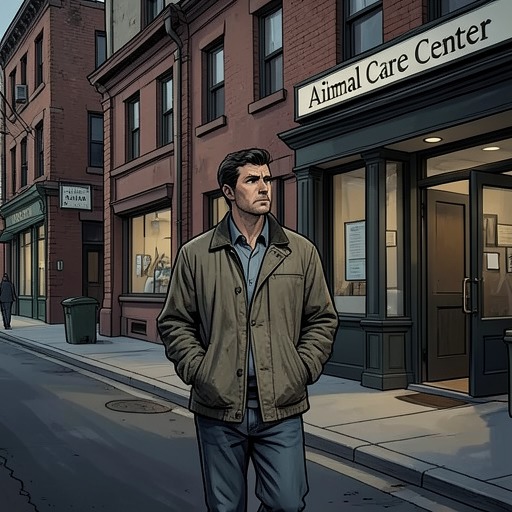
At first, working for Elliot’s practice is proposed as a way to channel Colton’s habit of rescuing strays. Colton and Elliot develop a difficult working relationship: Elliot is abrasive and has little patience with Colton’s trouble focusing, and Colton is eventually let go. Their conflict does not end Colton’s connection to the animals or to the shelter. Elliot still lets him visit when he is feeling low, and the two can spend time with the dogs and cats there.
The rescue operates by caring for animals until foster families can take them in and they can be adopted. Its work makes the dogs’ welfare more than a measure of Colton’s emotional needs: the animals have concrete requirements for food, safe shelter, and suitable care. When two hungry dogs turn up in the alley, Will responds by feeding them chicken and rice and offering support to the foster families so the dogs will not go hungry or be neglected or unloved. Rescue here depends on a network of people and resources, not only on an individual’s willingness to intervene.
Colton’s connections to the dogs continue across different settings. At Elliot’s shelter, he hears barking and recognizes that some of the dogs were ones he had previously brought into the basement at Ted House. On a later visit, he explains the history of those animals and the rescue’s foster-home system to Marcel, including that Elliot was the person he called after a dog found him. The shelter thus links Colton’s impulsive attempts at rescue to a more organized form of ongoing care.
Particular dogs and particular needs
The dogs are not interchangeable occasions for Colton to show kindness. At the shelter, he points out a large dog who is part Husky and talks about Apollo, whom he sometimes cares for and identifies as Wyatt’s guide dog. Apollo is described as mostly well behaved, and his role illustrates that dogs may have distinct work and relationships as well as being animals in need of rescue.
Colton spends much of his time with Gomez, a dog with chewing problems and extreme anxiety whom people do not want to adopt. Colton leans over the fence to watch him at the back of the shelter and thinks Elliot may adopt him. That possibility matters because Gomez’s difficulties make him less readily chosen, while Colton’s attention is sustained by precisely the fact that other people turn away. Later, when Colton opens a run, the dogs crowd around him, and Gomez works his way past them to reach Colton’s arms. The scene shows an established bond through the dog’s individual approach, rather than merely treating the group as a welcoming backdrop.
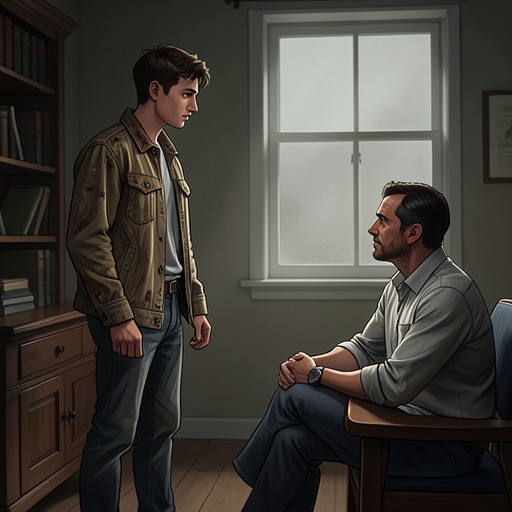
Colton’s care also extends to animals he has not yet met. He mentions new dogs at the shelter and asks Marcel whether he can see the large part-Husky dog. Such moments show how he shares his attention to individual animals with another person, including Marcel, whose visual impairment shapes how he encounters the shelter. The dogs’ presence gives the two men something concrete to discuss and experience together, while Colton remains the one who knows their histories and temperaments.
Care, belonging, and persistence
The dogs also appear at points when Colton is unsettled or ashamed. After a dog presses its wet nose against him, he looks down to find a small, shaggy lap dog at his heel. The animal’s arrival is an immediate interruption to his distress, but the relationship is not reduced to comfort: throughout the story, Colton responds to dogs as vulnerable beings who need human care, and his attachment involves practical attention as well as affection.
When Colton lists what he considers disadvantages in himself—his energy, nervousness, age, and café job—he also identifies his love of stray dogs as part of who he is. Marcel answers that he wants him as he is, specifically including that love. Dogs therefore become part of how Colton is recognized in an intimate relationship: not a problem to be corrected, but a defining and accepted element of his everyday character.
That commitment persists even when it creates conflict at home. Near the end, Colton returns with a large cage partly covered with towels and a little mutt named Mikey at Marcel’s feet. Marcel’s visual impairment does not prevent him from noticing the cage, and Colton’s sheepish manner makes clear that he knows his rescue has been discovered. He pleads for the female dog, insisting that no one wants her and that he cannot leave her to rot. The episode brings the recurring pattern into the domestic space: Colton’s instinct to take in an unwanted animal remains active, while the shared home makes its practical consequences visible to both partners.
Across the novel, dogs connect acts of rescue to the longer work of fostering, feeding, and finding animals homes. Their needs sometimes disrupt Colton’s employment or household arrangements, yet the narrative does not present care as a passing quirk. It is a continuing practice through which Colton forms relationships, returns to meaningful work even after a job ends, and expresses a sense of responsibility to beings others may overlook.