early in the story, before the main narrative begins
Mary Antin's Birth in Polotzk
[Mary Antin](entity:character-recall-character-mary-antin-31e6f047acf8) is born in [Polotzk](entity:location-recall-location-polotzk-848b06061245), within the [Pale of Settlement](entity:location-recall-location-pale-of-settlement-c0b17b761d96), to [Pinchus](entity:character-recall-character-pinchus-69ea3fd49e10) and [Hannah Hayye](entity:character-recall-character-hannah-hayye-14fe692009a2). Her birth is the culmination of a long lineage of Jewish ancestry, and she is immediately immersed in the religious and cultural traditions of her people. Her early life is shaped by the constraints of the Russian Empire, which restricts Jews to the Pale and subjects them to systemic persecution.
early childhood, before the family's emigration
Childhood in the Pale
[Mary Antin](entity:character-recall-character-mary-antin-31e6f047acf8) grows up in [Polotzk](entity:location-recall-location-polotzk-848b06061245), experiencing the dual worlds of Jewish piety and Gentile hostility. She learns about the pogroms, the blood libel, and the constant fear of persecution. Her family is relatively prosperous, and she enjoys a comfortable childhood, but the shadow of anti-Semitism is ever-present, shaping her worldview and instilling in her a deep sense of Jewish identity.
during childhood in Polotzk, before the family's emigration
The Sabbath Handkerchief Experiment
[Mary Antin](entity:character-recall-character-mary-antin-31e6f047acf8), a curious and questioning child, decides to test her faith by carrying a handkerchief outside on the [Sabbath](entity:rule-recall-rule-sabbath-69611e9498df), a forbidden act. She expects divine punishment but experiences none, leading her to doubt the literal truth of her religious teachings. This experiment marks the beginning of her intellectual independence and her questioning of orthodox Judaism.
during childhood in Polotzk, before the family's emigration
The Father's Sabbath Lamp Incident
[Mary Antin](entity:character-recall-character-mary-antin-31e6f047acf8) witnesses her father, [Pinchus](entity:character-recall-character-pinchus-69ea3fd49e10), secretly turning down the [Sabbath lamp](entity:object-recall-object-sabbath-lamp-706be46fa100), a violation of Jewish law. She is shocked but also understands that her father holds private doubts about religious observance. This incident deepens her own skepticism and creates a bond of unspoken understanding between them, as she realizes that even the most pious can harbor heretical thoughts.
during childhood in Polotzk, while studying with Reb' Lebe
Questioning Reb' Lebe about God
[Mary Antin](entity:character-recall-character-mary-antin-31e6f047acf8), studying Hebrew with her teacher [Reb' Lebe](entity:character-recall-character-reb-lebe-a0e80745b9fd), asks profound questions about the nature of God and creation. Reb' Lebe is unable to answer her, revealing the limitations of traditional Jewish education. This experience fuels her desire for a broader, more secular education and contributes to her growing intellectual restlessness.
during childhood in Polotzk, while studying with Isaiah the Scribe
The Secret Russian Primer Study
[Mary Antin](entity:character-recall-character-mary-antin-31e6f047acf8), eager to learn Russian, secretly studies a primer in a dusty storeroom, despite being told she is too delicate for such study. She masters the alphabet and basic words, surprising her family with her accomplishment. This act of defiance demonstrates her determination to learn and her willingness to break rules to achieve her goals.
during Mary Antin's childhood, after her father's return from travels
The Family's Financial Decline
A series of illnesses and business failures strikes the Antin family, reducing them from prosperity to poverty. [Pinchus](entity:character-recall-character-pinchus-69ea3fd49e10) and [Hannah Hayye](entity:character-recall-character-hannah-hayye-14fe692009a2) both fall ill, and the family business collapses. This period of hardship forces the family to rely on charity and marks a turning point in their fortunes, ultimately leading to Pinchus's decision to emigrate.
when Mary Antin is about ten years old
Pinchus Antin's Emigration to America
[Pinchus](entity:character-recall-character-pinchus-69ea3fd49e10) Antin, facing poverty and limited opportunities in [Russia](entity:location-recall-location-russia-8ee8be401081), decides to emigrate to [America](entity:location-recall-location-america-c751899c385c). He travels with borrowed money and the assistance of an emigrant aid society, leaving his family behind in [Polotzk](entity:location-recall-location-polotzk-848b06061245). His departure is a momentous event, filled with both hope and sorrow, and it sets the stage for the family's eventual reunion in the New World.
shortly after Pinchus Antin's departure for America
The Father's Pre-Sailing Letter
[Mary Antin](entity:character-recall-character-mary-antin-31e6f047acf8), recovering from measles, receives a letter from her father written just before he boards the ship. The letter is filled with excitement and a sense of triumph, which Mary interprets as a vision of a better life in [America](entity:location-recall-location-america-c751899c385c). This letter ignites her own dreams of America and becomes a symbol of hope for the family.
during the three years of Pinchus Antin's absence
The Family's Hardship in Polotzk
While [Pinchus](entity:character-recall-character-pinchus-69ea3fd49e10) is in [America](entity:location-recall-location-america-c751899c385c), the Antin family struggles to survive in [Polotzk](entity:location-recall-location-polotzk-848b06061245). [Hannah Hayye](entity:character-recall-character-hannah-hayye-14fe692009a2) peddles tea, [Fetchke](entity:character-recall-character-fetchke-19159be7aea8) works as a dressmaker's apprentice, and Mary attempts to learn millinery but fails. The family lives in poverty, relying on the charity of relatives and neighbors. This period of hardship strengthens the family's resolve to join Pinchus in America.
during the period of Pinchus Antin's absence, when Mary is about twelve or thirteen
Mary Antin's Visit to Vitebsk
[Mary Antin](entity:character-recall-character-mary-antin-31e6f047acf8) spends six months in [Vitebsk](entity:location-recall-location-vitebsk-ddf1f887b756) with her Uncle [Solomon](entity:character-recall-character-solomon-a9e9ad34817a)'s family. She enjoys a more prosperous and stimulating life, reading secular literature and learning to make lace. This visit broadens her horizons and exposes her to a world beyond [Polotzk](entity:location-recall-location-polotzk-848b06061245), but she returns to find her family in even worse circumstances.
in the spring, after Pinchus Antin has been in America for three years
The Family Emigration to America
The Antin family receives their steamer ticket and prepares to emigrate to [America](entity:location-recall-location-america-c751899c385c). The news spreads throughout [Polotzk](entity:location-recall-location-polotzk-848b06061245), and the family is besieged by well-wishers and advice-givers. After a tearful farewell, they travel by train through [Russia](entity:location-recall-location-russia-8ee8be401081) and [Germany](entity:location-recall-location-germany-2e3723c2f347), facing bureaucratic hurdles and quarantine, before finally boarding a ship for America.
during the journey to America, in Hamburg
The Quarantine in Hamburg
The Antin family, along with other emigrants, is held in quarantine in [Hamburg](entity:location-recall-location-hamburg-83eba4856d4b) for two weeks. They are subjected to humiliating inspections and disinfection procedures, and they fear they are being robbed or imprisoned. This experience is traumatic but also a testament to their resilience and determination to reach [America](entity:location-recall-location-america-c751899c385c).
on a May morning, six weeks after leaving Polotzk
Arrival in Boston
The Antin family arrives in [Boston](entity:location-recall-location-boston-aded649f4602), where they are reunited with [Pinchus](entity:character-recall-character-pinchus-69ea3fd49e10). [Mary Antin](entity:character-recall-character-mary-antin-31e6f047acf8) is overwhelmed by the new world, with its bright lights, free education, and sense of opportunity. The family moves into a small apartment on [Union Place](entity:location-recall-location-union-place-83d4335d3299), and Mary begins her [Americanization](entity:concept-recall-concept-americanization-3fed1b9d9f9a) process.
in September, after the family moves to Chelsea
First Day at the Chelsea Public School
[Mary Antin](entity:character-recall-character-mary-antin-31e6f047acf8), along with her siblings, enters the public school in [Chelsea](entity:location-recall-location-chelsea-a4c781a37b29). This is a momentous occasion, as it fulfills her father's dream of free education for his children. Mary is placed in the baby class but quickly advances, and she is deeply moved by the experience of learning in a free and welcoming environment.
during her first year at the Chelsea public school
Publication of Mary Antin's 'Snow'
[Mary Antin](entity:character-recall-character-mary-antin-31e6f047acf8) writes a composition about snow, which her teacher, [Miss Dillingham](entity:character-recall-character-miss-dillingham-58b93f12a47b), submits to an educational journal. The piece is published, marking Mary's first appearance in print. This event is a turning point in her life, as it ignites her ambition to become a writer.
during her second year at the Chelsea public school
Mary Antin's Washington's Birthday Poem
[Mary Antin](entity:character-recall-character-mary-antin-31e6f047acf8) composes a poem in honor of George Washington for a school celebration. The poem is a patriotic tribute, expressing her love for her adopted country. It is well-received, and she recites it before her class, further establishing her reputation as a talented student.
during her early years in Chelsea
The Schoolyard Declaration of Atheism
[Mary Antin](entity:character-recall-character-mary-antin-31e6f047acf8), influenced by her father's freethought, declares in the schoolyard that she does not believe in God. This causes a stir among her classmates, who are horrified. Mary defends her position, citing the Constitution and the separation of church and state, and she is supported by her teacher, who advises her to avoid religious arguments at school.
during her early years in Chelsea
Eating Ham at Miss Dillingham's Tea
[Mary Antin](entity:character-recall-character-mary-antin-31e6f047acf8) is invited to tea at [Miss Dillingham](entity:character-recall-character-miss-dillingham-58b93f12a47b)'s home, where she is served ham, a forbidden food in Jewish dietary law. Despite her newfound freethought, she is deeply conflicted and struggles to eat it. This experience reveals the lingering power of her religious upbringing and the complexity of her assimilation.
after about a year in Chelsea
The Family's Move to Wheeler Street
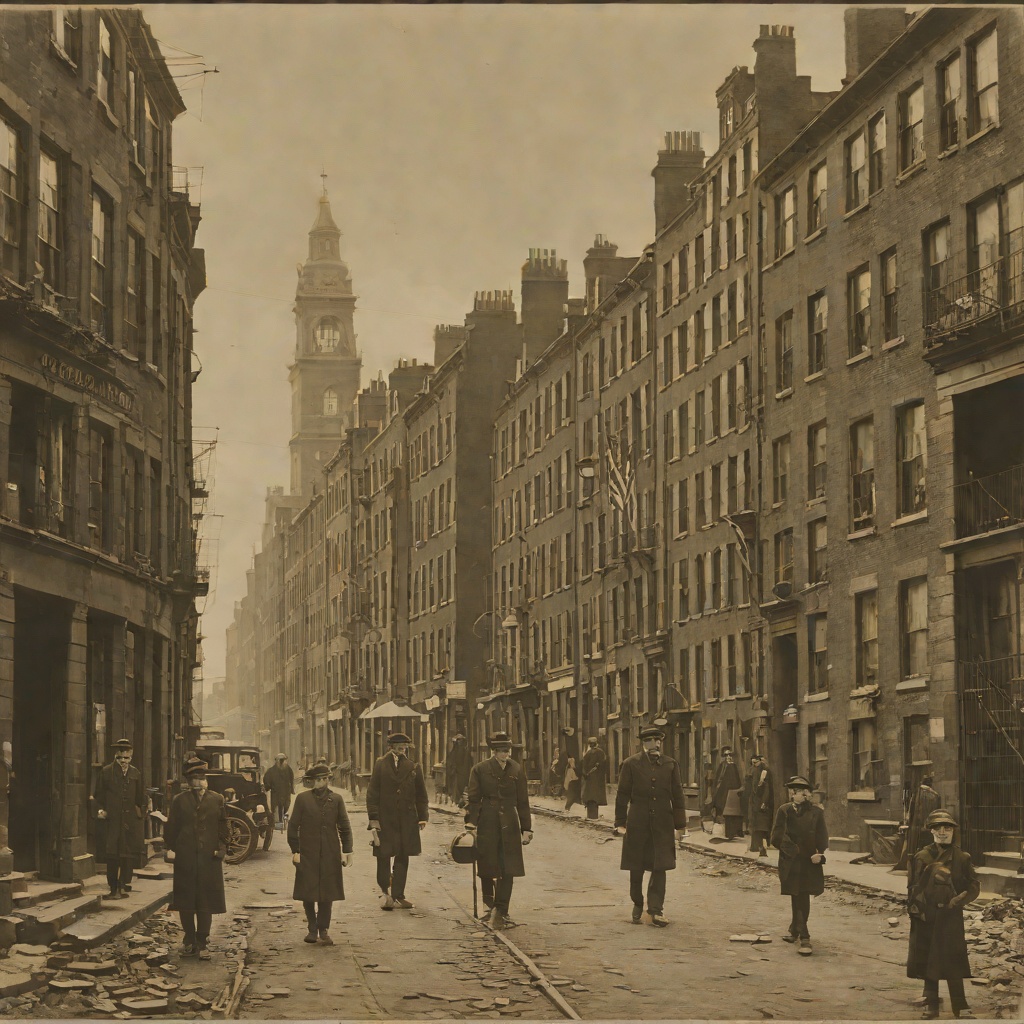
The Antin family moves to [Wheeler Street](entity:location-recall-location-wheeler-street-198ef117c347) in the [South End](entity:location-recall-location-south-end-d1fa526d25d8) of [Boston](entity:location-recall-location-boston-aded649f4602), where [Pinchus](entity:character-recall-character-pinchus-69ea3fd49e10) opens a grocery store. The neighborhood is poor and crowded, but Mary finds it exciting. She continues her education, and the family experiences both the challenges and opportunities of life in the slums.
in September, after graduating from grammar school
Mary Antin's Entry into the Latin School
[Mary Antin](entity:character-recall-character-mary-antin-31e6f047acf8) enters the [Girls' Latin School](entity:organization-recall-organization-girls-latin-scho-21724889f56b) in [Boston](entity:location-recall-location-boston-aded649f4602), a prestigious institution. She is determined to pursue a college education, and she excels in her studies despite the social and economic differences between her and her classmates. Her time at the Latin School is marked by both academic success and personal growth.
during her time at the Latin School, on a Saturday
The Boston Searchlight Canvass
[Mary Antin](entity:character-recall-character-mary-antin-31e6f047acf8) attempts to earn money by selling subscriptions to the [Boston Searchlight](entity:organization-recall-organization-boston-searchlig-b0e9ef669e51). She spends a day canvassing offices, but she is largely unsuccessful and faces humiliation when a man offers her money as charity. This experience teaches her about the harsh realities of the working world and the challenges of earning a living.
during her time at the Latin School, on a non-rent day
The Peace Mission to Mrs. Hutch
[Mary Antin](entity:character-recall-character-mary-antin-31e6f047acf8), hoping to resolve the conflict with her landlady, [Mrs. Hutch](entity:character-recall-character-mrs-hutch-3cca14d00c0b), visits her at home. She attempts to explain her educational ambitions, but Mrs. Hutch is unreceptive and scolds her. The visit ends in a misunderstanding, but Mary's attempt to make peace demonstrates her maturity and her desire to help her family.
during her time at the Latin School
The Broken Medicine Bottle and Mr. Pastor
[Mary Antin](entity:character-recall-character-mary-antin-31e6f047acf8), returning from the dispensary with a bottle of medicine, accidentally breaks it. Unable to afford a replacement, she asks the druggist, Mr. Pastor, for credit. He kindly agrees, and this act of generosity becomes a symbol of the kindness she often encounters in [America](entity:location-recall-location-america-c751899c385c).
during her time at the Latin School, on a Friday evening
Mr. Emerson's Lecture on Spiders at Hale House
[Mary Antin](entity:character-recall-character-mary-antin-31e6f047acf8) attends a lecture on spiders at [Hale House](entity:location-recall-location-hale-house-9ca6ef4c4eab), given by [Mr. Emerson](entity:character-recall-character-mr-emerson-c51ade23a873). Despite her initial aversion to spiders, she is fascinated by the lecture and begins to see the natural world in a new light. This event marks the beginning of her interest in natural history and her involvement with the [Natural History Club](entity:organization-recall-organization-natural-history-ed1aa4cf8398).
during her time at the Latin School, on a day trip
The Natural History Club's Excursion to Nahant
[Mary Antin](entity:character-recall-character-mary-antin-31e6f047acf8) joins the [Natural History Club](entity:organization-recall-organization-natural-history-ed1aa4cf8398) on a field excursion to [Nahant](entity:location-recall-location-nahant-b93595444783), where they study marine life. She is deeply moved by the experience, feeling a profound connection to the natural world and the vastness of time. This excursion is a spiritual and intellectual awakening for her, and it solidifies her love of science.
during her time at the Latin School
Mary Antin's First Meeting with Edward Everett Hale
[Mary Antin](entity:character-recall-character-mary-antin-31e6f047acf8) meets [Edward Everett Hale](entity:character-recall-character-edward-everett-hale-42cb0c8acd83), a prominent [Boston](entity:location-recall-location-boston-aded649f4602) minister and author, after hearing him speak. He invites her to visit him, and they begin a friendship that provides Mary with access to a world of intellectual and social opportunity. This meeting is a turning point in her life, as it connects her to the broader Boston community.
during her time at the Latin School
Celia Poses for the Nativity Painting
[Mary Antin](entity:character-recall-character-mary-antin-31e6f047acf8)'s baby sister, Celia, is chosen to pose for a Nativity painting by [Miss Hale](entity:character-recall-character-miss-hale-baff6a175299), [Edward Everett Hale](entity:character-recall-character-edward-everett-hale-42cb0c8acd83)'s daughter. This event symbolizes the family's growing acceptance of American culture and their departure from strict Jewish orthodoxy. It also highlights the connections Mary has made with influential Bostonians.
in June, after four years in America
Mary Antin's Graduation from Grammar School
[Mary Antin](entity:character-recall-character-mary-antin-31e6f047acf8) graduates from grammar school with honors. The ceremony is a triumph, and she delivers a composition about her cousin's death. A school board member gives a speech praising her achievements, and Mary is overwhelmed with pride and emotion. However, she also makes a social blunder by standing up to thank the speaker, which causes her great embarrassment.
during the graduation ceremony
The Graduation Day Thank-You Blunder
After a school board member praises [Mary Antin](entity:character-recall-character-mary-antin-31e6f047acf8) in his speech, she impulsively stands up to thank him, violating protocol. The principal silences her, and she is mortified. This incident haunts her for years, but it also teaches her a lesson about humility and the dangers of vanity.
before the family moves to Dover Street
Marriage of Frieda Antin and Moses Rifkin
Frieda Antin, Mary's older sister, marries [Moses Rifkin](entity:character-recall-character-moses-rifkin-a7d9feef8896), a young man of good character. The marriage is arranged in the traditional Jewish manner, and Frieda leaves the family to live in [East Boston](entity:location-recall-location-east-boston-e45b88cdbb96). Mary is happy for her sister, but she also feels the loss of her close companion.
after Frieda's marriage
The Family's Move to Dover Street
The Antin family moves to [Dover Street](entity:location-recall-location-dover-street-cd862cbdd33b) in the [South End](entity:location-recall-location-south-end-d1fa526d25d8) of [Boston](entity:location-recall-location-boston-aded649f4602), a poorer and more crowded neighborhood. The apartment is small and dingy, but Mary finds it a place of both hardship and opportunity. She continues her education at the Latin School and becomes involved in the intellectual and social life of Boston.
during the summer before entering the Latin School
Consulting Mr. Tetlow about the Latin School
[Mary Antin](entity:character-recall-character-mary-antin-31e6f047acf8), unsure whether to attend the High School or the Latin School, visits Mr. Tetlow, the principal of both schools, at his home. He advises her to attend the Latin School, and she follows his recommendation. This visit demonstrates her initiative and her determination to make the most of her educational opportunities.
during the summer at Crescent Beach, before the family moved to Chelsea
The Wading Adventure at Crescent Beach
[Mary Antin](entity:character-recall-character-mary-antin-31e6f047acf8) and a boy from the Wilner family wade far out into the ocean at [Crescent Beach](entity:location-recall-location-crescent-beach-c09904f09080), unaware of the incoming tide. They are nearly swept away but manage to return to shore safely. This adventure is a thrilling and frightening experience that highlights Mary's adventurous spirit.
during the period of poverty in Polotzk, before the emigration
The Attachment of the Family's Household Goods
The Antin family's household goods are attached by police officers for a debt owed by a tenant. [Mary Antin](entity:character-recall-character-mary-antin-31e6f047acf8), observing the scene, philosophically reflects that the loss is only about money and not a matter of life and death. This incident reveals her ability to find perspective in difficult situations.
before the family's emigration to America
Mother Gives Up the Orthodox Wig
[Hannah Hayye](entity:character-recall-character-hannah-hayye-14fe692009a2), following her husband's advice, decides not to wear the orthodox wig after marriage. This is a significant departure from Jewish tradition and symbolizes her willingness to adapt to a new way of life. The decision is difficult for her, but she accepts it as part of the family's journey toward [Americanization](entity:concept-recall-concept-americanization-3fed1b9d9f9a).
shortly before Pinchus Antin's emigration
The Expulsion of Jews from Moscow
A wave of anti-Semitic persecution, including the expulsion of Jews from [Moscow](entity:location-recall-location-moscow-b59c72aac896), sweeps through [Russia](entity:location-recall-location-russia-8ee8be401081). This event heightens the sense of insecurity among Jews in the Pale and contributes to [Pinchus](entity:character-recall-character-pinchus-69ea3fd49e10)'s decision to emigrate. The family celebrates [Passover](entity:rule-recall-rule-passover-caee88838439) in tears, but some begin to hope for a new life in [America](entity:location-recall-location-america-c751899c385c).
before Mary Antin's birth
The Wedding of Pinchus and Hannah Hayye
[Pinchus](entity:character-recall-character-pinchus-69ea3fd49e10) and [Hannah Hayye](entity:character-recall-character-hannah-hayye-14fe692009a2) are married in a traditional Jewish wedding in [Polotzk](entity:location-recall-location-polotzk-848b06061245). The wedding is a grand affair, with the bride's family providing a substantial dowry. The marriage is arranged, and Hannah Hayye is initially reluctant, but she accepts her fate. This union sets the stage for the birth of [Mary Antin](entity:character-recall-character-mary-antin-31e6f047acf8) and her siblings.
after Pinchus's travels in Russia, before the family's decline
The Father's Return from Travels
[Pinchus](entity:character-recall-character-pinchus-69ea3fd49e10) returns to [Polotzk](entity:location-recall-location-polotzk-848b06061245) after nearly three years of traveling in [Russia](entity:location-recall-location-russia-8ee8be401081), where he worked in various occupations. He brings back new ideas about education and modern life, which he hopes to apply to his children. His return marks a period of relative prosperity for the family, but it is short-lived.
during the period of recovery from illness, before the emigration
The Family's Life at the Gristmill
After [Hannah Hayye](entity:character-recall-character-hannah-hayye-14fe692009a2)'s illness, [Pinchus](entity:character-recall-character-pinchus-69ea3fd49e10) takes a job as superintendent of a gristmill, and the family moves to a cottage in the country. They enjoy a happy summer, but the position is temporary, and they are soon forced to return to [Polotzk](entity:location-recall-location-polotzk-848b06061245). This period of respite is a brief interlude in the family's struggles.
after the move from Crescent Beach, before the move to Wheeler Street
The Family's Life in Chelsea
The Antin family moves to [Chelsea](entity:location-recall-location-chelsea-a4c781a37b29), where [Pinchus](entity:character-recall-character-pinchus-69ea3fd49e10) opens a grocery store on [Arlington Street](entity:location-recall-location-arlington-street-d4ab352a5444). [Mary Antin](entity:character-recall-character-mary-antin-31e6f047acf8) begins her formal education in the public schools, and the family experiences a period of relative stability. Mary's academic success brings pride to her family and community.
after the move from Chelsea, before the move to Dover Street
The Family's Life on Wheeler Street
The Antin family moves to [Wheeler Street](entity:location-recall-location-wheeler-street-198ef117c347) in the [South End](entity:location-recall-location-south-end-d1fa526d25d8) of [Boston](entity:location-recall-location-boston-aded649f4602), where [Pinchus](entity:character-recall-character-pinchus-69ea3fd49e10) opens another grocery store. The neighborhood is poor, but Mary finds it exciting. She continues her education, and the family experiences both the challenges and opportunities of life in the slums.
after the move from Wheeler Street, during Mary's time at the Latin School
The Family's Life on Dover Street
The Antin family moves to [Dover Street](entity:location-recall-location-dover-street-cd862cbdd33b), a poorer and more crowded neighborhood. [Mary Antin](entity:character-recall-character-mary-antin-31e6f047acf8) continues her education at the Latin School, and she becomes involved in the intellectual and social life of [Boston](entity:location-recall-location-boston-aded649f4602). Despite the hardships, Mary finds the slums a place of both challenge and opportunity.
after graduating from the Latin School
Mary Antin's Entry into Barnard College
[Mary Antin](entity:character-recall-character-mary-antin-31e6f047acf8), having completed her studies at the Latin School, attends [Barnard College](entity:location-recall-location-barnard-college-221c997158b8) in [New York](entity:location-recall-location-new-york-f84f7f10ee10). She receives an invitation to live in New York that she does not like to refuse. At Barnard, she takes all the honors she deserves and learns to think in English without an accent.
after the Dover Street years, as the family's fortunes improve
The Family's Move to a Cottage
The Antin family eventually moves from the slums to a cottage of their own, where the sun shines in at every window and green grass runs up to the doorstep. This move symbolizes the family's successful [Americanization](entity:concept-recall-concept-americanization-3fed1b9d9f9a) and their achievement of a better life. [Mary Antin](entity:character-recall-character-mary-antin-31e6f047acf8) reflects on the journey that brought them there.