
The Pearl
"The Pearl" is a novella by American author John Steinbeck, first published as a short story in 1945 and then expanded into its current form in 1947. Set in the coastal town of La Paz, Baja California Sur, during the 1940s, the story follows Kino, a poor Indigenous pearl diver, and his family. The book is often described as a parable, warning against the destructive power of greed while exploring themes of social injustice, family bonds, and the loss of innocence.
The plot begins with Kino's infant son Coyotito being stung by a scorpion. When the local white doctor refuses to treat the child because of Kino's poverty, Kino is filled with rage and desperation. While diving for pearls, he discovers an enormous, perfectly formed pearl that he calls "the Pearl of the World." He dreams of selling it to pay for his son's medical treatment, to buy new clothes, and to give his son an education. However, the pearl quickly becomes a magnet for greed. The doctor, the priest, the pearl buyers, and even Kino's neighbors all covet the pearl. That night, Kino is attacked in his home. The next day, when he tries to sell the pearl, the buyers conspire to offer him a pittance. Determined to get a fair price, Kino decides to travel to the capital. His wife Juana, sensing the evil the pearl has brought, attempts to throw it back into the sea, but Kino catches her and beats her. After their house is burned down, Kino kills a man who attacks him, and the family flees into the mountains. Pursued by trackers, Kino tries to ambush them, but in the ensuing struggle, a rifle shot kills Coyotito. Devastated, Kino and Juana return to the village and, in front of the gathered townspeople, cast the pearl back into the ocean.
The central themes of "The Pearl" revolve around the corrupting influence of wealth and the social inequalities that trap the poor. Steinbeck demonstrates how the promise of sudden fortune can turn friends into enemies and destroy the very fabric of a family. The story also critiques the colonial system that keeps Indigenous people like Kino in a state of powerlessness; the doctor and the pearl buyers represent an oppressive elite that exploits the poor. The novella's simple, almost biblical language reinforces its moral fable quality.
Steinbeck's inspiration came from a Mexican folk tale he heard while traveling in La Paz in 1940. He was fascinated by the story's potential as a film and wrote it first as a screenplay. The book was published in 1947 with illustrations by José Clemente Orozco, and a Mexican film adaptation, "La Perla," was released the same year, winning several awards. "The Pearl" remains one of Steinbeck's most frequently taught works, especially in high school English classes, where its accessible length and profound themes make it a powerful tool for exploring human nature. Critics and readers alike praise its spare, evocative prose and its unflinching look at the dark side of ambition. As one reader noted, the book "says so much about humanity" and continues to resonate with new generations.
About the Author
John Ernst Steinbeck III (February 27, 1902 – December 20, 1968) was an American author and Nobel Prize laureate, widely regarded as one of the greatest writers of the 20th century. He was born in Salinas, California, to a family of German and Irish descent. Steinbeck attended Stanford University intermittently but left in 1925 without completing a degree, determined to become a writer. He moved to New York and worked as a reporter, but his early fiction failed to attract attention. His first novel, "Cup of Gold" (1929), a romanticized historical tale, was a commercial failure.
Steinbeck's breakthrough came in 1935 with "Tortilla Flat," a humorous novel about the paisanos of Monterey, which earned him critical praise. He followed this with the novella "Of Mice and Men" (1937), a tragic story of two migrant workers during the Great Depression, which became a classic and was adapted into a successful play and film. In 1939, he published his masterpiece "The Grapes of Wrath," which won the Pulitzer Prize for Fiction in 1940 and cemented his reputation as a voice for the dispossessed. The novel, which follows the Joad family's journey from Oklahoma to California, remains a cornerstone of American literature.
During the 1940s, Steinbeck continued to write prolifically, producing works such as "Cannery Row" (1945) and "The Pearl" (1947). He also served as a war correspondent during World War II, reporting from Europe and North Africa. In 1952, he published "East of Eden," a sprawling family saga that he considered his most ambitious work. Later books include "The Winter of Our Discontent" (1961) and the travelogue "Travels with Charley" (1962).
Steinbeck's personal life was marked by three marriages: to Carol Henning (1930–1943), Gwyn Conger (1943–1948), and Elaine Scott (1950 until his death). He had two sons, Thom and John IV. Despite his professional success, he struggled with family relationships and was often described as a conflicted man.
In 1962, Steinbeck was awarded the Nobel Prize in Literature for his "realistic and imaginative writing, combining as it does sympathetic humour and keen social perception." He died of heart failure in New York City on December 20, 1968, at the age of 66. His legacy endures; his works are taught in schools worldwide, and his empathetic portrayal of the downtrodden continues to inspire readers and writers alike.
StoryFlow
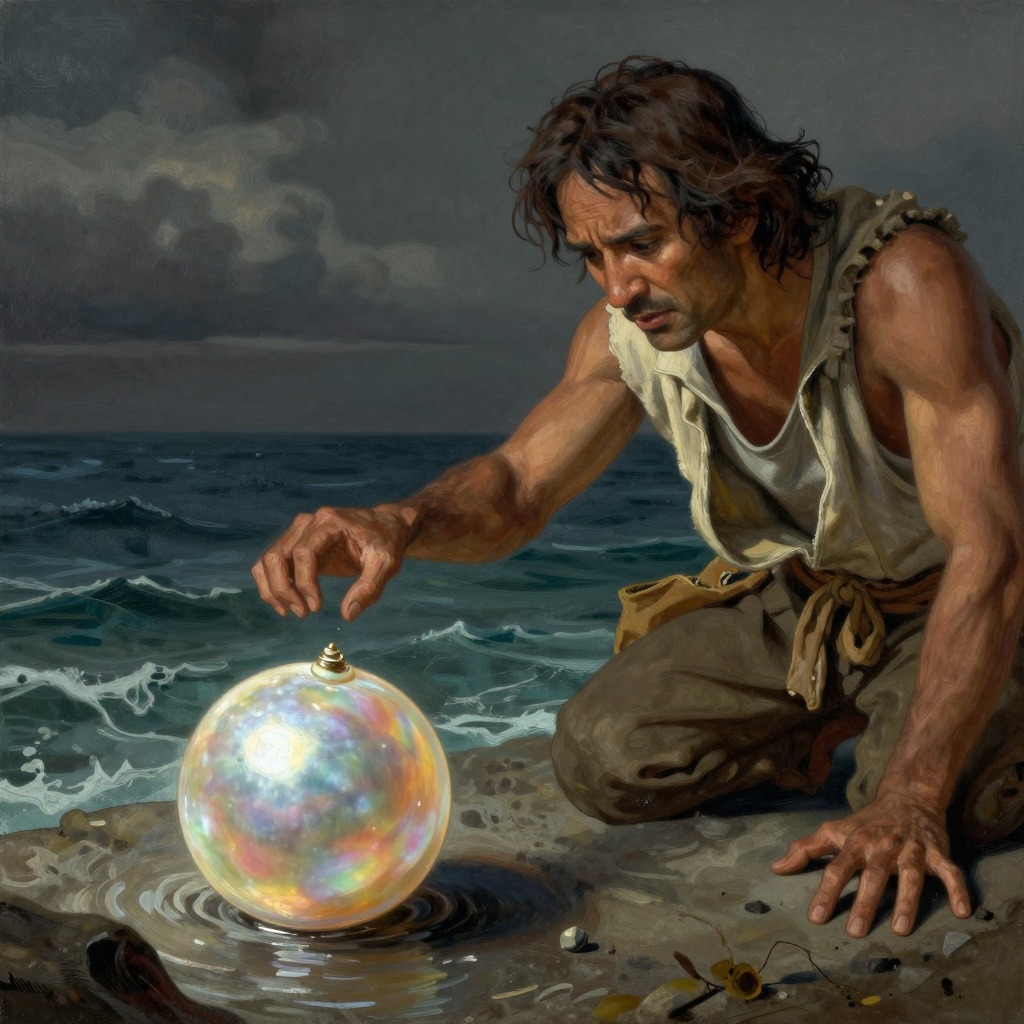
Kino's Discovery and Loss of the Pearl
Traces the arc from Kino finding the great pearl through the escalating violence and tragedy that leads him to throw it back into the sea.
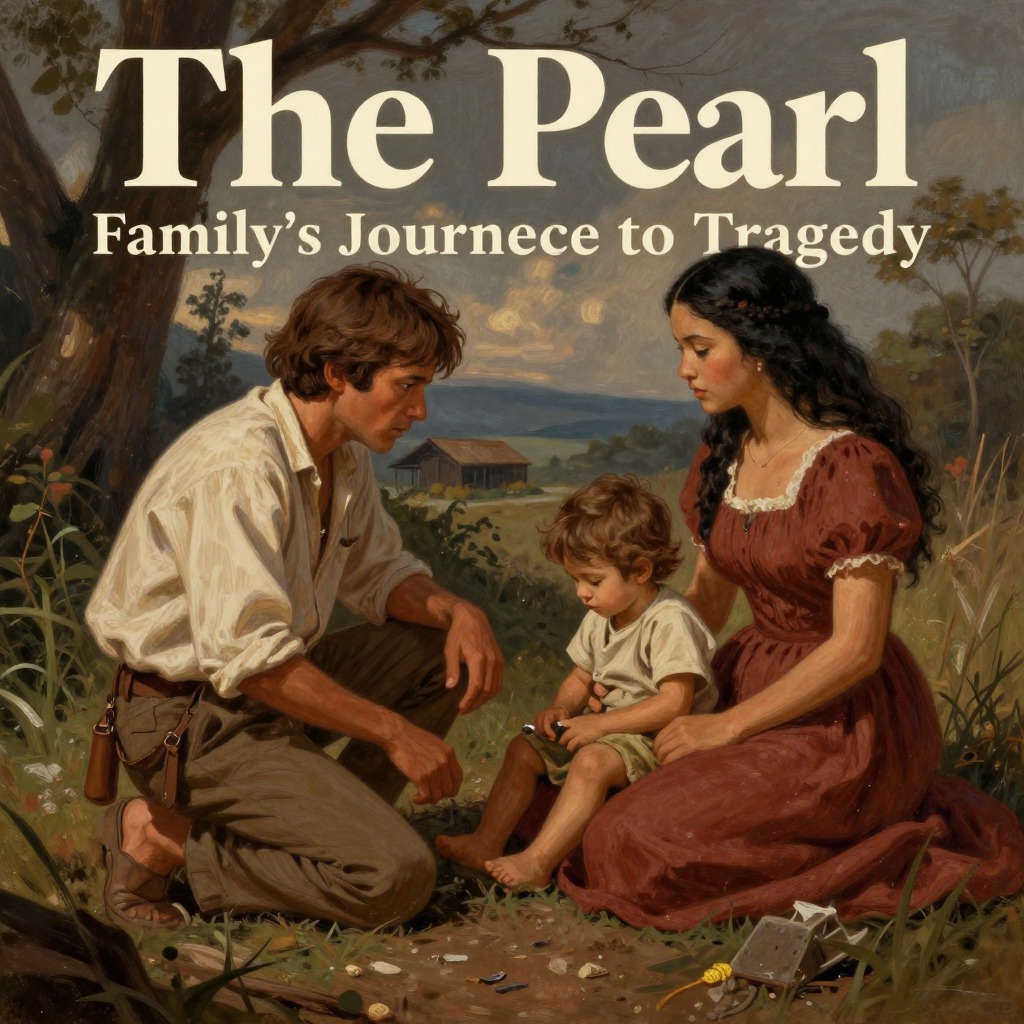
The Family's Journey from Innocence to Tragedy
Follows the transformation of Kino, Juana, and Coyotito from a harmonious family unit to a broken group shattered by violence and loss.
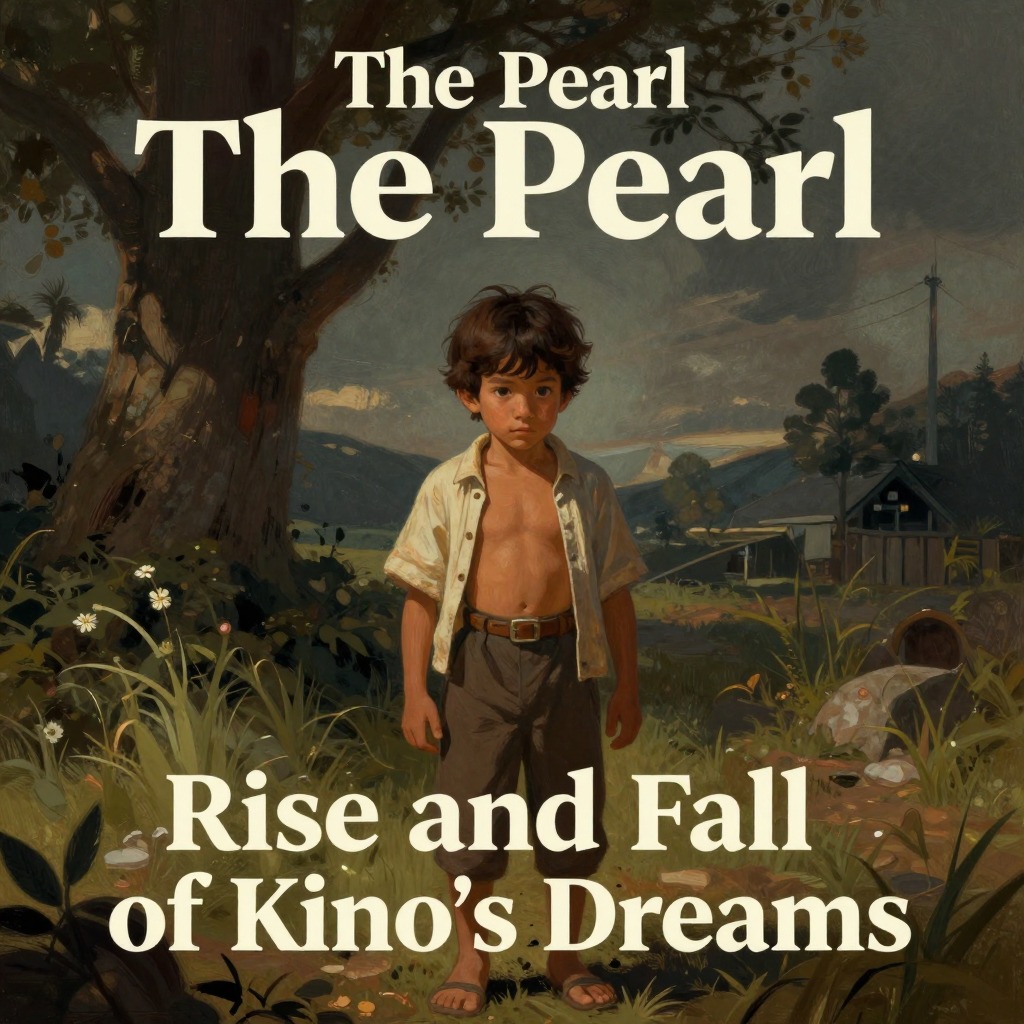
The Rise and Fall of Kino's Dreams
Traces Kino's escalating ambitions from simple hopes for his son's education to a desperate obsession that destroys everything.
