
The Sandman
The Sandman (German: Der Sandmann) is a short story by E. T. A. Hoffmann, first published in 1816 as part of the collection Night Pieces (Nachtstücke). The narrative unfolds through a series of letters: the protagonist Nathanael writes to his fiancée Clara and her brother Lothar, recounting his childhood terror of the Sandman—a figure from folklore said to steal the eyes of children who refuse to sleep. Nathanael associates this figure with Coppelius, a sinister lawyer who visited his father at night and once threatened to tear out the boy’s eyes. After a mysterious explosion kills his father, Coppelius vanishes. Years later, at university, Nathanael encounters an Italian optician named Coppola, whom he believes is Coppelius in disguise. Coppola sells him a pocket telescope, and through it Nathanael becomes obsessed with Olimpia, the beautiful daughter of a professor. Ignoring Clara’s warnings, he falls in love with Olimpia, only to discover at a ball that she is a lifeless automaton—her eyes taken by Coppola. Nathanael goes mad, is confined to an asylum, and eventually recovers. While visiting a tower with Clara, he again uses the telescope, sees Coppola, and in a frenzy tries to throw Clara off the tower. He is restrained, but then leaps to his death; Coppola vanishes into the crowd.
Core themes include the uncanny (das Unheimliche), a concept famously analyzed by Sigmund Freud in his 1919 essay “The Uncanny,” which uses The Sandman as its central text. The story blurs reality and fantasy, explores childhood trauma, the fear of losing one’s eyes (a symbol of castration anxiety in Freudian interpretation), and the dehumanizing potential of technology and rationalism. Olimpia represents the uncanny valley of the humanoid automaton, reflecting anxieties about artificial life that remain relevant today.
Hoffmann wrote The Sandman during the late German Romantic period, drawing on his own legal and artistic background to create a world where reason and madness intertwine. The story’s structure, blending epistolary form with omniscient narration, keeps readers uncertain about the truth of events.
The Sandman has had a lasting influence on literature, psychology, and popular culture. It inspired Freud’s concept of the uncanny, influenced later Gothic and horror writers such as Edgar Allan Poe and H. P. Lovecraft, and prefigured science fiction’s exploration of sentient machines. The automaton Olimpia has become a cultural archetype, echoing in works from Metropolis to Blade Runner. The story remains a staple of German curricula and continues to be adapted, analyzed, and admired for its psychological depth and eerie atmosphere.
About the Author
E. T. A. Hoffmann (Ernst Theodor Wilhelm Hoffmann, born 24 January 1776 in Königsberg, Prussia – died 25 June 1822 in Berlin) was a German Romantic author, jurist, composer, music critic, and illustrator. He adopted the pen name “E. T. A. Hoffmann” with the “A.” standing for Amadeus in homage to Wolfgang Amadeus Mozart. Hoffmann studied law at the University of Königsberg and worked as a government official throughout his life, but his true passions were the arts. He began his career as a theater director, conductor, and composer, writing the opera Undine (1816) and several other musical works. His literary breakthrough came relatively late with the publication of Fantasy Pieces in Callot’s Manner in 1814, when he was nearly forty years old.
Hoffmann’s life was marked by professional instability and personal hardship. After the Prussian defeat in 1806, he lost his civil service position due to his refusal to swear allegiance to Napoleon. He then worked in various artistic roles in Bamberg, Leipzig, and Dresden, often struggling financially. His literary output flourished after his return to Berlin in 1814, where he also served as a judge in the Supreme Court. His dual career as a lawyer and artist gave him a unique perspective on the tension between rational order and creative madness, a theme that permeates his work.
Major works by Hoffmann include: The Devil’s Elixirs (1815), a Gothic novel about a monk tormented by his doppelgänger; the short story collection Night Pieces (1817), which contains The Sandman; The Nutcracker and the Mouse King (1816), a fairy tale that later inspired Tchaikovsky’s ballet; and the novel The Life and Opinions of the Tomcat Murr (1819–1821), a complex experimental work that interweaves a cat’s autobiography with the fragmented biography of the musician Kreisler. Hoffmann also wrote music criticism, most notably his enthusiastic review of Beethoven’s Fifth Symphony, which helped establish Beethoven’s reputation in Germany.
Hoffmann’s style is characterized by the fusion of the fantastical and the realistic, the grotesque and the humorous, often exploring the dark recesses of the human psyche. His stories frequently feature doppelgängers, automata, supernatural forces, and psychological disintegration. He is considered a pioneer of modern fantasy and horror literature. His influence extends to Edgar Allan Poe, Fyodor Dostoevsky, Franz Kafka, and many others. Sigmund Freud used Hoffmann’s The Sandman as the central example in his 1919 essay “The Uncanny.” In music, Robert Schumann’s Kreisleriana and Jacques Offenbach’s opera The Tales of Hoffmann are directly inspired by his works.
Hoffmann died of a progressive disease (likely spinal tuberculosis) at age 46, leaving behind a legacy of over fifty short stories, three novels, operas, symphonies, and numerous drawings. He is celebrated as a universal genius of German Romanticism, a master of the fantastical whose work continues to captivate readers and inspire artists across disciplines.
StoryFlow
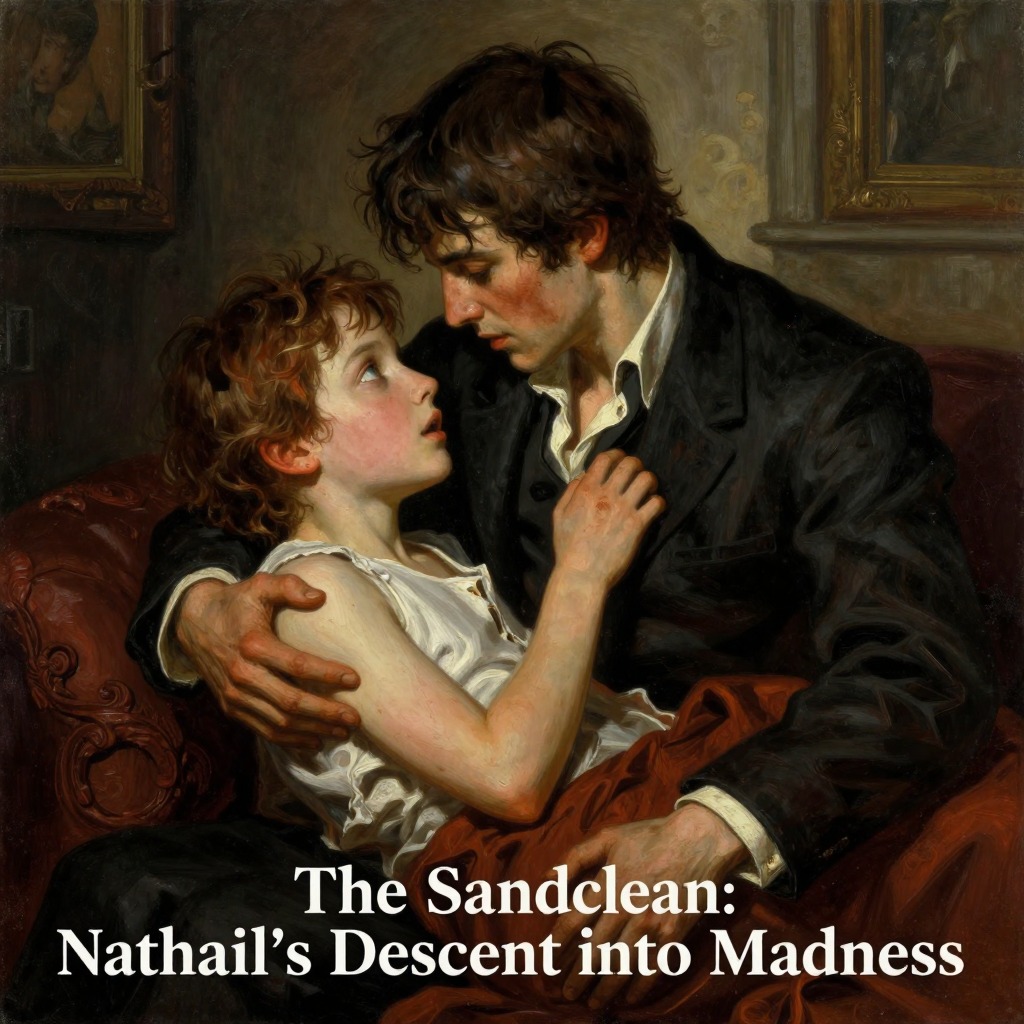
Nathaniel's Descent into Madness
Traces Nathaniel's psychological decline from childhood trauma through obsessive love to suicidal madness.
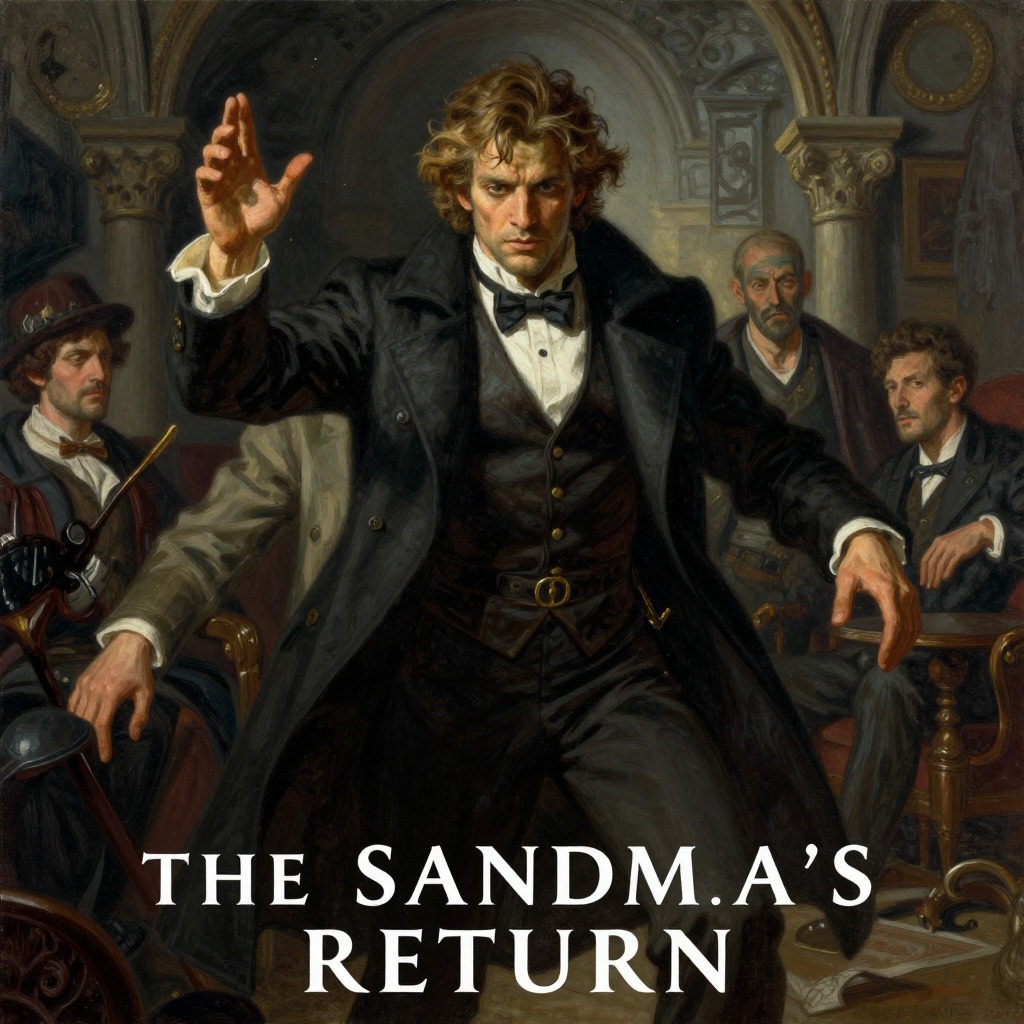
The Sandman's Return
Traces the reappearance of Coppelius/Coppola and his role as a catalyst for Nathaniel's tragedy.
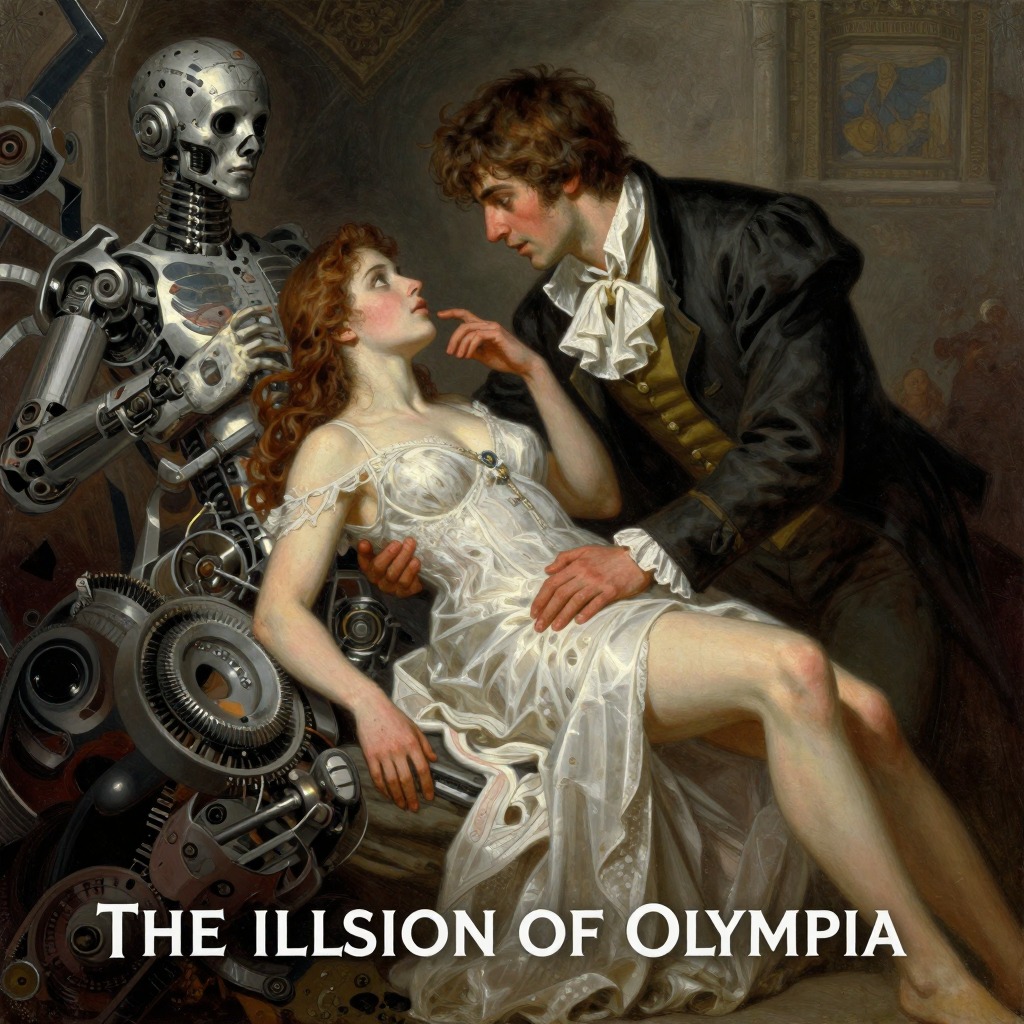
The Illusion of Olympia
Traces the creation, presentation, and destruction of the automaton Olympia and Nathaniel's delusional love for her.
