
Nature as a Force of Sympathy and Freedom
The Scarlet LetterExamines the role of nature in the novel, especially the forest and the brook, as a sympathetic force that contrasts with the harsh judgment of civilization.
increasing Bearing strength in each event
 decreasing
Bearing strength in each eventdecreasingThe Forest as a Place of Escape
The Wild Wilderness
A Realm of Freedom
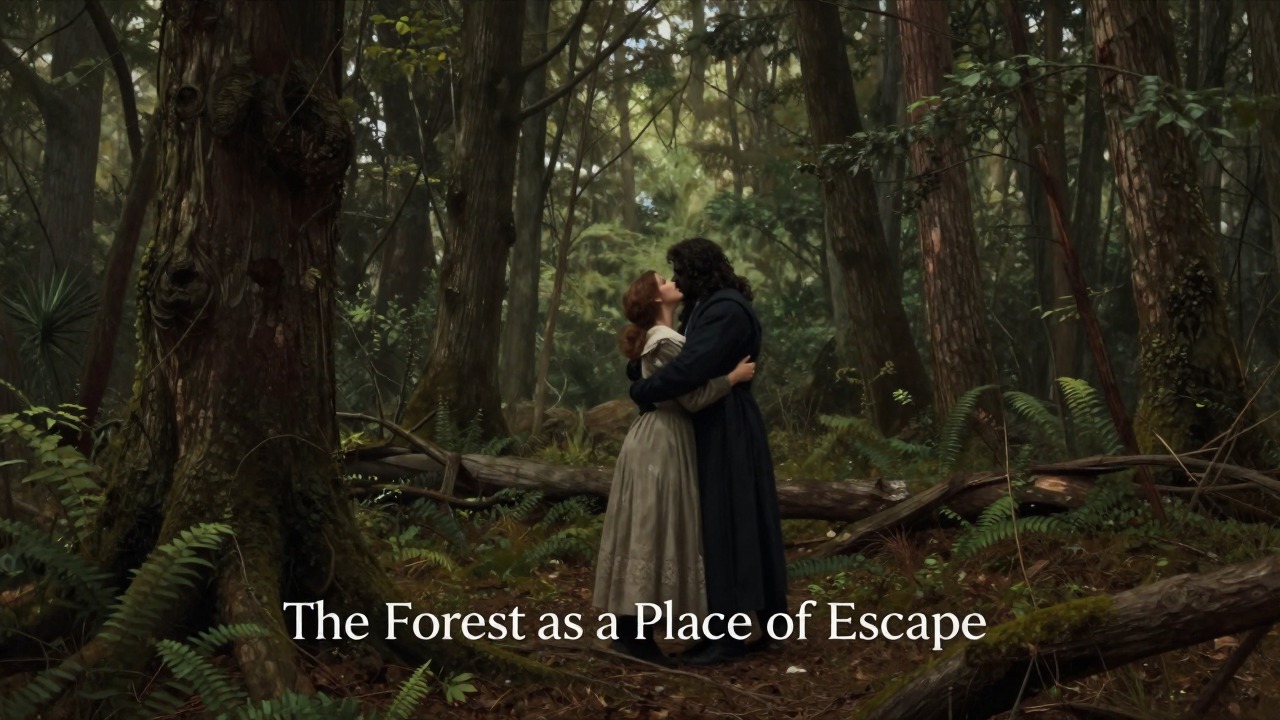
The forest is depicted as a wild, untamed place where the laws of Puritan society do not apply. It is a place of freedom and passion, where Hester and Dimmesdale can meet without fear of judgment.
The Black Man and the Dark Side
The forest is also associated with the Black Man and with witchcraft. It is a place of temptation and evil. The duality of the forest reflects the dual nature of sin itself: it can be both liberating and destructive.
The Sympathy of the Forest
When Hester and Dimmesdale meet in the forest, nature seems to sympathize with their joy. The sun breaks through the clouds, and the forest seems to bless their union. This sympathy contrasts with the harsh judgment of the Puritan town.
The Brook as a Symbol
The Melancholy Brook
A Voice of Sorrow
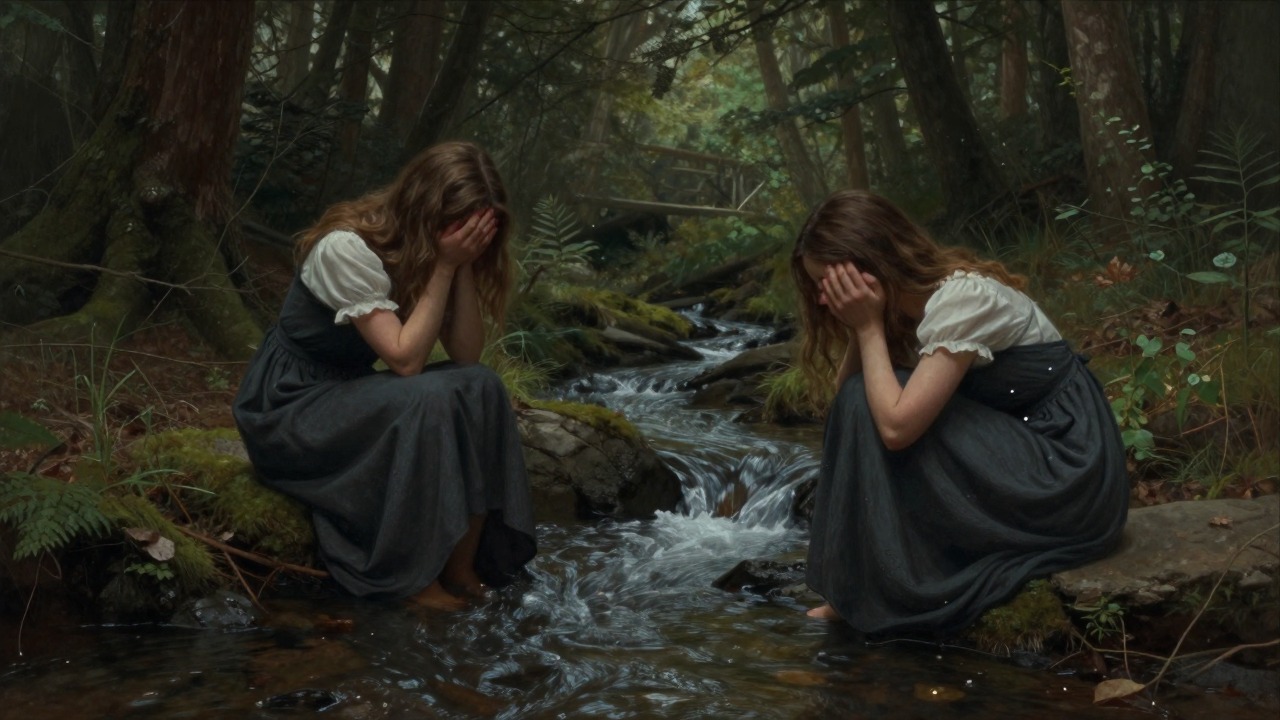
The brook that runs through the forest is a constant presence in the scene. It babbles a sad, unintelligible tale, reflecting the sorrow of the lovers. Pearl tries to cheer it up, but the brook remains melancholy.
The Boundary Between Worlds
Pearl refuses to cross the brook, treating it as a boundary. The brook separates the world of the forest, where the lovers can be free, from the world of the town, where they must be hypocrites. It is a boundary between truth and falsehood.
The Mirror of the Brook
The brook reflects Pearl's image and the scarlet letter. It is a natural mirror, showing the truth. The brook's constant murmuring is a reminder of the secret that cannot be hidden.
The Sunlight and the Shadow
The Play of Light
The Sunlight Avoids Hester
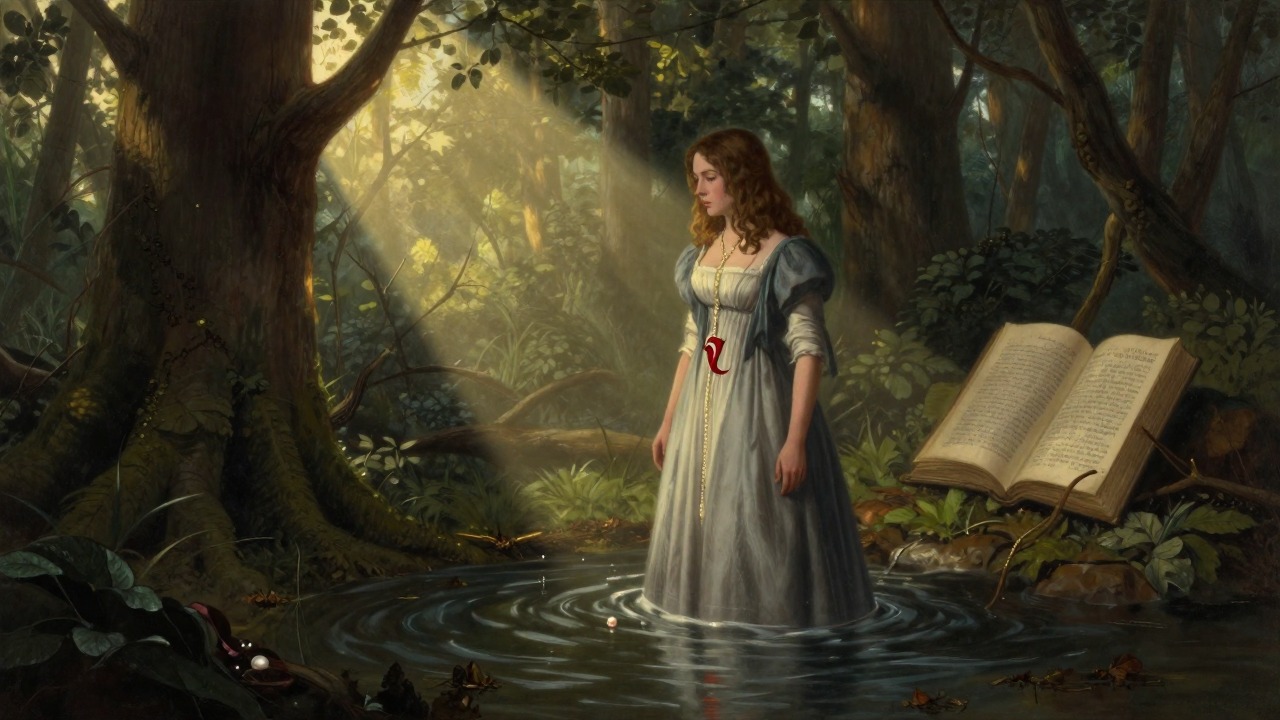
In the forest, the sunlight seems to avoid Hester because of the scarlet letter. Pearl can catch the sunshine, but it flees from Hester. This symbolizes the way sin casts a shadow over the sinner.
The Flood of Sunshine
When Hester removes the scarlet letter, the sun bursts through the trees. The change in nature mirrors the change in Hester's spirit. The sunshine is a sign of hope and freedom.
The Shadow of the Past
When Hester puts the letter back on, the sunshine disappears. Nature reflects the moral state of the characters. The novel uses light and shadow to emphasize the themes of sin and redemption.
throughout the story
during the forest meeting
throughout the story
