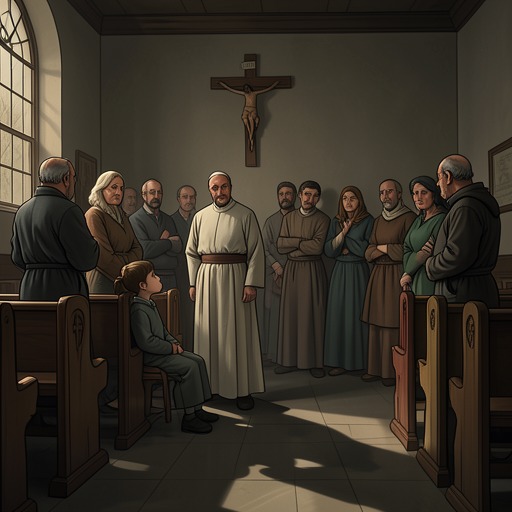
Ash Wednesday
TrespassesAsh Wednesday is marked in the novel by the ash cross on Cushla Lavery’s forehead, a ritual sign that follows her into the Lavery pub and becomes conspicuous in a setting where religious observance is uneven. As Cushla tries to remove it, the day’s devotional practice is caught between private belief, public appearance, and the expectations of the men at the bar.
Ritual and Its Mark
Father Slattery has marked Cushla’s forehead with a thick cross, about an inch wide and two inches long. When she rubs it, the ashes’ blessed unguent leaves a piney, resinous scent, and the sharp outline blurs into a sooty smudge. The mark is at once the residue of a religious observance and a visible feature she must reckon with before returning to the bar.
The Pub’s Uneasy Response
Cushla’s brother, Eamonn Lavery, notices the cross in the mirror and hands her a wet serviette, urging her to hurry. The regulars’ habits explain the pressure: most do not receive ashes on Ash Wednesday, attend Mass on Sunday, or follow the Stations of the Cross on Good Friday. The men accept drinking in a Catholic-owned pub, but react differently to being served by a woman whose forehead visibly displays Catholic observance. Cushla scrubs until her skin is pink, the serviette blackened, then throws it away.
A Shared, Uneven Observance
Jimmy O’Kane tells Cushla that he received ashes that morning too. She replies that he did a better job of getting rid of them; he offers a dishcloth and Lifebuoy as the means. Their exchange complicates the apparent divide between observant and indifferent: Jimmy shares the day’s ritual with Cushla, yet both discuss its mark in terms of how readily it can be washed away. A passing remark from Eamonn about having lived in Dublin, where Catholics were everywhere, is delivered lightly but with a keen look at Cushla. Ash Wednesday therefore registers not as an abstract calendar observance but as a sign whose meaning shifts with its setting and with who is looking.