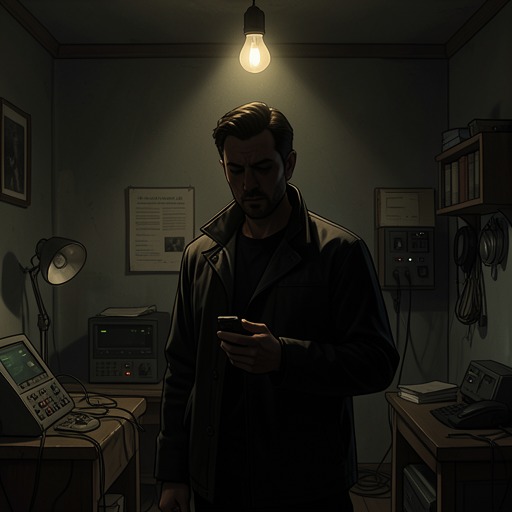
Michiel—adoptive parents
UpMichiel’s bond with his adoptive parents is shaped by a contradiction: he insists they never treated him as less than their child, yet privately believes he was never wholly theirs. After his sister died, he took on her dangerous life to protect them from its consequences. When they eventually learned that he had been a dealer, he let them believe he had caused her death rather than dismantle what he regarded as their last consoling account of her. His loyalty thus becomes both an act of care and a lasting barrier between them.
Adoption and Belonging
Michiel recounts that his adoptive parents could not have children when they adopted him, but his mother later became pregnant. He describes himself as both the child who arrived first and the later addition who could never measure up to the birth child. That comparison reflects his own sense of position in the family; it is not evidence that his parents neglected him. He expressly says they never shortchanged him, and recalls completing his training and moving into his father’s hair salon, where his work went well.
The distinction between how his parents treated him and how he felt about his place in the family remains important. Michiel acknowledges the care and ordinary family life he received, but still describes himself as not quite, not entirely their child in the same way. His account does not resolve that tension. Instead, it shows how a person may recognize that he was treated fairly while continuing to experience adoption as a difference that sets the terms of belonging.
The Sister’s Death and Michiel’s Protection of His Parents
Michiel’s sister was eventually diagnosed with bipolar disorder. A year later, she died by suicide. After her funeral, Michiel learned the scale of the life she had concealed: she had been carrying a loaded gun and was apparently one of the area’s major drug dealers. The discovery also placed the family in danger. People came after Michiel; he believed that his father’s business would be next and that his parents would follow. He could not bear to expose them, just after they had lost their daughter, to the truth about her criminal life.
He therefore took over what his sister had been doing, describing the decision as taking on everything of hers to protect their parents. This was not simply a practical substitution. Michiel assumed the risk and the secrecy that had surrounded her, making himself responsible for keeping the family outside the reach of the people pursuing her network. He later recognizes that this protection did not succeed in giving his parents the truth. It instead created another concealed history inside the family.
Concealment and the Family’s Account of Her Death
The autopsy established that Michiel’s sister had used drugs, but his parents could not understand how she could have obtained them. For a time, they did not know that she had been a dealer. Two years later, a customer let the truth slip to Michiel’s father: Michiel himself had dealt drugs and had supplied his sister. His parents consequently believed that he had helped bring about her death.
Michiel did not correct them. He explains that, in his view, their version allowed them to see their daughter as a victim rather than as the person responsible for the criminal life that had surrounded her. He calls this their happy ending: a story that spared them a more painful understanding of who she had been. Telling them the truth, he feared, would take that consolation away. His silence is therefore not presented as a simple effort to escape blame. It is an attempt to protect his parents from another loss, even as it leaves them with a false account of their son and daughter.
That choice carries a cost the narrative makes explicit. Emma observes that his parents lost their daughter first and then lost him. The remark identifies the consequence of Michiel’s self-sacrifice: by withholding what he knows and allowing his parents to believe he caused his sister’s death, he preserves one version of their family story but becomes separated from them within it. The account does not say that he later tells them the truth or that the estrangement is repaired.
Conflict, Disclosure, and the Relationship’s Limits
The family history returns during a confrontation with Iefke. After accusing Michiel of having no regard for the consequences of his actions, she invokes his adoption and asks what became of him. The attack turns a private vulnerability into a weapon. Michiel’s knuckles whiten and his face darkens, but he restrains himself, turns away, and goes into the garden with the dog’s leash wrapped tightly around his fist. The scene shows both how sharply the accusation lands and how much control he exerts rather than escalating the confrontation.
Later, Michiel explains the history to Emma, including the way he protected his parents, the deception that followed, and his belief that he had become the one who killed his sister in their eyes. His account does not simply revise the facts of the family past; it makes visible the emotional logic behind his silence. He had tried to spare his parents, yet the protection also prevented them from knowing the burden he carried or the part he had taken on for them.
Narrative Significance
Michiel’s relationship with his adoptive parents is presented neither as outright rejection nor as uncomplicated acceptance. His recollection that they treated him fairly stands beside his conviction that he never fully belonged; his efforts to protect them stand beside the secrecy that deepens their separation. The parents’ mistaken belief about their son’s role in their daughter’s death gives that contradiction its sharpest form: Michiel’s care for them is real, but it works through concealment and leaves them unable to see what he believes he sacrificed for their sake.