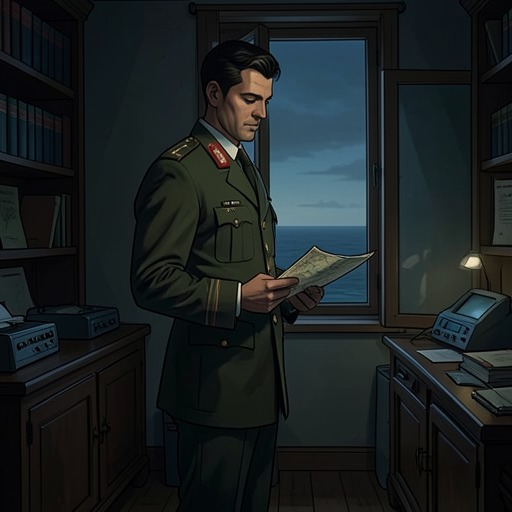
“There are criminals and there are traitors”
Wasp“There are criminals and there are traitors” expresses James Mowry’s distinction between self-interested lawbreaking and treachery. Its point is not that Skriva’s conduct is lawful, but that he understands it through profit rather than political or national allegiance.
The distinction
The phrase crystallizes Mowry’s assessment of Skriva’s outlook. Skriva has a criminal mentality, but politics, ethics, and patriotism do not interest him except when they offer a chance to make easy money. The categories in the expression therefore mark different motives: criminality is Skriva’s familiar pursuit of gain, while treachery is a political meaning he does not recognize in his own actions.
Skriva’s perspective
Mowry judges that Skriva probably regards his recent activities as profitable illegal business, not as betrayal. The distinction is consequential precisely because Skriva is not portrayed as weighing patriotic duty and rejecting it; the idea of treason simply would not occur to him. His indifference leaves him unable to understand that an act can carry a meaning beyond its immediate payoff.
The surrounding circle
Mowry extends the judgment to Skriva’s associates. He considers any of Skriva’s men capable of surrendering even his own mother to the Kaitempi, but not out of national duty. That example sharpens the expression’s contrast: cooperation with the authorities might look like loyalty from the outside, yet Mowry sees self-interest, not allegiance, as the motive. The phrase thus serves as a compact moral diagnosis of Skriva and his circle, whose willingness to act does not imply an understanding of what their actions mean.