At the opening interview
The Wasp Principle
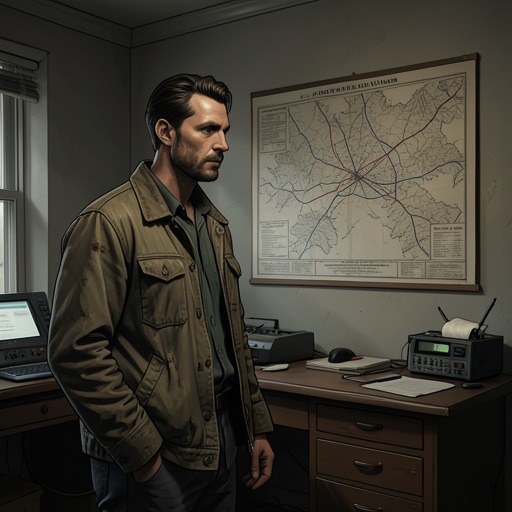
[James Mowry](entity:character-recall-character-james-mowry-feaecacb33c1) is summoned from Alaska to meet [William Wolf](entity:character-recall-character-william-wolf-94e0eab12285), who tests his short stature, Sirian accent, and ability to walk bow-legged. Wolf explains that tiny acts can provoke reactions far beyond their apparent force, comparing a prank that panicked a government, two escaped prisoners who mobilized thousands, and a wasp that caused a fatal crash.
The examples introduce the method [Terra](entity:location-recall-location-terra-498b3a9a0c69) hopes to use against the numerically superior [Sirian Empire](entity:organization-recall-organization-76a22b5307ee): turn small disturbances into costly distractions. Wolf tells [Mowry](entity:character-recall-character-mowry-60145a5e1a6c) that one person in the right place can immobilize an armored division with little more than a piece of chalk.
During the opening interview
A Mission Without Reward
Wolf reveals the purpose of his recruitment: [Mowry](entity:character-recall-character-mowry-60145a5e1a6c) is to infiltrate a Sirian-held planet and become a wasp, working alone to make the enemy as awkward as possible. The mission offers no money and carries the likelihood of death; Mowry initially reaches for his hat and refuses.
Wolf changes his mind by warning that the [Sirians](entity:creature-recall-creature-sirians-25ae52356dde) may drive [Terra](entity:location-recall-location-terra-498b3a9a0c69) out of existence if the war is left to defensive measures. Mowry learns that the enemy outnumbers Terrans twelve to one, and that his childhood in [Masham](entity:location-recall-location-masham-d124f9bb213c) and fluent Mashambi-accented Sirian make him unusually fit to pass as a native.
After Wolf's briefing
Mowry Volunteers
Wolf describes an intensive course in weapons, sabotage, psychological warfare, navigation, camouflage, and other field skills. [Mowry](entity:character-recall-character-mowry-60145a5e1a6c) understands that refusal could mean conscription and decides he would rather enter danger by choice than be marched into it.
He accepts the assignment, recognizing that his stubbornness has once again carried him toward a peril he cannot easily escape. Wolf says the service already knew he would volunteer.
Six to eight weeks after volunteering
The Wasp Course
[Mowry](entity:character-recall-character-mowry-60145a5e1a6c) completes the punishing special course and tells Wolf he feels battered in mind and body. The training has prepared him to operate alone, but it cannot make the prospect of being dropped into hostile territory feel safe.
Wolf says the destination will remain secret until the final leg of the journey. If Mowry is captured en route, he will know nothing useful about other operatives or the intended landing, leaving the [Kaitempi](entity:character-recall-character-kaitempi-d89ac654d955) without information to extract.
Near the end of the journey
Jaimec Is Chosen
The corvette’s captain reveals that the destination is [Jaimec](entity:location-recall-location-jaimec-74befab1e970), a sparsely developed but populated Sirian outpost. [Mowry](entity:character-recall-character-mowry-60145a5e1a6c) objects that the secrecy has left him ignorant of the planet, but the captain gives him the available reports, maps, and photographs.
Mowry selects a concealed cave near a cliff, accepting a long trek through forest in exchange for a remote supply cache. The captain plots an evasive route below the enemy radar horizon and warns that Mowry will be dropped into the very area the [Sirians](entity:creature-recall-creature-sirians-25ae52356dde) may search.
Before dawn on arrival at Jaimec
The Night Drop
After alarms and violent maneuvers signal that the corvette is being tracked, the crew sets [Mowry](entity:character-recall-character-mowry-60145a5e1a6c) and his equipment down at the selected cliffside caves. The ship leaves quickly to avoid producing a landing scar that could lead patrols straight to the cache.
Mowry watches it depart, aware that the crew may draw attention elsewhere to disguise his arrival. With daylight approaching, he waits until the forest trek is practicable, then heads inland carrying the first part of his new life on the hostile planet.
The morning after the drop
The First Disguise
[Mowry](entity:character-recall-character-mowry-60145a5e1a6c) crosses the forest and reaches a road after a demanding trek. He checks his Sirian clothes, pinned-back ears, purple complexion, and Mashambi accent, then memorizes a distinctive tree and places a stone beneath it as a marker for the concealed route back to the forest.
He adopts the identity Shir Agavan, a government forestry surveyor. His most important protection, he believes, is the [Sirians](entity:creature-recall-creature-sirians-25ae52356dde)’ inability to imagine that a Terran could be masquerading as one of them.
The first evening on Jaimec
A Ride Into Pertane
[Mowry](entity:character-recall-character-mowry-60145a5e1a6c) flags down a root-hauling truck by posing as a government official and rides toward [Pertane](entity:location-recall-location-pertane-d585c0fb3e1e). Its driver complains about taxes, the war, and a reported Spakum ship, while his quiet companion, Snat, answers mostly in monosyllables.
The ride gives Mowry his first test of ordinary conversation on [Jaimec](entity:location-recall-location-jaimec-74befab1e970). Neither passenger suspects that the supposed Sirian official is a Terran, and Mowry enters the capital as an unobtrusive stranger.
The first night in Pertane
Checking the Papers
Before checking into a hotel, [Mowry](entity:character-recall-character-mowry-60145a5e1a6c) tests his identity card by asking a policeman whether it needs an implausible nude photograph. The officer confirms that the papers are valid and warns him against spreading false rumors, giving Mowry confidence that the documents remain current.
Mowry books a room under the Shir Agavan identity but treats the stay as temporary. He knows that hotel registers attract official scrutiny and that avoiding questions is safer than bluffing his way through them.
The first night in Pertane
Inventing a Hidden Party
As he explores the capital, [Mowry](entity:character-recall-character-mowry-60145a5e1a6c) listens for people discontented with the war, the government, and the [Kaitempi](entity:character-recall-character-kaitempi-d89ac654d955). Fear keeps them from speaking plainly, but he notices citizens whose guarded manner suggests private resentment and opposition.
In his imagination he organizes this diffuse discontent into [Dirac Angestun Gesept](entity:character-recall-character-dirac-angestun-gese-336954a2510f), a Sirian Freedom Party, and appoints himself its entire leadership. The invented organization will let him make the authorities fear a resistance larger and more organized than any real group he could recruit.
The first full day of Mowry's campaign
The First Stickers
[Mowry](entity:character-recall-character-mowry-60145a5e1a6c) uses a bus ride and a crowded street collision to place [D.A.G. propaganda stickers](entity:object-recall-object-d-a-g-2a2034cc3e11) where strangers will find them. Their message promises punishment for war profiteers and aid to those suffering from the conflict.
When a crowd discovers one sticker, Mowry reads it aloud and helps turn the notice into a public event. The police threaten witnesses and order the shopkeeper to remove it, but the adhesive reacts to hot water by etching the message into the window, forcing the authorities to destroy or replace the glass.
The next night
The Walls Speak
[Mowry](entity:character-recall-character-mowry-60145a5e1a6c) returns to the streets after dark and distributes another hundred stickers, marking walls with the initials D.A.G. His special crayon makes the letters resistant to washing, so removing them will require rebuilding the surfaces.
The campaign is designed to make the phantom party visible everywhere while leaving no dependable trail to its author. Mowry’s first phase turns small acts of vandalism into a public challenge the government cannot easily acknowledge without amplifying.
The day after the first campaign
A Safer Hideout
[Mowry](entity:character-recall-character-mowry-60145a5e1a6c) leaves the hotel with the room paid in advance and moves into a shabby tenement under a different identity. He doubts that a routine inspection of the hotel register would confirm the nonexistent Shir Agavan’s employment.
The newspapers say nothing about the stickers or the etched windows. Mowry concludes that censorship has suppressed the story, a weak response that may make citizens more curious about what the authorities are hiding.
The early days of the campaign
Spreading the Rumor
[Mowry](entity:character-recall-character-mowry-60145a5e1a6c) carries the D.A.G. message beyond [Pertane](entity:location-recall-location-pertane-d585c0fb3e1e), traveling to [Radine](entity:location-recall-location-radine-6e4bbfdf79ff) and distributing stickers across smaller towns and villages. He recognizes that strangers attract less notice in a large city, while villagers may remember every movement and every vehicle.
His journeys are not only about reaching more readers. They make the supposed movement seem dispersed across [Jaimec](entity:location-recall-location-jaimec-74befab1e970), forcing the authorities to consider a threat whose reach they cannot measure.
During Mowry's first trip to Radine
The Search on the Train
On a crowded train to [Radine](entity:location-recall-location-radine-6e4bbfdf79ff), a policeman and two [Kaitempi](entity:character-recall-character-kaitempi-d89ac654d955) agents check passengers’ tickets, identity cards, and movement permits. [Mowry](entity:character-recall-character-mowry-60145a5e1a6c) hides a packet of stickers in a gap in his seat, fearing a search more than document inspection.
A passenger bolts from the train and the agents give chase, creating a diversion that lets Mowry retrieve the hidden material. He follows a Sirian major from the train, recognizing that the man’s official authority may be useful to the campaign.
That night in Radine
The Major's Secret
[Mowry](entity:character-recall-character-mowry-60145a5e1a6c) follows [Major Sallana](entity:character-recall-character-major-sallana-053fea2e70c4) to his apartment and enters while the officer is away. In the desk he finds official [Kaitempi](entity:character-recall-character-kaitempi-d89ac654d955) stationery, an embossing machine, and files on suspected political rivals, revealing that Sallana is a senior secret-police officer.
Sallana returns and reaches for a weapon after finding the apartment ransacked. Mowry shoots him before he can act, takes the anonymous [Kaitempi identification card](entity:object-recall-object-kaitempi-identificatio-a5f57af2672d) and incriminating documents, and leaves a message declaring that D.A.G. executed him.
The hours after Sallana's death
Escape From Radine
[Mowry](entity:character-recall-character-mowry-60145a5e1a6c) boards a late train back to [Pertane](entity:location-recall-location-pertane-d585c0fb3e1e), expecting the discovery of Sallana’s body to trigger a search. He avoids carrying his stolen case through the city by leaving it in a station locker, then walks home without attracting serious suspicion.
At home he weighs whether to keep the powerful [Kaitempi](entity:character-recall-character-kaitempi-d89ac654d955) card or surrender it to [Terran Intelligence](entity:organization-recall-organization-terran-intellige-9a969d45b160). He decides to report the prize and let [Terra](entity:location-recall-location-terra-498b3a9a0c69) judge its broader value, even though the card could be an important weapon in his own hands.
The days after Sallana's assassination
A Threatening Letter
[Mowry](entity:character-recall-character-mowry-60145a5e1a6c) retrieves the case and uses Sallana’s official stationery to send hundreds of brief warnings to political and military leaders, journalists, and police officials. The letters announce that Sallana is only the first target and that D.A.G.’s list is long.
He also carries the propaganda campaign into six towns and dozens of villages. Though public channels remain silent, his actions are meant to compel the government to disperse forces and spend time investigating a resistance that has no actual membership list.
After several weeks on Jaimec
A Hunch Saves Him
[Mowry](entity:character-recall-character-mowry-60145a5e1a6c) grows discouraged because official media still appear to ignore both D.A.G. and Sallana’s killing. A growing sense of danger finally overcomes his reluctance, and he abandons his tenement without knowing whether anyone has found him.
[Kaitempi](entity:character-recall-character-kaitempi-d89ac654d955) agents raid the building later that night, searching for him and brutalizing the landlord. Mowry’s instinctive departure saves him, confirming the training lesson that a hunted operative must trust a warning he cannot explain.
Soon after leaving the tenement
A Slum Recruitment
[Mowry](entity:character-recall-character-mowry-60145a5e1a6c) settles into a locked room in [Pertane](entity:location-recall-location-pertane-d585c0fb3e1e)’s roughest quarter, where a payment secures a key without questions. He improves the door and window and creates a concealed escape route through the roof.
He then plants Sallana’s gun in a vacant lot and watches who dares to take it. A careful thief, [Butin Arhava](entity:character-recall-character-butin-arhava-2eb271856018), retrieves it and leads Mowry to a criminal bar, where Mowry offers him money to find people willing to carry out killings.
The day of the government registration order
The Registration Trap
The government orders every organization to register its officers, membership, meeting places, and purpose, threatening death for membership in anything left unregistered. [Mowry](entity:character-recall-character-mowry-60145a5e1a6c) sees that the decree is aimed at driving D.A.G. into the open or frightening its supposed members into betrayal.
Because his organization exists chiefly in his own invention, it has no informed membership to expose. Mowry submits a deliberately insolent registration form under a false name and stamps it with Sallana’s [Kaitempi](entity:character-recall-character-kaitempi-d89ac654d955) insignia, turning an administrative demand into another act of provocation.
The evening of the registration order
The Snap Searches
As [Mowry](entity:character-recall-character-mowry-60145a5e1a6c) heads to meet Arhava, police cordons close around crowds and [Kaitempi](entity:character-recall-character-kaitempi-d89ac654d955) agents conduct sudden searches. Mowry slips away and destroys the papers associated with the Shir Agavan identity.
He adopts a new identity as Krag Wulkin, a special correspondent whose records would take time to verify from [Diracta](entity:location-recall-location-diracta-c738483ca40e). The abrupt searches show that the government has escalated its response and make every journey through [Pertane](entity:location-recall-location-pertane-d585c0fb3e1e) more dangerous.
That night at Cafe Susun
Hiring the Brothers
At [Cafe Susun](entity:location-recall-location-cafe-susun-a71294c9f927), Arhava introduces [Mowry](entity:character-recall-character-mowry-60145a5e1a6c) to the brothers [Gurd](entity:character-recall-character-gurd-71281ba8bfba) and [Skriva](entity:character-recall-character-skriva-51b2d64c825f). Mowry offers them money to kill selected officials, paying an advance and insisting that the remaining sum depends on public confirmation of each death.
The brothers accept the first job, the assassination of Colonel Hage-Ridarta, a senior figure whose name appears in Sallana’s papers. Mowry refuses to pay Arhava a commission, exposing the weakness in the group’s loyalties and leaving open the possibility that Arhava may become a liability.
The following days
The First Paid Killing
[Mowry](entity:character-recall-character-mowry-60145a5e1a6c) reaches a roadside marker where he has hidden money and contacts [Skriva](entity:character-recall-character-skriva-51b2d64c825f) to collect it. He has already learned that the brothers completed the killing of Colonel Hage-Ridarta, and he pays them after the news confirms the death.
The operation demonstrates how counterfeit Terran money can turn local criminal greed into a weapon. Mowry follows the assassination with a new assignment: place devices on telephone lines so the authorities will fear that their communications have been compromised.
After Hage-Ridarta's death
Arhava's Betrayal
[Mowry](entity:character-recall-character-mowry-60145a5e1a6c) arranges to meet the brothers again, but [Cafe Susun](entity:location-recall-location-cafe-susun-a71294c9f927) is under surveillance. A strange, overbearing voice on the telephone gives away the trap, and Mowry cuts off the call before the authorities can trace or hold him.
He escapes by changing buses and returning toward the forest, while the [Kaitempi](entity:character-recall-character-kaitempi-d89ac654d955) raid the cafe and seize people there. The failed rendezvous costs Mowry his criminal contacts and convinces him that the campaign has drawn increasingly determined attention.
After fleeing Pertane
The Forest Message
[Mowry](entity:character-recall-character-mowry-60145a5e1a6c) reaches his hidden cave and sends a report through the [Container-5 signal transmitter](entity:object-recall-object-container-5-bbe31f44e210). A distant Terran voice confirms that his actions have forced Sirian fleets and troops to disperse, and that [Jaimec](entity:location-recall-location-jaimec-74befab1e970) cannot spare forces for other fronts.
He also asks whether to surrender the [Kaitempi](entity:character-recall-character-kaitempi-d89ac654d955) card and press. The reply says [Terran Intelligence](entity:organization-recall-organization-terran-intellige-9a969d45b160) already has a card, purchased at the cost of an agent’s life, so Mowry may keep and use the one he took from Sallana.
After Mowry's return to Pertane
The Government Strikes Back
[Mowry](entity:character-recall-character-mowry-60145a5e1a6c) returns to [Pertane](entity:location-recall-location-pertane-d585c0fb3e1e) under another disguise and learns that authorities have intensified searches and surveillance. The assassination of Hage-Ridarta has been publicly reported, while the enemy’s retreat from Fedira, Fedora, and [Gooma](entity:location-recall-location-gooma-1a81e4d15844) appears in subdued news items.
The military’s claims of continuing victory sit uneasily beside its withdrawals. For Mowry, the mismatch between triumphal propaganda and events on the ground is material for further pressure on civilian morale.
During Mowry's renewed campaign
The Second Assassination
[Mowry](entity:character-recall-character-mowry-60145a5e1a6c) gives [Skriva](entity:character-recall-character-skriva-51b2d64c825f) another target: Arhava, whom the brothers regard as an unreliable prospective informer. They kill him and bring Mowry proof of the death, making Arhava the next name in the campaign’s announced list.
Mowry uses the murder to reinforce the appearance that D.A.G. is a disciplined organization punishing enemies from within. The death also removes the man who first connected him to the criminal network, though it does not resolve the risk of the brothers being captured.
After Arhava's death
The Fake Wiretap Network
[Mowry](entity:character-recall-character-mowry-60145a5e1a6c) pays [Gurd](entity:character-recall-character-gurd-71281ba8bfba) and [Skriva](entity:character-recall-character-skriva-51b2d64c825f) to attach decoy devices to telephone lines. Their visible cables are meant to trigger a comprehensive inspection of the system, leaving officials to wonder who may have been listening and what they may have learned.
The hoax magnifies suspicion inside the government without requiring a functioning intelligence network. It is a paper-war tactic translated into infrastructure: the possibility of a leak is enough to tie up investigators and unsettle leaders.
That night in Radine
The Hotel Explosion
After a new visit to [Radine](entity:location-recall-location-radine-6e4bbfdf79ff), [Mowry](entity:character-recall-character-mowry-60145a5e1a6c) finds authorities gathered outside his expensive hotel and is challenged by two plainclothes agents. Their questions threaten to expose his journalist identity, so he punches one and throws the other, then runs.
His booby-trapped suitcase explodes when agents try to search it, tearing a hole through the hotel room. Mowry steals a car, breaks through a roadblock, and evades the pursuing forces, but loses the cache of papers and supplies he had brought with him.
After escaping Radine
Refusing Replacement
Mori arrived at the cave, facing a choice: report his position, which would likely result in being ordered to leave Jeremek; or ignore the danger and continue with the mission. He refused to regard the pursuit of Kaitanpi as proof of his failure, choosing to stay
After Mowry returns to Pertane
A False Kaitempi Operation
Mori impersonated a high-ranking intelligence officer and met with Kaitan agent Sagaramasulu after an air raid. He praised Sagaramasulu's brutal treatment of an elderly protester and persuaded him to assist in arresting a man allegedly the leader of the Darg organization. Sagaramasulu
Soon after the false operation begins
The Agent's Death
In the alley, Mori questioned Sagramasso Lu as to why he attacked the old man; as Sagramasso Lu turned, Mori shot him dead. He took the official badge, removed any traces on the body that could be used to identify the victim, and took another car. This murder added
During the escalating campaign
Shugruma Is Bombed
A Terran destroyer broke through the Saryan defense line and bombed the munitions complex of Shugrum. Saryan media downplayed the losses and claimed the attack ship had been destroyed; but Pertun felt the shockwave, indicating the explosion was far greater than officially acknowledged
The days after the Shugruma bombing
Rumors of Disaster
Mori told the tourists in the park and others who were willing to listen to him that [Shugruma](entity:location-recall-location-shugruma-995775709c5d) had been severely damaged, and Guma may no longer be habitable. He fabricated frantic eyewitness accounts and graphic details, targeting those who might relay the news without questioning it. The rumors spread
After Skriva locates a prison insider
The Prison Extraction Plan
Scriba reported that Gould and two companions were imprisoned and that he could buy information from a guard. Mori refused to pay a large sum without assurance, but agreed to pay for a real Kitanpi extraction form and for the successful escape of the prisoner. The plan takes advantage of the prison's
The evening before the jailbreak
A Form Is Altered
[Skriva](entity:character-recall-character-skriva-51b2d64c825f) got a used extraction application form and then brought a typewriter to More. More carefully checked the stamped document and determined he could erase the existing prisoner information, repair the paper, and type the names of Gould and other prisoners. He also learned that Kaitanpi usually extracts prisoners and
The next day
The Prisoner Transfer
Mori and Scriba arrived at the prison with altered extraction application forms, with two other criminals impersonating Kaitan agents to back them up. The warden questioned their authority, but accepted Mori's intelligence personnel ID and stolen badge. The warden insisted that a Kaitan officer must sign
Immediately after the prison extraction
The Escape Splinters
When the prisoner left the prison, another group of Kaitanpi personnel arrived. The group began to suspect, and Mori's group hurried toward the car; one of the cars was locked, and gunshots were heard as they escaped. After the group split up, the pursuers chased the wrong
After the jailbreak
Pertane Under Martial Law
In the city, there are police and military everywhere. The newspaper headlines announced the implementation of a state of emergency, prohibition of movement, and the search for mail bomb attackers, reporting on casualties and arrests in prison escapes. Plainclothes agents were watching the street where Mori rented a house, but when
That evening
The Blockade Bluff
Mori chose a route with fewer people to go to Parma Rei, arriving at a military checkpoint. He impersonated Colonel Haloputi, showing his documents to a sergeant and a young lieutenant. Both were hesitant, as the order seemed to require everyone to have a pass. The lieutenant finally decided
After Mowry reaches the forest cave
Phase Nine Begins
Mori finally reported to the Tera command center. The voice from the transmitter told him that the situation had changed, a Tera ship was nearby, and he had to skip several stages and start the ninth stage directly: creating a maritime panic. This unexpected order meant that the war was about to
After the Phase Nine order
The Periboob Deception
Mori remembered the false submarine warning buoy, a maritime decoy device that would rise and sink when a ship approached. Its purpose was to make sailors believe that a small submarine was active in the sea routes of Jeremek. To spread the deception, two merchant ships must be sunk in seemingly credible
Soon after Phase Nine begins
The Harbor Is Surveyed
Mori went to Xiaopertun as a maritime official. He checked the port schedule to determine which ships would leave the port before dawn and selected two ships that would load cargo at the same wharf area. Workers and officials were still crowded along the seaside, so he hid in a warehouse and
That night at Alapertane harbor
Mines Beneath the Ships
After the dockworkers left, Mori installed the frogman mine on the bottom of the Su-Katera and Su-Limane. He set the delay fuse, moving with such care that the sailors didn't notice. He expected the explosion to create the needed, convincing maritime disaster
After the harbor operation
The Stolen Cruiser
[Mowry](entity:character-recall-character-mowry-60145a5e1a6c) gets rid of his booby-trapped suitcase in a public place, hoping the eventual explosion will draw attention away from him. With his car compromised and the city likely to be sealed, he searches for another way out of [Alapertane](entity:location-recall-location-alapertane-4c81099cbb6e).
An attempt to rent a vehicle nearly exposes him when he overhears the agency reporting suspicious applicants. He escapes before the call is completed, discards his spectacles, and boards an airport bus to reach the outskirts on foot.
That night beyond Alapertane
The Police Radio Chase
[Mowry](entity:character-recall-character-mowry-60145a5e1a6c) finds a police cruiser left beside a bus being searched and drives off in it while the officers are distracted. He discovers that the vehicle’s radio lets him hear the response to the theft and learns that nearby cars are being directed into a search grid.
He leaves the main road, hides the cruiser in a barn, and resumes driving after the immediate patrols pass. The maneuver buys time but does not break the net: a powerful transmission cuts the vehicle’s power, forcing him to continue on foot.
The following day
The Cave Is Compromised
[Mowry](entity:character-recall-character-mowry-60145a5e1a6c) reaches the forest after a punishing journey, but the [Cave warning ring](entity:object-recall-object-1b89a21b0ea4) fails to signal as he approaches the hidden cache. A faint, suppressed sound ahead confirms that someone is near the cave, and he concludes that the supplies have been discovered and watched.
Rather than risk walking into an ambush, he retreats and keeps moving away from the site. The loss of the cache also cuts off his practical access to the transmitter and most of his equipment, leaving him with only what he carries.
The days after the cache is exposed
Flight Through the Forest
[Mowry](entity:character-recall-character-mowry-60145a5e1a6c) travels through the immense forest with little food, hearing aircraft patrol the region as the authorities search for what they may believe is a larger Terran operation. He avoids stealing trucks because a stolen vehicle would reveal his direction and intensify the pursuit.
After days of hunger, he reaches a village and buys food while pretending to have walked from [Valapan](entity:location-recall-location-valapan-86891ac622b0) after his car stalled. A suspicious cafe owner watches him leave, so Mowry returns to the forest and rationing, aiming to circle toward [Radine](entity:location-recall-location-radine-6e4bbfdf79ff) and find a way to survive outside the cache.
Several days later
Terran Ships Arrive
Near the [Radine](entity:location-recall-location-radine-6e4bbfdf79ff)–[Khamasta](entity:location-recall-location-khamasta-5824b9d2bde6) road, [Mowry](entity:character-recall-character-mowry-60145a5e1a6c) sees a vast flash over Khamasta, feels the ground shake, and watches Terran warships thunder across the sky. The Sirian defenses answer with missiles, while Terran forces descend in overwhelming numbers.
Mowry runs toward the arriving troops, shouting that he is a Terran. The soldiers mistake him for a Sirian pretending to be one and take him into custody, leaving the lone operative behind enemy lines imprisoned by the army he has served.
The twelve days after the invasion
A Prisoner of War
[Mowry](entity:character-recall-character-mowry-60145a5e1a6c) spends twelve days in a crowded prisoner-of-war compound, repeatedly trying to convince sentries that he is a Terran operative. They dismiss his claims, while other prisoners boast falsely that they led D.A.G. and expect rewards from the conquerors.
His captivity exposes the irony of his disguise: he has spent months convincing [Sirians](entity:creature-recall-creature-sirians-25ae52356dde) that he is one of them, and now cannot persuade Terrans that he is not. Some boastful prisoners are strangled in their sleep, but Mowry remains unable to get a message through to the guards.
After twelve days in the POW compound
The Wasp Is Identified
A captain finally calls for [James Mowry](entity:character-recall-character-james-mowry-feaecacb33c1), and [Mowry](entity:character-recall-character-mowry-60145a5e1a6c) rushes forward. Military Intelligence confirms that a beam-radio report has prepared them to identify him, but the first response is not a hero’s welcome: another operative, Kingsley, has disappeared on [Artishain](entity:location-recall-location-artishain-e33dc5150069).
The officer orders Mowry to take Kingsley’s place. The war has advanced so quickly that Terran command has skipped the remaining stages of Mowry’s planned operation and intends to send him straight back into hostile territory as a wasp.