Become a wasp
WaspBecome a wasp names the strategy William Wolf proposes to Mowry: accept the physical disparity between one person and a powerful enemy, then turn that disparity into an advantage through speed, timing, and concentrated effect. The image is not of matching an army’s force, but of making a small agent’s presence consequential—and of acting alone without losing allegiance to a larger swarm.
The Analogy and the Invitation
William Wolf grounds the metaphor in scale. A wasp weighs less than half an ounce; beside a human being it is minute, with negligible strength. Its significance therefore cannot lie in brute force. The contrast establishes the problem that the expression answers: how can an agent so small matter against an opponent so much larger? The answer lies in the wasp’s capacity to turn limited means into a disproportionate threat. Later, when Mowry’s actions are described as the insect buzzing and then demonstrating its sting, the image supplies its own progression from apparent insignificance to effect.
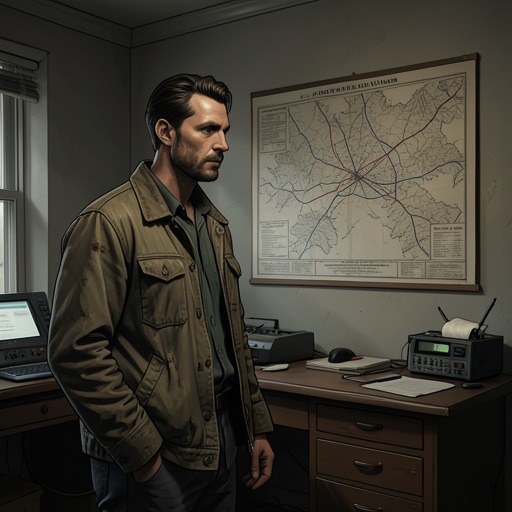
Wolf makes the metaphor a personal proposition when he tells Mowry that the plan is for him to become a wasp. The phrasing converts an abstract comparison into a role: Mowry is to act as a small, mobile force within an occupied environment, not as a conventional soldier confronting an enemy on equal terms. The invitation does not erase the danger or grant him greater strength. It makes the mismatch the basis of the method. The wasp’s measure is not the size of the opponent it can overpower in a direct contest, but the disruption it can cause by choosing where and when to act.
Small Acts, Disproportionate Effects
The method’s central proposition is that even a mark on a wall can have consequences out of proportion to the effort required to make it. Wolf describes how suitable words, scrawled in the right place at the right time by the right person, might immobilize an armored division. The example links scale, timing, and target: the writing itself is slight, but its effect depends on where it appears and how it bears on the enemy. The metaphor therefore includes psychological and operational leverage, not simply physical attack.
Mowry’s later conduct is framed by a corresponding rule of action. When one man is playing the part of an invading army, he must move fast, use every opportunity, and waste no effort. This formulation makes the wasp a practical discipline as well as an image. A lone agent cannot afford the slow, resource-heavy methods of a large force; he must keep moving and make each opening count. The contrast between one man and an invading army also sharpens the performance involved: Mowry must produce effects that suggest a larger presence than the one person actually acting.
Buzzing, Stinging, and Escalation
The expression takes on a more dangerous force as words and violence become associated. Stickers and wall-scrawls are given murderous support; together they suggest that someone is willing and able to do more than talk. The image then marks a change in the campaign’s register: the wasp has buzzed around, but now has demonstrated its sting. Propaganda is no longer merely a sign of dissent. Set beside an act of violence, it becomes part of a warning whose credibility rests on demonstrated capacity.
That sequence makes the metaphor’s two modes—buzzing and stinging—distinct but connected. The buzzing represents a presence that can circulate, attract attention, and keep an opponent uncertain; the sting shows that the threat is not empty. Mowry searches a body and obtains something he had coveted, a consequence that ties the metaphorical escalation to a concrete action without reducing the whole strategy to violence alone. The wasp’s force comes from the combination: words can unsettle, action can substantiate the warning, and neither requires the agent to meet the enemy as an equal army.
The Individual and the Swarm
The wasp is described as buzzing alone and unaided, yet remaining loyal to the swarm. That tension is essential to the expression. Mowry’s isolation is a condition of his work, not proof that his purpose is purely individual. The image holds solitary initiative and collective allegiance together: he acts without immediate assistance, but his efforts belong to a wider cause.
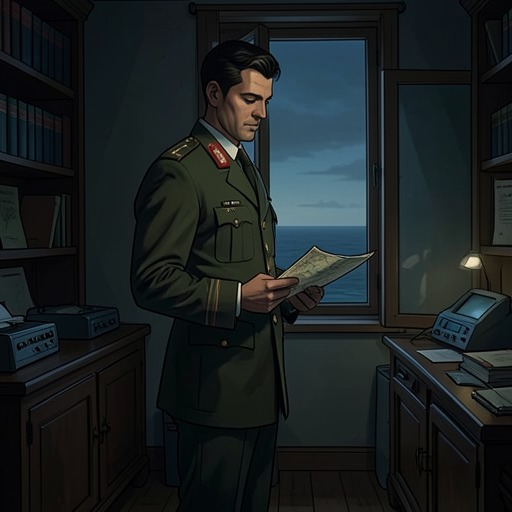
A later moment makes that distinction explicit through communication. Unable to sit because the connecting cord is too short, Mowry has to stand as he rapidly recites The Tale of a Wasp by Samuel Sucker, then waits for a reply. The scene gives the metaphor a wry, performative edge: the wasp story is something he must transmit, and its journey through a constrained connection turns the image into a signal as well as a doctrine. The delay before the reply also contrasts with the urgency of his field rule. Fast action does not mean that coordination is always immediate.
When other wasps are said to be working in separate places but united in purpose, the swarm ceases to be merely an implied ideal. Mowry is not alone in the larger sense, even where no fellow agent is beside him. The expression thus gathers its full meaning across the campaign: small acts can impede a much larger force; a lone operator can project effects beyond his own scale; and dispersed agents can remain connected by common purpose. Becoming a wasp is not becoming powerful in the conventional sense. It is learning how to make limited force count, then understanding that solitary action may still belong to a collective effort.