Phase Nine
WaspPhase Nine is a late escalation in the Wasp campaign on Jaimec: a plan to carry panic from land onto the seas, making ordinary shipping appear vulnerable to an unseen threat. Its importance lies less in the destruction of any single vessel than in the pressure it is designed to impose on an already strained war effort. The enemy must respond to the possibility of danger across the planet’s sea-lanes, even when it cannot tell where the next blow will come from.
Place in the Campaign
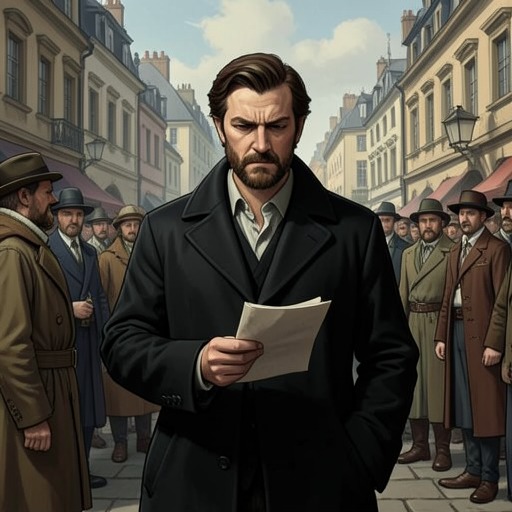
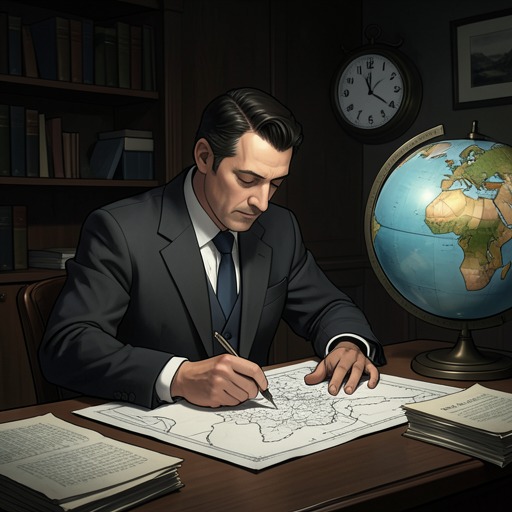
Phase Nine arrives out of sequence. In a conversation with a distant voice, Mowry learns that the authorities do not want the unrest to subside; they want it to spread, and he is ordered to begin the ninth phase. His startled response is that he is only on Phase Four and asks what has happened to Phases Five through Eight. The exchange makes the campaign feel less like a checklist than a strategy whose demands can change abruptly: escalation is driven by the desired pressure on the enemy, not by orderly completion of every intervening step.
The stated purpose is to disperse the enemy’s overstretched resources further and put another great strain on its creaking war machine. The image of the “last straw” gives the phase a cumulative logic. It is not presented as a self-sufficient victory plan; it is one more pressure added to a system already carrying too much. Earlier strategic discussion in the novel describes enemy fleets being widely dispersed and troop movements from an overcrowded home system toward outer planets. Jaimec is a constraint within that larger deployment: the enemy cannot safely remove strength from the planet, and might have to reinforce it at Diracta’s expense. Phase Nine exploits precisely this kind of forced allocation, turning the need to guard one place into a weakness elsewhere.
The Maritime Design
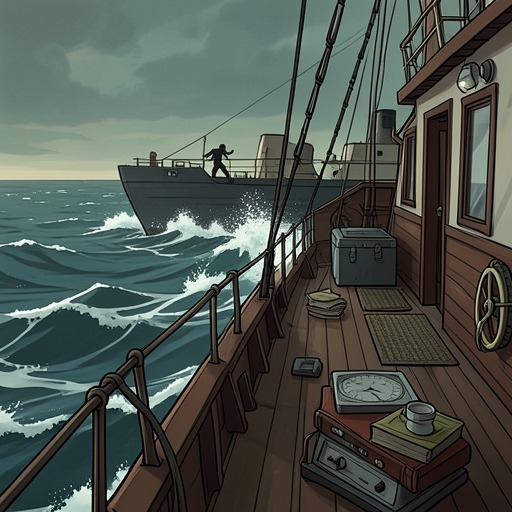
The operation seeks to make panic planetary by transferring it from land to water. Jaimec is especially susceptible because it is a colonial world with an extensive dependence on shipping. About twenty established routes carry its sea traffic, and no vessel is larger than fifteen thousand tons. Yet the ships’ modest scale does not make them incidental: the local war effort depends critically on their unimpeded movement. Delays, disrupted schedules, or vessels bottled up in port could therefore create consequences beyond the immediate danger to crews or cargo.
The planned instrument is Periboob, a maritime decoy designed to suggest a threat beneath the water. The devices are to be scattered in the oceans before a rapid getaway, almost certainly at night and along known sea-lanes. Their physical behavior supports the deception: when a mass of metal moves away, a Periboob rises again until its tube pokes above the waves. A small, intermittent sign is enough to invite a much larger interpretation. The object need not visibly attack a ship to make sailors and authorities fear that an attack may follow.
The scheme also includes a prepared stage and a spotlight. At the outbreak of war, the enemy was allowed to obtain top-secret plans, providing a basis for the apparent threat to seem credible. The plan anticipates that a convincing bang could be followed by the sinking of a couple of merchant vessels at sea. That prospect turns the decoy from an isolated oddity into part of a story the enemy can believe: something is in the water, ships may be lost, and the danger may recur along any of the familiar routes.
Fear as a Strategic Effect
The design depends on uncertainty doing the work. A Periboob sighting encourages Jaimecans to connect the device with the possibility of ships being sunk; the result is a threat that spreads beyond the location of any one sighting. The enemy then faces a practical dilemma. It can treat the objects as harmless, risking the appearance of neglect if ships are attacked, or respond by searching and patrolling the oceans and bombing Periboobs wherever they are found. Either response consumes attention and resources that the larger campaign is trying to stretch.
Crucially, the operation’s value does not rest on keeping the deception intact forever. The narrative explains that it does not matter if the enemy discovers it has been fooled: officials may trawl a Periboob from the depths and still feel compelled to patrol or bomb suspected devices. The reveal of the trick does not instantly undo its effects. Even after the object is understood, the possibility of a real danger, or the political cost of overlooking one, can keep the response going. Phase Nine thus converts exposure into another stage of pressure rather than making exposure a clean defeat.
Jaimec Under Pressure
The surrounding campaign has already made fear and coercive control visible on land. Under the War Emergency Powers Act, the Jaimec Ministry of Defence orders organisations, societies, parties, and other corporate bodies to register. Mowry encounters uniformed police lines extending across a street, and later headlines announce martial law in Pertane, a travel ban, and drastic action against Dirac Angestun Gesept. These measures belong to the broader atmosphere of crisis, not to a demonstrated aftermath of Phase Nine; they show how readily perceived danger can be answered with restrictions and force.
That wider setting sharpens the maritime plan’s political logic. Shipping is not merely a backdrop but a vital part of the planet’s war effort, so anxiety at sea can threaten schedules, mobility, and confidence at once. Phase Nine extends the campaign’s reach from the streets and the political order into the routes on which Jaimec depends. Its bleak irony is that the enemy may be compelled to spend real effort responding to a danger whose apparent presence has been carefully staged. The intended victory is not a decisive naval engagement, but an enemy made to guard more places, distrust more waters, and carry still more strain.