Wasp warfare
WaspWasp warfare is William Wolf’s name for a form of asymmetric action in which one operative is meant to create effects far beyond his physical or military scale. Its governing idea is disproportion: a person, or even a small mark made in the right place, might unsettle a government or impede an army. For James Mowry, the proposal makes unconventional action a practical alternative to meeting a larger power on its own terms.
Definition and Strategic Logic
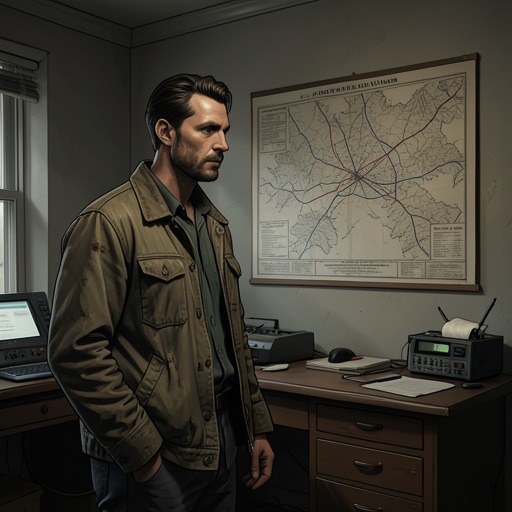
William Wolf introduces the idea while recruiting James Mowry to become a wasp. He argues that apparent differences in scale need not decide the outcome: one person might shake a government, two might temporarily stop an army twenty-seven thousand strong, and a small wasp might kill four much larger opponents while also destroying their machine. The examples escalate from political disturbance to a direct attack on people and equipment, but share one principle: a small actor can impose costs disproportionate to his size.
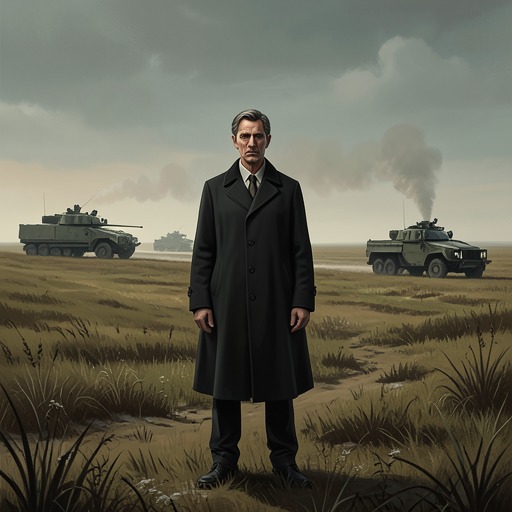
Wolf makes the same point through a less physically forceful example. Words scrawled on a wall, he suggests, could immobilize an armored division if the right person placed them at the right time. The example shifts attention from firepower to circumstance. The effectiveness of an act depends not just on what is done, but on where and when it is done, and on the response it provokes. James Mowry recognizes the method as an unorthodox form of warfare; Wolf treats its unconventionality as an advantage rather than a defect.
The Operative and the Method
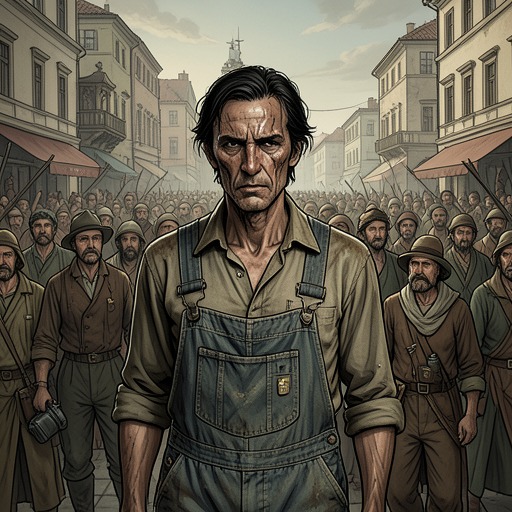
The wasp is not presented as a generic volunteer. Asked what defines one, Wolf begins with a physical type: mostly a short person who can walk slightly bow-legged, with ears pinned back and a dyed face. His answer also indicates that the selection problem involves ruling candidates out. People judged too thin, too stupid, too rash, or too cautious leave few suitable choices. The account therefore presents the wasp both as a practical human instrument and as a deliberately selected one, though the supplied description does not establish a complete list of qualifications.
The method places a premium on speed and opportunism. When James Mowry acts as though he is an invading army on his own, the essential requirements are to move fast, exploit any available opportunity, and waste no effort. The contrast is between the apparent scale of an army and the actual resources of one man: because he cannot act like a conventional force, he must make each movement count. This is not simply a preference for isolated daring. It is an operating logic in which rapid action and careful use of openings compensate for the absence of numbers.
From Principle to Urban Action
The idea is illustrated through acts of public defacement and damage to prominent plate-glass windows, as well as through the distribution of stickers. Between half past seven in the evening and midnight, James Mowry places exactly one hundred stickers on the city’s shops, offices, and vehicles. The number and time span give the campaign a concrete measure: a single operative sustains activity across several kinds of public and commercial sites in a few hours.
The stickers differ in scale and force from Wolf’s examples of killing opponents or destroying a machine, but they belong to the same broad logic of small actions made conspicuous through placement and repetition. Their appearance across shops, offices, and vehicles turns separate surfaces into a citywide field of activity. The episode makes the proposed asymmetry visible not as a battle formation but as a pattern of rapid, distributed intervention. The evidence supports this as an instance of the method, without establishing that every tactic Wolf mentions is used in the same campaign.
Scale, Effects, and Limits
Wasp warfare moves between the individual and the political or military scale. Wolf’s examples claim that a single person might shake a government and that a few people might temporarily put down a much larger army; his wall-writing example imagines an effect on an armored division. These are descriptions of possible leverage, not evidence that each outcome occurs. Their purpose in the proposal is to make numerical inferiority seem less decisive when action is carefully timed and directed.
The wider strategic picture includes dispersed fleets and extensive troop movements from an overcrowded home system toward outer planets. That context places the small-scale operations against a conflict involving large movements of military power, although the evidence does not show that the stickers or any single act caused those movements. The contrast clarifies the concept’s central tension: the wasp does not become an army, but seeks to make a larger force spend attention and effort responding to an actor too small to confront conventionally. Its significance lies in that intended disproportion, and in the discipline Wolf attaches to achieving it: move quickly, seize the opportunity, and waste nothing.