Fabricated Internal Resistance
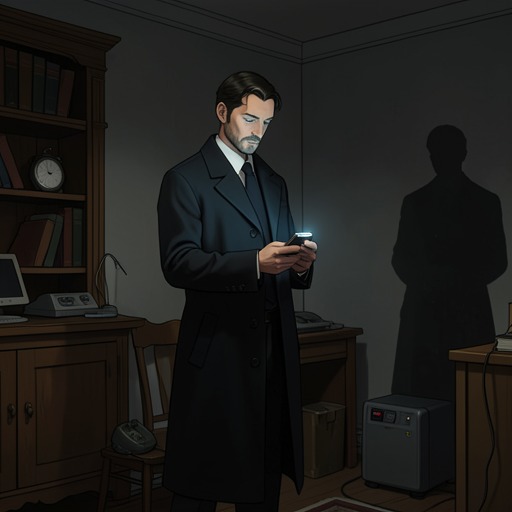
WaspFabricated Internal Resistance is a staged political threat within James Mowry’s campaign on Jaimec: he seeks to convince the Sirian authorities that opposition exists inside their own system, provoke them into striking at it, and use that reaction to deepen their vulnerability. The strategy makes repression part of the deception. Each emergency measure intended to suppress resistance can also persuade the public and the authorities that resistance is real, while forcing the government to spend attention and strength policing its own territory.
Strategic Logic
The method is laid out as a sequence rather than a single act of sabotage. First, an internal opposition must appear to exist; whether it is genuine or imaginary matters less than whether the enemy accepts it as real. Mowry considers this first condition accomplished. The next step is to make the authorities afraid of that opposition and provoke them into striking back. He considers that accomplished as well. The scheme therefore depends not only on what Mowry does, but on what the Sirian state is induced to believe and how it chooses to respond.
A further stage requires the supposed opposition to have confidence in its own power. Mowry regards that condition as achieved too. The sequence gives the invented resistance a political function: it must seem sufficiently credible and capable to draw a consequential reaction. Once the authorities respond, their actions can be read as confirmation of the danger they claim to be suppressing. The strategy’s central irony is that the government’s effort to display control may instead advertise its insecurity.
The fourth move belongs to the Terran side. Mowry’s outline calls for enough military action to make a mockery of Sirian claims of invincibility. This shifts the operation beyond a contest over internal security: the staged opposition and the external military pressure are successive parts of a larger effort to break confidence. The passage introduces a further expected change in public morale after that intervention, but does not complete its description, so the precise result remains unspecified.
Pressure on Jaimec
The plan operates within a wider strategic squeeze. Mowry describes Sirian fleets as widely dispersed and reports large troop movements from the overcrowded home system toward the outer planets. Against that background, Jaimec is a point of pressure the authorities cannot easily abandon: they dare not remove strength from the planet, however badly it may be needed elsewhere, and may have to reinforce it at Diracta’s expense. The manufactured internal threat thus fits a broader pattern in which the enemy is made to divide its attention and hold resources in place.
The timing of military action is constrained. Mowry is not supposed to begin offensive action of the Phase Three type until he receives orders, because such action usually precedes a full-scale attack by Terran space-forces. That restriction distinguishes the stages of the operation: the political and psychological pressure is already being prepared, but the larger military step has its own authorization and place in the sequence. The strategy is not simply a call for immediate escalation; it depends on making pressure accumulate while preserving the intended order of moves.
Uncertainty helps the pressure persist. The blows are designed so that the authorities cannot tell when or where the next one will fall. In a discussion of the wider campaign, Mowry’s interlocutor says that the full picture cannot be seen from one position; the response is to offer only a glimpse. This partial visibility echoes the strategy itself. The enemy must react to a threat whose outlines it cannot reliably establish, while observers receive only fragments of the larger design.
Repression as Evidence
Jaimec’s measures give the strategy a visible political setting. A War Emergency Powers Act order issued by the Jaimec Ministry of Defence requires organisations, societies, parties, and other corporate bodies to register. The order is presented as an administrative demand, but in the context of a feared internal opposition, registration also extends the state’s scrutiny across organized public life. The government’s attempt to identify and control associations helps make the possibility of conspiracy feel pervasive.
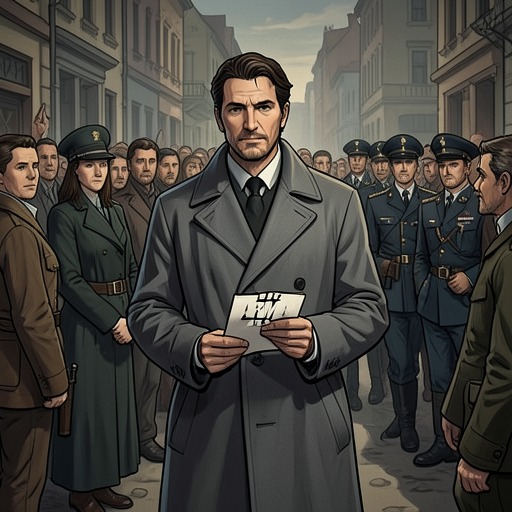
Street searches add force to that atmosphere. While heading to a rendezvous, Mowry suddenly finds a line of uniformed police stretching across the street, with a second line positioned four hundred yards farther on. The arrangement turns an ordinary route into a controlled space and makes the security response immediate and physical. Elsewhere, the discovery of several more telephone taps confronts the authorities with three unresolved questions: who has been listening, for how long, and how much has been learned. The danger is not only the surveillance itself but the state’s inability to know its reach.
Later headlines announce martial law in Pertane, a travel ban, a declaration that the population will stand firm, and drastic action against Dirac Angestun Gesept. Together, these reports show how the crisis is framed publicly: emergency restrictions, official resolve, and action against a named figure occupy the same news space. Under martial law, about sixty routes radiate from Pertane’s perimeter, while the main roads toward Shugruma and Radine are expected to be more heavily guarded. Security policy therefore changes the practical geography of escape as well as the public language of danger.
Limits and Significance
The concept does not require the reader to assume that every reported threat or act of resistance is invented. Its explicit principle is more tactical: the opposition’s actual existence matters less than the enemy’s conviction that it exists. The distinction matters because the operation works through perception and response, not through a simple claim that all dissent is fictional. Mowry’s achievement, as he assesses it, is to establish the threat in the authorities’ minds, encourage a fearful counterstroke, and present the successive stages as already completed.
The strategy also exposes a vulnerability in coercive rule. Registration, searches, surveillance, travel restrictions, and military deployments may strengthen immediate control, yet they can enlarge the sense that danger is everywhere and that the government lacks reliable knowledge of it. Meanwhile, the need to retain forces on Jaimec may constrain the Sirian response elsewhere. Fabricated Internal Resistance is therefore both a deception and a means of redistributing the enemy’s attention: it turns suspicion inward, makes the response politically legible, and helps keep pressure on a strategically important planet.